

We may earn a commission when you buy through links on this page, at no extra cost to you. Learn more.
moscato vs white zinfandel comes down to grape, color, and style: Moscato is an aromatic wine made from Muscat grapes, while White Zinfandel is a pink rosé made from red Zinfandel grapes. Classic Moscato d’Asti is lightly sparkling, floral, sweet, and notably low in alcohol; familiar White Zinfandel is usually still, strawberry-scented, medium-sweet, and light-bodied. Both can suit casual sipping, fruit-forward dishes, and spicy foods, but Moscato is the better fit for fragrant peach-and-flower flavors, while White Zinfandel brings red-berry character and a soft rosé profile.
These wines often appeal to the same drinker because they are approachable, fruit-driven, and commonly sold with noticeable sweetness. The useful comparison goes beyond sweetness to production, flavor, acidity, alcohol, and food pairing.
The Main Differences Between Moscato and White Zinfandel
Moscato and White Zinfandel are both often sweet and easy to enjoy, but they are not made from the same grape or in the same color category. Moscato d’Asti from Piedmont, Italy, is typically pale straw and gently sparkling at about 5 to 6% alcohol, while White Zinfandel is a light pink rosé commonly around 8 to 10% alcohol.
| Feature | Moscato (classic Moscato d’Asti) | White Zinfandel (common style) |
|---|---|---|
| Grape | Muscat Blanc à Petits Grains, also called Moscato Bianco | Red-skinned Zinfandel |
| Color | Pale straw to light gold | Blush pink to light salmon |
| Typical sweetness | Usually sweet; dry Muscat styles also exist | Usually medium-sweet; drier rosé versions exist |
| Typical alcohol | About 5 to 6% ABV for Moscato d’Asti | About 8 to 10% ABV for common bottlings |
| Texture | Often gently sparkling and lively | Usually still, light-bodied, and soft |
| Common aromas | Peach, apricot, orange blossom, honeysuckle | Strawberry, raspberry, citrus, melon |
| Acidity and tannin | Fresh acidity; very little tannin | Relatively low acidity and low tannin |
| Easy pairing direction | Fruit desserts, brunch, aromatic or spicy dishes | Salads, seafood, chicken, picnic foods |
The table describes familiar styles, not every bottle. Moscato can be dry, still, sparkling, or fortified, while White Zinfandel ranges from medium-sweet to drier interpretations.
Choose Moscato for floral fragrance, peach-like fruit, and gentle bubbles. Choose White Zinfandel for a chilled pink wine with strawberry and raspberry flavors, little tannin, and a soft palate.
What Moscato Brings to the Glass
Moscato is prized for its aromatic Muscat grapes, which can produce wines that smell of fresh grapes, flowers, citrus, and stone fruit. In the classic example from Piedmont, Moscato d’Asti is made from Muscat Blanc à Petits Grains and commonly carries a gentle sparkle with roughly 5 to 6% ABV.

The word Moscato refers to an Italian expression of the Muscat grape family rather than one universal sweetness level. Muscat Blanc à Petits Grains is the variety most closely associated with Moscato d’Asti, but the wider Muscat family includes other grapes and styles. That is why a bottle labeled Moscato may be still or sparkling, lightly sweet or distinctly sweet, and occasionally dry. A shopper comparing two bottles should look beyond the single word on the front label and identify the style or region.
Moscato d’Asti is a particularly useful reference point because it has a recognizable balance: natural grape sweetness, floral perfume, fresh fruit, and a light prickle of carbonation. Its aromas can suggest white peach, apricot, orange blossom, honeysuckle, and ripe table grapes. The bubbles are gentler than those in many fully sparkling wines, so the wine feels softly lifted rather than sharply fizzy. According to Wine Enthusiast’s Moscato overview, this style is made by partially fermenting the grape must, which retains natural sugar and leaves the wine at about 5 to 6% alcohol.
Not every Moscato tastes alike. A dry Muscat from Alsace or California can be aromatic without tasting sugary, while sweet still Moscato may have no bubbles. Fortified Muscat wines can be richer than the light Moscato d’Asti most American shoppers picture. For readers sorting out the grape names, Decanter’s explanation of Muscat, Moscatel, and Moscato clarifies why those terms are related but not interchangeable in every context.
How White Zinfandel Gets Its Color and Sweetness
White Zinfandel is a rosé made from Zinfandel, a red-skinned grape, not a white grape or a white wine. Winemakers give the crushed grapes a short period of contact with their skins to extract a pale pink color, then separate the juice so it can finish fermenting with much less skin contact than red Zinfandel.
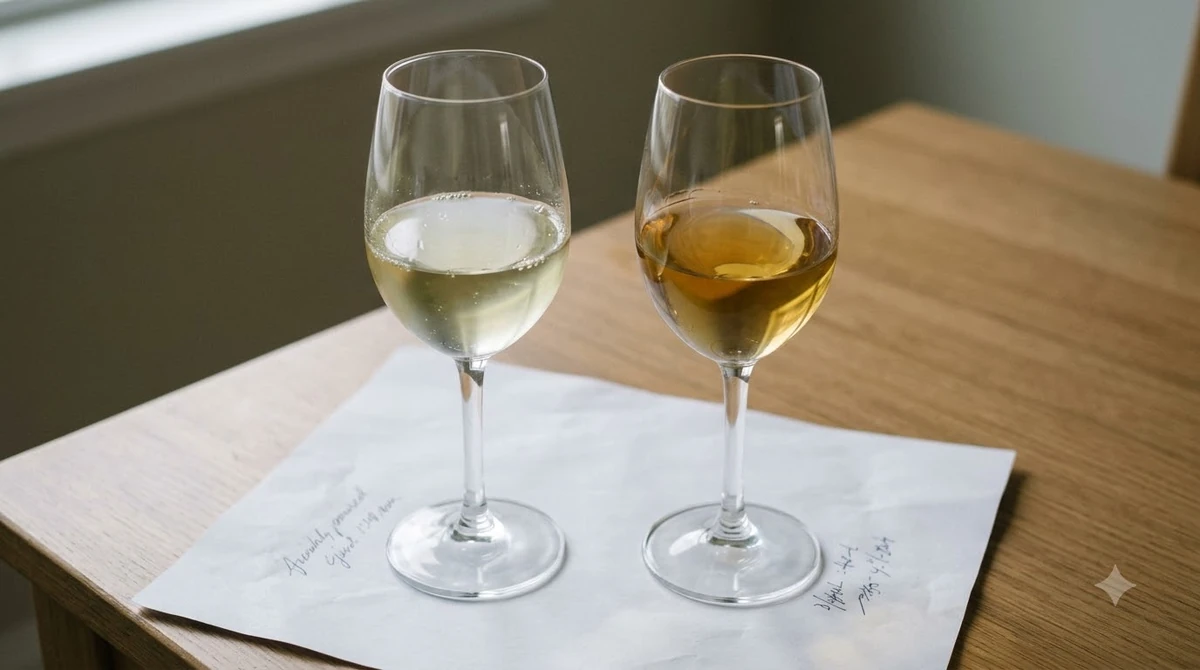
The name can be confusing because the wine looks pink. It describes a style, not a separate white grape variety. Brief contact with red grape skins gives it color but far less tannin than red Zinfandel. White Zinfandel is usually light-bodied and meant to be enjoyed young.
White Zinfandel’s best-known origin story is tied to Sutter Home in California. In 1972, winemaker Bob Trinchero drew off some juice from a Zinfandel fermentation as part of an effort to concentrate the red wine that remained. The pink wine made from that juice was initially a separate project. In 1975, a fermentation stopped before all the grape sugar had been converted into alcohol, leaving a sweeter, lower-alcohol wine. That accidental result helped define the medium-sweet White Zinfandel familiar to many American drinkers. VinePair recounts the 1972 experiment and the later stuck fermentation that left about 2% residual sugar in the wine.
Modern White Zinfandel is not uniformly sweet; some producers make drier styles. The familiar medium-sweet version is light-bodied, with strawberry, raspberry, melon, citrus, and sometimes clove or nutmeg. Short skin contact keeps the finish soft rather than grippy.
Sweetness, Flavor, Acidity, and Alcohol Compared
Sweetness is the first point of overlap: classic Moscato d’Asti and familiar White Zinfandel can both taste noticeably sweet. Their differences are more apparent in aroma and acidity, with Moscato usually showing floral and peach notes and White Zinfandel leaning toward strawberry, raspberry, and melon.
Aromas can make the wines seem sweeter or drier than their sugar levels. Moscato’s orange blossom, honeysuckle, and peach suggest sweetness, while acidity can keep the palate from feeling heavy. White Zinfandel’s red-fruit aromas suggest berries, and its lower acidity makes the texture rounder.
Alcohol also changes the experience. Moscato d’Asti commonly sits around 5 to 6% ABV, while many White Zinfandels fall around 8 to 10% ABV. Still or dry Muscat wines can have more alcohol, and White Zinfandel varies by producer, so compare the stated alcohol levels on the bottles. Acidity matters just as much as sugar: Moscato’s fresh acidity helps balance its sweetness, while White Zinfandel is generally lower in acidity and can feel softer. Both have little tannin compared with Cabernet Sauvignon or Syrah; Moscato often finishes with a floral or citrus lift, while White Zinfandel tends to finish with mellow red-fruit flavors.
Tip: Taste each wine well chilled, then take a small sip after a bite of food. The acidity in Moscato may feel brighter beside fruit or spice, while White Zinfandel’s softer profile may seem rounder with salty snacks or a simple chicken dish.
Do not use sweetness alone to decide which wine is better for dessert. The wine should be at least as sweet as the dessert, or the wine can taste thin and tart after the food. A lightly sweet Moscato may work with a fresh fruit tart, while a sweeter White Zinfandel can suit berries and a mild cream dessert. For a broader look at how to compare bottle styles on their own terms, see this guide to Wine vs Wine.
Food Pairings for Moscato and White Zinfandel
Moscato is especially useful with aromatic foods, fruit desserts, brunch dishes, and spicy preparations, while White Zinfandel is a natural match for casual seafood, chicken, salads, and picnic plates. For either wine, sweetness should meet or exceed the sweetness of the food, and acidity should be high enough to stand beside tart ingredients.
For Moscato, try peach cobbler, apricot tart, fruit salad, lemon cookies, or a soft cheese plate with honey. The wine’s floral notes echo ripe fruit, and a gently sparkling Moscato d’Asti can refresh the palate between bites. Spicy Thai noodles, chili-lime shrimp, and lightly sweet-and-sour dishes can also work because a touch of wine sweetness eases the impression of heat. Keep chili intensity moderate: alcohol and tannin can amplify heat, so a lower-alcohol Moscato is often a sensible match for a spicy dish.
White Zinfandel works well with grilled shrimp, crab cakes, chicken salad, roast chicken, turkey sandwiches, and a platter of mild cheeses. Its strawberry and melon character sits comfortably beside fruit, while its light body does not overwhelm simply prepared seafood. Salty snacks such as pretzels, kettle chips, and mild cured meats can soften the perception of sweetness and make the wine feel more balanced. A drier White Zinfandel can also work with a broader range of savory foods than a clearly sweet bottling.
Pay attention to the sauce rather than matching only the main ingredient. A lemon-heavy seafood dish needs enough acidity to keep the pairing lively; if the Moscato is soft and sweet, a citrus-forward White Zinfandel or a different crisp white may work better. A creamy chicken dish can handle White Zinfandel, while peach-glazed chicken may suit Moscato. Avoid pairing either sweet style with a dessert much sweeter than the wine, because the wine can taste sour or diluted; very hot chili sauces can also make higher-alcohol wines seem hotter. For the reverse comparison with another crisp, high-acid white, Albariño vs Sauvignon Blanc explores options for tangy seafood. For a more savory red-wine dinner, the comparison of Chianti vs Malbec offers a different direction.
Serving, Shopping, and Storing Each Wine
Serve both wines chilled without making them so cold that their aromas disappear. Start at 43 to 50°F for sweet Moscato d’Asti and 45 to 50°F for White Zinfandel; allow a few minutes in the glass if the wine seems muted.
For Moscato, the style on the label helps set expectations. Moscato d’Asti usually signals a gently sparkling, sweet wine from Piedmont, while a still Muscat or a dry Muscat bottling can taste quite different. Look for descriptors such as frizzante, sparkling, dry, or sweet, and pay attention to the named region. A bottle from Asti is a more specific point of reference than a generic Moscato label. If the goal is a floral dessert wine with modest alcohol, Moscato d’Asti is a reliable place to start; for a drier dinner wine, search for a clearly dry Muscat style.
When shopping for White Zinfandel, decide how much sweetness you prefer before buying. Words such as blush, White Zin, and rosé do not tell you the exact sugar level, and some producers make drier examples than the classic medium-sweet style. Look for familiar fruit descriptions such as strawberry, raspberry, and melon, and compare the alcohol level if you are choosing between two bottles. A common White Zinfandel around 8 to 10% ABV will usually feel lighter than a full-strength dry rosé, but individual bottlings vary.
Neither wine generally needs long aging. White Zinfandel is best enjoyed young, and aromatic Moscato is usually bought for its immediate fruit and floral character. Store unopened bottles on their sides, away from light and heat, near 55°F. After opening, refrigerate with a proper closure; still wines are generally best within 3 to 5 days, while sparkling wines are best within 1 to 3 days. For a gathering, plan on a standard 5-ounce pour and roughly five glasses from a 750-milliliter bottle. Moscato d’Asti’s light bubbles make it useful as an aperitif, and White Zinfandel’s pink color suits a cookout or afternoon meal. Chill the bottles before guests arrive, open the Moscato carefully, and pour smaller amounts if serving it with dessert.
Frequently Asked Questions
These answers clarify label and serving questions, from Piedmont’s two sparkling Moscato styles to Zinfandel’s names in Italy and Croatia.
Is Moscato the same grape as Muscat?
Moscato is the Italian name most closely associated with Muscat Blanc à Petits Grains, while Muscat is also used for a wider family of related grapes. Muscat of Alexandria is another important member and is often called Moscatel in Spain and Portugal. The names overlap, but they do not always identify the same grape.
Is White Zinfandel made from white grapes?
No. It is made from the red-skinned Zinfandel grape, which is also known as Primitivo in Italy and Crljenak Kaštelanski in Croatia. The pale pink color comes from limited contact between the juice and the skins, not from a white grape variety.
Are Moscato d’Asti and Asti Spumante the same wine?
They are related Piedmontese wines made from Moscato Bianco, but they are distinct styles. Moscato d’Asti is gently sparkling and usually lower in alcohol, while Asti Spumante is fully sparkling and can be made in a range of sweetness levels. The words on the label help distinguish the two.
Can White Zinfandel be served over ice?
It can be, especially in an informal setting, although serving it chilled in a regular wine glass preserves more flavor. Ice gradually dilutes the wine, so use a large cube and drink it before it melts too far. A small chilled pour is usually the better choice for comparing its fruit character.
Why do some Zinfandel rosés taste drier than classic White Zinfandel?
Sweetness depends on how fermentation is managed, not simply on the red grape or pink color. If yeast converts nearly all available grape sugar into alcohol, the finished rosé can be dry; stopping fermentation earlier leaves more residual sugar. That is why two pink wines made from Zinfandel can taste noticeably different.
Moscato and White Zinfandel both offer approachable fruit, but the best choice depends on whether you prefer floral, gently sparkling Moscato or soft, berry-led rosé. Match the wine’s sweetness to the food, serve it cool rather than icy, and choose the style that suits the occasion. For a first bottle, Moscato d’Asti is a clear starting point for floral sweetness, while White Zinfandel is an easy pick for a chilled pink wine with red-fruit flavor.
More in Wine vs Wine
 Nero d’Avola vs Pinot Noir: Taste, Body, and Pairing DifferencesUpdated Nov 21, 2026
 Chenin Blanc vs Pinot Blanc: Key Differences in Taste, Acidity, and PairingsUpdated Nov 21, 2026
 Chardonnay vs Shiraz: Key Differences in Taste, Serving, and PairingUpdated Nov 21, 2026
 Chardonnay vs Verdejo: How Spain’s Crisp White Compares to the World’s ChameleonUpdated Nov 21, 2026
 Chardonnay vs Sancerre: Key Differences in Taste, Grapes, and PairingUpdated Nov 21, 2026
 Chardonnay vs Malbec: Key Differences in Taste, Body, and PairingUpdated Nov 21, 2026