

We may earn a commission when you buy through links on this page, at no extra cost to you. Learn more.
The KitchenAid electric wine opener is not a verifiable KitchenAid product in the manufacturer’s documented wine-tool lineup, so buyers should distinguish its manual corkscrew and cordless wine sealer from an electric corkscrew. KitchenAid does sell wine-related accessories, including a cordless vacuum wine sealer, but that accessory preserves opened wine rather than extracting corks. If an electric opener is the priority, comparing established alternatives by cork compatibility, button controls, charging method, and handling is a more reliable purchasing strategy than assuming a KitchenAid-branded electric model is available.
KitchenAid is a familiar name in kitchen equipment, making it understandable that shoppers might search for an electric wine opener carrying the same branding. However, wine accessories perform several different jobs, and the distinction matters before spending money. A corkscrew removes a cork, a wine sealer closes an opened bottle, and a manual winged opener uses mechanical leverage instead of an electric motor. This review examines the available KitchenAid wine-tool evidence, explains the closest alternatives, and identifies what to look for in an electric opener that actually performs the intended job.
Specs and Key Features: What KitchenAid Actually Offers
The central finding is that KitchenAid’s documented wine accessories should not be confused with a rechargeable electric corkscrew. Its official cordless wine accessory is intended for preserving unfinished bottles, while a separately listed KitchenAid winged corkscrew provides conventional manual cork removal.
KitchenAid’s official product listing identifies the Go Cordless Vacuum Sealer Accessory – Wine Sealer as model KVSRWA2. The accessory works with the KitchenAid Go Cordless Handheld Vacuum Sealer, which is sold separately. Its purpose is to vacuum-seal wine after a bottle has been opened, helping consumers store unfinished wine for later use. The manufacturer also describes the accessory as capable of sealing an unfinished 750 mL bottle in seconds.
That is useful equipment for someone who regularly opens wine but does not finish a bottle. However, it cannot replace a corkscrew. It does not contain a powered cork-removal mechanism, and it should not be purchased by someone whose main requirement is removing a natural or synthetic cork with the press of a button.
| Product or feature | Verified information | What it means for buyers |
|---|---|---|
| KitchenAid Go wine accessory | Model KVSRWA2 | Wine preservation accessory, not a cork remover |
| Compatible equipment | KitchenAid Go Cordless Handheld Vacuum Sealer | Requires a separate compatible vacuum sealer |
| Sealing capacity | 750 mL bottle | Designed for a standard unfinished wine bottle |
| Sealing operation | Seconds, according to KitchenAid | Helps close an opened bottle for storage |
| Included accessories | Wine sealer and storage case | Provides a dedicated storage solution |
| KitchenAid manual opener | Stainless steel winged corkscrew | Removes corks using manual leverage |
| Electric corkscrew | No verified KitchenAid model identified in the reviewed product information | Consider an established alternative |
The manual KitchenAid winged corkscrew is a different product category. Canadian Tire describes it as a stainless steel opener with a double-lever wing design, a helix-style screw, and an additional bottle opener integrated into its handle. These features provide a practical manual solution, but there is no electric motor or rechargeable battery involved.
For shoppers comparing these products, the most important distinction is functional rather than cosmetic. A cordless wine sealer is an accessory for an already opened bottle. A manual corkscrew is an opening tool. An electric corkscrew performs the latter job with powered rotation and extraction. Each belongs in a different part of a home wine setup.
KitchenAid’s official product information can be reviewed on its KitchenAid Go cordless wine sealer product page, which clearly identifies the accessory’s intended function.
What Owners Like About KitchenAid Wine Accessories and Electric Openers
The strongest reasons to consider KitchenAid’s wine-related accessories are straightforward functionality, compatibility within an existing cordless system, and the availability of a conventional mechanical corkscrew. Buyers looking for an actual electric opener should evaluate comparable benefits without assuming that all KitchenAid-branded wine equipment has the same purpose.
The KitchenAid Go wine sealer is particularly relevant to households that frequently leave wine unfinished. Its dedicated accessory and storage case provide a specific place for the preservation component. KitchenAid also describes its cordless collection as using a removable battery shared across compatible products, which may be convenient for someone who already owns other equipment in that system.
Another practical advantage is the separation between opening and preserving wine. A household can use a preferred corkscrew to remove the cork and a dedicated vacuum accessory to seal the remaining wine afterward. This approach avoids expecting one accessory to perform two unrelated mechanical jobs.
Why electric corkscrews remain attractive
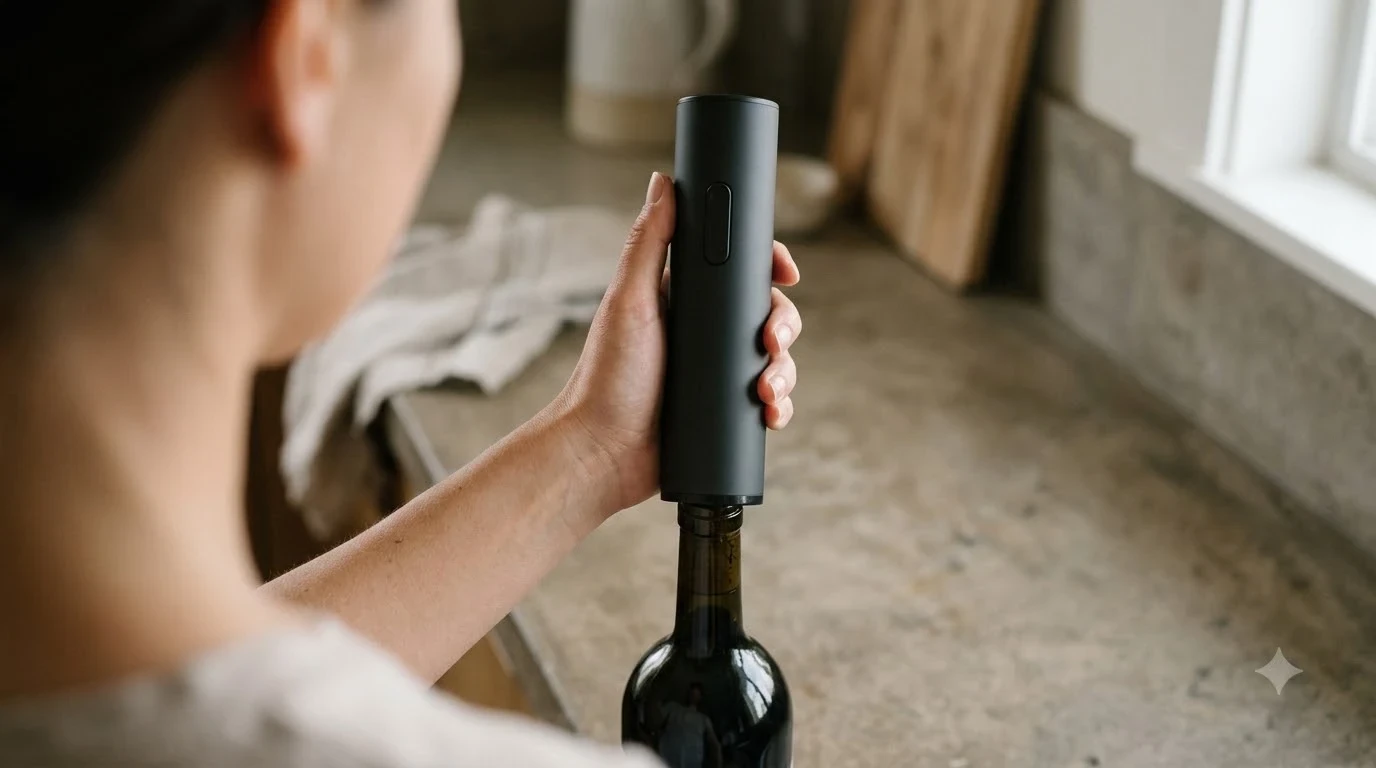
Electric wine openers appeal to consumers who want a consistent opening process without repeatedly twisting a manual screw. The motor handles the rotation and extraction, while the user concentrates on positioning the device over the bottle neck. This can be especially convenient when several bottles need to be opened for a dinner or gathering.
Good Housekeeping’s electric opener buying research highlights several practical advantages: powered operation, more controlled screw positioning, and reduced errors caused by inserting a traditional corkscrew at an angle. A properly positioned electric opener can help reduce cork breakage associated with poor insertion technique.
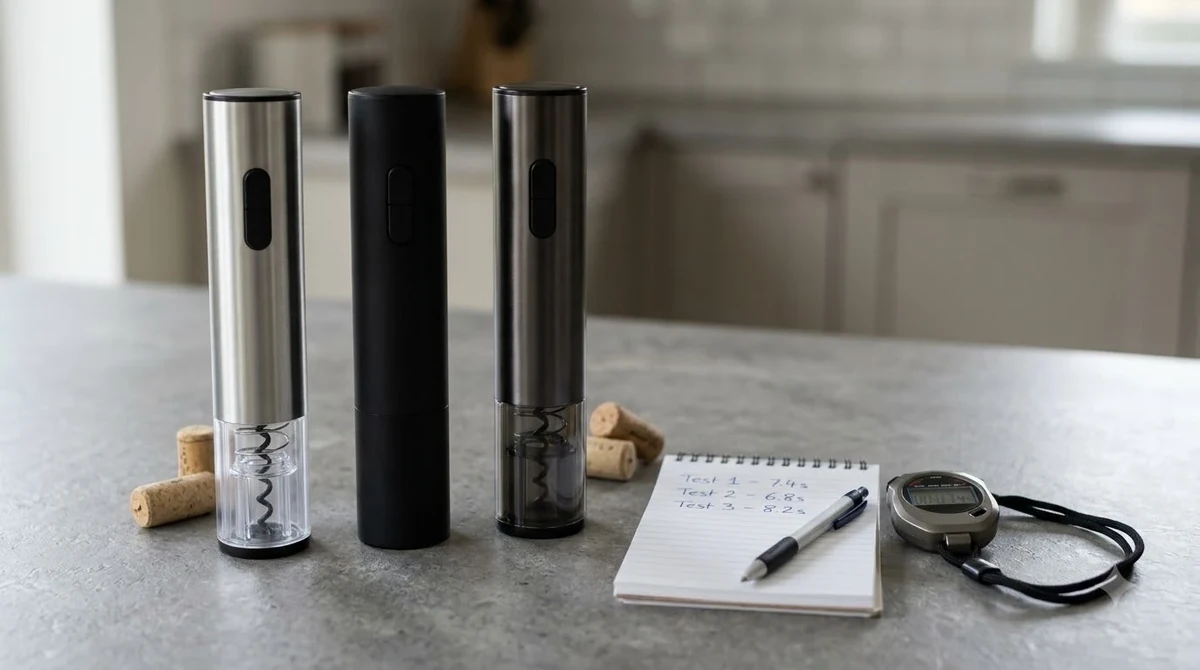
Controls also matter. The Cuisinart CWO-25, for example, uses separate Remove and Eject buttons. This arrangement gives the user direct control over extracting the cork and releasing it from the screw. Some consumers prefer this approach because the operating sequence is easy to understand.
America’s Test Kitchen also emphasizes practical construction details such as a comfortable grip, a transparent mechanism window, and a useful foil cutter. Its preferred Secura model includes a manual-start button system and a foil cutter, demonstrating that a relatively straightforward design can be more useful than a complicated collection of additional functions.
These advantages are not evidence that a KitchenAid electric opener exists. They are useful criteria for selecting an alternative that performs the same job a shopper might have expected from one.
Which benefits matter most?
For occasional wine drinkers, a simple opener that removes natural corks reliably may be sufficient. Regular hosts may appreciate rechargeable operation, a stable grip, and convenient cork ejection. Consumers with limited hand strength may place greater importance on button placement and the amount of pressure needed to keep the device centered.
Appearance can also influence a purchase, particularly when the opener will remain on a bar cart or kitchen counter. Nevertheless, attractive materials and matching kitchen accessories should come after reliable cork removal. A beautiful opener that struggles with synthetic corks is less useful than a basic model that works consistently.
Tip: Before purchasing a KitchenAid-branded wine accessory, identify whether the intended job is opening a sealed bottle or preserving an opened one. The KVSRWA2 is a wine sealer, not an electric corkscrew.
Common Complaints and Limitations to Consider
The biggest limitation for someone searching for a KitchenAid electric wine opener is product availability and identification. The reviewed KitchenAid documentation identifies a cordless wine sealer and a manual winged corkscrew, but does not establish a corresponding electric corkscrew model. Buyers should avoid relying on vague product descriptions or third-party listings that do not provide a verifiable manufacturer model number.
There are also practical disadvantages associated with electric wine openers generally. Their rechargeable batteries require maintenance, their motors introduce another potential failure point, and their housings take up more storage space than a traditional waiter-style corkscrew. Some models also wobble during extraction, particularly if the device is not held vertically over the bottle.
Battery and charging inconvenience
A rechargeable opener must be charged before it is needed. This can become frustrating when a bottle is ready to serve but the opener has been sitting unused for several weeks. Good Housekeeping reports that charging times commonly fall between six and ten hours, depending on the model.
Charging methods also differ. Some products use USB cables, while others rely on dedicated charging stands. A stand may provide convenient storage, but it occupies additional counter space. Buyers should consider where the device will be kept and whether its charging arrangement fits the kitchen.
Unstable operation and difficult corks
America’s Test Kitchen identifies instability, excessive weight, and slow operation as shortcomings that can undermine the convenience of an electric opener. A device that rotates or wobbles around the bottle neck may require additional hand control, defeating part of the reason for purchasing it.
Synthetic corks can present another challenge. Their material and resistance differ from those of traditional natural corks. A poorly designed screw may struggle to enter the material cleanly, while an opener with insufficient extraction power may stop before the cork is fully removed.
Good Housekeeping also identifies automatic-start behavior as a consideration. Some models begin operating as soon as pressure is applied. Although this can simplify operation, consumers who prefer predictable control may find separate extraction and release buttons easier to manage.
The KitchenAid Go wine sealer has its own limitation: compatibility. The KVSRWA2 requires the corresponding handheld vacuum sealer, so it is not a standalone cork-removal gadget. Someone purchasing it without understanding this requirement may end up with an accessory that cannot perform the expected task.
Why brand assumptions can cause problems
KitchenAid’s name appears on a wide range of kitchen equipment, and wine accessories are no exception. However, a shared brand name does not mean that every product uses the same technology or offers the same capabilities.
It is particularly important to distinguish the KitchenAid manual winged opener from a motorized product. A manual screw depends on the user’s twisting and lifting movements. An electric corkscrew uses a motor to drive its worm through the cork and extract it. Neither should be mistaken for the vacuum mechanism of a wine sealer.
For buyers, this distinction is more important than choosing a particular color or finish. Identifying the correct product category first prevents unnecessary purchases and makes comparisons much more meaningful.

Who Should Buy a KitchenAid Wine Tool and Who Should Skip It
KitchenAid wine accessories make sense when their specific functions match an existing home setup. The cordless wine sealer is intended for preserving unfinished bottles, while the manual winged corkscrew suits someone comfortable using a traditional mechanical opener. Neither is a verified substitute for an electric corkscrew.
Someone who already owns the KitchenAid Go handheld vacuum sealer may find the KVSRWA2 a useful addition. Its compatibility with the cordless system means the accessory fits into an existing equipment arrangement. Its storage case also helps keep the wine-preservation component together when not in use.
Buy the KitchenAid wine sealer if:
- You regularly open 750 mL wine bottles but do not always finish them.
- You already own the compatible KitchenAid Go handheld vacuum sealer or intend to purchase it.
- You want a dedicated accessory for vacuum-sealing unfinished wine.
- You value a removable battery system shared across compatible KitchenAid Go products.
- You need a preservation accessory rather than a cork-removal device.
Consider the manual KitchenAid corkscrew if:
- You prefer a traditional mechanical opening method.
- You want a stainless steel winged design.
- You appreciate the convenience of a built-in bottle opener.
- You do not want to maintain a rechargeable battery.
- You are comfortable applying manual twisting and lifting pressure.
Skip these products if:
- You specifically want an electric motor to remove wine corks.
- You expect one cordless accessory to both open and preserve bottles.
- You want a standalone rechargeable electric corkscrew.
- You need a verified KitchenAid electric opener model with published battery and extraction specifications.
Consumers who want powered cork removal should look at electric openers from manufacturers with clearly identified products. This makes it easier to verify charging requirements, replacement support, included accessories, and compatibility with different cork materials.
For someone building a complete wine setup, opening and preservation tools can complement each other. An electric opener handles the initial cork removal, while a compatible preservation accessory helps close an unfinished bottle afterward. An electric wine chiller can serve another purpose by preparing bottles for serving, rather than opening or sealing them.
How It Compares to Electric Wine Opener Alternatives
For shoppers who specifically want powered cork removal, the Cuisinart CWO-25, Secura SWO-3N, and Peugeot Elis Touch provide documented alternatives worth investigating. They represent different approaches to controls, handling, and design, making them useful reference points when selecting an electric wine opener.
The Cuisinart CWO-25 is a particularly practical comparison because its operating controls are clearly separated. Good Housekeeping describes its Remove and Eject buttons, stainless steel construction, and charging base. The base also provides storage for the accompanying foil cutter, although its larger footprint may not suit every kitchen.
The Secura SWO-3N stands out for its comparatively lightweight construction and simple manual-start operation. America’s Test Kitchen identifies its weight as 14.7 ounces and its height as 9.75 inches without the charging stand. Its transparent window also lets users observe the corkscrew mechanism during operation.
The Peugeot Elis Touch is another alternative named in Serious Eats’ electric wine opener research. It offers a different approach to electric cork extraction, and shoppers can compare its operating mechanism and overall handling with the more conventional button-operated designs.
| Model or category | Operating approach | Notable characteristic | Best suited to |
|---|---|---|---|
| KitchenAid KVSRWA2 | Vacuum sealing | Preserves opened wine | Existing KitchenAid Go owners |
| KitchenAid winged corkscrew | Manual leverage | Stainless steel construction | Traditional corkscrew users |
| Cuisinart CWO-25 | Electric, dual-button controls | Separate Remove and Eject buttons | Users who prefer direct control |
| Secura SWO-3N | Electric, manual start | Transparent window and foil cutter | Buyers seeking straightforward operation |
| Peugeot Elis Touch | Electric cork extraction | Alternative pressure-based design | Buyers comparing premium-style designs |
These comparisons should not be interpreted as proof that every alternative offers identical battery capacity, charging accessories, or cork compatibility. Those specifications differ by model and should be verified independently before purchasing.
Electric versus manual operation
A manual opener is generally simpler in construction. It does not need charging and can be stored in a kitchen drawer. A waiter-style corkscrew also provides considerable control to someone who has learned how to insert the screw correctly and extract the cork without excessive force.
An electric model reduces the amount of twisting required, but it is not completely hands-free. Users still need to position the mechanism accurately, stabilize the bottle, and operate the appropriate controls. America’s Test Kitchen notes that electric models can wobble during operation, and some still require enough hand strength to keep them steady.
The best choice therefore depends on the user’s priorities. Someone who opens a single bottle occasionally may prefer a compact manual tool. Someone who entertains regularly may appreciate the repeatable process of a rechargeable electric opener.
Consumers who want a broader overview of available wine accessories can also explore Accessory Brands for other equipment categories. If serving temperature is the next concern, the best electric wine chiller comparison addresses a different but complementary part of wine preparation.
Frequently Asked Questions
Does KitchenAid manufacture an electric wine opener?
The reviewed KitchenAid product information does not establish a dedicated electric corkscrew model. Its documented wine-related products include a manual winged corkscrew and the KVSRWA2 cordless wine sealer. Buyers should request a verifiable model number and manufacturer documentation before purchasing a product advertised under this description.
Can the KitchenAid Go wine sealer remove a wine cork?
No. The KVSRWA2 is designed to vacuum-seal an already opened bottle, rather than extract its cork. Its compatible handheld vacuum sealer creates the vacuum needed for the preservation process. A separate corkscrew is required to open the bottle initially.
Does an electric wine opener work with screw-cap bottles?
No corkscrew is needed for a conventional screw-cap bottle. The cap is removed by turning it, rather than extracting a cork with a rotating worm. An electric corkscrew is intended for bottles sealed with compatible cork-style closures.
Can an electric wine opener be used for sparkling wine bottles?
Electric corkscrews should not be used on sparkling wine bottles with pressure-bearing mushroom-shaped closures. Sparkling wine requires careful manual removal because pressure inside the bottle can propel the closure unexpectedly. Keep the bottle pointed away from people and maintain control of the cork during removal.
What is the difference between a foil cutter and a corkscrew?
A foil cutter removes the protective covering around a wine bottle’s neck so the cork is accessible. A corkscrew extracts the actual closure. Some electric openers include a separate foil cutter, but it does not replace the powered extraction mechanism.
The KitchenAid electric wine opener search highlights an important product distinction: KitchenAid’s documented wine sealer and manual corkscrew do not provide the powered cork-removal function many buyers want. For a genuine electric opener, prioritize a verified model, dependable extraction, comfortable controls, and convenient charging. Choosing the correct tool for opening, preserving, and serving wine will make a home wine setup more practical.
More in Wine Accessories
 Waring Corkscrew Review: Open Bottles Faster With the WWO120Updated Nov 21, 2026
 Vinturi Wine Accessories for Better Wine PouringUpdated Nov 21, 2026
 Vinturi Wine Chiller: Keep Pre-Chilled Bottles Cold at the TableUpdated Nov 21, 2026
 Vacu Vin Corkscrew: Make Opening Wine Bottles EasierUpdated Nov 21, 2026
 Soireehome Wine Aerator Review for Easier Glass-by-Glass Wine ServingUpdated Nov 21, 2026
 Screwpull Wine Chiller Review: Keep Bottles Cool AnywhereUpdated Nov 21, 2026