


We may earn a commission when you buy through links on this page, at no extra cost to you. Learn more.
Vinturi wine accessories are worth considering for wine drinkers who want faster aeration, improved aroma, and more convenient pouring without waiting for a traditional decanter. The brand is particularly recognized for its handheld red wine aerator, no-drip accessories, and tower-style serving setup. Its products offer a straightforward way to introduce air during pouring, although correct technique, regular cleaning, and choosing the right aerator for the wine are important for good results.
Wine accessories should make serving a bottle easier rather than create another complicated step. Vinturi focuses on that practical goal with aerators designed to work as wine enters the glass. Instead of transferring a bottle into a separate decanter and waiting, a drinker can pour through the aerator and serve immediately. The collection is especially interesting for households that regularly open Cabernet Sauvignon, Merlot, Pinot Noir, and other wines that benefit from some exposure to air. However, not every accessory suits every wine drinker. The differences between handheld aerators, stands, towers, and specialized models deserve attention before choosing a set.
Vinturi Accessories: Specifications and Key Features
Vinturi’s main appeal is its aeration system, which introduces air as wine moves through the device. The Red Wine Aerator Essential combines a compact acrylic body, a removable sediment screen, and a no-drip stand for everyday serving.
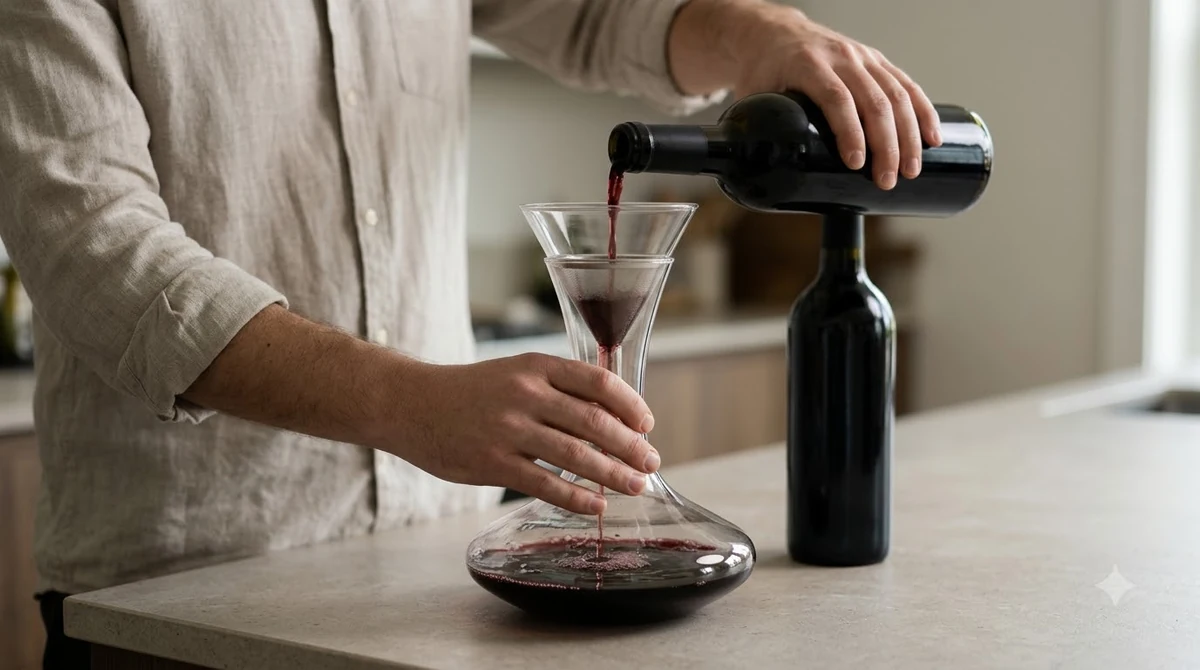
The standard red wine aerator is designed to sit between the bottle and the glass. Its internal air channels help mix air into the wine during pouring, while the removable screen catches sediment and particles before they reach the glass. This is useful with older red wines that may have developed deposits during bottle aging, although the screen is not a substitute for careful decanting when substantial sediment is present.
The model identified by IWA Wine as V1010 measures approximately 6 inches high and 2 inches wide. Its acrylic construction keeps the device relatively compact, and its included stand gives users somewhere to place it between pours. A travel pouch is also included in the listed package, making the handheld accessory easier to store or take to another household.
Vinturi also offers a tower-style arrangement for people who prefer a more stationary serving setup. The tower supports the aerator above a glass or decanter, reducing the need to hold the device throughout the pouring process. The separate aerator-and-tower combination is a more elaborate choice than the basic handheld accessory.
| Feature | Vinturi Red Wine Aerator Essential |
|---|---|
| Model designation | V1010 |
| Main material | Acrylic |
| Height | Approximately 6 inches |
| Width | Approximately 2 inches |
| Air intake | Internal air channels |
| Sediment protection | Removable mesh screen |
| Included accessories | No-drip stand and travel pouch |
| Cleaning | Dishwasher-safe according to product information |
| Primary purpose | Instant red wine aeration |
These specifications describe the Red Wine Aerator Essential rather than every item sold under the Vinturi name. Other products have different configurations, particularly the white wine aerator and tower sets. Buyers should distinguish between the handheld aerator alone and a package that includes additional serving accessories.
One important point is that aeration does not mean every wine will taste dramatically different. A young Cabernet Sauvignon with pronounced tannins may seem rounder after exposure to air, while a lighter Pinot Noir may show a more noticeable aromatic change than a simple pour suggests. The result depends on the wine, its age, serving temperature, and personal preference.
For the technical explanation, WIRED’s examination of the Vinturi aerator describes how changes in fluid pressure draw air into the wine as it passes through the device.
What Owners Like About Vinturi Accessories
The strongest attraction is convenience: Vinturi allows wine to receive additional air during the normal pouring process. Owners also appreciate the recognizable aeration sound, compact storage, and the ability to serve individual glasses without preparing a separate decanter.
A traditional decanter can require advance planning. A young, structured red wine may benefit from 30 to 60 minutes of decanting, depending on its characteristics. That approach works well for a planned dinner, but it is less convenient when someone opens a bottle after arriving home or wants to serve one glass before dinner. A Vinturi aerator offers a faster alternative for those situations.
The serving process is also easy to understand. Position the aerator above a glass, pour wine through its upper opening, and allow the wine to flow into the glass. The internal channels introduce air during the process. The distinctive sound gives users an audible indication that the aeration mechanism is operating.
Less waiting before serving
Convenience is especially attractive for casual entertaining. Imagine opening a young Merlot shortly before serving dinner. Instead of transferring the bottle into a decanter, waiting, and then pouring into individual glasses, a host can use the aerator while serving each guest. Merlot generally has softer, medium tannins than Cabernet Sauvignon, so the difference may be more subtle, but the quicker serving routine remains useful.
For more structured reds, the aerator provides another option. Cabernet Sauvignon from Napa Valley, for example, often has substantial tannin and dark-fruit character. Exposure to air can make its aromas more expressive and its texture seem less firm. It does not reproduce every effect of extended decanting, but it gives the wine a different introduction to the glass.
A useful addition to a serving station
The no-drip stand is a practical detail because an aerator needs somewhere to rest after use. Without a stand, the user must keep holding the device or find a suitable surface. A dedicated stand makes the accessory easier to manage during a dinner with several guests.
The tower setup goes further by positioning the aerator over the glass or decanter. This is particularly useful when serving several people or transferring wine from a bottle into a larger vessel. It also makes the serving arrangement more organized for a home bar or entertaining space.
Owner feedback collected by IWA Wine includes comments praising the aerator’s quick operation, straightforward cleanup, and usefulness as a gift. Some reviewers describe it as a convenient alternative to using a separate decanter for everyday bottles. These comments suggest that the product’s strongest advantage is practical serving rather than elaborate wine preparation.
A Vinturi aerator can also complement other entertaining equipment. A well-organized bar cart provides a natural place for wine glasses, bottle stoppers, and a compact aerator, keeping frequently used items together instead of scattered around the kitchen.
Common Complaints and Limitations
Vinturi accessories are not completely trouble-free. The most important limitations involve pouring technique, occasional splashing, cleaning internal passages, and the need to select the correct aerator for the wine being served.

One recurring concern is wine escaping through the air tubes instead of flowing cleanly into the glass. Vinturi’s own troubleshooting guidance identifies obstructed air holes, residue inside the device, and incorrect pouring technique as possible causes. Pouring too quickly can also cause problems, as WIRED noted in its review of the original aerator.
The correct technique is to pour into the bowl rather than directly down the center. Keep the wine around the middle of the aerator’s reservoir as it flows. This allows the air-intake system to operate as intended. A rushed pour or an incorrectly positioned bottle can lead to splashing and unnecessary cleanup.
Holding the aerator can become inconvenient
The handheld design is simple, but the user must hold the aerator above the glass throughout the pour. That can become awkward when serving several people, particularly if the bottle is heavy or the glass has a narrow opening.
Feedback on the Vinturi White Wine Aerator at Best Buy also identifies holding the device as an inconvenience. Another customer reported wine splashing from the sides when the aerator was not positioned correctly. These experiences do not establish that every unit behaves the same way, but they highlight why pouring technique and product configuration matter.
A stand or tower can help with the handling issue. However, adding a larger accessory also requires additional storage space. Someone who only pours one glass occasionally may prefer the compact handheld design despite its manual operation.
Cleaning requires attention
The internal channels are central to the aerator’s operation, but they also create places where wine residue can remain. Simply rinsing the outside may not remove everything. Dried wine residue can obstruct the passages and interfere with airflow, potentially contributing to inconsistent pouring.
Vinturi recommends soaking the aerator in hot, soapy water when cleaning is needed. Its instructions also describe using narrow and wider cleaning brushes to reach internal passages and the lower channel. This is especially relevant for the Reserve model supplied with a cleaning kit.
Another issue is material durability. Acrylic is lightweight and convenient, but it should not be treated like an indestructible metal wine tool. Some owner comments raise concerns about cracks or fragile-feeling construction. Careful storage, gentle handling, and avoiding unnecessary impacts are sensible precautions.
Tip: After pouring, rinse your Vinturi aerator promptly rather than allowing wine residue to dry inside the air channels. If the pour becomes uneven or wine escapes from the side openings, clean the internal passages and check for obstructions before using it again.
Who Should Buy Vinturi Accessories and Who Should Skip Them
Vinturi makes the most sense for people who regularly drink red wine and value quick serving. It is less compelling for households that rarely drink wine, prefer traditional decanting, or want one universal accessory for every bottle.
Red wine drinkers who frequently open Cabernet Sauvignon, Syrah, and other structured varieties are likely to appreciate the ability to introduce air immediately before drinking. These wines can have more pronounced tannins, and additional oxygen exposure may soften the initial impression. The effect varies by bottle, so an aerator should be considered a serving tool rather than a guarantee of better wine.
People who entertain regularly may also find the tower set useful. It provides a more stable serving arrangement and reduces the need to hold the aerator continuously. For dinner parties, wine tastings, or a home bar, that convenience can matter more than keeping the accessory as small as possible.
Good reasons to consider buying
- You regularly serve young red wines and want to introduce air during pouring.
- You prefer individual-glass aeration rather than waiting for a decanter.
- You appreciate practical accessories such as sediment screens and no-drip stands.
- You entertain guests and want a more organized wine-serving setup.
- You enjoy experimenting with the difference between aerated and unaerated wine.
Reasons to look elsewhere
- You primarily drink delicate older wines that require careful sediment separation.
- You want a completely hands-free accessory without buying a tower.
- You dislike cleaning small internal channels after each use.
- You expect aeration to transform poor-quality wine into excellent wine.
- You mostly drink sparkling wine and want an accessory designed specifically for sparkling bottles.
There is also a practical consideration for people who mainly drink white wine. A red wine aerator should not automatically be treated as a universal model. Vinturi offers a separate white wine aerator because the two styles are designed around different aeration requirements.
For a household that enjoys both styles, choosing the correct device for each wine is more sensible than assuming that one aerator will produce equally good results with every bottle.
Vinturi accessories can also make thoughtful wine-related gifts. Someone putting together a wine-themed present could combine an aerator with a wine bottle holder or a selection of glasses. For seasonal entertaining, a wine advent calendar offers another way to make a wine gift more interesting.
How Vinturi Compares to Traditional Wine Accessories
Vinturi’s main distinction is the way it introduces air during pouring rather than requiring a separate resting period. Traditional decanters, ordinary pourers, and bottle stoppers solve different serving problems, so the best choice depends on what a wine drinker wants to accomplish.
A decanter provides a broad surface area for wine to interact with air. This is useful for young, tannic reds that benefit from more time to open up. It can also help separate wine from sediment when used carefully. A Vinturi aerator is more compact and convenient, but it does not offer the same control over the length of aeration or sediment separation.
Vinturi versus a traditional decanter
A decanter is a better option when a wine needs extended aeration or when sediment must be separated from the liquid. A young Napa Cabernet Sauvignon, for example, may benefit from 30 to 60 minutes in a decanter. The wine can gradually develop as its aromas become more expressive.
Vinturi is better suited to someone who wants a glass immediately. It introduces air during pouring, which can make the wine seem more open without requiring advance preparation. The trade-off is that the process is brief and does not offer the same flexibility as letting wine rest in a decanter.
Vinturi versus an ordinary wine pourer
An ordinary pourer is primarily designed to control the flow of wine from the bottle. It may help reduce dripping and make serving cleaner, but it does not necessarily introduce air in the same way as a dedicated aerator.
Vinturi’s internal air channels are the defining feature. They draw air into the wine during the pouring process, creating a different serving experience from simply attaching a spout to the bottle. Someone who values aeration will find this distinction more important than the appearance of the accessory.
Vinturi versus a wine preservation accessory
Aeration and preservation are almost opposite tasks. An aerator introduces air during pouring, while a preservation tool attempts to limit the wine’s exposure to oxygen after opening. A bottle stopper or vacuum-style preservation system may therefore be more useful for someone who frequently saves unfinished bottles.
Still wine generally keeps for approximately 3 to 5 days in the refrigerator after opening, depending on the wine and storage conditions. A Vinturi aerator does not extend that period. It is designed to affect the serving process, not preserve the remaining bottle.
For a broader overview of complementary tools and equipment, the Accessory Brands section provides a useful starting point for comparing different types of wine accessories.
The practical distinction is simple: a decanter gives wine more time and space to interact with air, a Vinturi aerator introduces air during pouring, and a preservation tool helps protect wine after opening. These products can complement one another rather than compete directly.
Cleaning, Storage, and Everyday Care
Regular cleaning is important because the Vinturi aerator depends on unobstructed air channels. A simple rinse after use helps prevent residue from drying inside the device, while occasional deeper cleaning keeps the internal passages clear.
The manufacturer’s care instructions recommend warm, soapy water after each use. The aerator and its stand are described as suitable for the top dishwasher rack in the Reserve product instructions. However, the exact cleaning instructions for a particular package should be followed because included accessories can differ between models.
A practical cleaning routine
- Separate removable components. Remove the sediment filter and stand where applicable, so each part can be cleaned properly.
- Rinse after pouring. Use clean water to remove fresh wine residue before it dries.
- Wash with warm, soapy water. Clean the aerator and removable parts according to the product instructions.
- Clear the internal channels. Use the appropriate narrow or wide brush to remove residue from the air passages and bottom channel.
- Rinse thoroughly. Make sure soap and loosened wine residue are removed before the next use.
- Dry before storage. Use a clean cloth to remove water spots and allow the parts to dry completely.
Vinturi also addresses a common concern about fine lines visible near the air-intake holes. Its FAQ explains that certain lines can be normal manufacturing weld lines rather than actual cracks. This distinction is useful because an owner might otherwise mistake a normal construction feature for product damage. Genuine structural damage, however, should not be dismissed as a manufacturing line.
Store the aerator safely
Keep the handheld unit in a clean, dry location where it will not be crushed beneath heavier kitchen equipment. The supplied pouch can help protect it during storage and travel. Avoid forcing cleaning brushes through the channels, as gentle cleaning is preferable to putting unnecessary pressure on the acrylic body.
The no-drip stand should also be kept clean, particularly if wine collects around its base. A clean serving station helps prevent sticky residue from transferring to glassware or other accessories.
For wine storage itself, the aerator should not be confused with a bottle storage device. Unopened wine is generally best stored away from direct sunlight and major temperature fluctuations, with bottles kept on their sides when cork closure requires it. A temperature near 55 degrees Fahrenheit is a common storage target.
For opened bottles, refrigeration helps slow deterioration. Sparkling wine generally lasts about 1 to 3 days after opening, while still wines commonly last around 3 to 5 days under suitable refrigerated storage. Vinturi can improve the serving process, but proper bottle storage remains a separate responsibility.
Frequently Asked Questions
Does Vinturi work with screw-cap wine bottles?
Yes. A Vinturi aerator is used after the bottle has been opened, so the closure type does not determine whether the device can function. Screw-cap bottles can be poured through the aerator in the same way as bottles closed with natural cork. The important consideration is using the correct aerator for the wine style.
Can a Vinturi aerator remove wine sediment completely?
No. The removable mesh screen on compatible red wine models catches some sediment and particles, but it is not a complete sediment-removal system. Older Bordeaux-style wines and vintage Port can develop substantial deposits that require careful decanting. Keeping the bottle upright before serving can also help sediment settle toward the bottom.
Why does my Vinturi make a different sound during pouring?
The sound comes from air entering and mixing with the moving wine. Its intensity can vary with pouring speed, wine flow, and how the device is positioned. If the normal sound disappears and the wine flow becomes irregular, check for residue or an obstruction in the air passages.
Can I use a Vinturi aerator with fortified wine?
Compatibility depends on the specific model and its intended wine style. Port and other fortified wines can have different serving requirements, especially when bottle age produces sediment. For vintage Port, careful decanting is often more useful than relying on a standard aerator to handle deposits.
What should I do if my Vinturi develops a cloudy appearance?
First, clean the aerator with warm, soapy water and a soft cloth to remove dried wine residue and water spots. Avoid abrasive cleaning materials that might scratch the acrylic. If cloudiness remains or the material shows visible structural damage, contact Vinturi customer support for guidance rather than assuming the unit is safe to continue using.
Vinturi wine accessories are a practical choice for red wine drinkers who value quick aeration and straightforward serving. The handheld aerator offers the most compact approach, while a tower setup makes more sense for frequent entertaining and larger pours. With the correct model, careful pouring, and regular cleaning, Vinturi can be a useful addition to an everyday wine-serving collection.
More in Wine Accessories
 Coravin Vs Vacu Vin: Choose the Right Wine Saver for Your BottlesUpdated Nov 21, 2026
 Zwilling Wine Stopper Review: Preserve Open Bottles LongerUpdated Nov 21, 2026
 Wine Enthusiast Wine Preserver Review: Features, Benefits and LimitationsUpdated Nov 21, 2026
 Wine Enthusiast Wine Stopper: An Easier Way to Reseal Open BottlesUpdated Nov 21, 2026
 Vintorio Wine Opener: Two-Step Cork RemovalUpdated Nov 21, 2026
 Zwilling Wine Aerator Review: Aerate, Pour, and Seal With One ToolUpdated Nov 21, 2026