

We may earn a commission when you buy through links on this page, at no extra cost to you. Learn more.
The soireehome wine aerator is a glass, in-bottle wine accessory that aerates wine as you pour, making it a convenient choice for serving individual glasses without decanting an entire bottle. Its hand-blown borosilicate glass construction, silicone bottle gasket and straightforward pouring design make it particularly appealing to people who appreciate attractive wine accessories. However, it is not a complete replacement for a traditional decanter, especially when serving older wines or bottles that benefit from longer aeration.
The Soiree from Soiree Home takes a different approach to wine aeration than a conventional glass decanter. Instead of pouring a bottle into a separate vessel and allowing it to breathe, the accessory attaches directly to the bottle and introduces air during pouring. That approach saves preparation time and lets drinkers control how much wine they aerate at once. Its unusual glass appearance also makes it an interesting addition to a home bar, although its construction and cleaning requirements deserve consideration before buying.
Specs and Key Features
The Soireehome wine aerator is designed around three practical elements: a hand-blown glass body, a silicone gasket and an aeration chamber that exposes flowing wine to oxygen. Together, these features provide a compact serving solution for people who prefer to aerate wine by the glass rather than prepare an entire bottle in advance.
Soiree Home identifies the original product as a handcrafted borosilicate glass accessory. Its manufacturer listing gives a weight of 1 pound and dimensions of 5.5 × 3 × 3 inches. Another retailer, Parrotcha, lists different measurements for the same SOHO1006 product, so shoppers should recognize that published specifications are not entirely consistent across retailers.
| Specification | Published information |
|---|---|
| Brand | Soiree Home |
| Product name | Soiree Wine Aerator |
| Product identifier | SOHO1006 |
| Material | Hand-blown borosilicate glass |
| Bottle connection | Food-grade silicone gasket |
| Manufacturer-listed dimensions | 5.5 × 3 × 3 inches |
| Manufacturer-listed weight | 1 lb |
| Alternative retailer dimensions | 4.5 × 2.75 × 2.75 inches |
| Alternative retailer weight | 0.29 lb |
| UPC | 858485002008 |
| Listed wine compatibility | Red, white and rosé |
| Cleaning information | Dishwasher-safe claim on Advanced Mixology listing |
The borosilicate glass body is the product’s defining material choice. This type of glass is commonly used in kitchenware because it offers good resistance to thermal shock compared with ordinary glass. The clear construction also makes the wine’s movement through the aerator visible, adding a presentation element that opaque plastic accessories lack.
The silicone gasket provides the connection between the aerator and the bottle opening. Advanced Mixology describes it as a food-grade component designed for most cork and screw-cap bottles. This is important because an aerator needs a reasonably secure connection to avoid leaks, particularly when the bottle is tilted during a pour.
Another important feature is its individual-glass approach. The aerator works while wine is being poured, so there is no requirement to transfer the whole bottle into a separate vessel. The manufacturer describes the process as gently introducing oxygen to intensify aromas and flavors. That is the intended function, rather than a promise that every wine will undergo a dramatic transformation.
One specification deserves particular attention: the conflicting published dimensions and weights. Soiree Home lists 5.5 × 3 × 3 inches and 1 pound, while Parrotcha lists 4.5 × 2.75 × 2.75 inches and 0.29 pound. Those differences are substantial enough that shoppers should avoid assuming every retailer’s measurements describe the same packaging configuration.
For a closer look at the manufacturer’s description, see the official Soiree aerator product listing. It provides the product identification, construction description and manufacturer-listed dimensions.
What Owners Like
The Soiree’s main appeal is its simple serving routine: attach it to a wine bottle, tilt and pour. Owners and product reviewers also have reasons to appreciate the glass construction, the individual-pour format and the ability to use the accessory with several wine styles.
The first advantage is convenience. Traditional decanting requires a separate vessel, preparation space and time. With the Soiree, the wine passes through the aerator on its way to the glass. That makes it particularly useful when a bottle is opened spontaneously or when different people at the table want different amounts of wine.
It also makes sense for households that regularly open bottles without finishing them in one sitting. Since the aerator treats each pour individually, the remaining wine stays in its original bottle rather than being transferred into a decanter. This does not stop oxidation after opening, but it does avoid an additional transfer step.
The second attraction is the appearance. Unlike many functional wine accessories made primarily from plastic, the Soiree has a transparent glass body. Its distinctive shape can become a conversation piece during a dinner party, particularly when paired with attractive stemware and a thoughtfully arranged bar cart.
The Standard’s wine-aerator roundup identifies the Soiree as an unusual-looking glass design and notes its suitability for red, white and rosé wines. Its assessment also reports noticeable improvement in the wines evaluated. However, the publication questions the idea that the accessory can make an inexpensive bottle taste equivalent to a substantially more expensive one.
That distinction matters because aeration is not the same as improving the underlying quality of wine. Oxygen exposure can change the way aromas and flavors present themselves, but it cannot add fruit concentration, balance or complexity that the wine never possessed.
Owners may also appreciate the silicone gasket. A properly seated gasket helps the aerator remain attached during pouring and reduces the chance of wine escaping around the bottle opening. This is especially useful when serving at a table where spills can damage tablecloths or stain light-colored surfaces.
Another benefit is the ability to adjust the pour. Advanced Mixology describes tilting the accessory to control the degree of aeration. This gives the user some flexibility rather than forcing every bottle through an identical serving process.
For example, a young Cabernet Sauvignon might benefit from more oxygen exposure than a delicate Pinot Noir. A bold red with pronounced tannins can become more approachable after aeration, while a lighter red may need a gentler approach. The same principle applies to whites: a structured Chardonnay can respond differently from a crisp Sauvignon Blanc.
The Soiree’s versatility is therefore more useful than a simple claim that it works with every wine. It gives drinkers a convenient way to experiment with different pouring styles while keeping the original bottle in use.
Finally, the glass construction gives the accessory a more substantial visual presence than disposable or inexpensive plastic pourers. For someone who enjoys collecting wine-serving equipment, that aesthetic quality can be part of the purchase decision rather than an incidental detail.
Common Complaints
The Soiree has a distinctive design, but its glass construction and bottle-mounted format also create practical limitations. The main considerations are careful handling, bottle compatibility, cleaning and the fact that rapid aeration cannot reproduce every benefit of extended decanting.
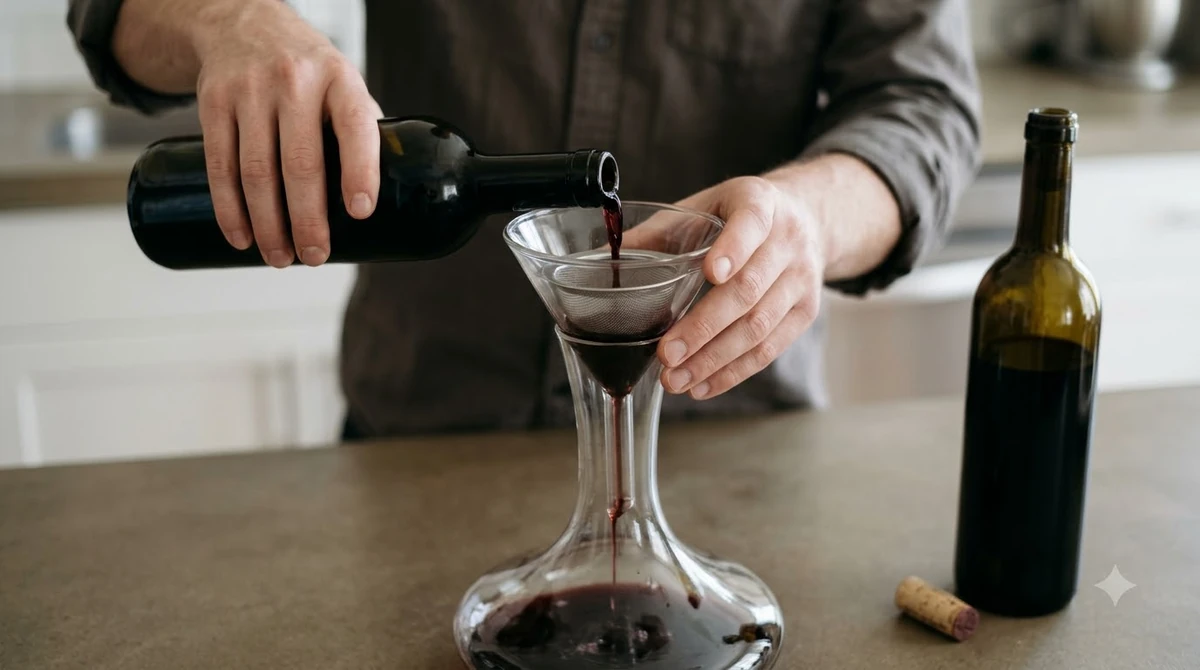
Glass requires more care than flexible silicone or molded plastic. Although borosilicate glass is a useful material for kitchen accessories, it is not unbreakable. Dropping the aerator onto a stone countertop, knocking it against a sink or storing it loosely beside heavy bar tools can cause damage.
This becomes particularly important when serving several guests. An accessory that is repeatedly removed, rinsed and reattached needs a safe resting place between uses. A dedicated stand, where included with the particular package, can help keep the piece upright and reduce unnecessary contact with other objects.
Cleaning is another consideration. Wine can leave residue in narrow passages and around the silicone connection. Red wine pigments are especially noticeable on clear accessories, and dried residue can become more difficult to remove if the aerator is left unwashed after use.
Advanced Mixology describes the product as dishwasher safe and mentions a drying rack. However, the availability of accessories and the exact package contents should not be assumed across every listing. Buyers should distinguish the advertised aerator itself from bundles or older packages that may include additional pieces.
Even when a dishwasher-safe claim is available, careful hand rinsing immediately after pouring is a sensible routine. It helps remove wine before it dries and allows the user to inspect the gasket and glass body. Follow the cleaning instructions supplied with the particular product rather than assuming every replacement component has identical dishwasher compatibility.
Bottle fit is another potential source of frustration. The silicone gasket is described as fitting most cork and screw-cap bottles, but that wording does not guarantee compatibility with every unusual bottle neck. Some bottles have unusual openings, damaged rims or neck shapes that can prevent a secure connection.
A loose fit is not simply an inconvenience. Wine can leak around the connection, making pouring untidy and creating an avoidable breakage risk if the user tries to correct the fit while the bottle is tilted. Always check that the gasket sits evenly before pouring.
The product’s appearance can also divide opinion. Its bulbous, transparent form is visually distinctive, but shoppers who prefer discreet, minimalist accessories may find it too unusual. It is more of a visible conversation piece than an invisible bottle attachment.
There is also a limitation inherent in the product category. An in-bottle aerator exposes wine to oxygen during pouring, but it does not provide the same controlled resting period as a decanter. A young, concentrated red wine may continue developing after it has been poured, and the aerator cannot guarantee that every aroma will emerge immediately.
Older bottles create another challenge. Some mature wines are delicate and can lose their most appealing aromas after excessive oxygen exposure. Others may contain sediment that requires careful decanting. The Soiree is primarily a serving aerator, not a specialist sediment separator.
Finally, product availability deserves attention. The manufacturer listing and individual retailers can display different inventory conditions and package details. A product page remaining online does not necessarily mean that the original model, replacement gasket or accessories are currently available from every seller.
Who Should Buy and Who Should Skip
The Soiree is best suited to wine drinkers who want convenient glass-by-glass aeration and appreciate a decorative glass accessory. It is less suitable for people who regularly decant mature bottles, need sediment filtration or prefer equipment that can tolerate rough everyday handling.
Who should consider buying it
Regular home entertainers are a natural audience. When guests arrive, attaching an aerator directly to the bottle makes serving straightforward. There is no need to prepare a separate decanter before the first glass, and the clear glass design can complement an organized serving area.
It is also appealing to people who enjoy trying different red wines. Cabernet Sauvignon, Syrah and young Merlot can show firm tannins that sometimes become more approachable with oxygen exposure. The ability to aerate one serving at a time makes experimentation easier without committing the entire bottle to a long decanting session.
Wine enthusiasts who drink a variety of styles may appreciate the advertised red, white and rosé compatibility. Not every white wine needs aeration, but some fuller-bodied examples can benefit from additional air contact. A structured Chardonnay, for instance, may respond differently from a delicate aromatic white.
The Soiree also makes sense for people who value the presentation of their wine equipment. Its hand-blown glass construction gives it a decorative quality that can complement decanters, quality stemware and other accessories. Those assembling a coordinated wine setup may also appreciate browsing the wine accessory brands category for complementary serving tools.
Who should skip it
People who frequently serve mature Bordeaux, older Burgundy or other sediment-prone wines may be better served by a traditional decanter. These wines can require careful handling and controlled separation from sediment. An in-bottle aerator is not designed to replace that process.
Likewise, anyone who wants an accessory that can withstand frequent drops or rough handling should consider a less fragile construction. Glass is visually appealing, but a sturdy plastic or metal alternative may be more practical for a busy household.
Buyers who prefer a simple bottle stopper and pourer rather than a distinctive glass attachment may also find the Soiree unnecessary. Aeration is useful for certain wines, but it is not a mandatory step for enjoying every bottle.
People with limited storage space should consider the shape before purchasing. Although the product is compact compared with a large decanter, its distinctive body still requires a protected storage location. It should not be squeezed into a drawer where heavy utensils can strike it.
Ultimately, the purchase makes the most sense when the user values convenience, presentation and control over individual pours. It is a specialized serving accessory rather than an essential piece of equipment for every wine drinker.
How It Compares to Alternatives
The Soiree occupies a middle ground between a conventional decanter and more specialized wine aeration systems. Its central advantage is that it aerates during pouring, while alternative designs may prioritize longer exposure, sediment filtration or controlled bottle dispensing.
A traditional decanter remains the most straightforward alternative for people who want to expose a larger quantity of wine to air. Pouring wine into a wide-bottomed vessel increases its contact with oxygen, and the wine can then rest before serving. Young, full-bodied reds such as Cabernet Sauvignon often benefit from approximately 30 to 60 minutes of decanting.
The main difference is timing. With the Soiree, aeration takes place as wine moves through the accessory. With a decanter, the wine can spend considerably longer in contact with air. Neither method guarantees the same result for every grape or vintage.
A decanter with aerator combines two functions by introducing oxygen during transfer into a separate serving vessel. This arrangement can be appealing when serving several guests at once because the wine can be aerated and presented in one container.
By comparison, the Soiree keeps the original bottle at the center of the serving process. That can be convenient for casual dinners, tasting different wines or serving small amounts without preparing an additional vessel.
Another alternative identified by The Standard is the Coravin Timeless Aerator. It is designed to work with the Coravin Timeless Wine Preservation System rather than functioning as a general-purpose bottle attachment. This makes it a more specialized option for users already invested in that preservation system.
The Standard also discusses the Georg Jensen Sky funnel and aerator. Its metal construction combines funneling and aeration, and it includes a detachable sediment filter. That makes it a different choice for people who want to transfer wine into a decanter while managing sediment.
| Serving option | Main advantage | Best application |
|---|---|---|
| Soiree glass aerator | Aerates during individual pours | Casual bottle service |
| Traditional decanter | Allows extended air contact | Young, concentrated reds |
| Decanter with aerator | Combines transfer and aeration | Serving several guests |
| Coravin Timeless Aerator | Works with a preservation system | Existing Coravin users |
| Georg Jensen Sky funnel and aerator | Funneling and sediment filtration | Decanting with sediment control |
The important distinction is that an aerator is not automatically better than a decanter. It is simply faster and more convenient for certain serving situations. A decanter provides more flexibility when wine needs time to open up, while the Soiree is designed around the immediate experience of pouring.
For everyday entertaining, the Soiree offers a straightforward approach. For a formal tasting involving several mature bottles, a traditional decanter and appropriate glassware provide greater control over the preparation and presentation process.
How to Use and Maintain the Soiree
Correct positioning and careful cleaning make a noticeable difference to the experience of using a glass wine aerator. The Soiree is designed to work during pouring, so a secure bottle connection and controlled tilt are more important than complicated preparation.
- Inspect the aerator. Before use, examine the glass body for visible damage and check that the silicone gasket is seated correctly. Do not use an aerator with a cracked or chipped glass section.
- Prepare the bottle. Open the wine bottle and remove any loose foil or packaging around the neck. Make sure the bottle opening is clean and free from fragments of cork.
- Position the gasket. Place the aerator securely into the bottle opening. The connection should feel stable rather than loose or uneven.
- Begin with a controlled pour. Tilt the bottle gradually over the glass. Avoid sudden movements, particularly during the first pour, while checking that wine passes through the aerator without escaping around the gasket.
- Adjust the pouring angle. Follow the product’s intended pouring method to control the degree of aeration. Use a gentler approach for delicate wines and experiment more with young, structured reds.
- Finish carefully. Return the bottle upright before removing or repositioning the accessory. This reduces the chance of residual wine dripping onto the table.
- Rinse after use. Clean away wine residue promptly, paying attention to the glass passages and gasket area.
- Dry and store safely. Allow the aerator to dry completely and store it in a protected location away from heavy bar equipment.
Tip: Try the Soiree with a young Cabernet Sauvignon before using it with a delicate older Pinot Noir. Compare the aroma and texture before and after aeration, and remember that a longer decant is sometimes more appropriate than an immediate in-pour treatment.
Cleaning should be treated as part of normal wine service rather than an occasional maintenance task. Residual wine can dry inside the aeration passages, making the next use less pleasant and potentially affecting the appearance of the clear glass.
Although Advanced Mixology describes the aerator as dishwasher safe, gentle cleaning is still a sensible choice for an accessory made from glass and silicone. Avoid striking the body against other dishes, and do not use abrasive cleaning tools that could scratch or damage its surface.
The gasket deserves separate attention. Inspect it periodically for stretching, deterioration or residue around its contact surfaces. A damaged gasket can compromise the fit and make the accessory more difficult to use safely.
Storage is equally important. A protected cabinet or dedicated wine-accessory shelf is preferable to a crowded kitchen drawer. If the package includes a drying stand, use it as intended and allow the accessory to dry fully before putting it away.
Wine selection also influences how useful the Soiree will be. Cabernet Sauvignon and Syrah have relatively substantial tannin structures, so they are reasonable wines for experimenting with aeration. Merlot generally has softer, medium tannins, while Pinot Noir tends to be more delicate and benefits from a lighter approach.
For white wine, avoid assuming that additional oxygen is always an improvement. A crisp Sauvignon Blanc is often appreciated for its freshness and acidity, while a fuller Chardonnay may offer more scope for experimenting with aeration. The goal is to improve the presentation of a particular wine, not to apply the same technique indiscriminately.
Serving temperature remains important, too. Light-bodied reds generally show well around 55 to 60 degrees Fahrenheit, while fuller-bodied reds are commonly served around 60 to 65 degrees. Full-bodied whites are generally served around 50 to 55 degrees, and light whites around 45 to 50 degrees. An aerator does not replace proper temperature management.
Finally, remember that aeration does not preserve an opened bottle. Still wines generally remain in good condition for approximately three to five days when properly resealed and refrigerated, although the actual result depends on the wine and storage conditions. The Soiree is a serving tool, not a wine-preservation device.
Frequently Asked Questions
Does aerating wine remove sulfur dioxide?
No, an ordinary wine aerator is not a sulfur dioxide removal device. Wine naturally contains sulfur dioxide compounds that help protect it against oxidation and unwanted microbial activity. Aeration changes oxygen exposure and aroma development, but it does not provide a reliable method of removing these compounds.
Can the Soiree aerator be used with sparkling wine?
It is not specifically presented as a sparkling-wine accessory. Carbon dioxide is responsible for the bubbles in sparkling wine, and unnecessary agitation or oxygen exposure can reduce the fresh, lively character that makes these wines appealing. A conventional sparkling-wine stopper and careful pouring are generally more appropriate.
Does aerating wine change its alcohol content?
Using an ordinary in-bottle aerator does not meaningfully change the alcohol content of a serving. Its purpose is to increase contact between wine and oxygen during pouring, affecting aroma and flavor perception rather than removing alcohol. The wine’s original alcoholic strength remains essentially unchanged.
Should wine be swirled after passing through an aerator?
Swirling remains a useful way to release additional aromatic compounds in the glass. A few gentle movements can help expose the wine to air across its surface, particularly when evaluating a young red. There is no requirement to swirl aggressively after using the Soiree.
Is aeration the same as wine aging?
No. Aeration is a relatively immediate process involving oxygen exposure during serving or decanting. Bottle aging is a much slower development involving chemical changes over months or years, influenced by the wine’s composition, closure and storage conditions. An aerator cannot reproduce the complexity developed through years of proper bottle aging.
The Soireehome wine aerator is an attractive option for people who value convenient, individual-glass serving and distinctive glass construction. Its silicone gasket and in-pour aeration design make it practical for everyday wine enjoyment, although careful handling and realistic expectations are important. Choose it for convenient serving and presentation, and keep a traditional decanter available for wines that need more time or careful sediment separation.
More in Wine Accessories
 Coravin Vs Vacu Vin: Choose the Right Wine Saver for Your BottlesUpdated Nov 21, 2026
 Zwilling Wine Stopper Review: Preserve Open Bottles LongerUpdated Nov 21, 2026
 Wine Enthusiast Wine Preserver Review: Features, Benefits and LimitationsUpdated Nov 21, 2026
 Wine Enthusiast Wine Stopper: An Easier Way to Reseal Open BottlesUpdated Nov 21, 2026
 Vintorio Wine Opener: Two-Step Cork RemovalUpdated Nov 21, 2026
 Zwilling Wine Aerator Review: Aerate, Pour, and Seal With One ToolUpdated Nov 21, 2026