

We may earn a commission when you buy through links on this page, at no extra cost to you. Learn more.
Is red wine or white wine healthier? Neither has a proven overall health advantage, although red wine contains more grape-derived polyphenols than white wine. Those plant compounds have attracted attention for their antioxidant properties, but their concentrations in wine are relatively low. Both wines contain ethanol, which carries health risks regardless of grape color, alcohol content, or winemaking method. The most important distinction is therefore between their chemical composition and the effects of consuming alcohol.
Red wine has traditionally enjoyed a reputation as the healthier choice, particularly because of its association with resveratrol and heart-health research. White wine, meanwhile, is sometimes considered a lighter alternative because of its color and generally different production process. These assumptions do not tell the complete story. Understanding grape skins, polyphenols, alcohol exposure, serving sizes, and the limitations of nutritional research provides a much clearer answer. It also explains why neither wine should be considered a health supplement or a necessary part of a balanced diet.
Red Wine and White Wine Have Different Chemical Compositions
Red wine generally contains more grape-derived polyphenols, while white wine contains smaller amounts of many of the same compounds. However, this difference in composition does not establish that red wine produces better overall health outcomes.
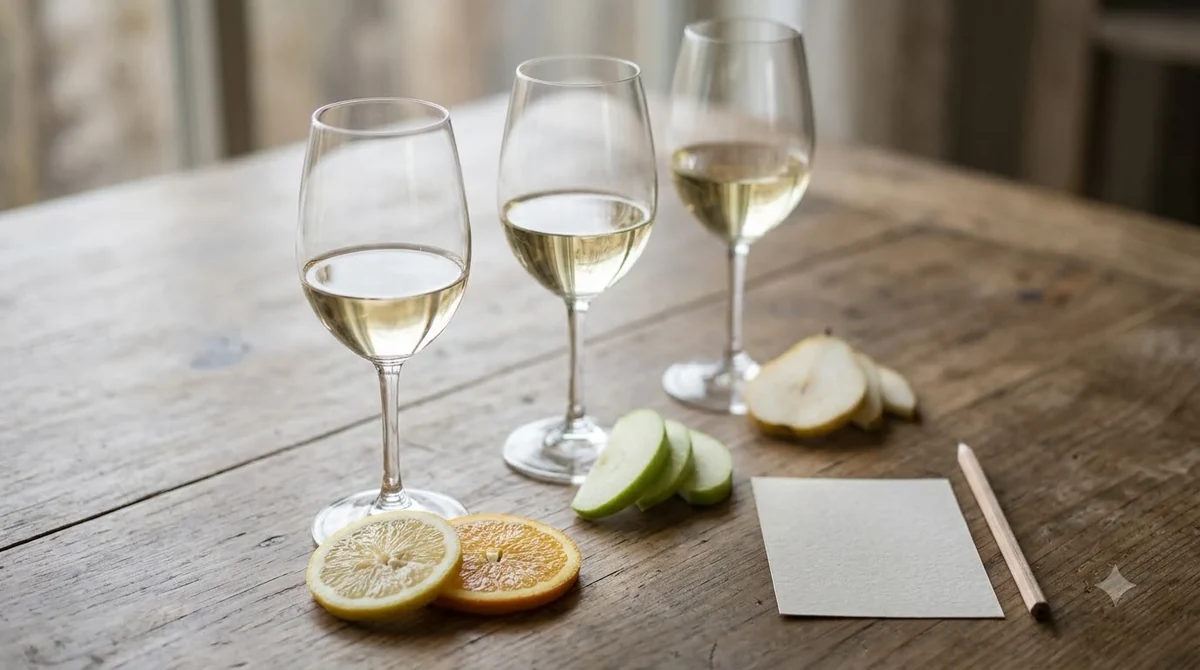
The biggest difference begins with the grapes and the fermentation process. Red wines are generally fermented with their skins, allowing pigments, tannins, and other plant compounds to enter the liquid. White wines are usually fermented after the juice has been separated from the skins. This shorter contact with grape solids explains much of the difference between the two categories.
Red grape skins contain anthocyanins, which provide much of the wine’s characteristic red and purple color. They also contain tannins and various phenolic compounds. Some of these compounds are associated with antioxidant activity in laboratory research. The grape seeds and stems can contribute additional phenolic material, depending on how the wine is produced.
White wines are not completely free of polyphenols. White grapes also contain phenolic compounds, and some enter the finished wine through pressing, fermentation, and aging. Chardonnay, Sauvignon Blanc, Riesling, and Pinot Grigio can all contain naturally occurring grape-derived compounds, although their concentrations and profiles differ.
Winemaking choices also influence the final composition. Skin contact, grape variety, growing conditions, pressing intensity, fermentation temperature, oak aging, and filtration can affect which compounds remain in a bottle. Consequently, two red wines can have noticeably different chemical profiles, just as two white wines can differ.
Color alone is therefore an incomplete way to judge nutritional composition. A deeply colored Cabernet Sauvignon and a lighter Pinot Noir do not necessarily contain identical concentrations of polyphenols. Likewise, a skin-contact white wine may have a different phenolic profile from a conventional white wine made with minimal skin contact.
The important distinction is that having more plant compounds does not automatically make a beverage healthier. The quantity of a compound, how the body absorbs it, the amount consumed, and the presence of other substances all matter when evaluating a potential health effect.
Red Wine Contains More Polyphenols, but That Is Not the Whole Story
Polyphenols help explain red wine’s health reputation, but the amount present in an ordinary glass is not enough to establish a meaningful health advantage. Resveratrol is one well-known example, although it represents only a small part of the broader group of compounds found in grapes.
Polyphenols are naturally occurring plant chemicals found in fruits, vegetables, tea, cocoa, and many other foods. They include several families of compounds, such as flavonoids, anthocyanins, and phenolic acids. Researchers investigate these substances because some demonstrate antioxidant and anti-inflammatory activity in laboratory settings.
Red wine receives particular attention because fermentation with grape skins extracts more of these compounds than conventional white winemaking. The resulting wine can contain anthocyanins, catechins, quercetin, tannins, and resveratrol. Their concentrations vary according to grape variety, growing conditions, fermentation practices, and aging.
Understanding resveratrol
Resveratrol is a naturally occurring compound found in the skins of certain grapes. It has attracted scientific interest because laboratory and animal studies have investigated its possible relationships with inflammation, cellular stress, and cardiovascular function.
However, results from laboratory experiments do not automatically translate into benefits from drinking wine. Research frequently uses concentrations that are difficult to obtain through ordinary dietary consumption. The body also absorbs and processes resveratrol differently from the way experimental systems handle it.
This distinction is important. A substance can demonstrate interesting biological activity without the food or beverage containing it producing the same effect in humans. The presence of resveratrol on a wine’s chemical profile is not proof that drinking that wine prevents cardiovascular disease.
Why more antioxidants do not necessarily mean better health
Harvard T.H. Chan School of Public Health addresses this distinction directly. Its discussion of red versus white wine explains that although red wine contains more polyphenols, the concentrations are not sufficient to establish a health advantage without consuming more wine than would be considered moderate.
There are also many ways to obtain polyphenols without consuming ethanol. Blueberries, blackberries, grapes, green tea, black tea, and dark chocolate contain different combinations of these plant compounds. These foods provide an alternative way to include plant-derived substances in the diet without making alcoholic beverages part of that intake.
Another important point is that antioxidant activity is not a single measure of overall health. A beverage could contain more antioxidant compounds while also containing a substance associated with increased disease risk. Evaluating only one chemical category can therefore produce a misleading impression of the beverage as a whole.
For these reasons, red wine’s greater polyphenol content is a genuine compositional difference, not proof that it is the healthier alcoholic beverage.
Alcohol Is the Main Health Concern in Both Wines
Red and white wine share the same central health concern: ethanol. The alcohol molecule does not become harmless because it comes from dark grapes, contains resveratrol, or has been aged in oak barrels.
When alcohol enters the body, it is metabolized through several processes. One important product of this metabolism is acetaldehyde, a toxic substance that can damage DNA and proteins. The National Cancer Institute identifies acetaldehyde formation as one of the mechanisms through which alcohol contributes to cancer development.
Alcohol consumption is associated with several types of cancer. The Centers for Disease Control and Prevention identifies cancers affecting the mouth, throat, voice box, esophagus, colon, rectum, liver, and breast among the cancers associated with drinking alcoholic beverages.
This relationship applies to all major alcoholic beverage categories. A glass of Merlot, Pinot Noir, Chardonnay, or Sauvignon Blanc contains ethanol. Changing the grape variety does not remove the underlying exposure.
Alcohol may contribute to cancer through several biological pathways. In addition to acetaldehyde formation, research has investigated oxidative damage, changes in hormone levels, and effects on the body’s ability to absorb and process certain nutrients.
The National Cancer Institute also explains that alcohol consumption can increase estrogen levels. This is relevant because estrogen plays a role in breast cancer development. Alcohol can also make tissues in the mouth and throat more receptive to certain carcinogenic substances, including chemicals associated with tobacco smoke.
These mechanisms help explain why alcohol-related risks cannot be evaluated simply by comparing the antioxidant content of red and white wine.
Does moderate consumption eliminate the risk?
No. Drinking smaller quantities generally means less alcohol exposure than drinking larger quantities, but moderation does not establish a zero-risk threshold. The World Health Organization has explained that available evidence does not identify a level of alcohol consumption below which cancer risk disappears.
Some research has suggested that light or moderate alcohol consumption may be associated with certain cardiovascular outcomes. However, these findings do not establish that alcohol provides a net health benefit for an individual. The WHO has specifically noted that possible cardiovascular benefits have not been shown to eliminate the cancer risks associated with drinking.
The CDC similarly identifies drinking less alcohol or not drinking as ways to reduce alcohol-related cancer risk. Its guidance applies equally to red wine and white wine.
For additional detail, the CDC’s explanation of alcohol and cancer describes the affected cancer types and the biological mechanisms involved. It makes clear that wine color does not change the basic relationship between alcohol consumption and cancer risk.
Heart Health Research Does Not Prove Red Wine Is Better
Red wine’s reputation for cardiovascular benefits comes largely from research involving polyphenols, observational studies, and investigations into how alcohol consumption relates to certain heart-health measurements. These findings are interesting, but they do not demonstrate that drinking red wine is a reliable way to improve cardiovascular health.
Some observational studies have identified associations between light drinking and particular cardiovascular outcomes. However, an association does not necessarily mean that alcohol caused the observed difference. People who drink wine may also differ from people who do not drink in their diet, exercise habits, income, healthcare access, and other lifestyle characteristics.
These differences can make research difficult to interpret. For example, if a group of wine drinkers has better average cardiovascular measurements than another group, researchers must determine whether the difference relates to wine itself or to other characteristics of the participants.
There is also a methodological issue involving comparison groups. Some older studies classified former drinkers together with lifelong abstainers. Former drinkers may have stopped consuming alcohol because of health problems, potentially making the abstaining group appear less healthy than it would otherwise be.
What researchers investigate in red wine
Researchers have examined whether red wine polyphenols influence blood vessel function, inflammation, and other cardiovascular markers. Compounds such as resveratrol, catechins, and quercetin have been studied individually and in combinations.
Some investigations have also examined dealcoholized red wine. This research is particularly interesting because it helps separate the possible effects of grape-derived compounds from those of ethanol. However, short-term changes in a cardiovascular measurement do not establish long-term reductions in heart attacks, strokes, or cardiovascular deaths.
It is also important to distinguish between laboratory outcomes and actual clinical outcomes. A change in a biomarker may suggest a biological effect, but it does not necessarily mean that the beverage improves a person’s long-term health.
Harvard T.H. Chan School of Public Health has emphasized that red wine’s higher polyphenol concentration does not provide a demonstrated health advantage over white wine. Its discussion also identifies alternative sources of these compounds, including blueberries, tea, and dark chocolate.
White wine has been studied in cardiovascular research as well, but direct comparisons between red and white wine are limited. Differences between studies, populations, drinking patterns, and wine compositions make it difficult to establish a clear winner.
The most defensible interpretation is that some grape-derived compounds have scientific interest, but the available evidence does not justify treating red wine as a heart-health product or assuming that white wine is inferior for every cardiovascular outcome.
Alcohol Content and Serving Size Matter More Than Wine Color
The amount of ethanol in a glass depends on its volume and alcohol by volume, commonly abbreviated as ABV. A standard 5-ounce serving of wine at approximately 12% ABV contains about 14 grams of pure alcohol, making it equivalent to one US standard drink.
This comparison is more useful than judging a wine by its color or apparent lightness. A pale white wine can contain as much alcohol as a red wine, while a lower-alcohol red wine may contain less ethanol than a stronger white wine.
For example, a Sauvignon Blanc at 13.5% ABV contains more alcohol in an equal-sized pour than a Pinot Noir at 11% ABV. The reverse can also happen. Grape variety and color do not determine the finished wine’s alcohol concentration by themselves.
The following table shows approximate ethanol quantities in equal 5-ounce servings. The calculations use the density of pure ethanol and are rounded for practical comparison.
| Wine ABV | Pour size | Approximate pure alcohol | US standard drinks |
|---|---|---|---|
| 10% | 5 oz | 11.7 g | 0.84 |
| 11% | 5 oz | 12.9 g | 0.92 |
| 12% | 5 oz | 14.0 g | 1.00 |
| 13% | 5 oz | 15.2 g | 1.09 |
| 14% | 5 oz | 16.4 g | 1.17 |
| 15% | 5 oz | 17.6 g | 1.26 |
These numbers illustrate why serving size matters. A restaurant pour can be larger than 5 ounces, and a generous home pour can contain substantially more alcohol than a standard serving. A 750-milliliter bottle contains approximately five standard 5-ounce pours, although the actual number of servings depends on how the wine is poured.
For readers interested in wine quantities for larger gatherings, understanding bottle formats can also help. The guide to how many glasses in a magnum explains how bottle volume translates into individual servings.
How to compare two bottles
Start with the ABV printed on each bottle and compare equal serving volumes. If one wine contains 11% alcohol and another contains 14%, the second wine supplies more ethanol in the same-sized pour.
Consider a 5-ounce serving of each wine. The 11% example contains approximately 12.9 grams of pure alcohol, while the 14% example contains approximately 16.4 grams. That is a difference of roughly 3.5 grams in otherwise identical pours.
Sweetness, acidity, body, and color do not provide reliable substitutes for this calculation. A crisp Riesling can have a relatively low ABV, while another Riesling may have considerably more alcohol. Similarly, a light-bodied red does not necessarily have less ethanol than a full-bodied white.
Tip: Compare wines by their ABV and actual pour size rather than their color, sweetness, or body. A 5-ounce glass at 14% ABV contains more ethanol than an equal pour at 11% ABV, regardless of whether either wine is red or white.
Grape-Derived Compounds Are Available Without Alcohol
People interested in the polyphenols associated with red wine can find many of the same broad categories of plant compounds in ordinary foods and nonalcoholic beverages. This is an important distinction because grape-derived compounds and ethanol are separate components of wine.
Blueberries, blackberries, red grapes, and other deeply colored fruits contain various polyphenols. Tea provides additional plant compounds, while cocoa and dark chocolate contain flavanols. The specific compounds and quantities differ, so these foods should not be considered chemically identical to red wine.
Nevertheless, they demonstrate that wine is not the only dietary source of substances that researchers investigate for antioxidant activity. The presence of these compounds in grapes does not require fermentation into an alcoholic beverage.
Whole grapes and grape juice
Whole red and purple grapes contain naturally occurring phenolic compounds, particularly in their skins. Eating the fruit also provides water and dietary fiber, which are not present in the same quantities in a typical glass of wine.
Grape juice can retain some grape-derived polyphenols, although its composition depends on the grape variety, processing, filtration, and production method. It can therefore provide some compounds associated with grapes without the ethanol found in conventional wine.
Juice and whole fruit are not interchangeable from a nutritional perspective. Juice generally contains less fiber than intact fruit, and its sugar concentration can be relatively high. These differences are separate from the question of whether wine’s alcohol content produces health risks.
Nonalcoholic wine
Nonalcoholic wine is another category worth understanding. These products are generally made through winemaking followed by processes designed to remove most of the alcohol. Some retain grape-derived aromatic and phenolic compounds, although the final composition varies by producer and processing method.
Dealcoholization can involve vacuum distillation or membrane-based separation. These processes aim to reduce ethanol while retaining as much of the wine’s other character as possible. However, removing alcohol can also change aroma, body, and flavor, which explains why nonalcoholic wine may taste different from its conventional counterpart.
Products labeled nonalcoholic do not all have identical alcohol specifications. In the United States, labeling categories and applicable regulatory requirements matter, so the term should not automatically be interpreted as a guarantee of absolutely zero ethanol.
For wine enthusiasts interested in the grape flavors and winemaking experience without conventional alcoholic strength, this category offers a distinct alternative. It also illustrates why the possible properties of grape compounds should be considered separately from the effects of drinking ethanol.
Frequently Asked Questions
The key distinction is between grape composition and alcohol exposure. A 5-ounce serving is the standard US wine-drink reference, and approximately 14 grams of ethanol represents one standard alcoholic drink. The answers below address additional details that help clarify common comparisons.
Does red wine contain more resveratrol than white wine?
Generally, yes, because red winemaking usually involves fermentation with grape skins, where much of the grapes’ resveratrol is concentrated. However, levels vary considerably by grape variety and production method. Some skin-contact white wines can have different phenolic profiles from conventional white wines.
Does organic wine have fewer alcohol-related health risks?
Organic certification primarily concerns agricultural and production standards rather than the removal of ethanol. An organically produced Cabernet Sauvignon still contains alcohol, as does an organically produced Chardonnay. Organic status does not establish that a wine has lower alcohol-related cancer risks.
Does decanting wine reduce its alcohol content?
Ordinary decanting does not meaningfully remove ethanol from wine. Pouring wine into a decanter allows it to interact with oxygen and can help separate sediment, but it is not a dealcoholization process. Removing alcohol requires specialized production techniques rather than simply exposing wine to air.
Can red wine cause headaches even when consumed in small amounts?
Yes. Some individuals report headaches after drinking red wine, and possible contributing factors include individual sensitivity to wine constituents and alcohol itself. Harvard’s discussion specifically identifies tannins and sulfites as substances that may contribute to headache or allergy-like symptoms in sensitive people.
Does wine made from older grapevines contain more beneficial compounds?
Vine age alone does not establish the polyphenol concentration or health properties of a finished wine. Grape variety, vineyard conditions, growing season, fruit maturity, extraction, and fermentation practices all influence the wine’s chemical composition. The phrase old vines is therefore not a scientifically established measure of nutritional superiority.
Red wine has a higher concentration of certain grape-derived polyphenols, but that difference does not establish that it is healthier than white wine. Both contain ethanol, and neither should be treated as a source of necessary health benefits. Understanding alcohol content, serving size, and the distinction between plant compounds and ethanol provides a more accurate basis for comparing the two styles.
For more practical explanations of grape varieties, wine terminology, bottle sizes, and serving basics, explore the site’s Wine Q&A and wine basics resources.
More in Wine Basics
 Which Rose Is Best for Your Taste, Budget, and Food PairingsUpdated Nov 21, 2026
 Is Cheap Wine Bad? How to Find Bottles Worth DrinkingUpdated Nov 21, 2026
 What To Write On A Wine Gift Tag: Thoughtful Messages For Every OccasionUpdated Nov 21, 2026
 Which Wine Is Best For Weight Loss? Compare Lower-Calorie ChoicesUpdated Nov 21, 2026
 What Is The Best Wine For Mimosas? Choose Bubbly That Balances Orange JuiceUpdated Nov 20, 2026
 Which Prosecco Is Best for Your Taste and OccasionUpdated Nov 20, 2026