

We may earn a commission when you buy through links on this page, at no extra cost to you. Learn more.
Which wine is best for weight loss? No wine directly supports weight loss, but a smaller serving of lower-alcohol, dry wine is generally a more calorie-conscious choice if you choose to drink. Dry Sauvignon Blanc, Pinot Grigio, and sparkling Brut are useful styles to compare because they are commonly available in relatively dry expressions. However, alcohol itself supplies calories, so the amount poured, alcohol percentage, and drinking frequency matter more than whether the wine is red, white, or rosé.
Choosing wine while managing calorie intake requires looking beyond sweetness and color. A dry red wine is not automatically lighter than a sweet white, and a bottle labeled low sugar does not necessarily contain fewer calories. Understanding alcohol content, serving size, residual sugar, and drinking habits makes it easier to compare wines realistically. This guide explains the differences and shows how to make more informed choices without treating wine as a weight-loss product.
Who This Wine Guide Is For
This guide is for adults who already drink wine and want to understand how different wine styles contribute to their overall calorie intake. It is particularly useful for comparing dry whites, lighter reds, sparkling wines, and lower-alcohol alternatives without relying on misleading marketing descriptions.
Someone tracking daily food intake may find that wine contributes more calories than expected. A typical 5-ounce glass of wine can contain approximately 100 calories according to MedlinePlus, while the NHS reports that a 175 ml glass of 12% wine can contain up to 158 calories. These estimates differ because serving sizes and wine characteristics vary.
The distinction matters because a glass poured at home is not necessarily a standard serving. A generous restaurant pour may contain substantially more wine than a measured glass, and having a second glass doubles the amount consumed. Understanding those differences is more useful than simply choosing a bottle with a particular color or grape variety.
This information is also relevant to people comparing wine with other alcoholic drinks. A cocktail containing fruit juice, syrup, and liqueur can have considerably more calories than a straightforward glass of wine. However, switching from wine to another alcoholic beverage does not automatically create a calorie advantage.
There is an important limitation: wine should not be considered a weight-loss aid. Alcohol provides energy but relatively few nutrients, and drinking can make it easier to consume additional food without planning to do so. The National Institute on Alcohol Abuse and Alcoholism explains these calorie considerations through its alcohol calorie calculator.
People who do not drink should not start drinking for supposed weight-management benefits. People who prefer to avoid alcohol can choose sparkling water, unsweetened iced tea, or another nonalcoholic beverage instead.
Key Factors to Compare When Choosing Wine
The most useful comparisons involve alcohol by volume (ABV), serving size, residual sugar, and total calories. These four factors explain why two wines with similar appearances can contribute different amounts of energy.
| Factor | What to Compare | Why It Matters |
|---|---|---|
| Alcohol content | ABV percentage | Alcohol supplies approximately 7 calories per gram. |
| Serving size | 5 oz versus 8 oz | A larger pour increases total calories. |
| Residual sugar | Dry versus sweet | Remaining sugar contributes additional calories. |
| Wine style | Still versus sparkling | Production style and sweetness affect the final composition. |
| Drinking frequency | Occasional versus frequent | Repeated servings increase cumulative calorie intake. |
| Additional ingredients | Plain wine versus cocktails | Syrups, juices, and liqueurs can add energy. |
1. Alcohol by volume
ABV is one of the most useful indicators when comparing wines. It expresses the percentage of a beverage’s volume that consists of alcohol. Since alcohol provides approximately 7 calories per gram, wines with higher alcohol content generally contain more calories from alcohol when comparing equivalent serving sizes.
For example, a 5-ounce pour of a 12% ABV wine contains less alcohol than the same pour of a 15% ABV wine. The difference may seem small when comparing individual glasses, but it becomes more relevant when multiple servings are involved.
This is why a lighter-style wine with moderate alcohol content can be a sensible option to compare. However, ABV alone cannot provide an exact calorie count because residual sugar and other components also contribute.
2. Residual sugar
Residual sugar is the natural grape sugar remaining after fermentation. A wine described as dry generally has relatively little residual sugar, while sweeter wines retain more. The amount varies by wine, so sweetness descriptions are helpful starting points rather than complete nutritional measurements.
Dry wines can be useful choices for people comparing sugar content, but dry does not mean calorie-free. A dry Cabernet Sauvignon with high alcohol content can contribute more calories than a lower-alcohol wine with slightly more residual sugar.
For a better understanding of sweetness terminology, see this explanation of which wine is sweet and how sweetness differs between wine styles.
3. Serving size
Portion size is often easier to control than the exact composition of a bottle. A standard wine serving in the United States is 5 fluid ounces, approximately 150 ml. MedlinePlus uses this measurement when explaining standard wine portions.
An 8-ounce pour contains 60% more wine than a 5-ounce pour. Even if the bottle is relatively low in alcohol and sugar, a larger serving increases the total amount consumed.
4. Total calories rather than one label claim
Some bottles emphasize low sugar, low carbohydrates, or lighter alcohol. These descriptions can be helpful, but they are not interchangeable. A wine with fewer carbohydrates may still contain substantial calories from alcohol.
The best comparison is between equivalent serving sizes using reliable nutritional information. If exact calorie information is unavailable, ABV and sweetness can provide useful clues, but neither should be treated as an exact substitute for a nutritional measurement.
Step-by-Step: How to Choose a More Calorie-Conscious Wine
A practical selection process starts with the amount of alcohol consumed rather than the grape variety. These steps help compare bottles and make serving sizes easier to manage.
-
Decide whether drinking is necessary.
If reducing calorie intake is the priority, choosing a nonalcoholic beverage avoids the calories supplied by alcohol. There is no nutritional requirement to include wine in a weight-management plan.
-
Compare the ABV percentages.
Look for wines with relatively moderate alcohol content rather than automatically selecting the strongest bottle. For example, compare a 11.5% ABV white wine with a 14.5% ABV red wine using the same 5-ounce serving size.
-
Identify the sweetness level.
Choose a dry style if lower residual sugar is one of the selection criteria. Brut sparkling wines, dry Sauvignon Blanc, and dry Pinot Grigio are examples worth comparing. Remember that dry wines still contain alcohol calories.
-
Check the serving measurement.
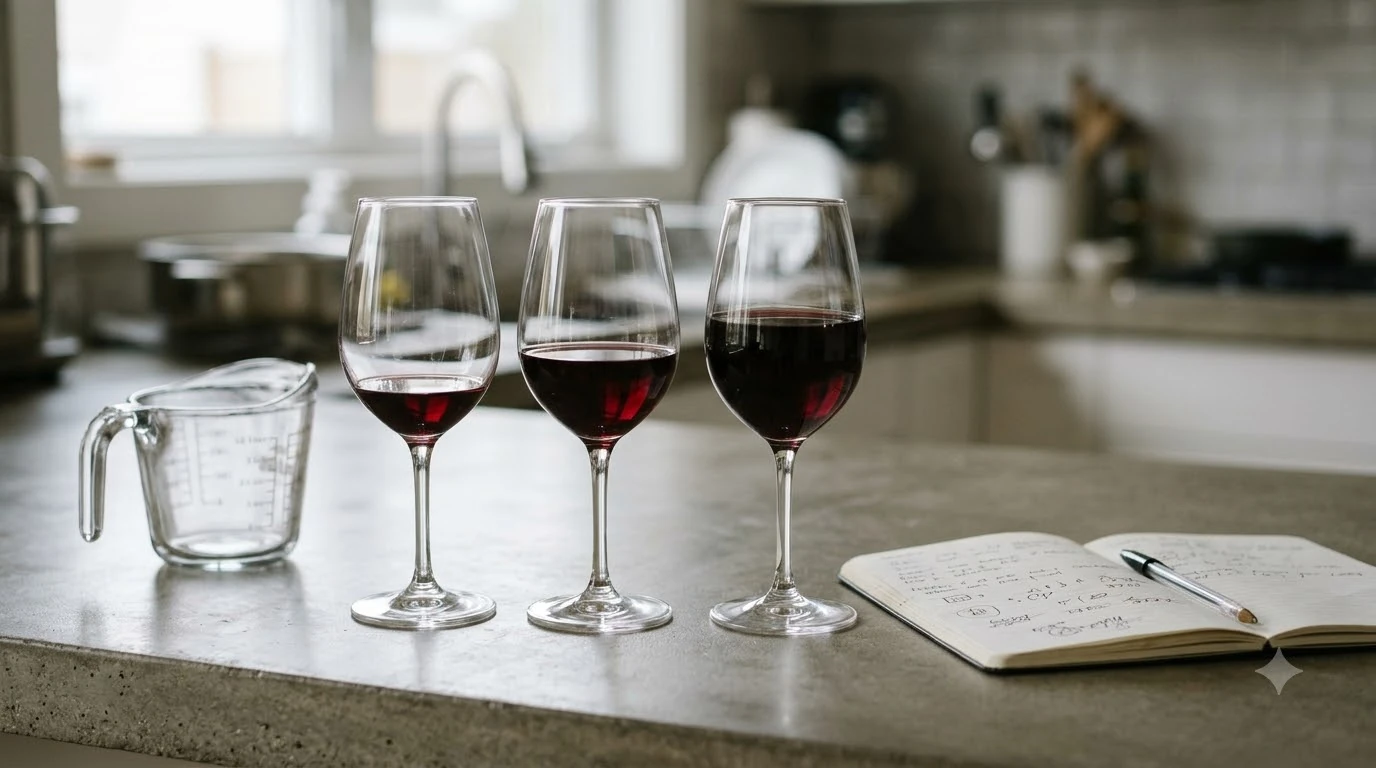
Use a measuring cup or marked wine glass to understand what 5 ounces looks like. Avoid estimating a serving from the height of the liquid in a large glass, since glass shapes vary considerably.
-
Compare the nutritional information.
Use manufacturer-provided nutrition information when available. The NIAAA alcohol calorie calculator also provides separate categories for red, white, sweet, and sparkling wines, helping users organize their comparisons.
-
Consider the occasion.
Think about whether a full bottle is necessary for a meal or gathering. A smaller amount or a nonalcoholic alternative can reduce the total calories associated with the occasion.
-
Account for the food served alongside wine.
Consider snacks, restaurant meals, cheese boards, and desserts as part of the overall occasion. Alcohol can influence food choices, so planning food before drinking may help prevent unplanned eating.
-
Review the overall pattern.
Look at the frequency of drinking rather than judging a single glass in isolation. A repeated weekly habit can contribute more total calories than an occasional serving, even when the selected wine is relatively dry.
Tip: Compare two wines using the same 5-ounce serving size before deciding which is lighter. A 12% ABV dry white and a 15% ABV dry red are not nutritionally equivalent simply because both are labeled dry.
For additional terminology, the guide to which wine is dry explains how dry wine differs from sweet wine and why the distinction matters when comparing bottles.
Types and Styles of Wine Explained
Dry white wines, sparkling Brut, and lighter-bodied reds are useful starting points for comparison, but no grape variety guarantees a specific calorie count. The actual ABV, residual sugar, and portion size determine how much energy a serving contributes.

Dry Sauvignon Blanc
Sauvignon Blanc is commonly produced as a crisp, dry white wine with refreshing acidity. Examples from Marlborough in New Zealand and the Loire Valley in France are popular choices for people who prefer citrus, green fruit, and herbal flavors.
A relatively moderate-ABV bottle may offer a useful alternative to a stronger wine. However, Sauvignon Blanc is not inherently lower in calories than every Chardonnay or Pinot Grigio. Comparing the alcohol percentage and serving size remains important.
Its fresh acidity also makes it a versatile food wine. Seafood, vegetable dishes, and salads are common pairing options, making it relatively easy to incorporate into a meal without relying on sweet mixers or elaborate cocktails.
Dry Pinot Grigio
Pinot Grigio is another common option for people who enjoy lighter white wines. Italian examples often emphasize citrus, pear, and refreshing acidity, while other regions may produce richer interpretations.
Dry Pinot Grigio can be useful when comparing lower-sugar white wines. However, its calorie content still depends on alcohol concentration and the amount poured. A high-ABV Pinot Grigio should not automatically be considered lighter than a moderate-ABV Chardonnay.
For shoppers who prefer straightforward flavors, this style can be a practical everyday comparison. Look at the ABV and available nutritional information rather than choosing solely because the wine tastes light.
Dry sparkling Brut
Brut sparkling wine is another category worth considering. Brut is a dryness designation used for sparkling wine, and it generally indicates a relatively low level of residual sugar compared with sweeter sparkling categories.
Champagne, Cava, and sparkling wines from other regions can be produced in Brut styles. Their calorie contributions vary according to alcohol content, dosage, and serving size.
One common misunderstanding is that bubbles reduce calories. Carbonation does not remove alcohol or make a serving calorie-free. A 5-ounce serving of sparkling wine still needs to be counted as an alcoholic beverage.
Dry rosé
Dry rosé can offer a middle ground for people who enjoy fruit-forward wine without wanting a noticeably sweet finish. Provence rosé, for example, is often associated with pale color, fresh acidity, and dry flavor profiles.
Rosé is not automatically lower in calories than red or white wine. A bottle with higher ABV can contain more alcohol-derived calories than a lighter white wine, even when both taste equally dry.
When comparing rosé, prioritize the same criteria used for other wines: alcohol percentage, residual sugar, nutritional information, and serving size.
Pinot Noir and other lighter reds
Pinot Noir is a useful red-wine comparison because it generally has lower-to-medium tannin and relatively high acidity. Bottles from Oregon, Burgundy, and California can have quite different alcohol levels and flavor profiles.
Its lighter body may make Pinot Noir seem like a lower-calorie alternative to Cabernet Sauvignon, but body and calorie content are different measurements. A concentrated Pinot Noir with high ABV may contain more calories than a lower-alcohol red blend.
Merlot is another option for people who prefer softer tannins. Neither grape should be selected on the assumption that its variety guarantees a particular calorie count.
Sweet wines and dessert wines
Moscato, late-harvest Riesling, Sauternes, and other sweet wines can retain more residual sugar than dry table wines. This can add calories beyond those contributed by alcohol.
However, serving size is especially important in this category. Sweet dessert wines are often served in smaller portions than standard table wines, so comparing a 2-ounce dessert-wine serving with a 5-ounce dry-wine serving without adjusting the measurements can produce a misleading conclusion.
For people prioritizing lower residual sugar, a dry wine is generally a more appropriate starting point than a dessert wine. That does not eliminate the calories from alcohol itself.
Common Mistakes When Choosing Wine for Weight Management
Many wine-selection mistakes happen because shoppers focus on a single characteristic instead of the entire serving. Understanding these misconceptions helps prevent inaccurate comparisons.
Assuming red wine is always lighter
Red wine is sometimes described as a better choice than white wine for weight management. However, color does not determine calorie content. A Cabernet Sauvignon with 14.5% ABV may contribute more alcohol-derived calories than a 12% ABV dry white wine served in the same quantity.
Red wine contains tannins and other compounds that influence its structure and taste, but those characteristics do not make the beverage a weight-loss product. Compare the actual alcohol concentration rather than relying on general claims about red wine.
Believing dry means calorie-free
Dry wine generally contains less residual sugar than sweet wine, but it still contains alcohol. Since alcohol contributes approximately 7 calories per gram, a dry wine with high ABV can still be relatively calorie-dense.
Dryness describes sweetness, not the total energy content. This is why a dry sparkling wine, a dry white, and a dry red should still be compared using their alcohol levels and serving sizes.
Ignoring oversized pours
A large wine glass can make a standard serving look surprisingly small. A restaurant pour of 8 ounces is substantially larger than the standard 5-ounce serving used in common US nutrition comparisons.
Two large glasses can represent considerably more than two standard servings. This is particularly relevant at social events where glasses are frequently topped off before the original serving has been finished.
Choosing wine based on carbohydrate claims alone
Low-carbohydrate wine is not necessarily low-calorie wine. Carbohydrates and alcohol contribute energy differently, and alcohol remains a major source of calories in wine.
A bottle advertising minimal sugar may still contain a substantial amount of alcohol. The distinction between carbohydrates and total calories is important when comparing products with different marketing claims.
Assuming low-alcohol wine is always low in calories
Lower-alcohol wine can be useful because it generally contains fewer calories from alcohol when serving size and other characteristics are comparable. However, the fermentation process and production style influence the final sugar content.
Some reduced-alcohol wines retain more residual sugar, which can offset part of the calorie difference. Comparing actual nutrition information is more reliable than assuming every low-alcohol bottle has the same composition.
Forgetting food and cocktail ingredients
Wine is sometimes consumed alongside cheese, crackers, restaurant appetizers, and desserts. The overall calorie intake from an occasion includes those foods, not just the beverage.
Wine-based cocktails can introduce additional ingredients such as fruit juice, syrup, and sweet liqueurs. A straightforward glass of dry wine and a sweet wine cocktail are not interchangeable calorie comparisons.
Practical Drinking, Tracking, and Storage Tips
Managing wine consumption is easier when portions and drinking frequency are considered together. A consistent approach to measuring servings, tracking intake, and choosing alternatives provides a clearer picture than switching between grape varieties.
Measure servings instead of estimating
A 5-ounce pour is a useful reference point for comparing wine calories. At home, measuring the first serving can help establish what that amount looks like in a particular glass.
Large balloon glasses and wide-bowled red-wine glasses can hold substantially more than 5 ounces without appearing full. A measured serving avoids the assumption that one glass always equals one standard drink.
Track the actual beverage
Record the wine style, approximate ABV, serving size, and number of servings if tracking beverage calories. These details make comparisons more meaningful than simply entering one generic glass of wine into a food diary.
The NIAAA calorie calculator offers a way to estimate weekly calories across several beverage categories. It can help illustrate how drinking frequency affects the total, although individual bottles may differ from the calculator’s averages.
For example, someone drinking two 5-ounce servings on three evenings each week consumes six standard servings. Someone drinking one serving on a single evening consumes only one. The difference in total alcohol exposure and calorie intake is substantial, regardless of which wine varieties are selected.
Plan food before drinking
Drinking without eating can make it easier to become intoxicated quickly and may affect subsequent food decisions. MedlinePlus recommends eating before drinking and preparing snacks in advance.
For a planned meal, consider ordinary foods such as vegetables, lean protein, whole grains, and fruit. This approach keeps the meal itself separate from the assumption that wine will provide meaningful nutritional value.
Alternate with nonalcoholic beverages
Water and sparkling water provide alternatives between alcoholic servings. They also make it easier to extend a social occasion without continuously adding alcohol calories.
The NHS specifically mentions adding soda water to white wine as one way to make the same amount of wine last longer. This does not remove the alcohol already present, but it changes the volume of the drink without adding another full serving of wine.
Understand wine storage
Storage conditions do not change the calorie content of wine in any meaningful way. Nevertheless, proper storage helps preserve the quality of a bottle and prevents unnecessary waste.
Unopened bottles are generally best stored away from direct sunlight and major temperature fluctuations. A cool environment around 55°F is a commonly recommended target for longer-term storage, with bottles containing natural cork traditionally stored on their sides.
Once opened, still wines are generally best consumed within approximately 3 to 5 days when refrigerated and properly resealed. Sparkling wines usually retain their quality for a shorter period, often around 1 to 3 days with an appropriate sparkling-wine stopper.
These storage recommendations are about wine quality, not weight management. Keeping an opened bottle fresh does not make additional servings a calorie-conscious choice.
Recognize when avoiding alcohol is the better option
Reducing or eliminating alcoholic beverages is a straightforward way to remove alcohol-derived calories from drinking occasions. For people who are finding weight management difficult, examining how frequently they drink can be more useful than searching for a supposedly ideal grape variety.
Alcohol also carries health risks beyond calorie intake. Some people should avoid it entirely, including people who are pregnant, those taking medications that interact with alcohol, and people with certain medical conditions. Anyone concerned about their drinking habits can discuss appropriate support with a qualified healthcare professional.
Frequently Asked Questions
Does red wine have more antioxidants than white wine?
Red wine generally contains more skin-derived polyphenols because red-wine production commonly involves extended contact with grape skins. Resveratrol is one compound found in grape skins, although concentrations vary considerably. These compounds do not make alcoholic wine a weight-loss treatment or cancel out alcohol calories.
Does wine contain gluten?
Traditional wine made from fermented grapes is generally naturally gluten-free. However, flavored wine beverages and certain products with added ingredients may require additional scrutiny. People with celiac disease or gluten sensitivity should evaluate the specific product and manufacturer information.
Can wine affect sleep quality?
Alcohol can make someone feel sleepy initially, but it can disrupt normal sleep patterns later in the night. Its effects can include changes in sleep architecture and more frequent nighttime awakenings. A wine’s dryness, color, or grape variety does not eliminate these effects.
Is nonalcoholic wine completely free of calories?
No. Nonalcoholic wine can still contain calories from residual grape sugar and other carbohydrates. Products labeled dealcoholized may retain small amounts of alcohol, so the alcohol percentage and nutritional information provide useful details when comparing bottles.
Does freezing wine remove its calories?
No. Freezing wine does not eliminate its alcohol or meaningful amounts of its energy content. The liquid may separate or change texture as it freezes and thaws, but the underlying nutritional composition remains broadly comparable.
The most useful answer to which wine is best for weight loss is that no alcoholic wine produces weight loss, although lower-ABV, dry wines in measured servings can be more calorie-conscious choices than stronger or sweeter alternatives. Dry Sauvignon Blanc, Pinot Grigio, Brut sparkling wine, and dry rosé are sensible styles to compare, but reducing drinking frequency or choosing nonalcoholic beverages has a clearer impact on calories from alcohol. Focus on the entire drinking pattern rather than expecting one particular grape variety to make the difference.
More in Wine Basics
 Which Rose Is Best for Your Taste, Budget, and Food PairingsUpdated Nov 21, 2026
 Is Cheap Wine Bad? How to Find Bottles Worth DrinkingUpdated Nov 21, 2026
 What To Write On A Wine Gift Tag: Thoughtful Messages For Every OccasionUpdated Nov 21, 2026
 What Is The Best Wine For Mimosas? Choose Bubbly That Balances Orange JuiceUpdated Nov 20, 2026
 Which Prosecco Is Best for Your Taste and OccasionUpdated Nov 20, 2026
 Which Wine Is Best For Health? Understand the Risks and BenefitsUpdated Nov 20, 2026