

We may earn a commission when you buy through links on this page, at no extra cost to you. Learn more.
How to pronounce scuppernong: say SKUP-er-nawng, with three syllables and the strongest emphasis on the first syllable. The American pronunciation is represented by Collins English Dictionary as /ˈskʌpərˌnɔŋ/, with an alternative final vowel sound. The word refers to a distinctive bronze-colored muscadine grape associated with North Carolina and the American South. Once you recognize its three sound parts, saying it naturally becomes much easier.
Scuppernong is one of those wine-related words that can make an unfamiliar bottle label or restaurant conversation feel like a pronunciation test. Its unusual spelling, Southern American roots, and connection to a historic grape variety make it different from familiar wine names such as Chardonnay or Cabernet Sauvignon. Fortunately, there is no complicated foreign-language pronunciation to memorize. A simple breakdown of the sounds, a little attention to stress, and some background about the grape will help you use the word confidently.
The Correct American Pronunciation of Scuppernong
The standard American pronunciation is SKUP-er-nawng, divided into three syllables. Collins English Dictionary records the pronunciation as /ˈskʌpərˌnɔŋ/, with another American variant ending in /ɑŋ/. The most important thing is to keep the opening syllable strong and pronounce the final part as a single sound rather than separating it into extra syllables.
Think of the pronunciation as three connected pieces: SKUP, er, and nawng. The first sounds somewhat like the beginning of the English word cup, but with an S before the K. The middle syllable is short and relaxed, similar to the unstressed sound in butter in many American accents. The final syllable sounds like nong, with the vowel varying slightly according to regional speech.
Here is a practical breakdown:
- SKUP: Begin with a clear S sound followed immediately by K. Use the short vowel heard in cup.
- er: Move into a short, unstressed middle syllable. Avoid making it too long or forceful.
- nawng: Finish with N, an open vowel, and the nasal NG sound heard at the end of song in many American accents.
The entire word should flow together as SKUP-er-nawng, rather than sounding like three separate words. The first syllable should be immediately recognizable, while the middle syllable should remain light. The final syllable should be clear enough to distinguish the word from similar-sounding names.
For a useful reference, the Collins American English pronunciation entry for scuppernong provides phonetic spellings and the word’s dictionary meaning. It is particularly helpful if you want to compare the American pronunciation with the British version.
Breaking Down the Three Syllables and Their Sounds
Understanding the individual sounds makes scuppernong easier to pronounce than memorizing its unusual spelling. Each of its three syllables has a distinct role, and the final consonant combination is especially important for getting the word right.
The first syllable, SKUP, begins with a consonant cluster. Pronounce the S and K together without inserting an extra vowel between them. The vowel is the short /ʌ/ sound found in sun, luck, and cup. It should not sound like the long U in super.
The middle syllable is represented by /ər/ in the American phonetic transcription. This is a relaxed sound, similar to the ending of teacher in a typical American accent. It does not need much emphasis. Keeping this syllable short prevents the pronunciation from becoming overly formal or artificially stretched.
The final syllable is where some speakers hesitate. Collins gives /nɔŋ/ as the main American ending and /nɑŋ/ as an alternative. These represent slightly different vowel qualities, but both retain the same basic N-to-NG ending. The NG is one sound, as in long, rather than a hard G pronounced separately.
| Part | Sound | Pronunciation Example | Emphasis |
|---|---|---|---|
| First syllable | /skʌp/ | SKUP, like cup with an S and K | Primary stress |
| Second syllable | /ər/ | er, as in American butter | Unstressed |
| Third syllable | /nɔŋ/ or /nɑŋ/ | nawng or nahng | Secondary emphasis |
One useful practice technique is to say each part slowly before connecting them. Start with SKUP, add er, and finish with nawng. Repeat the complete word at a normal conversational pace. Once the transitions feel comfortable, there is no need to exaggerate the individual syllables.
Remember that the phonetic transcription is a guide rather than a requirement to imitate a particular regional accent. American speakers have different vowel sounds, especially across the South, Midwest, and Northeast. A natural American pronunciation can therefore vary slightly while remaining recognizable.
Which Syllable Gets the Stress?
The first syllable receives the main emphasis in the American pronunciation of scuppernong. Collins marks this primary stress before /skʌp/, while its transcription also indicates secondary emphasis on the final syllable.
In ordinary conversation, the practical result is simple: say SKUP-er-nawng. Do not place the strongest emphasis on the middle syllable. Making the word sound like skup-ER-nong changes its natural rhythm and makes it harder for listeners familiar with the name to recognize immediately.
Stress is important because English listeners often identify unfamiliar words through their rhythm as well as their individual sounds. Even when every consonant and vowel is reasonably close, placing emphasis on the wrong syllable can make a name sound unfamiliar.
Try comparing these patterns:
- Correct: SKUP-er-nawng. The opening is clear and strong, and the middle remains relaxed.
- Less natural: skup-ER-nawng. The middle syllable receives too much emphasis.
- Less natural: skup-er-NAWNG. The ending is overemphasized, making the rhythm sound different from the dictionary transcription.
The final syllable still deserves a clear pronunciation. Secondary emphasis does not mean that it should disappear or become indistinct. The aim is to preserve the natural balance between a strong beginning, a light middle, and a recognizable ending.
A helpful exercise is to repeat the word three times while maintaining the same rhythm: SKUP-er-nawng, SKUP-er-nawng, SKUP-er-nawng. Then place it in a normal sentence, such as, “This winery makes a wine from Scuppernong grapes.” Practicing it in a complete sentence helps the pronunciation sound less rehearsed.
Tip: Remember the rhythm as SKUP-er-nawng, not skup-ER-nong. If you can pronounce the first part clearly and keep the middle syllable short, you have the essential American pronunciation.
What Scuppernong Means in Wine and Grape Terminology
Scuppernong is the name of a specific bronze-colored muscadine grape cultivar, and it is also used for wine made from that grape. The distinction matters because muscadine is the broader grape category, while Scuppernong identifies one particular variety associated with North Carolina.
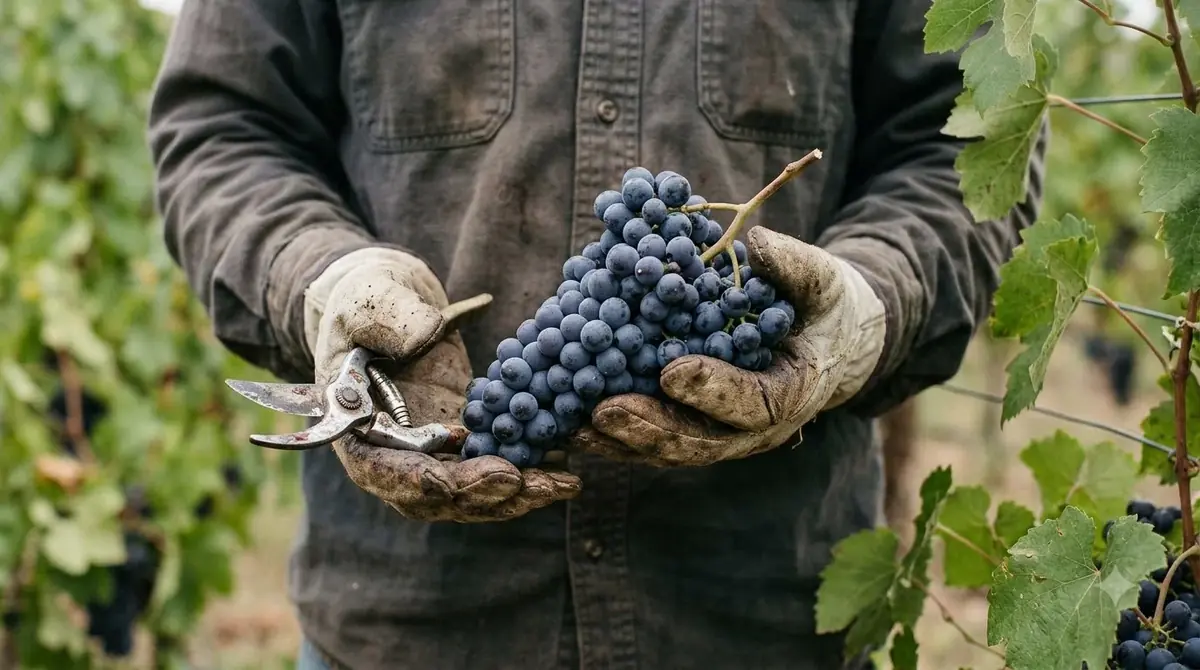
According to NC State Extension, muscadines are native to the southeastern United States and have been cultivated for more than 400 years. The grapes are recognized by their relatively large berries, thick skins, and distinctive flavor. They are used for fresh eating, juice, and winemaking, making them an important part of Southern food and wine traditions.
Scuppernong is particularly associated with bronze-colored fruit. Many people historically used the name for almost any bronze muscadine, but that usage is botanically imprecise. NC State Extension explains that Scuppernong is one cultivar among many muscadines, including Carlos, Doreen, Magnolia, Noble, and Nesbitt.
The word can also describe a wine made from the grape. Collins defines scuppernong wine as a sweet, light-colored wine produced from the variety. However, the name of a grape alone does not establish the exact sweetness level, alcohol content, or winemaking approach of every bottle. Those characteristics depend on the producer and the individual wine.
For readers learning wine vocabulary, it helps to distinguish grape names from wine styles and regional designations. Chardonnay, for example, is a grape that can produce several different wine styles. Similarly, Scuppernong identifies a grape variety, while a Scuppernong wine refers to a wine made using that fruit.
Anyone exploring unfamiliar grape terminology can also learn Wine by Type to understand how grape varieties, wine styles, and regional traditions relate to one another. This distinction is useful when reading tasting notes or discussing American wines.
The North Carolina History Behind the Name
The name Scuppernong comes from the Scuppernong River in northeastern North Carolina. Its history connects the grape to the coastal region, early American agriculture, and the development of wine production in the southeastern United States.
NC State Extension traces the recognized bronze cultivar to a grape discovered before 1760 by Isaac Alexander in Tyrrell County, North Carolina. It was initially called the Big White Grape before receiving the Scuppernong name. The grape eventually became one of the best-known representatives of American muscadine cultivation.
The name itself has an older linguistic history. NCpedia traces Scuppernong to the Algonquian word askuponong, interpreted as the place of the askupo, a reference to the sweet bay tree. This historical connection helps explain why the name does not resemble the spelling patterns of familiar European grape varieties.
There is also a famous historical connection to Roanoke Island. Clemson Extension discusses the so-called Mother Vine, a large cultivated muscadine vine traditionally associated with the island and the early history of American grape growing. Its precise age and origins remain subjects of historical discussion, so claims about its exact planting date should be treated cautiously.
The grape’s cultural importance extends beyond its name. Muscadines have been used by generations of Southerners in homemade wine, preserves, pies, and other traditional foods. NC State Extension also notes that Native Americans preserved muscadines as dried fruit long before European settlement.
These associations explain why the word is still strongly linked to North Carolina. It is not simply an unusual wine term but a regional name carrying centuries of agricultural and culinary history.
How to Use Scuppernong Naturally in Conversation
The easiest way to become comfortable with scuppernong is to practice using it in everyday wine-related sentences. The word is most useful when discussing Southern grape varieties, regional wine traditions, vineyard visits, and bottles made from muscadines.
For example, someone visiting a North Carolina winery might ask, “Is this wine made from Scuppernong grapes?” The pronunciation should remain the same whether the word appears on a tasting menu, a bottle label, or in a conversation with a winemaker.
Another natural example is, “Scuppernong is a traditional bronze muscadine variety from North Carolina.” This sentence uses the name in its more precise botanical sense rather than treating it as a synonym for every bronze grape.
Here are some additional examples:
- “I would like to learn more about Scuppernong wine.”
- “Is the Scuppernong grape native to North Carolina?”
- “The winery offers a wine made with bronze muscadine grapes.”
- “Scuppernong has an interesting history in Southern winemaking.”
- “Are these grapes the original Scuppernong cultivar or another bronze muscadine?”
When speaking about wine, it is also helpful to distinguish Scuppernong from other grape names that can be unfamiliar to American drinkers. Chardonnay, claret, and cuvée each have their own pronunciation patterns and historical backgrounds. If you are building a broader wine vocabulary, the guides on how to pronounce Chardonnay and how to pronounce claret provide useful comparisons.
The same approach applies to how to pronounce cuvée. Rather than trying to memorize every wine-related word as a single complicated sound, break it into manageable parts and practice the natural rhythm. This method works particularly well for grape varieties and traditional wine terminology that may be unfamiliar at first.
There is no need to force a regional Southern accent when saying Scuppernong. A clear American pronunciation is perfectly appropriate in a wine shop, restaurant, tasting room, or casual discussion. Understanding what the word describes is just as important as pronouncing it correctly.
How Scuppernong Grapes Differ from Other Muscadines
Scuppernong is a specific bronze muscadine cultivar, while muscadine describes a wider group of grape varieties. Recognizing this difference makes it easier to understand winery descriptions, agricultural information, and conversations about traditional Southern wines.
Most muscadines have dark purple or black fruit, although bronze-colored varieties are also common. Clemson Extension explains that bronze muscadines are genetically related to the darker forms, rather than representing an entirely unrelated group of grapes. The Scuppernong name became widely associated with bronze fruit because of its historical popularity.
Other muscadine cultivars have different colors, sizes, and growing characteristics. NC State Extension lists Carlos and Magnolia among bronze varieties used for wine and juice, while Noble is a dark-fruited cultivar. Doreen is another bronze variety, and Nesbitt is a dark variety commonly associated with fresh-market use.
The differences are not merely visual. Muscadine grapes have a distinctive structure compared with many familiar bunch grapes. NC State describes their fruit as appearing singly or in small groups instead of large, tightly packed clusters. Their thick skins and pronounced flavor also contribute to their distinctive culinary character.
The following comparison illustrates how Scuppernong fits into the larger muscadine family:
| Grape Name | Fruit Color | Typical Use | Relationship to Scuppernong |
|---|---|---|---|
| Scuppernong | Bronze | Wine and fresh eating | The specific historic cultivar |
| Carlos | Bronze | Wine and juice | A separate muscadine cultivar |
| Magnolia | Bronze | Wine and juice | A separate muscadine cultivar |
| Noble | Dark | Wine and juice | A separate dark-fruited cultivar |
| Doreen | Bronze | Wine and fresh eating | A separate muscadine cultivar |
| Nesbitt | Dark | Fresh eating | A separate muscadine cultivar |
These varieties demonstrate why the terms should not be used interchangeably. Calling every bronze muscadine a Scuppernong overlooks the differences between individual cultivars. The more accurate description is to use muscadine for the broader grape group and Scuppernong for the specific bronze variety.
For a closer look at the botanical characteristics and growing requirements of these grapes, Clemson Extension’s history of muscadine grapes provides additional information about their Southern origins, fruit characteristics, and traditional uses.
Frequently Asked Questions
Is scuppernong a French or Italian wine word?
No. Scuppernong is an American regional name associated with North Carolina, not a French or Italian wine term. Its linguistic history is connected to an Algonquian word, and its modern usage refers primarily to a muscadine grape cultivar and wine made from it.
Is scuppernong spelled with one or two Ps?
The standard spelling is scuppernong, with two Ps. It also contains two Ns near the end of the word. Remembering the spelling as SCUP-PER-NONG can help prevent common typing mistakes.
Is scuppernong recognized as a North Carolina state symbol?
Yes, Scuppernong was historically designated North Carolina’s official state fruit. State legislation later changed the official designation to the muscadine grape, which includes all muscadine varieties. This distinction explains why older references may call Scuppernong the state fruit while newer state materials use muscadine.
Can scuppernong grapes grow outside North Carolina?
Yes. Muscadine grapes are native to a much broader southeastern range, extending beyond North Carolina into states including Florida, Georgia, and Alabama. Growing conditions and cultivar suitability vary, particularly with winter temperatures and local climate.
Does the name scuppernong have any historical spelling variations?
Yes. Historical accounts record several earlier forms of the place name, including Scuponung and Cuscoponung. These variations reflect changes in how the original Indigenous place name was recorded and adapted into English over time.
Once you remember SKUP-er-nawng, pronouncing Scuppernong becomes straightforward. The name is easier to appreciate when you also understand its connection to bronze muscadine grapes, North Carolina’s agricultural history, and traditional Southern winemaking. Whether you encounter it on a wine list, a bottle label, or during a vineyard visit, you can now say it with confidence.
More in Wine Types & Grapes
 Zinfandel Sugar Content: Dry Red vs. White Zinfandel GramsUpdated Nov 21, 2026
 Best Zinfandel Substitute Options for Sipping and CookingUpdated Nov 21, 2026
 Zweigelt Food Pairing: Best Dishes, Cheeses, and Serving TipsUpdated Nov 21, 2026
 Zinfandel Tannins Explained: How Structure Shapes Every BottleUpdated Nov 21, 2026
 Zinfandel Sweetness Level: Dry Red vs. Sweet White Zin ExplainedUpdated Nov 21, 2026
 Xinomavro Food Pairing: Best Dishes, Styles, and Serving TipsUpdated Nov 21, 2026