

We may earn a commission when you buy through links on this page, at no extra cost to you. Learn more.
How to pronounce muscadine: Say MUHS-kuh-deen, with the first syllable stressed and the final syllable rhyming with “seen.” American English also recognizes MUHS-kuh-dine, with a long I sound at the end. Both pronunciations are accepted, so you can use either one when discussing this distinctive Southern grape or its wine.
Muscadine is a name worth learning if you enjoy American wine, regional grape varieties, or the food traditions of the southeastern United States. The word can look unfamiliar on a wine list, especially if you have never encountered the grape before. Fortunately, its pronunciation is relatively easy once you divide it into three syllables and understand where the emphasis belongs. A little background on the grape also makes the name easier to remember.
The Correct American Pronunciation of Muscadine
The most straightforward American pronunciation is MUHS-kuh-deen. Start with a short, relaxed first syllable, follow it with an unstressed middle syllable, and finish with a clear long E sound. The emphasis belongs on the first syllable rather than the final one.
Think of the word as three connected sounds:
- MUHS: The opening syllable rhymes approximately with the beginning of “must,” without the final T sound.
- kuh: A short, unstressed middle syllable, similar to the first sound in “about.”
- deen: The final syllable sounds like “deen,” rhyming with “seen” or “green.”
Put the three sounds together smoothly: MUHS-kuh-deen. Avoid making the middle syllable too prominent. The first syllable should be the strongest, while the other two should flow naturally after it.
The Cambridge Dictionary gives the American pronunciation as /ˈmʌs.kə.diːn/, with an additional accepted form, /ˈmʌs.kə.daɪn/. The symbols between the slashes represent individual speech sounds rather than letters. The apostrophe-like stress mark before the first syllable indicates that the opening sound receives the emphasis.
This pronunciation pattern is useful because it removes the temptation to pronounce the word as if it were spelled “muss-cad-dine.” There is no need to give every written letter a separate sound. Treating the word as three spoken syllables produces a more natural result.
For a practical comparison, say “mushroom,” then “cup,” then “seen.” The first two words provide rough reminders of the opening sounds, while the last supplies the final vowel. This is not a perfect phonetic transcription, but it is a convenient way to practice before ordering a glass of muscadine wine.
Why Muscadine Has Two Accepted Pronunciations
Muscadine does not have just one recognized American pronunciation. Dictionaries record both a final long E sound and a final long I sound, so hearing either version in conversation should not cause confusion.
The first version, MUHS-kuh-deen, ends with the same vowel sound found in “green,” “clean,” and “between.” Its phonetic transcription is /ˈmʌs.kə.diːn/. The second version, MUHS-kuh-dine, ends with the sound in “fine,” “wine,” and “vine.” Its transcription is /ˈmʌs.kə.daɪn/.
Both versions retain the same three-syllable structure and first-syllable stress. The difference is limited to the vowel in the final syllable. Neither pronunciation changes the meaning of the word, and neither refers to a different grape cultivar or wine style.
American regional speech can vary, particularly with words associated with local agricultural products and food traditions. Muscadine has strong historical associations with the South, where the grape has been cultivated for generations. That regional connection helps explain why speakers may encounter different spoken versions.
For a dictionary-based reference, Cambridge Dictionary’s muscadine pronunciation entry provides both American forms and sound-by-sound guidance. Listening to examples is especially helpful if the distinction between the long E and long I sounds is unfamiliar.
The important practical point is consistency rather than choosing a supposedly exclusive version. If you prefer MUHS-kuh-deen, use it. If MUHS-kuh-dine feels more natural, that is also acceptable. In either case, pronounce the first syllable clearly and avoid placing unnecessary emphasis on the middle of the word.
How to Break the Word Into Syllables and Practice It
The easiest way to learn muscadine is to practice its three syllables separately before connecting them. A short exercise using familiar English words helps establish the correct vowel sounds, stress, and rhythm.
Begin slowly with the opening syllable: MUHS. Keep the vowel short, similar to the vowel in “cup.” Do not turn it into “moose” or stretch it into a long vowel. The initial M and following S should remain clear.
Next, add the middle syllable, kuh. This is an unstressed sound, so it should be shorter and lighter than the first syllable. English speakers commonly use this relaxed vowel, known as a schwa, in unstressed syllables. You hear a similar sound in the first syllable of “about.”
Finally, practice the two possible endings. Say “deen” for the long E version, then “dine” for the long I version. Choose the ending you prefer and connect it to the first two syllables without pausing.
| Pronunciation part | Sound | Practice word | Emphasis |
|---|---|---|---|
| First syllable | MUHS | Cup | Strong |
| Second syllable | kuh | About | Light |
| Third syllable, version 1 | deen | Seen | Light |
| Third syllable, version 2 | dine | Fine | Light |
Use the following short practice sequence:
- Say MUHS five times, keeping the vowel short.
- Say kuh five times, making the sound relaxed and brief.
- Repeat deen and dine, listening for the difference between the two endings.
- Combine the sounds as MUHS-kuh-deen.
- Repeat the word as MUHS-kuh-dine.
- Choose one version and use it in a complete sentence.
For example, say, “I’d like to learn more about muscadine wine.” Then try, “These muscadine grapes grow in the southeastern United States.” Using the word in a sentence makes it easier to maintain its natural rhythm rather than pronouncing each syllable as an isolated sound.
Tip: Remember the opening sound of “cup,” the relaxed middle sound of “about,” and the ending of either “seen” or “fine.” Keep the strongest emphasis on MUHS, and the full word becomes much easier to pronounce.
For additional listening practice, Forvo’s American English muscadine recordings include contributions from two speakers in the United States. Hearing actual speakers can help you become familiar with natural speech rhythm and the way the syllables connect.
What Muscadine Means and Where the Grape Comes From
Muscadine is the name of a grape native to the southeastern United States, particularly associated with the warm and humid growing conditions of the region. Its botanical name is Vitis rotundifolia, and it is an important part of Southern fruit-growing and winemaking traditions.
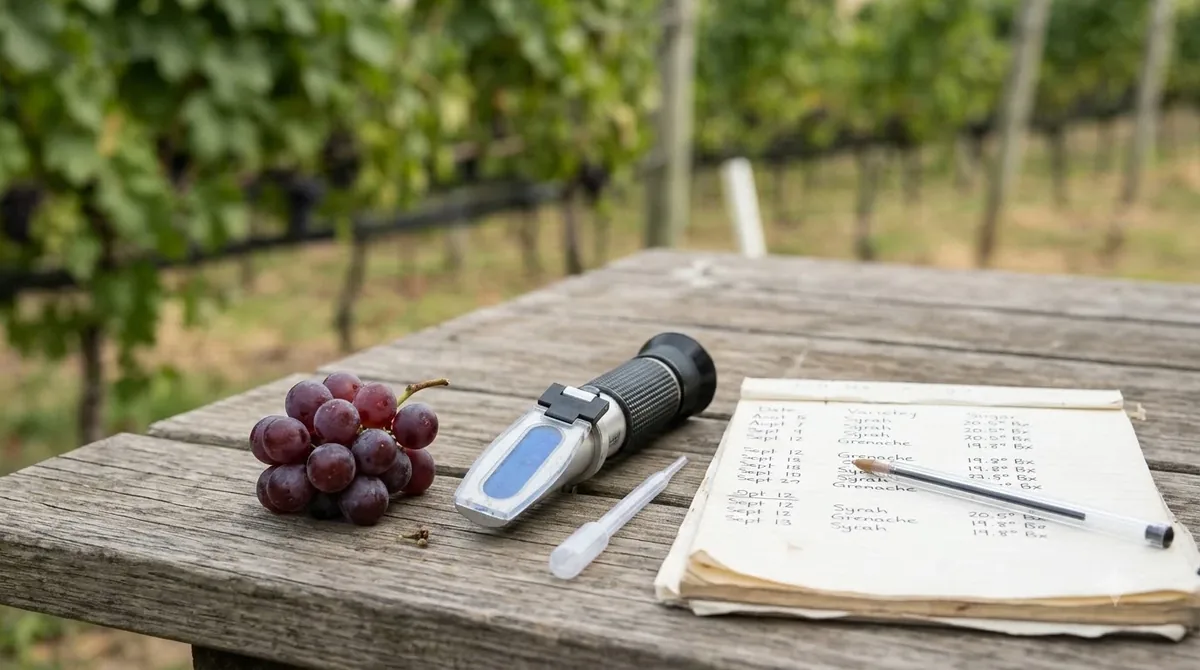
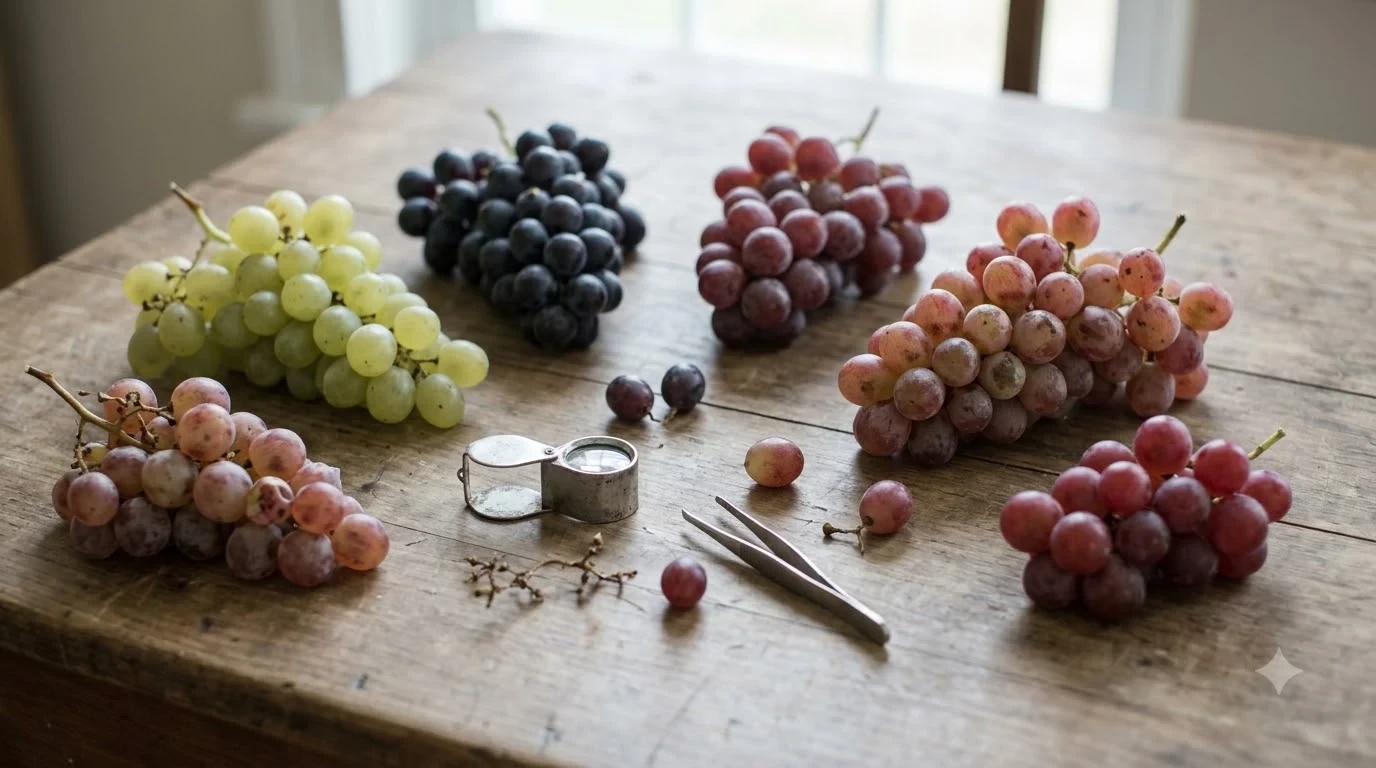
According to the University of Georgia’s viticulture program, muscadines are recognized for their thick skins, bold flavors, and natural resilience to heat, humidity, and many regional pests and diseases. Their colors range from bronze to deep purple, making them visually different from the familiar green and dark-colored bunch grapes found in many supermarkets.
The grape has several uses beyond winemaking. People eat muscadines fresh, make them into juice, preserve them in jams, and use them in regional recipes. The fruit is particularly familiar in Southern kitchens, where its distinctive aroma and flavor have long been appreciated.
North Carolina State Extension reports that muscadines have been cultivated for more than 400 years. Native Americans preserved the fruit as dried food before European settlement. The extension publication also records an early historical reference to muscadine wine: in 1565, Captain John Hawkins reported that Spanish settlements in Florida produced large quantities of it.
This history gives the word a distinctly American agricultural identity. Although many wine grapes grown in the United States have European origins, muscadine belongs to a native grape lineage associated with the southeastern states.
Its natural characteristics also help explain its importance to regional growers. Muscadines can tolerate environmental conditions that make growing certain other grape varieties more difficult. North Carolina’s Coastal Plain, for example, provides suitable growing conditions for many muscadine cultivars.
The University of Georgia identifies muscadines as an important regional crop used for fresh fruit, juice, jams, and distinctive wines. Understanding this background makes the name easier to associate with its place of origin rather than treating it as an unfamiliar wine term without a clear meaning.
How Muscadine Differs From Scuppernong and Other Grapes
Muscadine and Scuppernong are closely related names, but they are not interchangeable in every context. Scuppernong is one particular muscadine cultivar, while muscadine describes the broader grape category.
North Carolina State Extension traces the name Scuppernong to a bronze grape discovered before 1760 by Isaac Alexander in Tyrrell County, North Carolina. It was initially known as the Big White Grape. The name changed to Scuppernong after the area where the grape was found.
Over time, some people began using Scuppernong as a general name for bronze-colored muscadines. However, this is not botanically precise. Other bronze cultivars have their own names, including Carlos, Doreen, and Magnolia.
Dark-fruited muscadines also include several distinct cultivars. Noble, for example, is an important dark variety identified by North Carolina State Extension. Thomas is another well-known dark muscadine, while the familiar bronze Scuppernong remains a recognizable name in Southern grape-growing history.
The distinction matters when reading wine labels, visiting vineyards, or talking with growers. A wine made from Scuppernong comes from a particular muscadine cultivar. A wine described simply as muscadine may involve another cultivar or a blend of varieties.
Muscadines also differ from familiar European wine grapes such as Cabernet Sauvignon, Chardonnay, and Pinot Noir. These varieties belong to the species Vitis vinifera, while the commonly cultivated muscadine belongs to Vitis rotundifolia. Their botanical differences help explain why muscadines have distinctive growing characteristics and fruit structures.
Learning the names of grape varieties is part of becoming more comfortable with wine terminology. If you are building your vocabulary, our explanations of how to pronounce chardonnay and how to pronounce claret provide useful practice with two other frequently encountered wine terms.
What Muscadine Wine Tastes Like
Muscadine wine is associated with the distinctive fruity character of the grape, often accompanied by a recognizable musky aroma. Depending on the cultivar and winemaking approach, the finished wine can range from dry to sweet, with different levels of fruit intensity.
The grape itself has thick skins and bold flavors, according to the University of Georgia. North Carolina State Extension describes the juice as naturally sweet, with a relatively light taste and aroma. These characteristics help explain why muscadines are used for several different wine styles as well as fresh eating and preserves.
Bronze and dark-fruited cultivars can produce wines with different visual and flavor characteristics. A bronze grape such as Carlos or Magnolia may be used for a lighter-colored wine, while Noble is a dark-fruited variety associated with red-wine production.
Sweet muscadine wine is familiar to many Southern wine drinkers, but sweetness is not the only possible style. Dry and off-dry versions also exist. The finished wine’s sweetness depends on how the producer manages fermentation and the final balance of sugar and acidity.
Food pairing should follow the wine’s actual sweetness and acidity rather than relying only on its grape name. A sweet muscadine wine can work particularly well with fruit desserts, while a drier version may suit roasted poultry, pork, or dishes with mild seasoning.
As with other wines, sweetness is important when pairing muscadine with dessert. The wine should be at least as sweet as the food so that it does not taste thin or excessively tart alongside a sugary dish. A dry muscadine wine is generally more versatile with savory food than a very sweet bottling.
Serving temperature also depends on the wine’s style. A lighter white muscadine wine is generally best served around 45–50°F, while a fuller white version may benefit from 50–55°F. Light-bodied reds are usually served around 55–60°F rather than at warm room temperature.
These details make muscadine wine easier to understand as a genuine wine category rather than simply a sweet regional novelty. Its native grape heritage, range of cultivars, and different winemaking approaches provide plenty of variety for curious wine drinkers.
How to Use Muscadine Naturally in Wine Conversations
Once you know the pronunciation, the next step is using the word naturally in conversation. Muscadine commonly appears in discussions about Southern vineyards, native American grapes, regional wine styles, and traditional fruit preserves.
One simple example is ordering at a winery: “Could I try a glass of muscadine wine?” The sentence works with either accepted pronunciation, and the context makes the intended grape clear. You can also ask whether the wine is made from bronze or dark muscadines, which may help explain its style.
When discussing a particular variety, use its cultivar name. For example, you might ask whether a producer grows Carlos, Noble, or Scuppernong grapes. These names describe specific cultivars rather than separate pronunciations of the general term muscadine.
Another useful distinction is between the grape, the vine, and the wine. Someone discussing the agricultural side might talk about planting muscadine vines. A grower might describe a harvest of muscadine grapes. A wine enthusiast might discuss a bottle of muscadine wine.
For people learning wine vocabulary, it can be helpful to compare the word with other grape and production terms. The pronunciation of cuvée, for example, can be unfamiliar to new wine drinkers because its spelling reflects French rather than English conventions. Our guide to how to pronounce cuvee explains another common term that appears on wine labels.
You can also become more comfortable with regional wine terminology by exploring different grape categories. The Wine by Type resource offers a broader starting point for understanding how grapes, wine styles, and production choices relate to one another.
There is no need to exaggerate the Southern accent or imitate a particular regional speaker when saying muscadine. Clear pronunciation and a natural speaking rhythm are more important. Whether you choose the final E or final I version, the word should sound relaxed and conversational.
Practicing with real examples is particularly useful. Say “muscadine grapes,” “muscadine vineyard,” and “muscadine wine” several times. Changing the surrounding words helps you recognize that the pronunciation stays the same regardless of whether you are discussing the fruit, the plant, or the finished wine.
Frequently Asked Questions
Is muscadine a French word?
The word has a longer European linguistic history than its American grape association might suggest. Its etymology is generally connected to older terms such as muscadel and muscatel, although the precise derivation is uncertain. The American grape name became associated with the native southeastern species Vitis rotundifolia.
Is muscadine related to the muscat grape?
Muscadine and muscat are different grape names and refer to different grape groups. Muscat is a broad family of aromatic Vitis vinifera varieties, while muscadine commonly refers to Vitis rotundifolia. Their similar-looking names should not be taken as evidence that they are the same grape.
Can muscadine grapes grow outside the southeastern United States?
Some cultivars can grow beyond their traditional southeastern range. North Carolina State Extension identifies varieties such as Magnolia, Carlos, and Sterling as hardy enough to survive in parts of Virginia and the western foothills of the Blue Ridge Mountains. Local winter temperatures and growing conditions still determine which cultivars are suitable.
Are all muscadine grapes purple?
No. Muscadines can have bronze, dark purple, and even pink or red fruit, depending on the cultivar. North Carolina State Extension identifies Carlos and Magnolia as bronze varieties, Noble as a dark variety, and Razzmatazz as a pink or red selection.
Is muscadine wine traditionally associated with Florida?
Yes. An early historical account cited by North Carolina State Extension describes Spanish settlements in Florida producing muscadine wine in 1565. This makes the grape part of a long-standing American winemaking tradition, although its cultivation and wine production are also associated with other southeastern states.
Muscadine is easy to say once you remember its three syllables and first-syllable stress: MUHS-kuh-deen or MUHS-kuh-dine. Both American pronunciations are accepted, and both refer to the same distinctive native Southern grape. The next time you encounter muscadine on a wine list or at a vineyard, you can say the name confidently and recognize the regional history behind it.
More in Wine Types & Grapes
 Zinfandel Sugar Content: Dry Red vs. White Zinfandel GramsUpdated Nov 21, 2026
 Best Zinfandel Substitute Options for Sipping and CookingUpdated Nov 21, 2026
 Zweigelt Food Pairing: Best Dishes, Cheeses, and Serving TipsUpdated Nov 21, 2026
 Zinfandel Tannins Explained: How Structure Shapes Every BottleUpdated Nov 21, 2026
 Zinfandel Sweetness Level: Dry Red vs. Sweet White Zin ExplainedUpdated Nov 21, 2026
 Xinomavro Food Pairing: Best Dishes, Styles, and Serving TipsUpdated Nov 21, 2026