

We may earn a commission when you buy through links on this page, at no extra cost to you. Learn more.
The best decanter with stopper is one whose stopper seals firmly, fits the neck snugly, and is easy to remove, so the wine stays protected from dust and insects between pours. A stopper does not replace proper decanting. It is most useful for keeping a decanted red covered while it rests on the counter or waits for the next glass. This guide compares the stopper styles you will see and explains what each one does well.
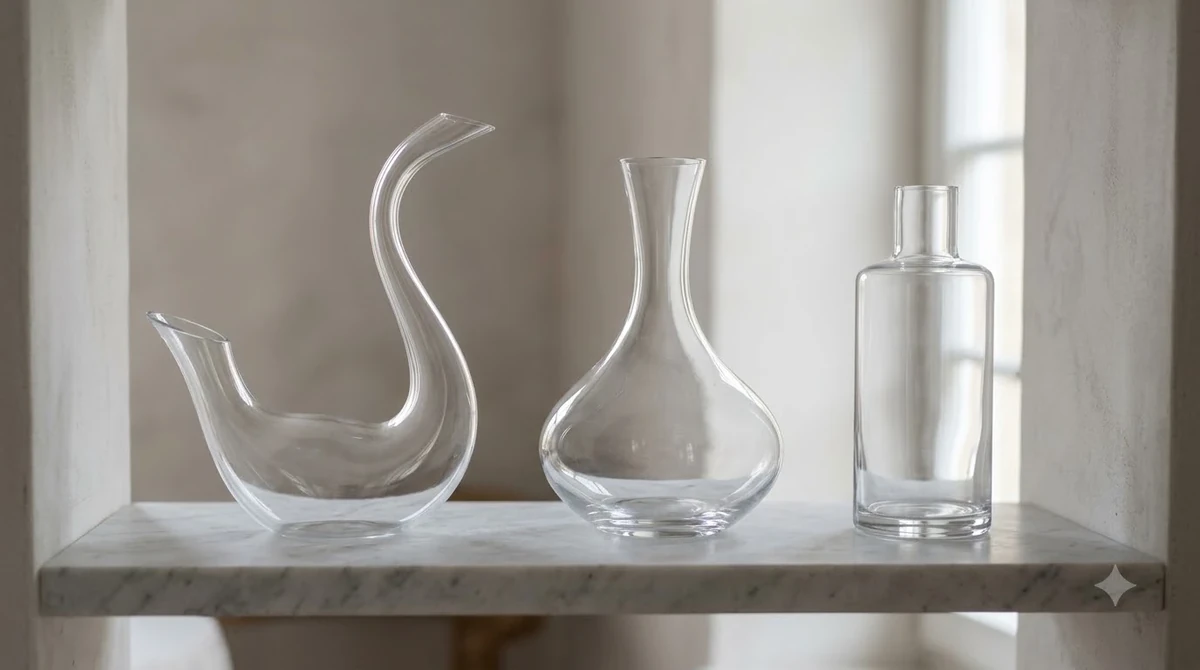
Stoppers come in a few forms, and they do different jobs. Some are simple glass plugs that fit the neck. Others are heavier, ground-glass pieces that seat into the opening. A few decanters use a wide cork or a soft seal. The right choice depends on how you use the decanter: for a quick pour at dinner, a loose plug is enough; for a decanter that sits out for hours, a snug seal matters more. If you are still choosing the vessel itself, our wine decanter guide covers shapes in more depth.
Quick Comparison of Stopper Types
Stoppers differ in how tightly they seal, how easy they are to clean, and how they look on the table. The table below compares the common styles on those points so you can match the stopper to the way you pour.
| Stopper type | Seal | Cleaning | Look | Good fit |
|---|---|---|---|---|
| Simple glass plug | Light, keeps out dust | Easy to rinse | Plain | Quick everyday pours |
| Ground-glass stopper | Firm fit in a matched neck | Needs care at the joint | Clean, formal | Decanters that sit out |
| Crystal stopper | Varies with the fit | Handle gently | Decorative | Gifts and display |
| Wide cork or soft seal | Good when it fits | Can absorb odor | Rustic | Casual serving |
Best for Everyday Pours With a Simple Plug
A simple glass plug suits a red you open for dinner and finish within the evening. It keeps dust and insects out of the decanter without adding much weight or effort. For a wine that needs only a short rest, a plug is often all that is needed, and it is the easiest type to rinse after use.
Why it stands out: it is quick to place and remove, and it takes up little room in the cupboard.
Keep in mind: a plug is not a tight seal. Do not rely on it for a decanter that will sit for hours in a warm room.
Best for: regular drinkers who pour a glass or two and want a tidy finish with minimal fuss.

- Capacity
- 950 ml (32 oz)
- Material
- Lead-free crystal glass
- Seal
- Food-grade silicone stopper
- Care
- Hand or dishwasher
A stopper that actually seals is what makes leftovers manageable. The silicone-lined stopper is airtight to prevent leaks and lets you store a pour for later, and the 32 oz (950 ml) body has room for most of a bottle. A textured stripe surface gives grip, and it can be washed by hand or in the dishwasher. The listing positions it for whiskey and other spirits as well as wine.
Pros & ConsView
- Airtight silicone stopper prevents leakage
- 950 ml capacity fits a full bottle
- Hand wash or dishwasher safe
- Marketed mainly as a liquor decanter
- Narrow 3.5 inch body, little aeration surface
Best for Decanters That Sit Out for Hours
When a decanter stays on the table through a long meal, a stopper that seats firmly in the neck keeps the top of the vessel covered for much longer. Ground-glass designs are made to fit a matched opening, which makes them a better choice for this use. The Wikipedia entry on wine preservation notes that a dried-out cork or temperature swings can let oxygen into a bottle, so a tight seal helps when you want to limit contact with air in any container.
Why it stands out: a firm fit covers the opening and reduces the chance of dust or stray odors reaching the wine while it waits.
Keep in mind: a sealed decanter still needs to be used within a sensible window. A stopper slows air contact, but it does not turn a decanted wine into something that keeps indefinitely.
Best for: hosts who plan a long dinner and want the wine to stay covered between glasses.

- Capacity
- 25 oz
- Material
- Lead-free glass
- Size
- 3.58 in W x 8.78 in H
- Stopper
- Glass stopper
A simple square glass decanter that serves everyday wine as easily as spirits. The 25 oz body is mid-size, so think of it as a carafe for a couple of generous pours rather than a pitcher for the whole table. It has a solid, weighty feel, a glass stopper, and is listed as airtight and dishwasher safe, with a blank front panel for engraving.
Pros & ConsView
- Simple square glass with solid heft
- Glass stopper, listed as airtight
- Dishwasher safe with engraving area
- Not sized as a large pitcher
- Marketed as a whiskey decanter
Best for Gifts and Display Pieces
Decanters have traditionally been made from glass or crystal, and a stopper is often the detail that makes a piece look finished. A crystal stopper with a matching decanter reads as a gift without much explanation, and it sits well on a sideboard. The Wikipedia entry on decanters explains that many were made of glass or crystal for centuries, which is why these designs remain common today.
Why it stands out: the stopper adds a visible finishing touch and makes the piece feel complete in a gift box.
Keep in mind: crystal is more delicate than everyday glass, and the stopper should be handled gently. Do not force a stopper that sticks; rinse it and let the fit loosen.
Best for: gift buyers and collectors who care about the look of the piece as much as its use.

- Capacity
- 27 oz (800 ml)
- Material
- Lead-free glass
- Stopper
- Diamond-cut with plastic liner
- Height
- 12 inches with stopper
Engraved sides and a diamond-cut stopper give this decanter an Art Deco look that sits well on a liquor cabinet or dining table. It is marketed for whiskey, scotch, rum and brandy, so treat it as a serving and display piece rather than an aerating vessel for a structured red. The food-grade liner gives the stopper an airtight fit.
Pros & ConsView
- Engraved body gives a secure grip for pouring
- Airtight stopper has a food-grade plastic liner
- Heavy glass base is stable on a bar
- Marketed for spirits, not wine aeration
- Plastic liner in the stopper
Best for Bold Reds That Need Air and Cover
Structured reds such as Syrah and Barolo benefit from a long rest, and the Wine Folly decanting guide suggests that high-tannin wines may need up to about two hours. A decanter that you can cover while the wine opens lets you keep the contents clean and avoid disturbing the surface. A wide, bowl-shaped body helps air reach more of the wine, and a stopper keeps the rest of the bottle protected.
Why it stands out: a wide base and a covered top suit the long wait that these wines need.
Keep in mind: a wide body with a tight stopper takes more effort to rinse. Plan on a little extra time at the sink after each use.
Best for: people who open big reds and want the wine to show its full character without constant checking.
Stoppers also make the choice of pour timing easier to plan. If you know the wine will need an hour or more, you can decant it early, cover the decanter, and return to it when the meal is ready. Without a cover, dust and stray odors from the room have more chance to settle on the surface, which matters more in a kitchen where food is being prepared.

- Capacity
- 1500 ml (52 oz)
- Material
- Lead-free crystal glass
- Includes
- Cleaning brush, lid, gift box
- Size
- 6"W x 12"H
With 1500 ml of capacity, this slim decanter gives a magnum-sized pour plenty of room to open up. The wide mouth and slanted top make it easy to pour without spills, while the included cleaning brush clears away deposits and residue. A gold-print gift box makes it ready to present, and a glass lid covers the opening between servings.
Pros & ConsView
- Large 1500 ml body for magnum-size pours
- Cleaning brush removes stains and deposits
- Gift box included for presenting
- Tall 12 inch shape may not fit all cabinets
- 1500 ml is far more than one bottle needs
Many people choose a stopper after a decanter has already been bought, and that order can make the fit a problem. Measure the neck opening before you buy a separate stopper, and check that the stopper seats without rocking. A loose fit may look fine on a shelf but will not keep the top covered during a long pour.
Best for Cleaning and Storing Between Uses
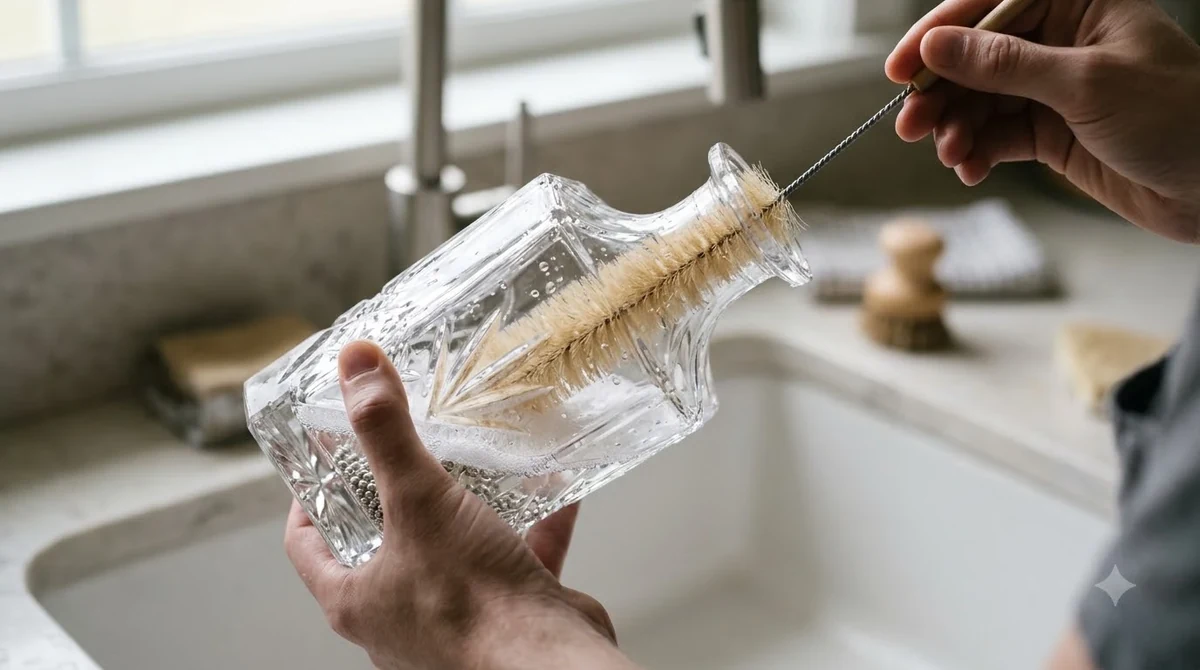
A stopper also matters when the decanter is not in use. Keeping it in place stops dust from settling inside, and it prevents the neck from being knocked during storage. The Wine Folly decanting guide advises rinsing the outside of a decanter with hot water and the inside with cold water to limit fogging, and it says restaurants generally avoid soap because residue affects aroma.
Why it stands out: a stopper that stays with its decanter keeps the set together and reduces the chance of losing a loose piece.
Keep in mind: a stopper that is always in place can trap moisture if the decanter is not dried. Let both pieces air-dry before storing them.
Best for: owners who store decanters in a cupboard between dinners.

- Capacity
- 1.8 L (60 oz)
- Material
- Hand-blown lead-free crystal
- Stopper
- Cork
- Extras
- Steel cleaning beads
Cleanup and storage are covered here: stainless steel beads are included to lift red wine stains from the carafe, and the cork stopper keeps flies and dust out between uses. The 1.8 liter body fits a full 750 ml bottle at its widest point for aeration, with a slanted top for a drip-less pour. It is lightweight, sturdy and dishwasher safe.
Pros & ConsView
- Included steel beads remove red wine stains
- Cork stopper keeps dust and flies out
- Slanted top pours without dripping
- Cork protects against dust, not a vacuum seal
- 1.8 liter size is large for small cabinets
How to Choose a Decanter With Stopper
Start with how long the decanter will sit out and how often you clean it. Those two answers usually decide the stopper style. The points below cover the details that affect daily use. For a wider look at options grouped by feature, our aerators and decanters category is a good next stop.
- Fit: a snug fit in the neck matters more than a decorative top.
- Material: glass is simple to rinse; crystal looks finer but needs more care.
- Neck shape: a wide neck is easier to clean around the stopper.
- Removal: a stopper that lifts out with one hand suits quick pours.
- Drying: choose a design you can dry fully, since trapped moisture causes odor.
- Storage: a compact set fits a cupboard more easily than a tall decanter with a long stopper.
Frequently Asked Questions
Do I need a stopper on a decanter?
Not always. For a quick pour at dinner, a decanter can stay open without trouble. A stopper helps when the decanter will sit for a while, because it keeps dust and insects out of the wine.
Does a stopper keep decanted wine fresh?
A stopper slows contact with air and keeps the decanter covered, but it does not make decanted wine last indefinitely. Drink it within a sensible time after pouring, and plan a longer pour only when the wine is still in good shape.
How do I clean a stopper that smells?
Rinse it with hot water and let it air-dry fully before reinserting it. The Wine Folly guide notes that soap residue can affect aroma, so avoid heavy detergent where you can.
Is a crystal stopper better than glass?
Neither is better for every use. Glass is practical for daily pours and easier to handle. Crystal looks finer and suits gifts, but it is more delicate and needs gentle handling.
A decanter with a stopper is most useful when you want the wine covered between glasses, and the right choice depends on how long it sits out. A simple plug covers everyday pours, while a firm fit suits a long dinner. For guidance on how long a red keeps once it has been opened, see our article on how long red wine lasts after opening, and for matching aerators, our wine decanter with aerator roundup is a helpful companion.
More in Decanters & Aerators
 Best Whiskey and Wine Decanter: Choosing One Vessel for Both DrinksUpdated Nov 18, 2026
 Best Tower Decanter: How to Pick the Right Shape for Your WineUpdated Nov 18, 2026
 Best Cleaning Brush Decanter Options for Narrow Necks and Deep BowlsUpdated Nov 19, 2026
 Best U Shaped Decanter Picks for Aerating Bold Red WineUpdated Nov 18, 2026
 Best Electric Decanter Styles for Faster, Smoother Wine PoursUpdated Nov 18, 2026
 Best Hand Blown Decanter Styles for Every Bottle and TableUpdated Nov 18, 2026