


We may earn a commission when you buy through links on this page, at no extra cost to you. Learn more.
The best wine decanter with aerator for most home drinkers is a wide-bodied glass decanter with a built-in aerating spout or insert, because one pour can both separate any sediment and add air to the wine. A wide base gives more surface for bold reds, a slimmer body suits lighter bottles, and a stopper helps if you want to keep leftovers for another day. This guide first compares the main styles, then matches each one to a buyer need so you can skip the designs that do not fit your table.
Decanters and aerators both expose wine to oxygen, but they work in different ways. A decanter is mainly a serving vessel. It lets you pour clear wine off any deposit and shows the bottle at the table. An aerator is a small device that pushes wine through a narrow passage or spreads it thin as it pours. A decanter with an aerator combines the two, so a single pour can open a young red while the glass stays easy to serve. The vessel itself has a long history. Decanters have traditionally been made of glass or crystal, and a typical one holds about one standard bottle, or 0.75 litres, according to the Wikipedia overview of decanters.
How Decanting and Aeration Differ
Air changes wine in two main ways. Some of the harsh edges in a young red soften as oxygen reaches it, and some aromas become easier to smell once the wine opens. The same exposure can also dull delicate aromas if it goes on too long. That trade-off is why the right vessel depends on the wine. A wide decanter exposes a lot of surface at once, a narrow neck slows the process, and an aerator works on each pour rather than the whole bottle. Knowing which effect you want helps you choose the right design before you spend money on one.
Quick Comparison of Decanter and Aerator Styles
The table compares the common styles by how they add air, how easy they are to clean, and which wines they suit. Use it as a first filter before you look at the five groups of buyers below.
| Style | How it adds air | Cleaning | Best fit |
|---|---|---|---|
| Wide-body glass decanter | Large surface area inside the bowl | Easy with a long brush | Full-bodied reds |
| Long-neck Venetian-style decanter | Narrow neck opening into a wide body | The neck is harder to reach | Firm, tannic reds |
| Decanter with aerating spout | Wine passes through the spout as you pour | Rinse the spout after each use | Young reds and daily use |
| Decanter with aerating insert | Insert breaks the stream inside the vessel | The insert must come out for washing | Dinner parties |
| Handheld pour-through aerator | Wine flows through the device into the glass | Quick to rinse | Single glasses with no decanter |
Best for Bold Reds and Tannic Wines
A wide-body decanter is the right pick when the wine has firm tannins and you want as much air as possible across the surface.
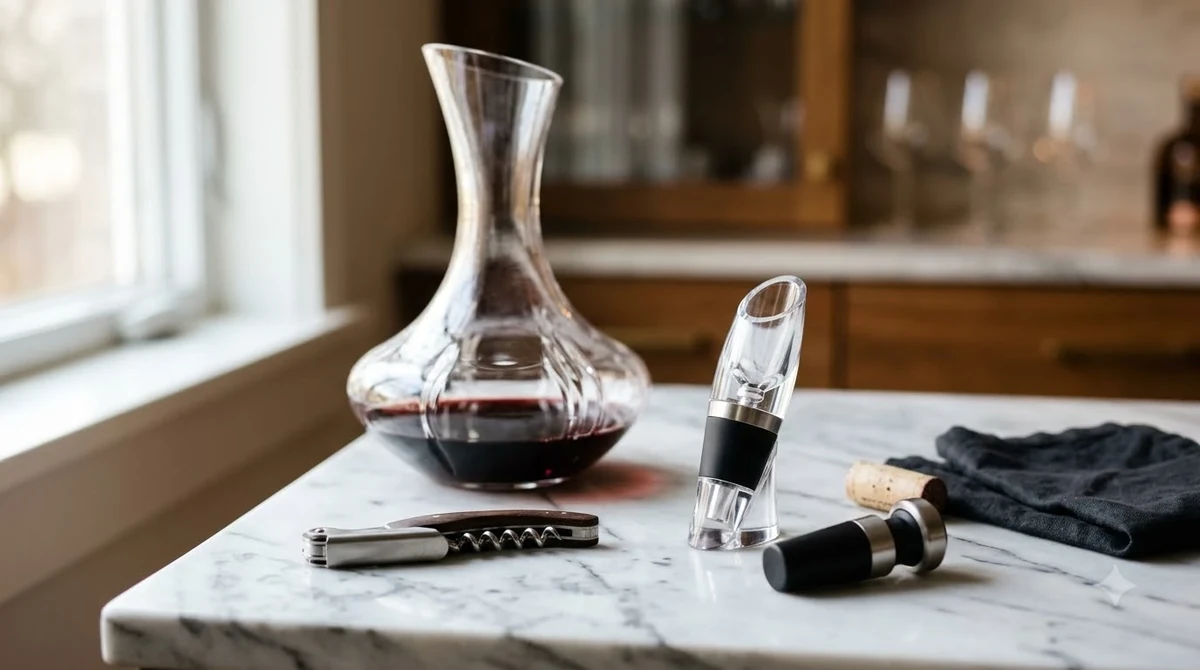
Why it stands out: the broad bowl exposes a large area of wine to air at once, so a bottle of Cabernet or Barolo opens faster than it would in the bottle. Many writers link decanting with softening harsh tannins, although the view is debated. The Wikipedia overview notes that Karen MacNeil recommends decanting for tannic wines such as Barolo and Bordeaux, which is the case this design is built for.
Keep in mind: a wide base takes up more shelf and counter space than a slim vessel. Hand washing with a long brush is the normal routine, and the stopper should be dried before it goes back in the box.
Best for: serious red drinkers who open full-bodied bottles and want the wine ready at the table.

- Type
- Red wine aerator pourer
- Material
- Acrylic with silicone grip
- Capacity
- 750 ml
- Care
- Dishwasher safe
Built for pouring full bottles at a table of guests, this red wine aerator draws in air as wine speeds through its patented chamber, so each glass is ready in seconds rather than after a long decant. A filter screen holds back cork bits and sediment, the silicone body is easy to grip, and the included base lets it rest between pours.
Pros & ConsView
- Aerates in the time it takes to pour
- Filter screen catches cork and sediment
- Includes a base to hold it between pours
- Made specifically for red wines
- Extra piece to store and rinse after use
Best for Everyday Young Wines
A decanter with an aerating spout suits a young red you open on a weeknight, because the pour does the aerating and there is nothing extra to set up.
Why it stands out: the spout adds air while you pour, so you do not have to wait or wash a separate device. The decanter also works as a serving piece, which matters if you finish the same bottle over two evenings. It takes the guesswork out of when to decant.
Keep in mind: spouts collect a film of wine if they dry out, so rinse straight after pouring. Check whether the spout is removable before you buy, since a fixed spout is harder to clean than an open neck.
Best for: households that open one or two bottles a week and want good wine with very little effort.

- Material
- Lead-free crystal, steel lid
- Capacity
- 1400 ml
- Aeration
- Waterfall pour with filter
- Size
- 12.2"W x 12.2"H
Everyday young wines get their best effect from quick, repeatable aeration, and this large 1400 mL carafe delivers it with a waterfall-style stopper that increases contact between wine and air. A fine filter in the spout removes sediment, the stainless pourer lid sits on a hand-blown lead-free crystal body, and a handle keeps pouring steady. It holds a full bottle with room to spare.
Pros & ConsView
- Waterfall stopper boosts air contact
- Fine filter removes sediment
- 1400 ml body holds a bottle with room to spare
- Large 12.2-inch size needs generous storage
- Stopper and filter add parts to clean
Best for Delicate and Aged Wines
For pale reds, Pinot noir, and older bottles, look for a design that limits air contact rather than maximizing it.
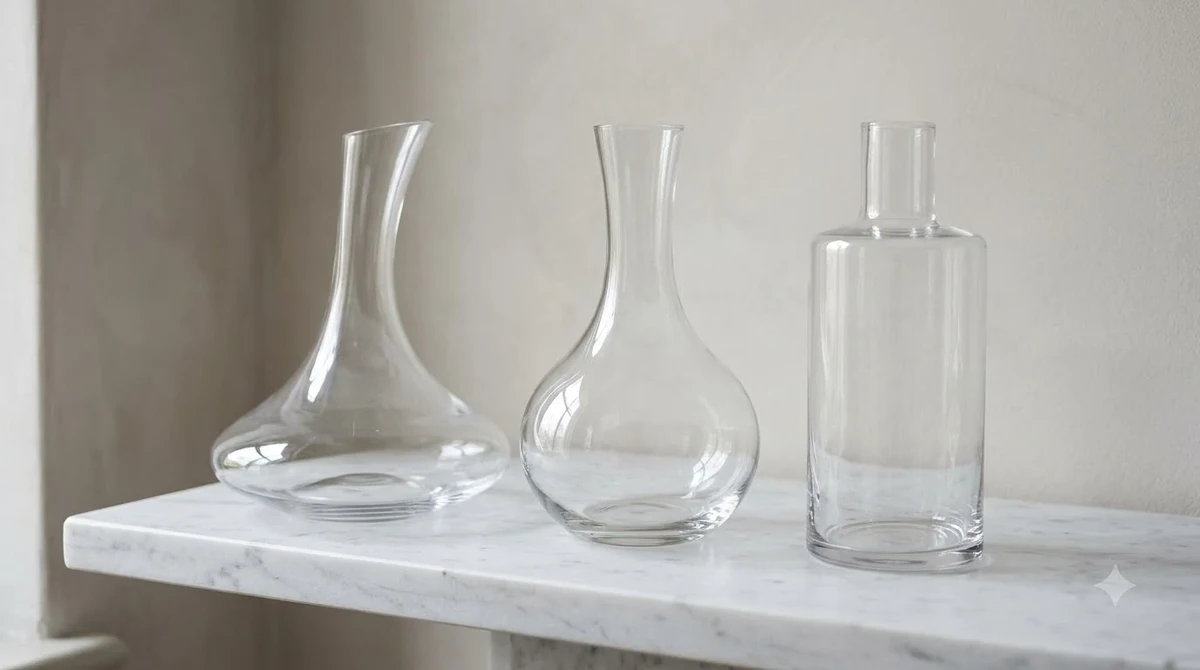
Why it stands out: a narrower body and a stopper reduce how much surface meets air, which suits wines that lose aroma quickly. A short decant is often enough to clear a deposit in an older bottle without pushing the wine too far.
Keep in mind: the French oenologist Émile Peynaud argued that prolonged exposure to oxygen “diffuses and dissipates more aroma compounds than it stimulates,” as the Wikipedia overview records. Karen MacNeil also warns that decanting may harm delicate wines such as Chianti and Pinot noir, so keep the time short.
Best for: collectors with older bottles and light-bodied reds, where the goal is to pour off sediment and keep the aroma intact.

- Material
- Lead-free crystal glass
- Capacity
- 750 ml (one standard bottle)
- Aeration
- Built-in double-layer filter
- Size
- 7"W x 9.5"H
Built for the ordinary weeknight bottle, this decanter pairs a classic round body with a built-in double-layer filter that strains and aerates as you pour. Wait roughly 3 to 5 minutes and a standard 750 ml red is ready for dinner. The slanted top is shaped to limit drips, and the narrow neck gives a secure grip.
Pros & ConsView
- Built-in filter strains and aerates in one step
- Slanted top helps limit spills and drips
- Sized for one full 750 ml bottle
- Holds only one standard bottle
- Filter insert adds one more part to clean
Best for Dinner Parties and Gifts
A decanter with an aerating insert fits a table where guests expect a little ceremony and the host wants several bottles ready at once.
Why it stands out: the insert breaks the stream inside the vessel, so a quick pour opens the wine without a long wait. The shape also reads as a centerpiece. Decanters have served as display pieces for a long time, and the Wikipedia overview notes that they once let a single servant carry the vessel to the table.
Keep in mind: inserts must come out for washing, and a bulky shape needs storage room in a cabinet. Before you give one as a gift, confirm how the insert seats and that the stopper fits securely.
Best for: hosts who serve more than one bottle in an evening, and gift buyers who want something useful and attractive.

- Capacity
- 750 ml
- Material
- Lead-free crystal glass
- Size
- 8.5 x 10 inches
- Care
- Dishwasher safe
Younger, tannic reds open up when given room, and this decanter provides it. Its wide hand-blown body holds a full 750 mL bottle, so the wine has plenty of surface for aeration. An integrated glass handle and slanted spout make pouring controlled, while the wide opening makes it easy to clean, and the crystal glass is dishwasher safe too.
Pros & ConsView
- Wide body aerates a full 750 mL bottle
- Integrated glass handle and slanted spout
- Wide opening makes cleaning easy
- Holds only one standard bottle at a time
- Stands 10 inches tall, so it needs roomy storage
Best for a Quick Pour Without Decanting
A handheld pour-through aerator is the simplest way to add air when you do not want a second vessel on the table.
Why it stands out: the device sits between the bottle and the glass, so each pour picks up a little air. There is no decanter to rinse and no space needed on the counter, and it packs easily into a drawer or a travel bag.
Keep in mind: one aerator treats one pour at a time, so it does less for a full bottle than a wide decanter does. Treat it as a quick option for single glasses, not as a substitute for a decanter with a bold red.
Best for: people who want a little aeration without a decanter, and anyone who wants a simple option for travel.

- Type
- In-bottle pourer spout
- Material
- Plastic, stainless steel
- Size
- 1.1"W x 5.2"H
- Weight
- 1.6 oz
A slim spout that sits in the bottle neck, this pourer suits everyday young reds you would rather not decant. Rabbit's silicone base fits all bottle types and keeps the pour drip free, while aeration happens as the wine leaves the bottle. It weighs only 1.6 ounces, so it stores easily in a drawer or on a bar cart for weeknight dinners.
Pros & ConsView
- Fits any standard wine bottle securely
- Silicone base helps keep pours drip free
- Lightweight at 1.6 ounces
- Aerates only as you pour, not in bulk
- Plastic and silicone parts, not all metal
How to Choose the Right Decanter or Aerator
Start with the wine you drink most often. Heavier reds benefit from a wider body, while lighter wines do better with less exposure to air. Then check these points before you buy.
- Capacity: a decanter that holds about one standard bottle, roughly 0.75 litres, covers most dinners.
- Shape: a wide body adds more air, while a narrow neck is harder to clean.
- Stopper: a stopper lets you keep leftover wine and limits air contact for delicate bottles.
- Cleaning: if the aerating part is removable, check that it comes apart easily and dries fully.
- Material: glass and crystal are the traditional choices, and both let you see the colour of the wine clearly.
Tip: decant red wine shortly before serving and taste as you go. The Wikipedia overview notes that hours of decanting may not soften tannins as often assumed, so a short decant is usually enough.
Frequently Asked Questions
How long should you decant wine with an aerator?
Most people decant shortly before serving and taste as they go. Some writers note that long decanting does not reliably soften tannins, so a short decant is a sensible starting point. Stop once the wine tastes open to you.
Is an aerator as good as a decanter?
They do different jobs. A decanter exposes a large surface to air and also separates sediment, while an aerator works on each pour. For single glasses an aerator is convenient, but for a full bottle of bold red a wide decanter usually gives more air.
Which decanter shape is best?
A Venetian-style design with a long neck and a wide body exposes more of the wine to air, and a typical decanter holds about one standard bottle. Choose the shape that you can wash thoroughly, because a vessel that stays dirty will affect the wine.
Do I need a stopper for a decanter?
A stopper is useful if you plan to keep wine for a day, or if you prefer to limit air contact for delicate bottles. Without one, the wine meets more air over time, so a stoppered decanter is the safer choice for leftovers.
If you are still choosing between styles, the guide to wine decanters covers glass shapes in more detail, and the wine aerator guide explains pour-through devices. For storage after opening, see how long does red wine last after opening.
More in Decanters & Aerators
 Best Whiskey and Wine Decanter: Choosing One Vessel for Both DrinksUpdated Nov 18, 2026
 Best Tower Decanter: How to Pick the Right Shape for Your WineUpdated Nov 18, 2026
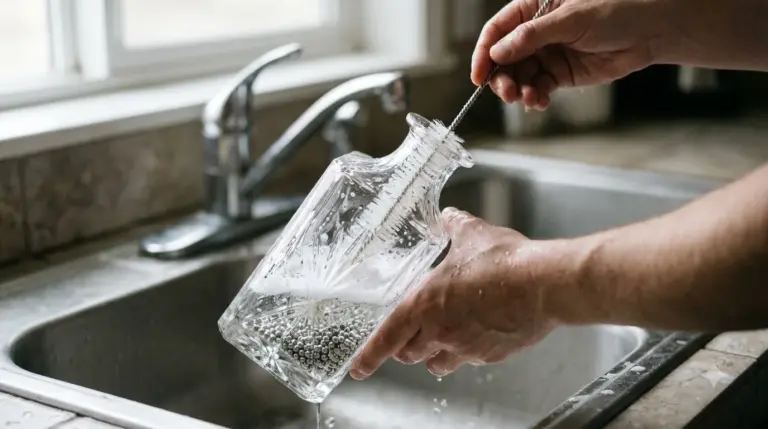 Best Cleaning Brush Decanter Options for Narrow Necks and Deep BowlsUpdated Nov 19, 2026
 Best U Shaped Decanter Picks for Aerating Bold Red WineUpdated Nov 18, 2026
 Best Electric Decanter Styles for Faster, Smoother Wine PoursUpdated Nov 18, 2026
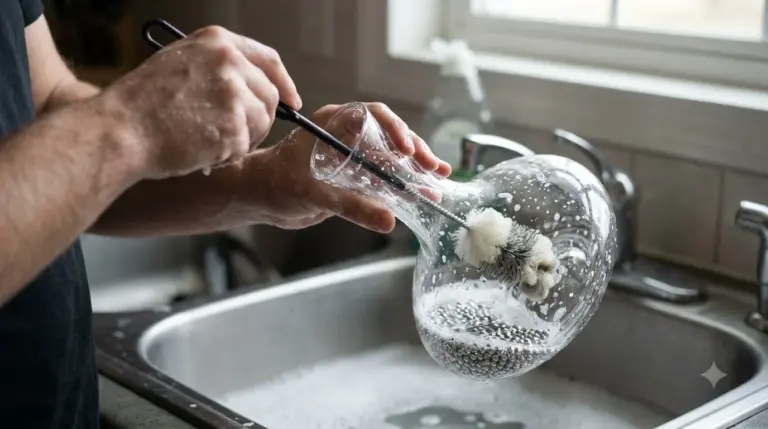 Best Hand Blown Decanter Styles for Every Bottle and TableUpdated Nov 18, 2026