

We may earn a commission when you buy through links on this page, at no extra cost to you. Learn more.
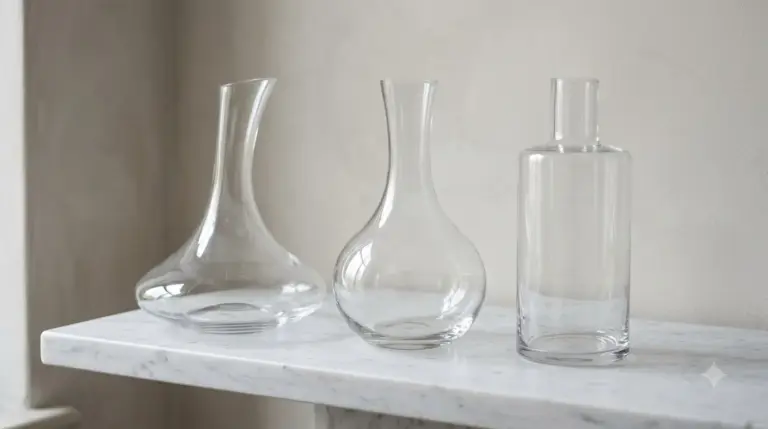
The best wine decanters match vessel geometry to what the bottle actually needs—wide, flat-bottomed bases maximize oxygen contact for young, tannic reds, while narrow, tall silhouettes protect fragile vintage wines as you separate them from sediment. For casual weeknight bottles, a compact carafe or bottle-top breather delivers quick aeration without cluttering your counter, whereas sculptural crystal vessels double as dining-table centerpieces. If post-dinner cleanup is your biggest hurdle, straightforward thick-walled glass carafes with wide openings go straight into the dishwasher without fuss.
A decanter does two distinct jobs: it introduces oxygen to soften harsh tannins and release bound aromatic compounds, and it lets you pour clear wine off the bitter solids that collect in older bottles. Because a vessel built for rapid aeration can flatten a delicate twenty-year-old Bordeaux, owning—or choosing—the right shape makes a noticeable difference in the glass.
Quick Comparison
Each decanter silhouette balances surface area, sediment control, and cleanup effort differently depending on the bottles you open most often.
| Decanter Type | Best For | Surface Area / Aeration | Typical Material | Cleanup Difficulty |
|---|---|---|---|---|
| Wide-Base Ship / Captain’s | Young, full-bodied reds | Maximum surface exposure | Lead-free crystal or blown glass | Moderate to high (narrow neck) |
| Compact Carafe / Breather | Everyday weeknight pours | Moderate, rapid aeration | Soda-lime or borosilicate glass | Low (wide opening) |
| Narrow / Duck / Amphora | Aged reds and sediment | Minimal air contact | Hand-blown crystal | Moderate (long body) |
| Sculptural / Swan / Horn | Entertaining and centerpieces | High, often dual-spout flow | Hand-blown crystal | High (curved channels) |
| Straight-Sided / Wide-Mouth | Dishwasher-safe convenience | Moderate aeration | Thick standard or borosilicate glass | Very low (dishwasher safe) |
Best for Young, Full-Bodied Reds
A wide-base decanter—often shaped like a flat-bottomed ship’s decanter or classic bell—spreads a standard 750-milliliter bottle into a broad, shallow pool so maximum wine meets the air.
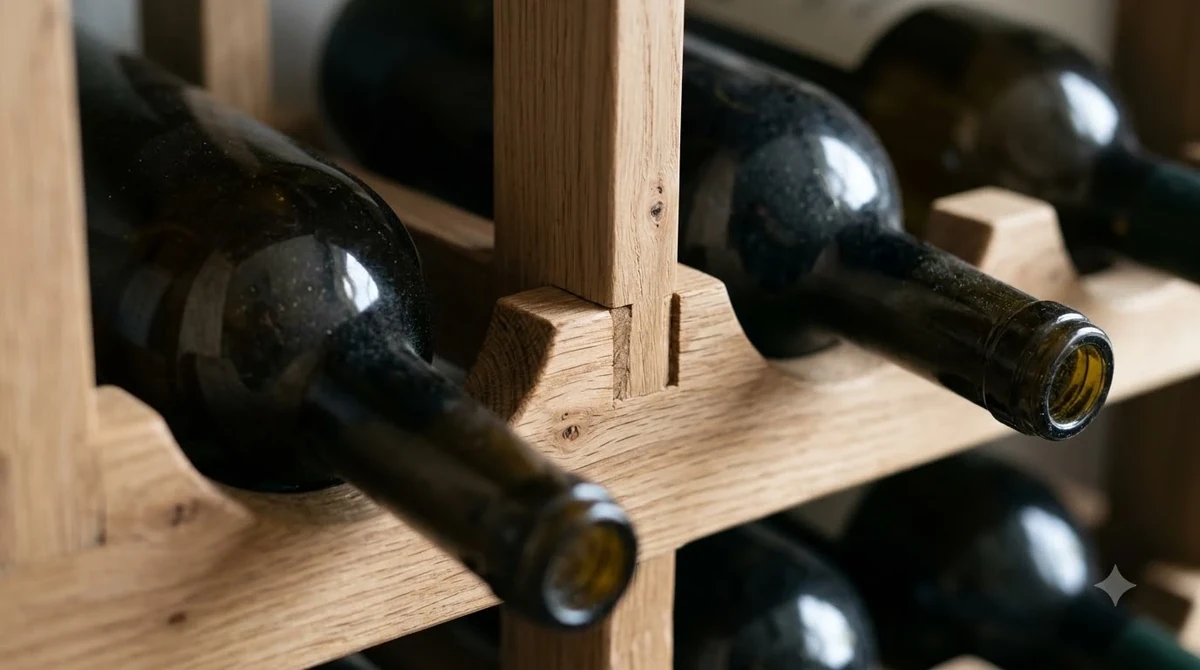
Why it stands out: According to Wine Folly’s decanter buying guide, exposing young, full-bodied wines like Cabernet Sauvignon, Nebbiolo, Syrah, and Petite Sirah to abundant oxygen softens astringent tannins and lets fruit and floral aromas emerge. A broad base—ideally wide enough that an entire bottle sits in a thin layer across the bottom—accelerates this process over one to two hours, and many designs add an indented punt underneath so you can swirl the wine safely by the base.
Keep in mind and best for: That generous footprint demands real estate on both your dining table and your drying rack, and the narrow chimney above the wide bowl traps moisture unless you dry it upside down on a stand. Choose this style if you regularly open structured, youthful reds or want to wake up an inexpensive everyday red that smells tight straight out of the bottle.
Best for Everyday Weeknight Decanting
Compact carafes and inverted bottle-top breather decanters give you fast aeration for a single bottle without taking over a small kitchen or requiring a twenty-minute hand-washing ritual.
Why it stands out: Reviewers at Wine Enthusiast highlight compact breather-style decanters for small spaces because they attach directly to an opened bottle, invert to aerate the wine as it cascades down the interior walls, and let you pour back into the original bottle if you prefer. Traditional hourglass carafes sized neatly for one bottle—which holds roughly five standard glasses in a bottle of wine—also fit easily inside a refrigerator door when you want to chill a light red like Pinot Noir or Beaujolais before serving.
Keep in mind and best for: Smaller vessels offer less surface area than a sprawling ship’s decanter, meaning heavy, tightly wound reds still need extra resting time or a gentle swirl. This category is best for apartment dwellers, weeknight wine drinkers, and anyone pairing decanters and aerators for quick, low-ceremony pours.

- Material
- Lead-free crystal glass
- Capacity
- 750 ml (one standard bottle)
- Aeration
- Built-in double-layer filter
- Size
- 7"W x 9.5"H
Built for the ordinary weeknight bottle, this decanter pairs a classic round body with a built-in double-layer filter that strains and aerates as you pour. Wait roughly 3 to 5 minutes and a standard 750 ml red is ready for dinner. The slanted top is shaped to limit drips, and the narrow neck gives a secure grip.
Pros & ConsView
- Built-in filter strains and aerates in one step
- Slanted top helps limit spills and drips
- Sized for one full 750 ml bottle
- Holds only one standard bottle
- Filter insert adds one more part to clean
Best for Aged Wines and Sediment Control
Narrow, tall silhouettes—such as slim cornetto tubes, angled duck decanters, and filter-topped carafes—limit oxygen exposure while helping you separate clear wine from gritty bottle deposits.
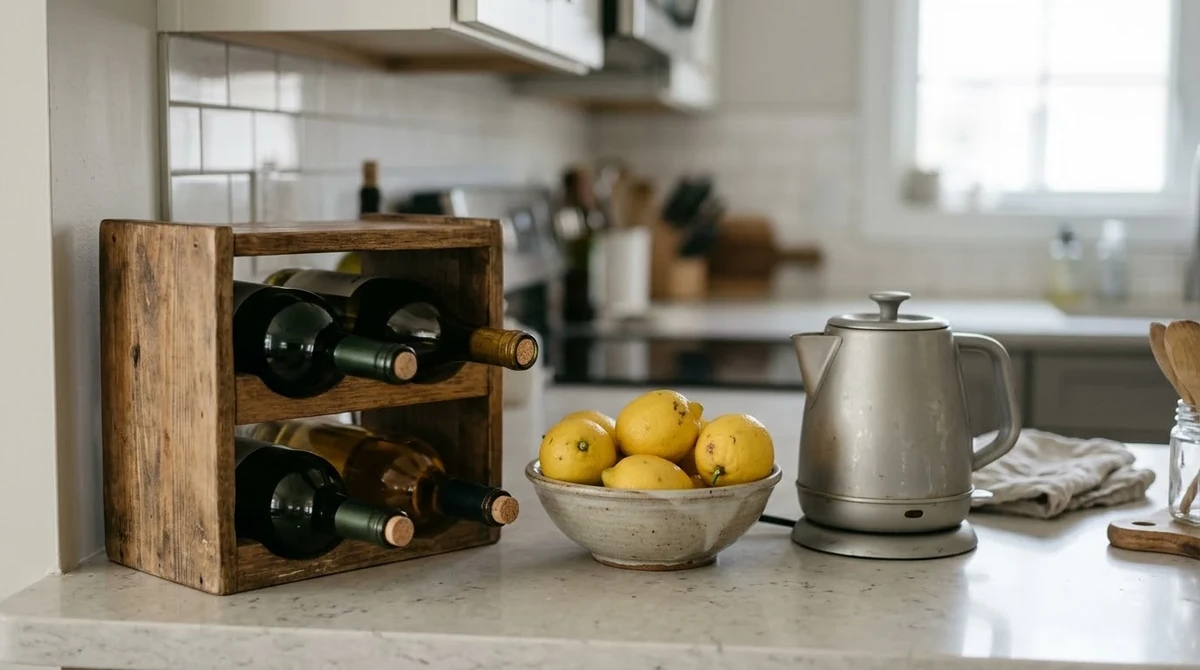
Why it stands out: Older red wines shed tannins and pigments into solid sediment over years in the cellar, yet those same mature bottles have delicate aromas that can fade rapidly if splashed into a wide bowl. As Wine Enthusiast notes, decanting exists both to aerate young wines and to separate clarified wine from solids formed during aging; narrow vessels hold the wine in a tall, tight column with minimal surface area so fragile tertiary notes stay intact while you decant slowly over a light source or through a fine stainless-steel mesh screen.
Keep in mind and best for: A slender profile will not tame a mouth-drying young Tannat or Barolo in thirty minutes, so it works poorly as an all-purpose aerator. Pick this shape if you cellar vintage Bordeaux, Rioja, Barolo, or unfiltered wines and want clean, grit-free pours without over-oxidizing mature bottles.

- Capacity
- 750 ml
- Material
- Lead-free crystal glass
- Size
- 8.5 x 10 inches
- Care
- Dishwasher safe
Younger, tannic reds open up when given room, and this decanter provides it. Its wide hand-blown body holds a full 750 mL bottle, so the wine has plenty of surface for aeration. An integrated glass handle and slanted spout make pouring controlled, while the wide opening makes it easy to clean, and the crystal glass is dishwasher safe too.
Pros & ConsView
- Wide body aerates a full 750 mL bottle
- Integrated glass handle and slanted spout
- Wide opening makes cleaning easy
- Holds only one standard bottle at a time
- Stands 10 inches tall, so it needs roomy storage
Best for Showpiece Entertaining
Sculptural hand-blown crystal decanters—from graceful swans and looping horns to double-chamber vessels—turn serving wine at a dinner party into visual theater while aerating the pour twice.
Why it stands out: Continuous-loop and dual-spout designs let you pour wine into a wide intake funnel on one side and serve from a tapered pouring spout on the other, cascading the liquid across curved crystal walls so it picks up air on the way in and on the way out. Hand-blown lead-free crystal keeps these dramatic profiles remarkably light and balanced in the hand, making them striking centerpieces alongside fine wine glasses during holidays and celebratory dinners.
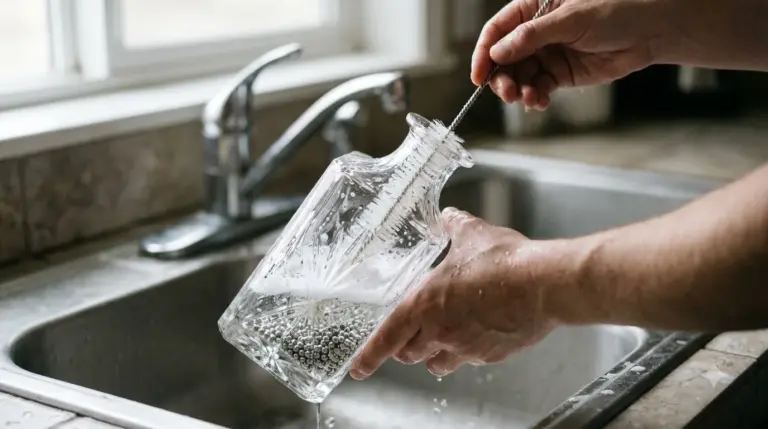
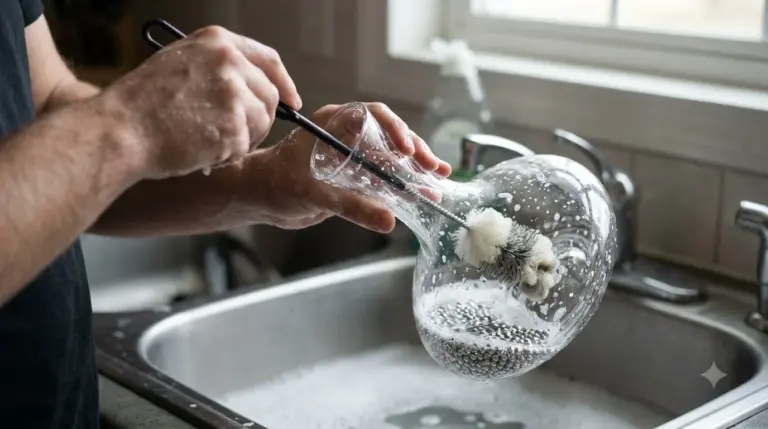
Keep in mind and best for: Intricate bends and narrow spouts are notoriously tricky to scrub, requiring flexible decanter brushes or stainless-steel cleaning beads rather than a quick sponge rinse. This category is best for hosts who love table presentation and gift shoppers looking for an heirloom-worthy piece.

- Material
- Glass with glass lid
- Capacity
- 42 oz (1.5 L)
- Seal
- Airtight glass stopper
- Care
- Dishwasher safe
A teardrop silhouette and clean lines make this decanter a table centerpiece that still earns its keep. The generous capacity serves a crowd, and the airtight glass stopper is easy to grip and remove. It suits red wine, and the maker also lists whiskey and brandy, so one vessel can cover the whole home bar.
Pros & ConsView
- Large capacity suits guests and shared tables
- Airtight glass stopper is easy to remove
- Also works for whiskey, brandy or other spirits
- Large body needs roomy storage space
- Plain glass rather than crystal
Best for Easy Cleaning and Dishwasher Use
Thick-walled, wide-mouth glass carafes eliminate tight corners and delicate rims so you can wash them by hand in seconds or load them directly onto a dishwasher rack.
Why it stands out: Wine Folly editors note that standard thicker-walled glass decanters with simpler shapes are far better suited to dishwasher cleanup than thin, elaborate crystal vessels. A generous neck opening—wide enough to fit a standard sponge or bottle brush—combined with a drip-resistant angled rim means zero red-wine rings left overnight and zero drips running down the exterior onto your tablecloth.
Keep in mind and best for: You trade away the razor-thin lip and high refractive sparkle of hand-blown crystal, and simpler cylindrical profiles provide moderate rather than extreme surface aeration. Choose this style if practicality rules your kitchen and a hard-to-clean vessel would otherwise gather dust in a cabinet.

- Material
- Hand-blown lead-free crystal
- Capacity
- 1300 ml
- Includes
- Drying stand, cleaning beads, aerator lid
- Weight
- 2 pounds
Cleanup is the weak spot of most decanters, and this set tackles it with a free drying stand and stainless-steel cleaning beads in the box. The 1300 ml hand-blown crystal body leaves room beyond a single bottle, and the aerator lid speeds up decanting. A good fit if you rinse by hand and want to dry it upside down.
Pros & ConsView
- Drying stand and cleaning beads are included
- Large 1300 ml body exceeds a standard bottle
- Aerator lid speeds up the decanting step
- Dishwasher use is not listed, so plan to hand-clean
- Heavier at 2 pounds and taller than most
How to Choose
Start by matching capacity to how you drink. A standard wine bottle holds 750 milliliters (about 25.4 ounces), so look for a decanter rated between 1,000 and 1,500 milliliters (34 to 50 ounces); that extra headroom allows the entire bottle to sit at the widest part of the bowl without spilling when you swirl. If you frequently host large gatherings or open magnums, step up to a 1.5-liter or larger vessel.
Next, weigh glass material against maintenance habits. Lead-free crystal can be spun or blown into thinner walls and dramatic shapes with crisp optical clarity, while soda-lime and borosilicate glass offer thicker walls, stronger impact resistance, and better tolerance for dishwashers. Pay close attention to the pouring lip as well—an angled, cold-cut, or gently flared rim prevents wine from dribbling down the outside of the vessel after every pour.
Tip: Never leave wine sitting in a decanter overnight just for storage. Once a bottle has had its recommended 30 to 120 minutes of air, pour any leftovers back into the original bottle using a funnel, recork it tightly, and refrigerate it—check our guide on how long red wine lasts after opening for exact timelines by style.
Frequently Asked Questions
How long should you decant wine before serving?
Most red wines benefit from 20 minutes to 2 hours in a decanter, with an average sweet spot around 40 to 60 minutes. Light-bodied reds like Pinot Noir usually open up in 20 to 30 minutes, medium-bodied reds take 30 to 60 minutes, and tannic full-bodied reds like Cabernet Sauvignon or Nebbiolo often need 1 to 2 hours. Delicate aged wines should be decanted right before serving so they do not lose their subtle aromas.
Is crystal or standard glass better for a wine decanter?
Neither material changes how wine tastes over a single evening, so the right choice comes down to aesthetics and cleanup. Lead-free crystal allows thinner walls, sharper clarity, and sculptural curves, while standard soda-lime or borosilicate glass is thicker, sturdier, and much safer in the dishwasher. If you ever use a vintage leaded-crystal decanter, serve from it the same evening rather than storing wine inside for days.
Should you ever decant white, rosé, or sparkling wine?
Most crisp white and rosé wines do not need decanting, though a young white that smells slightly muted or like a struck match—a sign of mild reduction—can brighten up after 15 to 30 minutes in a small chilled carafe. Full-bodied skin-contact orange wines and rich white Burgundies also respond well to brief air exposure. Sparkling wines rarely need decanting, and when they do, a narrow amphora shape helps preserve their bubbles.
What is the easiest way to clean a narrow-neck wine decanter?
Rinse the decanter with warm water immediately after pouring the last glass so pigments never dry onto the interior walls. For stubborn stains inside curved or narrow-neck shapes, swirl warm water with stainless-steel cleaning beads or a flexible foam bottle brush, avoiding harsh scented dish soaps that can linger in the glass. Always invert the decanter on a drying stand or towel so water spots do not form inside the base.
The right decanter comes down to the bottles you open most—a broad, flat-bottomed bowl for bold young reds, a slim profile for sediment-heavy cellar treasures, or a wide-mouth carafe you can toss in the dishwasher on a Tuesday night. Pick the silhouette that fits both your favorite wines and your cleanup routine, and you will actually reach for it every time you pull a cork.
More in Decanters & Aerators
 Best Whiskey and Wine Decanter: Choosing One Vessel for Both DrinksUpdated Nov 18, 2026
 Best Tower Decanter: How to Pick the Right Shape for Your WineUpdated Nov 18, 2026
 Best Cleaning Brush Decanter Options for Narrow Necks and Deep BowlsUpdated Nov 19, 2026
 Best U Shaped Decanter Picks for Aerating Bold Red WineUpdated Nov 18, 2026
 Best Electric Decanter Styles for Faster, Smoother Wine PoursUpdated Nov 18, 2026
 Best Hand Blown Decanter Styles for Every Bottle and TableUpdated Nov 18, 2026