

We may earn a commission when you buy through links on this page, at no extra cost to you. Learn more.
Cabernet Sauvignon vs Pinot Noir comes down to weight and grip: Cabernet is a full-bodied, firmly tannic red with dark fruit, while Pinot Noir is a lighter, silkier red that leans toward cherry and raspberry. Most of the difference starts in the grape itself. Cabernet has thick skins and Pinot Noir has thin ones, and that single fact shapes body, tannin, flavor, and how each wine pairs with food. Neither wine is better across the board. The right choice depends on the meal on the table and on how much grip you want in your glass.
Many shoppers stand in front of a wine shelf with a bottle of each and wonder whether the two are interchangeable. They are not. This guide explains what separates a Cabernet Sauvignon from a Pinot Noir, where each grape grows best, how to serve it, and which dishes suit it, so you can choose with confidence the next time you are holding two bottles.
What Makes Each Wine Feel Different
Body and texture are the first things most drinkers notice. The structure of a wine comes from the grape, the climate, and the winemaker’s choices, but the grape variety sets the starting point.
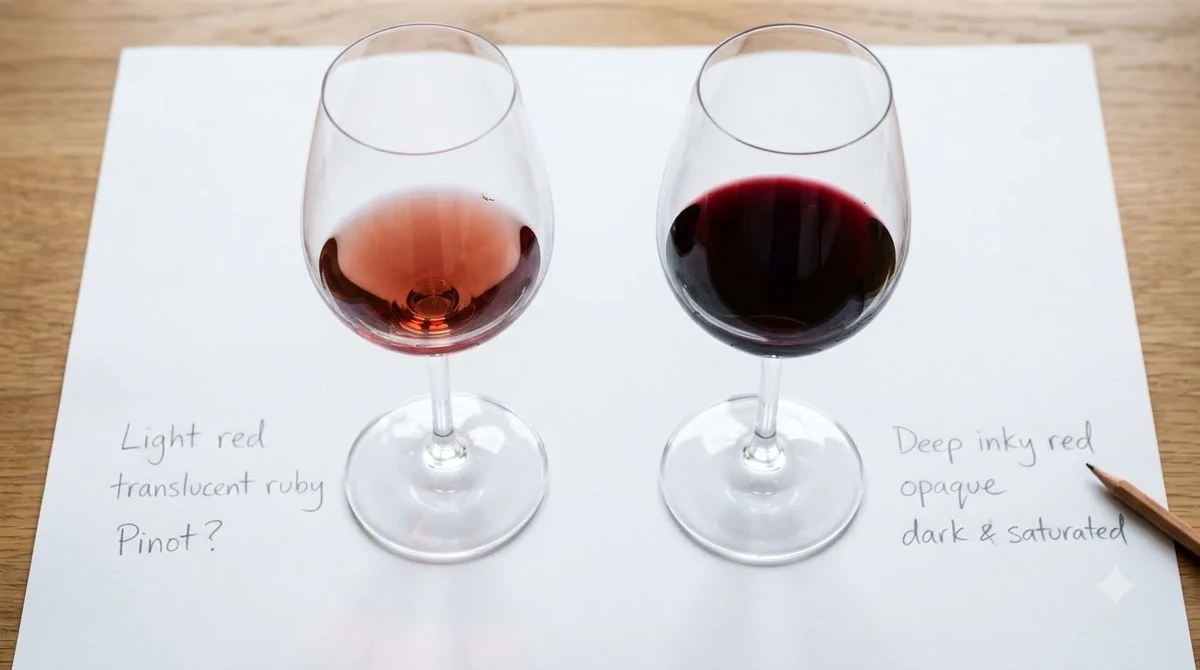
Cabernet Sauvignon is generally described as full-bodied. It feels dense on the palate and leaves a firm, drying sensation on the gums and tongue. That grip comes from tannins, the compounds drawn from grape skins, seeds, and stems. Cabernet grapes have thick skins, which carry a lot of tannin and color. Winemakers often age Cabernet in oak, which adds further structure and a layer of spice.
Pinot Noir sits at the other end of the scale. It is usually light to medium-bodied, with soft, gentle tannins that feel silky rather than gripping. Pinot Noir grapes have thin skins, so there is less tannin to extract. Many drinkers describe the texture as smooth and almost velvety, which is why Pinot Noir often feels easy to sip before a meal.
Why acidity is harder to pin down
Acidity is the crisp, mouth-watering quality that makes a wine feel fresh. Many comparison guides say one grape is always more acidic than the other, but the sources consulted do not support a fixed rule. The answer shifts with the producer and the climate. A cool-climate Pinot Noir can taste sharper than a warm-climate Cabernet, so treat acidity as a bottle-specific detail rather than a difference between the two grapes.
Side-by-Side Comparison
The table below puts the main traits next to each other. Read it as a rough guide, because individual bottles vary by producer, vintage, and winemaking style.
| Trait | Cabernet Sauvignon | Pinot Noir |
|---|---|---|
| Body | Full-bodied | Light to medium-bodied |
| Tannin | Firm and gripping | Soft and silky |
| Grape skin | Thick | Thin |
| Dominant fruit | Cassis, blackberry, plum | Cherry, raspberry, strawberry |
| Other notes | Structured, often oak-aged | Earthy, savory undertones |
| Typical climate | Warm regions such as Napa Valley and Bordeaux | Cool regions such as Burgundy, Oregon, and the Russian River Valley |
Tip: If you are unsure what you are holding, read the grape name on the label first. A Cabernet Sauvignon label usually signals the fuller, grippier style, while a Pinot Noir label signals the lighter, silkier one.
Flavor Profiles and Aromas
Fruit is where the two wines separate most clearly on the nose and the palate.
Cabernet Sauvignon leans toward dark fruit. Drinkers commonly pick up cassis, blackberry, and plum, and that fruit often sits alongside a firm, structured frame. Pinot Noir shows red fruit first, with cherry, raspberry, and strawberry, often accompanied by earthy notes. Some tasters describe the earthy side as forest floor or mushroom, though how strong that note is depends heavily on the bottle.
Age changes both wines, but in different ways. A young Cabernet can taste tight and chewy, and it generally needs time in the bottle for its tannins to soften. Pinot Noir is usually more approachable early on, and the best examples can develop complex, savory flavors as they mature.
Where Each Grape Grows Best
Climate explains much of the difference, because Cabernet ripens fully in warm conditions while Pinot Noir needs cooler weather to show its character.
Cabernet thrives in warm areas such as Napa Valley in California and Bordeaux in France. A long, warm growing season lets the thick-skinned grapes ripen fully, which concentrates the dark fruit and builds the firm tannins that define the style.
Pinot Noir does best in cool regions, including Burgundy in France, Oregon, and the Russian River Valley in California. It is a demanding grape to grow and reacts quickly to small shifts in climate and soil. Cooler conditions preserve its acidity and its delicate red fruit, which is one reason it tastes so different from a sun-ripened Cabernet.
If you want to read about how a grape’s home region shapes the glass, the Wine vs Wine section covers many other pairs of varieties and regions side by side.
How to Serve Each Wine
Serving temperature and glassware both change how these reds taste, so small adjustments pay off.
Most red wines show best slightly cooler than room temperature. One widely read pairing guide puts red wine in general at 55 to 65 degrees Fahrenheit, which is a sensible starting range for both grapes. A bottle that is too warm can taste flabby and alcoholic, while one that is too cold can hide its aromas.
Cabernet Sauvignon often benefits from decanting, especially when it is young and tight. Pouring it into a decanter for a while gives it contact with air, which softens the tannins and lets the fruit open up. Pinot Noir usually does not need decanting. An older bottle may throw sediment, though, so a gentle pour that leaves the last inch in the bottle is a good habit.
Glassware matters too. A wide bowl helps the more delicate aromas of Pinot Noir reach your nose, while a larger glass gives a full-bodied Cabernet room to show its structure. A Cabernet can also be served in a standard red glass with good results, so there is no need to buy a set just for these two.
Food Pairings for Each Style
The simplest rule is to match weight with weight. A heavy wine needs a rich dish, and a lighter wine suits a dish that is more delicate.
Cabernet Sauvignon works best with rich, charred, or fatty foods. Its tannins cut through the fat in a ribeye or a lamb chop and stand up to bold seasoning. According to the Farniente comparison of the two grapes, Cabernet suits ribeye, lamb chop, aged cheddar, Korean short ribs, and birria tacos. The same firm structure makes it a poor partner for very light fish, which can taste metallic beside a grippy red.
Pinot Noir suits medium-weight, savory dishes. It pairs well with salmon, duck, roast chicken, and mushroom risotto. Because its tannins are soft, it does not fight with fish or poultry the way a firm red can. The same source lists miso-glazed salmon and pho among its matches, which shows how flexible the wine is across different cuisines.
Pinot Noir also works with a wider range of everyday meals, including many vegetable-forward dishes, which is why it is often the safer choice when guests are bringing different food to the table.
How to Choose Between Them
Pick Cabernet Sauvignon for a rich meal and a bold glass, and pick Pinot Noir for a lighter, more flexible evening.
Choose Cabernet when the meal is built around red meat, a strong cheese board, or a dish with a heavy sauce. Its structure keeps pace with those flavors. Choose Pinot Noir when the menu leans toward poultry, fish, or mushroom dishes, or when the group wants a red that is easy to sip before dinner is served.
The producer and region on the label often tell you more than the grape name alone. Both grapes span a wide range of quality, from simple everyday bottles to rare, age-worthy wines. A well-made Pinot Noir from a cool site can be more complex than an ordinary Cabernet, and the reverse is also true.
If you want a closer look at a different style of Cabernet, the guide to cabernet sauvignon vs merlot explains how that softer red compares with the grape you are weighing here. Either way, the best way to learn the difference is to open the two wines side by side with the same meal and notice which one you reach for.
Frequently Asked Questions
Is Pinot Noir lighter than Cabernet Sauvignon?
Yes. Pinot Noir is generally light to medium-bodied, while Cabernet Sauvignon is full-bodied. The difference shows most in texture: Cabernet feels dense and grippy, while Pinot Noir feels smooth and silky. Alcohol levels vary by producer, so body and alcohol content are not the same measure.
Which wine has more tannin?
Cabernet Sauvignon has more tannin. Its thick skins carry a lot of this compound, which produces the firm, drying feel on the palate. Pinot Noir has soft, gentle tannins because its thin skins release less of it during winemaking.
Can I serve Cabernet Sauvignon and Pinot Noir with the same meal?
Often, yes, though a heavy Cabernet can overwhelm delicate dishes. Pinot Noir is the safer choice when the menu includes several lighter courses, while Cabernet works better when the main dish is rich or grilled.
Which one is better for a beginner?
Many beginners find Pinot Noir easier to enjoy first because its tannins are softer and its red fruit is bright and easy to follow. Cabernet’s firmness can take some getting used to, although many drinkers end up preferring its richer style once they know what to expect.
Cabernet Sauvignon and Pinot Noir are both red wines, but they ask different things of the meal and the drinker. Start with the food on the table, then choose the grape whose weight matches the dish. Once you understand the difference in body and tannin, the bottles on a shop shelf become much easier to read.
More in Wine vs Wine
 Nero d’Avola vs Pinot Noir: Taste, Body, and Pairing DifferencesUpdated Nov 21, 2026
 Chenin Blanc vs Pinot Blanc: Key Differences in Taste, Acidity, and PairingsUpdated Nov 21, 2026
 Chardonnay vs Shiraz: Key Differences in Taste, Serving, and PairingUpdated Nov 21, 2026
 Chardonnay vs Verdejo: How Spain’s Crisp White Compares to the World’s ChameleonUpdated Nov 21, 2026
 Chardonnay vs Sancerre: Key Differences in Taste, Grapes, and PairingUpdated Nov 21, 2026
 Chardonnay vs Malbec: Key Differences in Taste, Body, and PairingUpdated Nov 21, 2026