

We may earn a commission when you buy through links on this page, at no extra cost to you. Learn more.
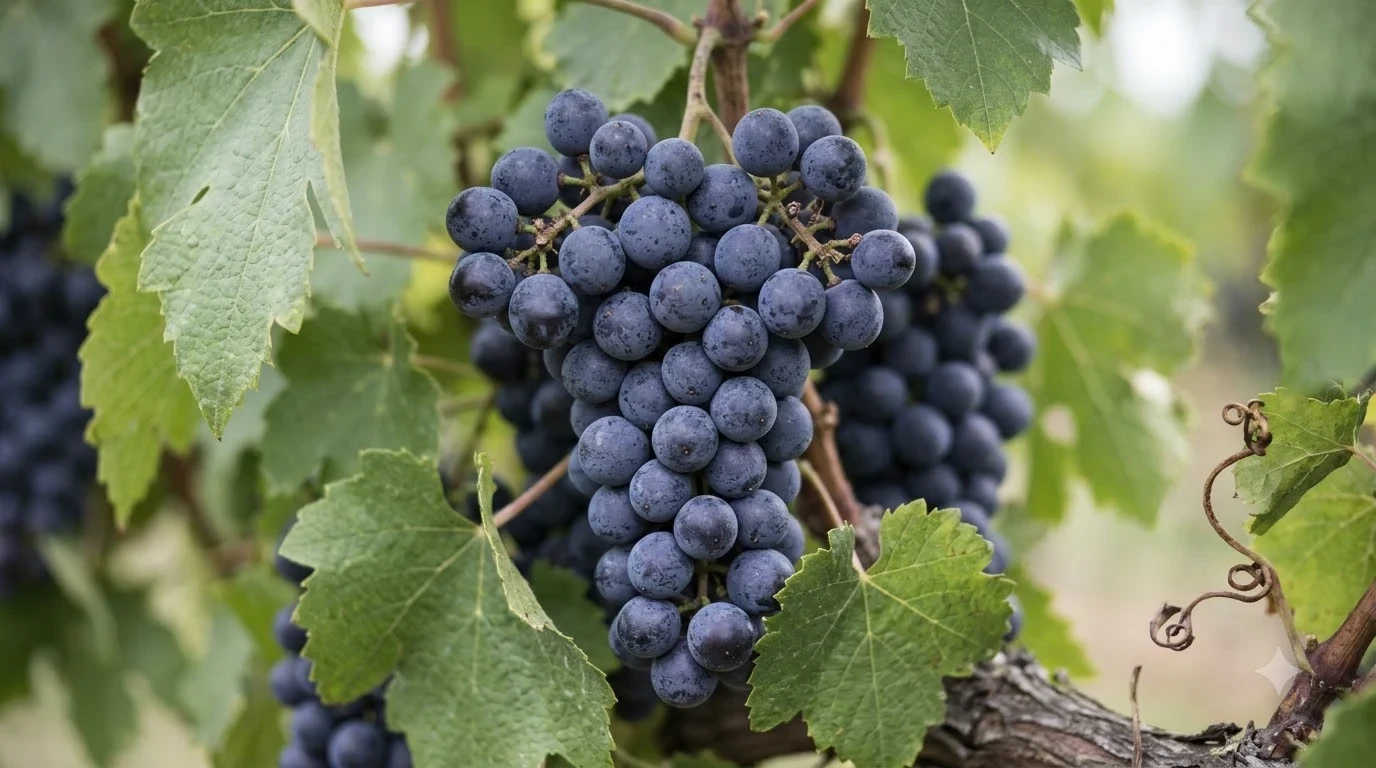
Cabernet Franc history begins in southwestern France and the western Pyrenees, with the grape becoming an important Bordeaux variety before establishing a celebrated identity in the Loire Valley. Its cultivation dates back several centuries, and historical records connect it with medieval western France, 17th-century Loire plantings, and the development of classic regional wines. Cabernet Franc also has an important genetic legacy: it is one of the parents of Cabernet Sauvignon and a parent of Merlot.
Cabernet Franc often receives less attention than its famous offspring, but its historical influence on French winemaking is considerable. It helped shape the red wines of Bordeaux, became the defining grape of several Loire Valley appellations, and eventually spread to vineyards across Europe and the New World. Understanding its history explains why the variety can produce both elegant standalone wines and an important component of traditional Bordeaux blends.
Origins in the Western Pyrenees and Southwestern France
Cabernet Franc is generally associated with the western Pyrenees, particularly the Spanish Basque Country and neighboring southwestern France. Although the exact birthplace and earliest history of the grape remain subjects of historical and genetic interpretation, its connection with this part of Europe is widely recognized.
The region’s position between northern Spain and southwestern France provides an important geographical starting point. Vine cultivation and the movement of agricultural varieties across this border helped establish a shared viticultural history. Cabernet Franc became associated with the Bordeaux region, where it developed a particularly important role among the traditional red grapes.
Bordeaux’s wine authority identifies Cabernet Franc as likely the oldest of the region’s principal grape varieties. It also places the grape within the Carmenet family, a historic group of red wine grapes associated with southwestern France. These connections help explain why Cabernet Franc appears in so many accounts of traditional Bordeaux viticulture.
Some historical interpretations also connect Cabernet Franc with early Roman references to grape varieties grown around ancient Bordeaux, then known as Burdigala. However, identifying a specific ancient grape with modern Cabernet Franc is difficult without reliable genetic material. It is more accurate to distinguish between evidence of early regional viticulture and documented identification of the modern variety.
The grape’s history also reflects the importance of local naming traditions. Bordeaux and neighboring wine regions did not always use the same name for a variety. Depending on the location, Cabernet Franc became known as Bouchet, Bouchy, Breton, or Acheria.
These different names do not necessarily identify separate grape varieties. They reflect the regional vocabulary that developed as Cabernet Franc moved between vineyards, growers, merchants, and wine-producing communities. The Bordeaux wine authority’s Cabernet Franc profile provides further detail about the variety’s origins, regional names, and traditional role in Bordeaux wines.
Medieval Expansion into the Loire Valley
Cabernet Franc became particularly important in the Loire Valley, where the region’s wine authority traces its establishment to the 11th century. Its early development in this area helped establish the foundation for the Loire’s historic red wine appellations, including Chinon, Bourgueil, and Saumur.
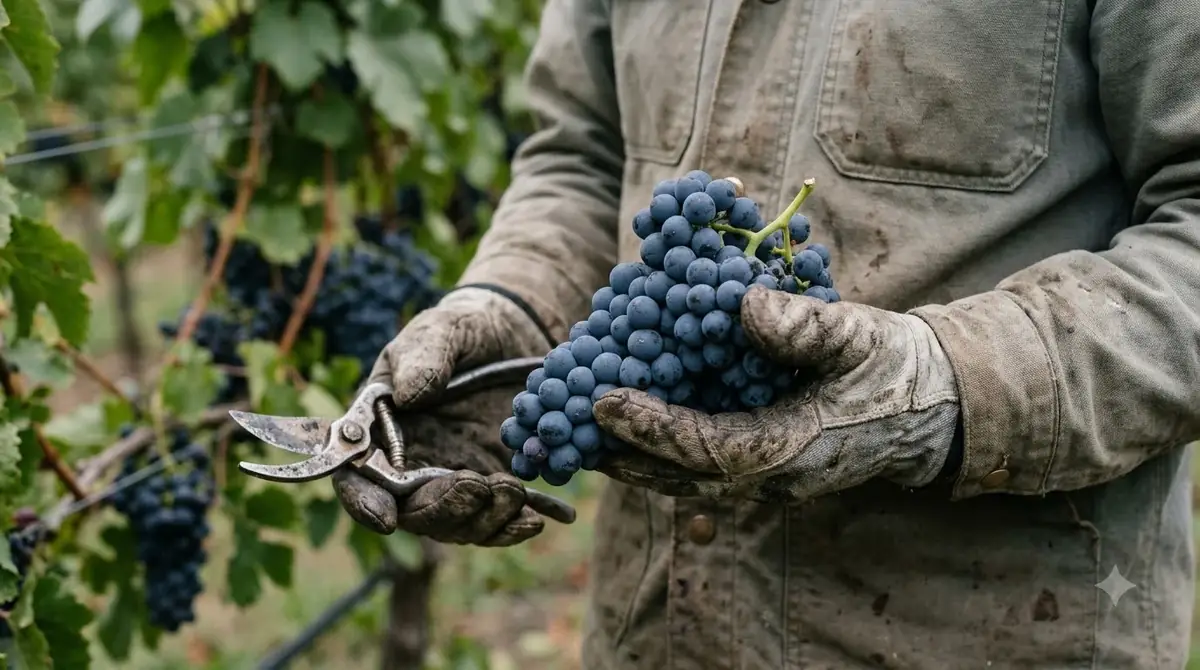
The Loire Valley wine authority describes Cabernet Franc as the region’s first red grape variety. Its cultivation became closely associated with the western French wine trade and the historical relationship between Aquitaine, Anjou, and the Loire vineyards.
One historical explanation connects its arrival with the marriage of Henry Plantagenet and Eleanor of Aquitaine. Their marriage in 1152 brought important political territories together, creating stronger connections between southwestern France and the Loire region. This relationship may have helped the movement of grapevines and winegrowing knowledge between the regions.
The grape eventually acquired the local name Breton. One explanation links the name to its passage through Nantes, which historically had strong connections with Brittany. The name became established in the Loire and remains a familiar synonym for Cabernet Franc in the region.
There is also a later historical tradition involving Cardinal Richelieu. According to this account, Richelieu encouraged the planting of Cabernet Franc in the Loire during the 17th century. The two explanations are not necessarily contradictory: the variety may have arrived much earlier and then received additional attention through later planting programs.
The Loire’s climate and landscape helped Cabernet Franc develop a distinctive identity. Compared with Bordeaux, many Loire vineyards experience cooler conditions, which can preserve freshness and emphasize red-fruit and herbal characteristics. The grape became particularly successful in vineyards around Chinon, Bourgueil, and Saumur.
Its ability to ripen earlier than Cabernet Sauvignon also helped make it suitable for the Loire’s growing conditions. Instead of depending entirely on warmer, longer growing seasons, growers could cultivate a variety capable of reaching maturity in a comparatively cool wine region.
Cardinal Richelieu and the Growth of Loire Red Wines
Cardinal Richelieu is an important figure in the traditional story of Cabernet Franc’s expansion in the Loire Valley. Around 1630, he reportedly arranged for thousands of Cabernet Franc vines to be sent to the vineyards around Chinon, Bourgueil, and Saumur.
The account appears in the historical documentation associated with Saumur-Champigny. Richelieu, who served as governor of Guyenne, reportedly selected the grape because it was already highly regarded in Bordeaux. Its introduction or renewed planting in the Loire helped strengthen the region’s red wine production.
The importance of this story should be understood in its historical context. Cabernet Franc was probably established in the Loire before Richelieu’s involvement. His contribution is better understood as part of the grape’s expansion rather than as definitive proof that he introduced it to the region for the first time.
During the 18th century, red wine consumption increased in western France, and Cabernet Franc plantings expanded. The grape became increasingly important to wine production in Anjou, Touraine, and the surrounding districts.
Historical writing provides further evidence of its reputation. In his 1845 treatise on grape varieties, Count Odart described Cabernet Franc as extremely widespread in western France. He connected the grape with the characteristic red wines of Bordeaux, Chinon, Bourgueil, and Champigny.
This description demonstrates that Cabernet Franc was already recognized as an important regional variety during the 19th century. It was not simply an obscure grape used for occasional blending. It had a substantial identity in several established wine-producing areas.
Nevertheless, red wine did not dominate every Loire vineyard. Historical commentary from 1861 noted that red wine production remained considerably smaller than white wine production in parts of the region. Cabernet Franc’s growing reputation therefore developed alongside a broader wine industry in which white varieties continued to play an important role.
Bordeaux Blends and Cabernet Franc’s Genetic Legacy
Cabernet Franc has a central place in Bordeaux history because it contributes to the region’s traditional red blends and is genetically related to two other major Bordeaux grapes. Its relationship with Cabernet Sauvignon is especially important, since modern DNA research established that Cabernet Franc is one of its two parents.

For generations, Cabernet Franc was cultivated in Bordeaux before Cabernet Sauvignon became widely established. The varieties eventually developed complementary roles in regional winemaking. Cabernet Sauvignon generally supplies more substantial tannin and structure, while Cabernet Franc contributes freshness, finesse, and aromatic detail.
The relationship between the grapes was scientifically clarified in 1997. Researchers John Bowers and Carole Meredith published a study in Nature Genetics demonstrating that Cabernet Sauvignon resulted from a natural crossing of Cabernet Franc and Sauvignon Blanc. The original 1997 genetic research on Cabernet Sauvignon parentage documents the DNA evidence supporting this relationship.
This discovery was important because the parentage of Cabernet Sauvignon had previously been a matter of speculation. Genetic analysis provided strong evidence for the relationship and explained why Cabernet Franc and Cabernet Sauvignon share certain physical and viticultural characteristics.
Cabernet Franc also has a genetic relationship with Merlot. Research summarized by the University of California, Davis, identifies Cabernet Franc as the male parent of Merlot as well as Cabernet Sauvignon. This makes the variety especially important to the historical development of Bordeaux’s major red grapes.
The region’s blending traditions developed around varieties that contribute different characteristics. Cabernet Sauvignon is associated with strong tannin and structure, Merlot generally provides softer texture and roundness, and Cabernet Franc adds freshness and aromatic complexity.
The proportions vary according to appellation, vineyard conditions, and producer preferences. On the Left Bank, particularly in the Médoc and Graves, Cabernet Sauvignon commonly plays the leading role. On the Right Bank, including Saint-Émilion and Pomerol, Merlot often dominates, with Cabernet Franc making a significant contribution.
Cabernet Franc is especially important in Saint-Émilion, where Bordeaux’s wine authority identifies it as representing approximately one-third of vineyard plantings. This substantial presence demonstrates that the grape is not merely a secondary blending ingredient in every Bordeaux district.
For additional historical context, the history of Cabernet Sauvignon explains how the natural crossing of Cabernet Franc and Sauvignon Blanc produced one of the world’s best-known red wine varieties. The discovery also illustrates why Cabernet Franc deserves attention in its own right rather than being viewed only as the parent of another grape.
Readers interested in the wider family of classic French varieties can also explore Wine by Type to understand how grape identity, regional traditions, and winemaking methods shape different wine styles.
The Rise of Chinon, Bourgueil, and Saumur-Champigny
The Loire Valley’s most important Cabernet Franc appellations developed distinctive identities around the grape. Chinon, Bourgueil, Saint-Nicolas-de-Bourgueil, and Saumur-Champigny demonstrate how a single variety can express different regional conditions while remaining central to local wine traditions.
Chinon, in the Touraine area, is one of the best-known names associated with Cabernet Franc. The vineyards are situated around the Vienne River, and the region produces wines that range from relatively light and fresh to more concentrated examples suited to aging.
Bourgueil and neighboring Saint-Nicolas-de-Bourgueil also have long connections with the variety. Cabernet Franc is locally known as Breton, a name that remains closely associated with Loire red wine. Different vineyard locations and soils contribute to variations in structure, fruit intensity, and aging potential.
Saumur-Champigny provides particularly useful historical documentation. According to the European Union’s published product specification, the early development of its vineyards dates to 1066, when monks from Saint-Florent Abbey cleared slopes overlooking the Loire between Saumur and Montsoreau.
Red wine production emerged much later, in the early 17th century. The same historical account describes Richelieu’s reported distribution of thousands of Cabernet Franc vines around 1630. This provides an important distinction between the age of the vineyard landscape and the later development of its red wine identity.
Antoine Cristal, a producer from Parnay, played an important role in advancing Cabernet Franc during the late 19th century. His work helped improve cultivation and winemaking practices and contributed to the subsequent recognition of Saumur-Champigny.
The appellation’s development accelerated during the 1960s. A cooperative winery established in 1957 also helped expand commercial opportunities, initially in Paris and subsequently across France and international export markets.
The following table summarizes the main historical milestones associated with Cabernet Franc and its best-known French wine regions.
| Period | Historical development | Significance |
|---|---|---|
| 11th century | Cabernet Franc established in the Loire Valley | Early development of Loire red wine traditions |
| 1152 | Marriage of Henry Plantagenet and Eleanor of Aquitaine | Political connection between Aquitaine and Anjou |
| Around 1630 | Richelieu reportedly distributes thousands of vines | Expansion around Chinon, Bourgueil, and Saumur |
| 18th century | Red wine consumption and plantings increase | Greater importance for Cabernet Franc |
| 1845 | Count Odart documents the variety’s regional importance | Recognition across western France |
| Late 19th century | Antoine Cristal advances cultivation in Parnay | Development of Saumur-Champigny wines |
| 1957 | Saumur-Champigny cooperative winery established | Expansion of distribution and commercial markets |
| 1960s | Saumur-Champigny gains significant recognition | Consolidation of the appellation’s identity |
| 1997 | DNA research establishes Cabernet Sauvignon’s parentage | Scientific confirmation of Cabernet Franc’s genetic legacy |
The appellation’s official specification also provides concrete information about its production standards. It identifies Cabernet Franc as the principal grape, establishes a minimum natural alcoholic strength of 10.5%, and sets a maximum fermentable sugar content after fermentation of 3 grams per liter.
These details show how historical identity eventually became supported by formal regional production rules. Saumur-Champigny is not simply a geographical reference; it is a protected wine designation with defined production requirements.
Cabernet Franc’s Appearance, Style, and Modern Identity
Cabernet Franc developed different identities across France, but its characteristic combination of freshness, moderate color, aromatic detail, and structured yet approachable tannins remains recognizable. Its modern reputation includes both Loire Valley varietal wines and Bordeaux blends.
In Bordeaux, the grape is frequently used to add finesse and freshness to blends. Its harvest timing falls between early-ripening Merlot and later-ripening Cabernet Sauvignon, giving growers another important variety to work with during the growing season.
In the Loire Valley, Cabernet Franc is commonly bottled as a single-variety red wine. This allows its regional characteristics to become more apparent, particularly in appellations such as Chinon, Bourgueil, and Saumur-Champigny.
Saumur-Champigny provides an official example of the grape’s typical visual and aromatic profile. Its product specification describes the wines as generally dark ruby, with aromas that frequently suggest red fruits and violet. The wines can be enjoyable while young or after several years of preservation.
Other common descriptions of Cabernet Franc include raspberry, red cherry, violet, fresh herbs, and green pepper. The precise profile depends on ripeness, vineyard conditions, fermentation choices, and aging. Cooler growing conditions can preserve freshness and emphasize herbal characteristics, while riper fruit can produce a rounder, more concentrated impression.
Its color is another distinguishing feature. Cabernet Franc generally produces moderately colored wines compared with Cabernet Sauvignon. Skin characteristics, extraction during fermentation, and the influence of other grapes in a blend can all affect the finished wine’s appearance.
For a more detailed explanation of this visual characteristic, see Cabernet Franc color. Understanding its appearance alongside its history makes it easier to distinguish Cabernet Franc from its more deeply colored relative.
Cabernet Franc also developed an international following. It is now grown in countries outside France, including the United States, where producers make both varietal wines and Bordeaux-inspired blends. Its combination of freshness and aromatic character makes it useful in a range of climates and winemaking styles.
In the United States, Cabernet Franc has become associated with several wine-producing areas, including Virginia, New York, and California. Regional growing conditions influence its style, but the variety continues to demonstrate the adaptability that helped it succeed in France.
Its international development represents an important change in the grape’s reputation. For much of its history, Cabernet Franc was closely connected with French regional traditions and Bordeaux blending. Modern varietal bottlings have helped establish its identity as a wine that can stand independently.
Why Cabernet Franc History Still Matters to Wine Drinkers
Cabernet Franc history helps explain the differences between French wine regions and the relationships among some of the world’s most familiar red grapes. It also provides useful context when choosing between a Loire Valley Cabernet Franc and a Bordeaux blend.
For someone exploring French wine, the grape offers a direct connection between two important wine regions. A bottle of Chinon or Bourgueil represents a tradition in which Cabernet Franc usually takes center stage, while many Bordeaux wines use it as one part of a carefully constructed blend.
These approaches produce different expressions of the same variety. A Loire Valley Cabernet Franc may emphasize fresh red fruit, herbal aromas, and lively acidity. A Bordeaux blend may combine its aromatic qualities with the stronger structure of Cabernet Sauvignon or the softer fruit character of Merlot.
Its history also changes how the relationship with Cabernet Sauvignon should be understood. Cabernet Franc is not simply a lighter version of Cabernet Sauvignon. It is an established variety with a much longer documented role in Bordeaux and a distinctive regional identity in the Loire.
The grape’s genetic relationship with Merlot is equally interesting. Both varieties are central to Bordeaux’s red wine tradition, and their shared parentage helps explain some of the historical connections among the region’s major grapes.
When exploring Cabernet Franc, compare wines from at least two different appellations. Chinon and Saumur-Champigny offer a useful starting point because both have strong historical relationships with the variety, while their different vineyard conditions and production choices can create noticeable stylistic differences.
Serving temperature can also help show the wine’s character. A lighter Cabernet Franc is generally best served around 55–60°F, while a fuller-bodied example can be served closer to 60–65°F. A standard 5-ounce pour provides enough wine to assess its aroma, texture, acidity, and finish.
Tip: Compare a Chinon with a Saumur-Champigny from the same general drinking period. Look for differences in red-fruit intensity, herbal aromas, tannin, and texture rather than assuming every Cabernet Franc tastes the same. These regional comparisons provide a practical introduction to the grape’s long French history.
Food pairing can further illustrate the variety’s versatility. Cabernet Franc generally works well with roasted poultry, grilled vegetables, pork, mushrooms, and moderately seasoned dishes. Its acidity can complement tomato-based foods, while its tannins can work with dishes containing enough protein and fat to soften their drying sensation.
Its history also helps explain why the grape continues to attract attention from producers. It offers a way to express regional character without relying entirely on the internationally familiar Cabernet Sauvignon style. In the Loire, that means preserving a long-established varietal tradition; in Bordeaux, it means maintaining an important part of the region’s blending heritage.
Frequently Asked Questions
Was Cabernet Franc known by another name in medieval France?
Yes. Cabernet Franc became known as Breton in the Loire Valley, Bouchet in the Libournais, and Bouchy in the Pyrénées-Atlantiques. These names developed through regional naming traditions rather than identifying entirely separate modern grape varieties.
Is Cabernet Franc genetically related to Carménère?
Yes. Genetic research has identified Cabernet Franc as a parent of Cabernet Sauvignon and has established its close genetic connection with several other Bordeaux varieties. Carménère belongs to this wider historical grape family, although its exact parentage should not be confused with the confirmed Cabernet Sauvignon crossing.
What is the difference between Cabernet Franc and Cabernet Sauvignon vines?
Cabernet Franc generally buds and ripens earlier than Cabernet Sauvignon, an important distinction in regions with shorter growing seasons. Cabernet Franc also tends to produce wines with less intense color and a different balance of fruit, herbal aromas, and tannin.
Which Loire appellation is particularly associated with Antoine Cristal?
Saumur-Champigny has a particularly strong historical connection with Antoine Cristal, who worked in Parnay during the late 19th century. His vineyard and winemaking efforts helped develop the region’s Cabernet Franc reputation. The historic Clos Cristal vineyard is also associated with his legacy.
Does Cabernet Franc have white-berried mutations?
Yes. Cabernet Blanc is a distinct white grape variety associated with a natural mutation of Cabernet Franc. It is genetically connected to the red variety but has different berry coloration and winemaking applications.
Cabernet Franc has a history that extends from the western Pyrenees through medieval Loire vineyards and the great estates of Bordeaux. Its influence on Cabernet Sauvignon, Merlot, and traditional French blending makes it one of the most historically significant red grapes in European wine. Exploring Chinon, Bourgueil, Saumur-Champigny, and Saint-Émilion offers a rewarding way to understand how this influential variety continues to shape wine today.
More in Wine Types & Grapes
 What Does Ruby Port Taste Like? Flavor Notes, Styles, and Serving TipsUpdated Nov 21, 2026
 What Does Ribolla Gialla Taste Like? Crisp White and Amber Styles ExplainedUpdated Nov 21, 2026
 What Does Semillon Taste Like? Flavor Profile, Styles & PairingsUpdated Nov 21, 2026
 What Does Scuppernong Taste Like? Flavor, Styles, and Pairing GuideUpdated Nov 21, 2026
 What Does Saperavi Taste Like? Flavors, Styles, and Pairing GuideUpdated Nov 21, 2026
 What Does Natural Wine Taste Like? Flavors, Styles, and Serving TipsUpdated Nov 21, 2026