

We may earn a commission when you buy through links on this page, at no extra cost to you. Learn more.
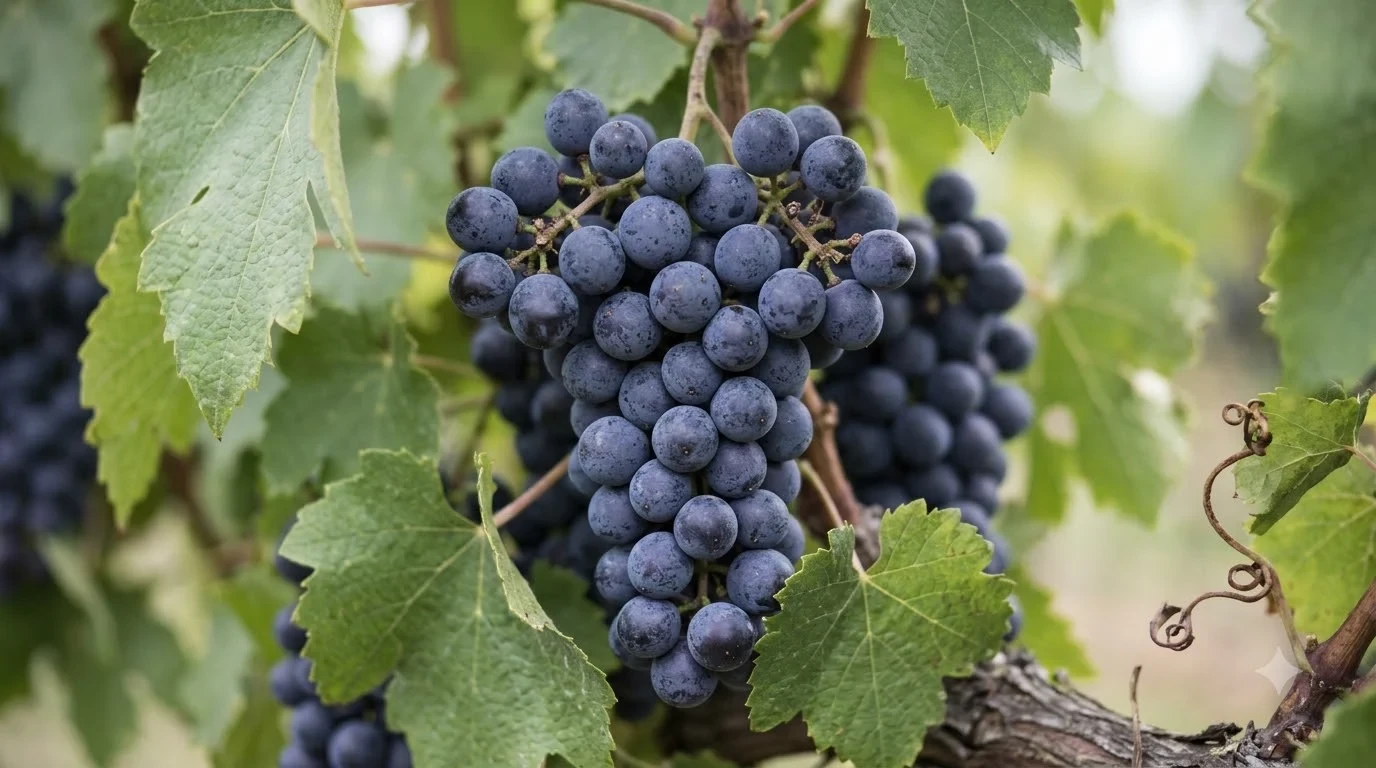
cabernet sauvignon history begins in Bordeaux, France, where the grape was growing by the 17th century before becoming a defining red variety in Napa Valley and other wine regions. Its ancestry remained uncertain until DNA research identified Cabernet Franc and Sauvignon Blanc as its parent grapes. The story explains why Cabernet Sauvignon became a benchmark for structured red wine, and why bottles from Bordeaux, California, and Chile can share a name while expressing different places.
Cabernet Sauvignon is now familiar on wine lists and store shelves, but its rise was neither inevitable nor immediate. Centuries of vineyard selection in France, adaptation to California, and a celebrated blind tasting in Paris turned a regional Bordeaux grape into an international reference point.
Where Cabernet Sauvignon First Appeared
Cabernet Sauvignon’s documented roots are in Bordeaux, in southwest France, where the grape was established by the 17th century and became especially well suited to the gravelly western side of the Gironde Estuary. Its early history is a story of adaptation to local vineyard conditions rather than a planned modern breeding program.
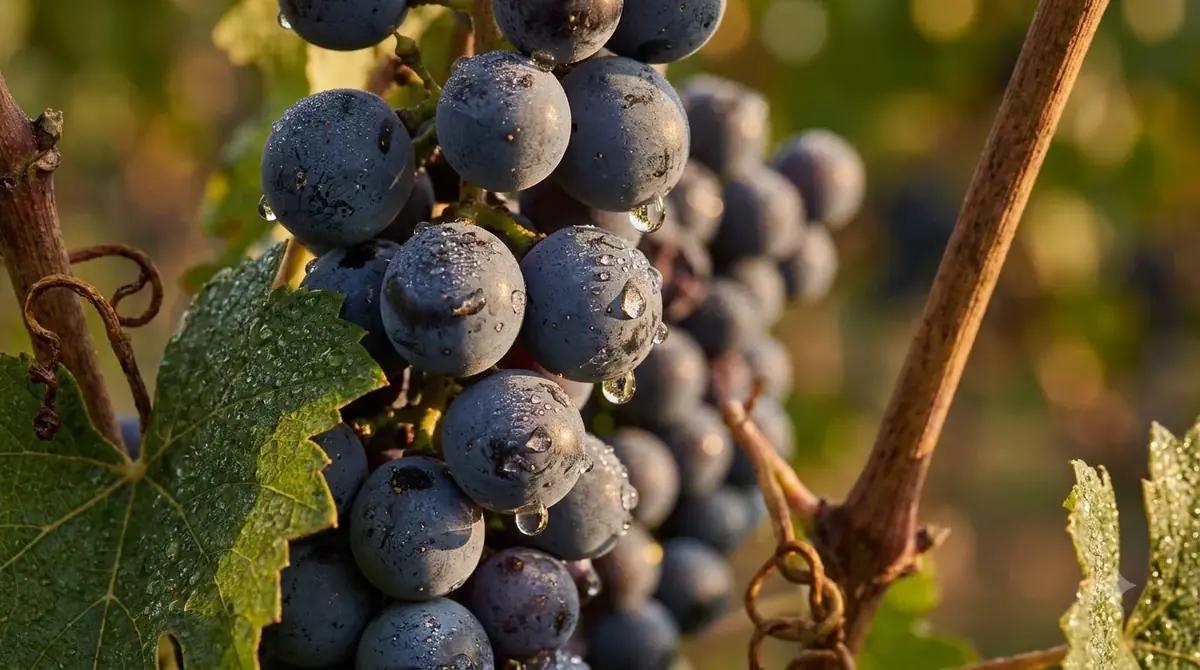
Before scientists could trace its ancestry, growers knew the grape through its performance in the vineyard and cellar. Cabernet Sauvignon ripens relatively late, develops small berries with substantial skins, and produces wines with deep color and firm tannins. Those qualities made it valuable in a region where autumn weather can be uncertain: a successful site needs enough warmth and a long enough growing season to bring the fruit to maturity. The grape’s thick skins also contribute to the concentration and structure that distinguish it from softer, earlier-ripening varieties.
The exact moment of its appearance has not been recorded. Historical evidence places Cabernet Sauvignon in Bordeaux by the 1600s, but there is no named breeder or founding estate to attach to its creation. Researchers later concluded that its parents were two varieties already present in the region, which makes a natural crossing much more plausible than a carefully planned experiment. For readers comparing grapes and finished styles, the site’s broader reference to Wine by Type can help separate a grape variety from the regional wine traditions built around it.
The name can create confusion: Cabernet Sauvignon is a grape variety, not one fixed wine style. A Bordeaux blend, a Napa Valley Cabernet, and a Chilean varietal bottling can taste quite different because of climate, soils, blending partners, and cellar choices.
What DNA Research Revealed About Its Parents
Cabernet Sauvignon’s parentage was established through DNA fingerprinting carried out by researchers at the University of California, Davis, with the findings reported in 1997. The study identified Cabernet Franc and Sauvignon Blanc as the two parent varieties, resolving a question that had remained open for generations of wine historians and growers.
Professor Carole P. Meredith and researcher John Bowers used genetic analysis to identify the relationship, rather than relying on similarities in leaf shape, berry color, or the names of the grapes. The discovery was striking because Cabernet Franc was an expected relative, while the contribution from Sauvignon Blanc was not. One parent is a red grape; the other is a white grape. Their offspring became one of the world’s best-known red wine varieties.
The research was not an attempt to create a new Cabernet. It grew from a practical effort to identify vines accurately, since visible traits can shift with growing conditions and mistaken identity can be costly for growers. DNA evidence gave nurseries and vineyard owners a more reliable way to confirm what they had planted. UC Davis recounts the work in its report on the Cabernet Sauvignon parentage study.
The finding placed the grape more clearly in Bordeaux’s family tree: Cabernet Franc is a parent, not merely a similar-tasting companion. Sauvignon Blanc’s contribution also shows that grape color does not determine which varieties can be related. The study did not identify the exact vineyard or date of the original cross.
Why Bordeaux Made Cabernet a Classic
By the 18th century, Cabernet Sauvignon was established on Bordeaux’s Left Bank, especially in the Médoc and Graves, where gravel soils and a relatively warm growing environment suited its late ripening. Its role in appellations such as Pauillac, Saint-Estèphe, and Margaux helped turn the grape into a foundation of fine Bordeaux red wine.
The Left Bank setting matters because Cabernet Sauvignon needs time to ripen fully. Gravel drains readily and can retain warmth, helping vines in suitable sites carry fruit toward maturity later in the season. The Bordeaux regional wine body says the grape accounts for 22% of the region’s red plantings and is commonly harvested 7 to 12 days after Merlot. That gap is one reason Cabernet and Merlot are useful partners: they do not ripen at exactly the same pace, and each brings a different structure to a blend.
Cabernet Sauvignon contributes firm tannins, dark-fruit character, and an upright frame. Merlot generally adds a rounder texture and softer fruit, while Cabernet Franc can contribute fragrance and freshness. The proportions vary with the site and the producer. A Médoc blend often places Cabernet Sauvignon at the center, while wines from Saint-Émilion and Pomerol on the Right Bank more often give Merlot the leading role. The official Bordeaux profile of Cabernet Sauvignon describes the grape’s place in the region and the gravelly Left Bank sites where it thrives.
Bordeaux built a tradition of estate identity, appellation, blending, and aging around its reds. Cabernet Sauvignon’s structure and ability to age made it a natural fit, and the grape became associated with Bordeaux prestige even in regions where producers bottle it on its own.
How Cabernet Sauvignon Reached California
Cabernet Sauvignon arrived in California during the 19th century, with the first documented importation recorded in 1852 and significant North Coast plantings following in the 1870s. It spread through Santa Clara, Sonoma, and Napa before vineyard disease and Prohibition sharply reduced its footprint.
University of California, Davis historical records identify French nurseryman Antoine Delmas as responsible for the first documented importation in 1852, bringing French vines to the Santa Clara Valley. In 1878, Sonoma’s Captain J. H. Drummond established a significant North Coast Bordeaux vineyard that included Cabernet Sauvignon, while H. W. Crabb planted the grape in Napa at about the same time. These early plantings were part of a broader effort to see whether Bordeaux varieties could thrive in California’s varied coastal valleys.
By the middle of the 1880s, Cabernet Sauvignon was established in Sonoma, Napa, and Santa Clara counties. California producers made Bordeaux-inspired reds that were often called clarets or Médoc blends. Yet early progress was fragile. Phylloxera damaged vineyards, and the variety’s comparatively low yields made it less attractive to some growers. The grape could produce excellent wines in favorable coastal settings, but it was not an easy choice everywhere in the state.
| Period | Milestone | Why it mattered |
|---|---|---|
| 1852 | First documented California importation to Santa Clara Valley | Introduced Bordeaux vines into the state’s developing wine industry |
| 1878 | Significant plantings in Sonoma and Napa | Established Cabernet in the North Coast’s early vineyard landscape |
| Mid-1880s | Established in Sonoma, Napa, and Santa Clara counties | Expanded beyond isolated experimental plots |
| 1891 | Plantings had become rare after phylloxera damage | Interrupted the grape’s early California expansion |
| 1933 | About 200 acres remained in California, mostly in Napa | Shows the scale of the decline by the end of Prohibition |
Prohibition made the situation more difficult. Many California vineyards planted with red Bordeaux varieties were not maintained because commercial wine production was severely restricted. A few wineries survived by producing sacramental wine, but Cabernet Sauvignon was not widely sold as a home-winemaking grape on the East Coast. By the repeal in 1933, historical estimates put California’s Cabernet Sauvignon acreage at roughly 200 acres, most of it in Napa. That small base helps explain why the variety’s later California success depended on renewed research, investment, and patient vineyard development.
How Napa Valley Changed Cabernet Sauvignon’s Reputation
Napa Valley already had a wine industry before Cabernet Sauvignon became its signature, but the grape’s rise accelerated after the 1976 Judgment of Paris. The 1973 Stag’s Leap Wine Cellars Cabernet Sauvignon won the red-wine category, and California had about 27,000 acres of Cabernet Sauvignon by the time of the tasting.
The result did not create Napa Cabernet from nothing. Wine Enthusiast documents that Napa had a first winery boom in the 1880s and that some strong Cabernet wines from the 1930s through the 1960s were already in winery cellars. Examples include Beaulieu Vineyard’s 1968 Private Reserve and Heitz Cellar’s 1974 Martha’s Vineyard. Their reputation, however, remained limited beyond a relatively small group of wine professionals and collectors.
The Paris tasting gave California’s leading wines a dramatic international stage. Organized by British wine merchant Steven Spurrier, it was a blind comparison between California wines and celebrated French bottles. Stag’s Leap Wine Cellars’ 1973 Cabernet Sauvignon placed first among the reds, ahead of established Bordeaux labels. The result challenged the assumption that France alone could produce world-class fine wine and gave Napa producers a powerful story to share with consumers and importers.
Investment followed in the late 1970s. Wine Enthusiast describes interest from American entrepreneurs as well as French wine companies and other outside investors. Acceptance broadened through the 1980s, and by the 1990s “Napa Cab” had become a recognizable identity. The region’s long sunny season, varied valley-floor and hillside sites, and growing experience with vineyard management and cellar technology helped producers develop a style that was both recognizable and distinct from Bordeaux.
UC Davis records show about 700 California acres in 1956, 1,417 coastal-county acres in 1963, and 27,000 statewide in 1976. The figures cover different geographies, but together they show how quickly planting expanded before the Paris result brought wider attention.
How Cabernet Became a Global Benchmark
Cabernet Sauvignon’s spread beyond Bordeaux and California gathered pace in the late 19th century, including plantings in Chile during the 1880s, and the grape later became a familiar reference point for producers across several continents. Its international reach reflects both its adaptability to suitable climates and the prestige attached to Bordeaux and Napa examples.
In Chile, Don Melchor Concha y Toro imported French grapevines, including Cabernet Sauvignon, from Bordeaux in the 1880s. He planted vineyards in several parts of the country, including the Cachapoal Valley near the coastal mountain range. Chile’s vineyards were not affected by the phylloxera epidemic in the same way as many European vineyards, helping preserve valuable old plantings and giving the country a distinctive history with French varieties.
Producers use the grape differently by region. Bordeaux often blends it with Merlot and Cabernet Franc, while Napa and many newer wine regions bottle Cabernet Sauvignon on its own to foreground its dark fruit, firm tannins, and oak-aged character. The same variety can represent a regional blend in one place and a single-grape wine in another.
Cabernet’s recognizable structure helps drinkers compare regions. Bordeaux examples often emphasize cassis, cedar, herbs, and firm tannins; warmer California sites may show riper black fruit and more oak. These are tendencies, not rules, since elevation, soils, vintage weather, harvest timing, fermentation, and maturation shape the final wine. A young, full-bodied Cabernet may benefit from 30 to 60 minutes in a decanter. This guide explains how long to decant cabernet sauvignon, while this overview of how long does cabernet sauvignon last unopened covers the factors that affect cellaring.
Tip: Cabernet Sauvignon’s firm tannins pair naturally with protein-rich foods such as grilled beef and lamb, while salt and fat can soften tannin’s drying impression. Very hot chili can make the alcohol and tannin seem more aggressive, so choose a less tannic wine for fiery dishes. For a sweeter pairing, the dessert should be at least as sweet as the wine; see ideas for Cabernet Sauvignon with chocolate.
Cabernet Sauvignon’s long history is therefore not only a timeline of plantings and famous tastings. It is also the history of a grape that can hold its identity while expressing different regions, blends, and cellar choices. Bordeaux established its reputation, California proved its international potential, and growers elsewhere adapted it to their own landscapes.
Frequently Asked Questions
These answers add a few practical details about the grape’s name, selection, and place in California wine culture. They also explain why Cabernet Sauvignon is not a single fixed recipe, even when the label names one variety.
What does the word “Sauvignon” mean?
The name is thought to derive from the French word sauvage, meaning “wild.” The shared word in Cabernet Sauvignon and Sauvignon Blanc is part of their names, but the genetic relationship was established through DNA evidence rather than the wording itself.
Are all Cabernet Sauvignon vines genetically identical?
No. Vine growers propagate selected vines, known as clones or selections, for traits such as yield, cluster shape, ripening, and fruit quality. UC Davis Foundation Plant Services documented more than 65 public and proprietary Cabernet Sauvignon selections in its catalog, illustrating the range available to growers.
What is a Meritage blend?
Meritage is a name used in the United States for blends based on traditional Bordeaux grape varieties. UC Davis records that the term came into use in the 1980s for blends containing less than 75% of any one variety, allowing several grapes to contribute without one dominating the recipe.
Why did early California growers hesitate to plant Cabernet Sauvignon?
Low yields made the variety less attractive in many vineyards, and early California viticulture research found that its aroma could become too intense in hotter inland areas. In 1907, University of California viticulturist Frederic Bioletti recommended it for coastal counties and cautioned against planting it in rich valley soils.
What kept some California Cabernet vineyards operating during Prohibition?
A small number of wineries continued producing sacramental wine, which gave some vineyards a commercial purpose while much of the state’s red Bordeaux acreage went unmaintained. UC Davis historical records name Concannon among the wineries that made altar wines during this period.
Cabernet Sauvignon became famous through a combination of Bordeaux vineyard conditions, California persistence, and a landmark international tasting, but its history is still being shaped by producers in established and emerging regions. Understanding that past makes it easier to read a bottle’s origin, recognize its style, and choose the right moment to open it.
More in Wine Types & Grapes
 What Does Mourvèdre Taste Like? Flavor Profile, Regions, and PairingsUpdated Nov 20, 2026
 What Does Marsanne Taste Like? Flavors, Styles, and Food PairingsUpdated Nov 20, 2026
 What Does Malvasia Taste Like? Styles, Flavors, and Food PairingsUpdated Nov 20, 2026
 What Does Grenache Blanc Taste Like? Flavor Profile, Styles, and PairingsUpdated Nov 20, 2026
 What Does Garnacha Taste Like? Key Flavors, Styles, and Pairing TipsUpdated Nov 20, 2026
 What Does Fruit Wine Taste Like? A Complete Flavor and Style BreakdownUpdated Nov 20, 2026