


We may earn a commission when you buy through links on this page, at no extra cost to you. Learn more.
The best wine travel bag depends on how you are traveling and how many bottles you plan to carry, with hard-sided wheeled wine suitcases offering the highest protection for checked air travel and padded leakproof sleeves working best for slipping one or two bottles inside regular luggage. Insulated multi-bottle totes suit road trips and winery-hopping by car, while compact crossbody carriers and weekender duffels cover picnics, BYOB dinners, and overnight getaways.
Glass wine bottles and rough baggage handling rarely mix well, yet bringing prized bottles home from wine country or transporting chilled whites to a weekend dinner is straightforward with the right carrier. Different travel scenarios call for distinct construction styles—from rigid, foam-lined shells built for airport cargo holds to collapsible insulated totes that keep bottles cold on the road.
Quick Comparison
Each wine carrier category balances impact protection, bottle capacity, thermal insulation, and empty-bag portability differently depending on your itinerary.
| Carrier Type | Typical Capacity | Impact Protection | Thermal Insulation | Portability When Empty |
|---|---|---|---|---|
| Hard-Sided Wine Suitcase | 6 to 12 bottles | Maximum (rigid shell + foam inserts) | Moderate to high (dense foam) | Low (full rolling luggage footprint) |
| Leakproof Padded Travel Sleeve | 1 to 2 bottles | Moderate to high (bubble/foam + seal) | Low to moderate | Maximum (folds flat in luggage) |
| Insulated Multi-Bottle Road Tote | 4 to 6 bottles | Moderate (padded dividers) | High (thermal lining + ice pack space) | Moderate (soft-sided or collapsible) |
| Insulated Crossbody or Day Carrier | 1 to 2 bottles | Moderate (cushioned walls) | High (PEVA/foil or neoprene lining) | High (lightweight and slim) |
| Convertible Wine Weekender Bag | 2 to 6 bottles + gear | Moderate (removable padded dividers) | Low to moderate | High (doubles as overnight bag) |
Best for Checked Air Travel: Hard-Sided Rolling Wine Suitcases
For flying home with half a case or a full case of wine, a hard-sided rolling wine suitcase with custom-cut foam inserts provides the strongest defense against baggage carousel drops and cargo hold pressure. Industry pros interviewed by VinePair point to rigid, foam-lined cases as the gold standard when transporting four or more bottles by air.
These carriers stand out because their outer shells—typically polycarbonate, ABS, or polypropylene resin—absorb blunt impacts while high-density interior foam cradles each bottle individually so glass never clinks against glass. Many designs include TSA-approved combination locks, four-wheel spinner bases for effortless airport navigation, and removable foam blocks that let you pack clothing on one side and wine on the other.
Keep in mind that weight adds up fast: a standard 750 mL wine bottle weighs roughly 2.6 to 3 pounds, meaning a full 12-bottle case plus the suitcase itself hovers right near the 50-pound airline checked-bag limit. These cases are best for collectors, wine club members, and vineyard travelers who regularly fly with six to twelve bottles and want dedicated, reusable luggage.
Best for Packing Inside Regular Luggage: Leakproof Padded Travel Sleeves
When you only plan to bring back one or two bottles tucked inside an existing checked suitcase, a resealable, leakproof padded travel sleeve protects both your wine and your wardrobe without requiring an extra piece of luggage.
Unlike improvised padding—such as rolling a bottle in a sweater or thick sock—purpose-built travel sleeves combine thick air-cell bubble cushioning or impact-absorbing foam with a double-zip or hook-and-loop liquid-tight seal. If a bottle ever does crack under extreme pressure, the sealed inner liner traps every drop of red wine inside the pouch rather than staining surrounding clothes. Because they pack completely flat, frequent travelers can toss two or three sleeves into a carry-on or backpack before departure just in case an unexpected bottle purchase happens on the trip.
Keep in mind that soft sleeves rely on surrounding clothing for secondary cushioning and do not offer rigid crush resistance if placed right against the outer wall of a soft-sided duffel. They are best for occasional wine buyers and light packers bringing home one to three bottles in standard checked baggage.

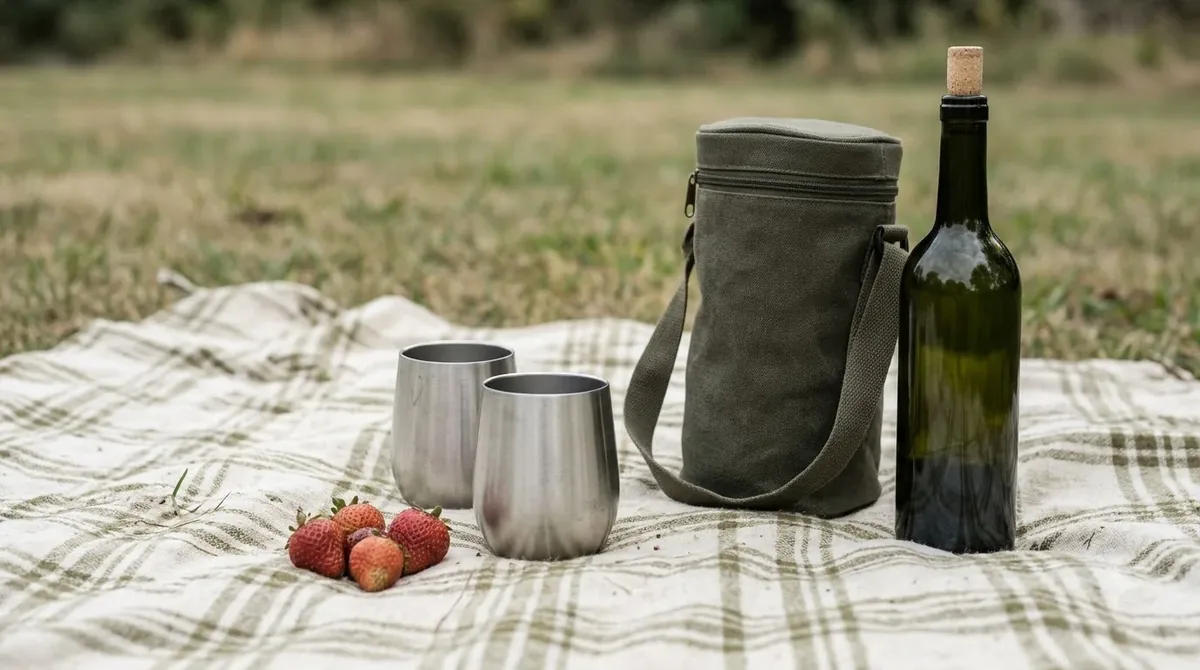
Slim and light, this padded two-bottle sleeve is easy to slip inside a larger bag. The insulated, leakproof body keeps wine chilled and protected, and at about 11 ounces it adds little weight to a packed suitcase. A shoulder strap and web handle let you carry it on its own for picnics, beach trips, or BYOB dinners once you arrive.
Pros & ConsView
- Padded, insulated, and leakproof body
- Light at 11.36 ounces
- Shoulder strap and web handle included
- Single compartment with no divider listed
- Fits two bottles only
Best for Road Trips and Winery Hopping: Insulated Multi-Bottle Totes
For driving tours, tailgates, and multi-stop tasting itineraries, a structured four- to six-bottle insulated tote keeps bottles upright, separated, and shielded from trunk heat.

Car trunks and backseats warm up quickly in direct sun, which can cook delicate aromas out of white, rosé, and red wines alike within an hour. Quality road-trip carriers pair heavy-duty exterior fabrics—such as waxed canvas, ballistic nylon, or reinforced polyester—with closed-cell foam insulation, waterproof PEVA or PVC linings, and removable padded dividers. Many also include exterior zippered pockets for a waiter’s corkscrew, foil cutter, and reusable ice packs, and some larger six-bottle models attach to a folding wheeled cart for rolling into tastings or events.
Keep in mind that soft insulated totes are not designed for airline cargo holds, where heavy bags stacked on top can crush fabric walls. They are best for regional road trips, wine club pickups, and hosting duties where you are transporting up to half a case by car and want bottles ready to serve upon arrival—or alongside a dedicated wine chiller at your destination.

- Holds
- 2 bottles
- Material
- Nylon oxford and PU leather
- Closure
- Zipper
- Insulation
- PU thermal, 5 mm PE foam
Long drives between wineries call for a tote that keeps bottles from knocking together. A padded divider separates the two bottles, and PU thermal material with 5 mm foam padding protects and chills them for hours. The leakproof interior guards against spills, a zipper closes the top, and an adjustable shoulder strap with steel buckle makes loading the car easy.
Pros & ConsView
- Padded divider keeps bottles from colliding
- Leakproof interior with zipper closure
- Adjustable shoulder strap with steel buckle
- Fits two bottles only
- Chills for hours, not days
Best for Picnics, Beaches, and BYOB Dinners: Insulated Crossbody and Day Carriers
When walking to a neighborhood BYOB restaurant, concert in the park, or beach picnic, a single- or two-bottle insulated crossbody carrier keeps your hands free while holding chilled wine at serving temperature.
Built from materials like thick neoprene, quilted puffer nylon, or full-grain leather with a thermal inner lining, these slim carriers cushion a bottle against everyday bumps while slowing heat transfer during warm-weather outings. Adjustable shoulder straps, quick-release buckles, and slim side pockets for keys or a corkscrew make them far easier to carry on foot than rigid boxes or bulky coolers. For outdoor gatherings where a single bottle pours roughly five standard servings (check our guide on how many glasses in a bottle of wine when planning for a group), a two-bottle insulated carrier hits the sweet spot between weight and capacity.
Keep in mind that slim crossbody bags are tailored for standard 750 mL Bordeaux or Burgundy profiles and may feel tight around wide-bottomed Champagne bottles or tall Alsace flutes. They are best for short-distance foot travel, outdoor concerts, beach days, and dinner invitations.

- Capacity
- 2 bottles
- Material
- Waxed cotton canvas
- Water
- Water repellent
- Size
- 12 x 7.5 x 3.5 in.
Travelers carrying bottles home from a winery can use this compact waxed-canvas tote, which holds two bottles with a removable divider and side pockets. The water-repellent cotton develops a distressed patina over time, dual handles and a shoulder strap carry it, and the open top gives quick access. A lifetime guarantee backs the construction, which suits gifts and trips.
Pros & ConsView
- Water-repellent waxed cotton canvas
- Removable divider and side pockets
- Backed by a lifetime guarantee
- Open top offers no closure
- Compact size fits only two bottles
Best for Overnight Getaways: Convertible Wine Weekender Bags
If you want one stylish bag that carries both your overnight clothes and two to six bottles of wine for a weekend escape, a convertible wine weekender duffel gives you dedicated bottle compartments without looking like specialized wine gear.
As highlighted across Wine Enthusiast travel guides, multi-compartment weekender totes and canvas-and-leather duffels typically feature a padded lower wine bay or removable Velcro-in bottle dividers. When the dividers are in place, bottles ride securely separated in the base while clothing, shoes, and toiletries sit cleanly in the upper compartment; when you are not carrying wine, you can collapse the dividers flat to use the entire interior as a standard overnight duffel.
Keep in mind that because these bags blend soft luggage construction with bottle storage, they are meant for car trunks, trains, and overhead carry-on bins (when empty of liquids) rather than checked airline holds. They are best for weekend bed-and-breakfast stays, cabin trips, and gift-worthy travel gear.
How to Choose
Before selecting a carrier, match its design to your primary mode of transit, bottle shapes, and temperature needs:
- Mode of transport: Checked airline bags endure drops, conveyor chutes, and heavy stacking, which require either a rigid foam-lined wine suitcase or a sealed leakproof sleeve cushioned in the center of a hard-sided suitcase. Car travel and walking allow lighter soft-sided totes and crossbody bags.
- Bottle shape compatibility: Standard 750 mL Bordeaux bottles have straight sides and fit almost every carrier, whereas wider-shouldered Burgundy bottles, sloped Pinot Noir bottles, and wide-base sparkling or Champagne bottles need slightly wider compartments or flexible foam cutouts.
- Divider construction and base support: In multi-bottle bags, look for full-height padded dividers and a reinforced, double-layer bottom panel so glass bottles cannot knock together or sag through the base under combined weight.
- Thermal protection and waterproofing: If you are transporting chilled white, sparkling, or rosé wines in warm weather, choose closed-cell foam insulation with a wipe-clean, waterproof PEVA or PVC interior liner that handles condensation or ice packs without soaking through. Pairing an insulated carrier with a portable ice bucket or browsing our Chillers & Buckets collection ensures bottles stay crisp once you unpack.
- Airline weight and liquid rules: TSA rules prohibit full 750 mL bottles in carry-on bags, so flying with wine means checking it. Always weigh a packed multi-bottle bag at home so you do not cross the standard 50-pound checked-bag threshold.
Tip: When packing wine inside a standard suitcase using padded travel sleeves, place the bottles in the dead center of the bag surrounded on all six sides by at least two inches of rolled clothing so they never sit directly against the outer shell.
Frequently Asked Questions
Can you bring a wine travel bag in your carry-on luggage?
No, TSA liquid rules limit carry-on liquids to containers of 3.4 ounces (100 mL) or less, so standard 750 mL wine bottles cannot go through airport security in a carry-on bag. You must pack your wine travel bag or padded sleeves inside checked luggage, unless you purchase duty-free wine after security in a sealed tamper-evident bag.
How many bottles of wine can you pack before hitting airline weight limits?
A full 750 mL glass wine bottle typically weighs between 2.6 and 3 pounds, meaning a 12-bottle case of wine alone weighs roughly 32 to 36 pounds. Once you add the weight of a hard-sided wine suitcase and foam inserts, a full 12-bottle carrier usually lands between 45 and 50 pounds, right at the standard airline checked-bag limit.
Do padded wine sleeves actually prevent spills if a bottle breaks?
Yes, provided you choose a leakproof travel sleeve equipped with a double-track zipper seal or heavy-duty adhesive closure rather than an open-top neoprene tote. While thick bubble cushioning or foam absorbs most baggage-handling shocks, the sealed plastic liner acts as a containment pouch so broken glass and wine stay trapped inside.
Will Champagne and Burgundy bottles fit in standard wine travel bags?
Not always, because Burgundy bottles have wider bases and sloping shoulders while Champagne bottles use thicker, heavier glass with a wider diameter than straight-sided Bordeaux bottles. Before buying, check that the bag specifies oversized compartments, flexible neoprene walls, or customizable foam cutouts designed for sparkling and Burgundy formats.
Choosing the right wine travel bag comes down to matching the carrier’s structure to your itinerary—rigid foam protection for airline cargo holds, leakproof sleeves for light suitcase packing, and insulated totes for road trips and outdoor gatherings. With the proper carrier in hand, you can bring back rare cellar finds and share properly chilled bottles wherever your plans take you.
More in Chillers & Buckets
 The Best Insulated Wine Bottle for Picnics, Events, and ServingUpdated Nov 18, 2026
 Best Wine Chiller Stick for Fast, Undiluted Cooling at HomeUpdated Nov 18, 2026
 Best Wine Cooler Sleeve: Which Chilling Sleeve Fits Your PoursUpdated Nov 18, 2026
 The Best Wine Bottle Chiller for Every Table, Patio, and Bottle ShapeUpdated Nov 18, 2026
 Best Wine Tote Styles for Safe, Chilled Bottle TravelUpdated Nov 18, 2026
 Best Wine Buckets for Crisp, Drip-Free Chilling at Any TableUpdated Nov 18, 2026