

We may earn a commission when you buy through links on this page, at no extra cost to you. Learn more.
The best wine bottle chiller for most home tables is a double-walled vacuum-insulated stainless steel cylinder, which locks in refrigerator temperatures for hours without ice, condensation, or dripping labels. If you need to drop a room-temperature bottle quickly, freezable gel sleeves or countertop electric units handle rapid cooling far better than passive insulation. For formal dinners, multi-bottle parties, or sparkling wines, traditional ice buckets and weighted stone chillers remain the most dependable choices.
Serving wine at its proper temperature transforms how aromas, acidity, and tannins show up in the glass, yet a bottle pulled from the refrigerator begins warming the moment it hits the dinner table. Whether you are pouring crisp Sauvignon Blanc on a summer patio, resting a lightly chilled Pinot Noir during a multi-course meal, or bringing a warm bottle down to cellar temperature in fifteen minutes, matching the cooling mechanism to your routine matters more than picking a single all-purpose vessel. Below, we break down the five primary styles of bottle chillers—evaluating how each handles heat transfer, tabletop condensation, bottle shapes, and prep time—so you can choose the right fit for your space and hosting habits.
Quick Comparison
Each wine bottle chiller category solves a distinct temperature-control problem, trading off between active cooling speed, passive insulation, and multi-bottle capacity.
| Chiller Type | Cooling Mechanism | Prep Required | Best Bottle Fit | Mess & Condensation |
|---|---|---|---|---|
| Double-Walled Vacuum Cylinder | Passive thermal insulation | None (pre-chill bottle first) | Standard 750 ml Bordeaux & Burgundy | Virtually zero; dry exterior |
| Freezable Gel Sleeve | Active phase-change cooling | 4 to 6 hours in freezer | Flexible; fits wide Champagne & Alsace | Minimal; slight exterior frost |
| Traditional Ice Bucket | Direct ice-and-water conduction | Ice cubes and cold water | All sizes, including magnums | High; wet labels and drips |
| Marble or Stone Chiller | Thermal mass retention | 1 to 2 hours in fridge or freezer | Standard 750 ml bottles | Low to moderate; porous stone sweats |
| Electric Countertop Chiller | Thermoelectric or spun-ice motor | Wall outlet or ice/water reservoir | Standard 750 ml & some sparkling | Low; contained inside unit |
Best for Drip-Free Dinner Parties: Double-Walled Vacuum-Insulated Chillers
Double-walled stainless steel and acrylic chillers surround a pre-chilled bottle with an airless thermal barrier, holding whites and sparkling wines at serving temperature for up to six hours without ice or wet rings on wood tables.
Why it stands out: Because these cylinders trap cold air between two sealed walls rather than relying on melting ice, the outer shell stays completely dry to the touch and keeps paper wine labels intact throughout a long dinner. Reviewers at Wine Enthusiast and home-entertaining publications frequently point out that vacuum-insulated models require zero freezer prep—you simply pull a cold bottle from the fridge, drop it into the cylinder, and set it beside the plates. Many designs also include an adjustable screw-top collar or tapered gasket that secures the neck, allowing you to lift and pour the bottle cleanly without sliding it out of the sleeve.
Keep in mind and best for: Passive vacuum insulation maintains an existing chill rather than cooling a warm bottle from scratch, so you still need refrigerator space ahead of time. Tightly machined metal interiors can also struggle with extra-wide Champagne bases or tall, slender Riesling bottles unless you choose an open-top model. This style is best for hosts who keep white and rosé bottles refrigerated in advance and want an effortless, tidy centerpiece for indoor dining tables or patio setups.

- Type
- Freezer chiller stick
- Material
- 18/10 stainless steel
- Freeze Time
- 2 hours minimum
- Extras
- Aerator, pour spout
Instead of a bucket, this slim rod chills from inside the bottle, so there is no wet bottle or ice to manage at the table. Freeze it for at least two hours, then insert it after pouring a little wine. A dual intake aerator and drip-free spout are built in, and the stainless steel will not dilute the wine the way melting ice can.
Pros & ConsView
- No ice or wet bottle at the table
- Built-in aerator and drip-free spout
- Fits standard 750 ml wine bottles
- Needs at least two hours in the freezer first
- Chills only the bottle it sits in
Best for Rapid Last-Minute Cooling: Freezable Gel Sleeves
Freezable cooling sleeves wrap directly around the glass using flexible pockets of non-toxic thermal gel, dropping a room-temperature bottle to crisp serving temperature in roughly fifteen to twenty minutes.
Why it stands out: Unlike rigid cylinders that only slow down warming, gel-lined sleeves actively pull heat out of the wine through direct surface contact. Wine directors and sommeliers featured in Decanter’s wine-chilling guide highlight flexible cooler sleeves as one of the cleanest ways to chill an unrefrigerated bottle or gently lower a red wine to cellar temperature without diluting the glass. Elastic side panels and wrap-around hook-and-loop closures let a single sleeve hug tapered Pinot Noir shoulders, squat sparkling bottles, and even glass decanters, while folding completely flat in a freezer drawer between uses.
Keep in mind and best for: Gel packs lose their thermal charge after one to two hours in warm weather, meaning you will need a backup sleeve rotating in the freezer during extended outdoor gatherings. Slight condensation can also form on the outer nylon or neoprene shell as the gel thaws, so pairing the sleeve with a coaster protects delicate wood finishes. Choose a freezable gel sleeve if you regularly bring bottles home straight from the shop, travel to BYOB restaurants, or lack permanent fridge space for wine.
Best for Champagne and Multi-Bottle Hosting: Traditional Ice Buckets
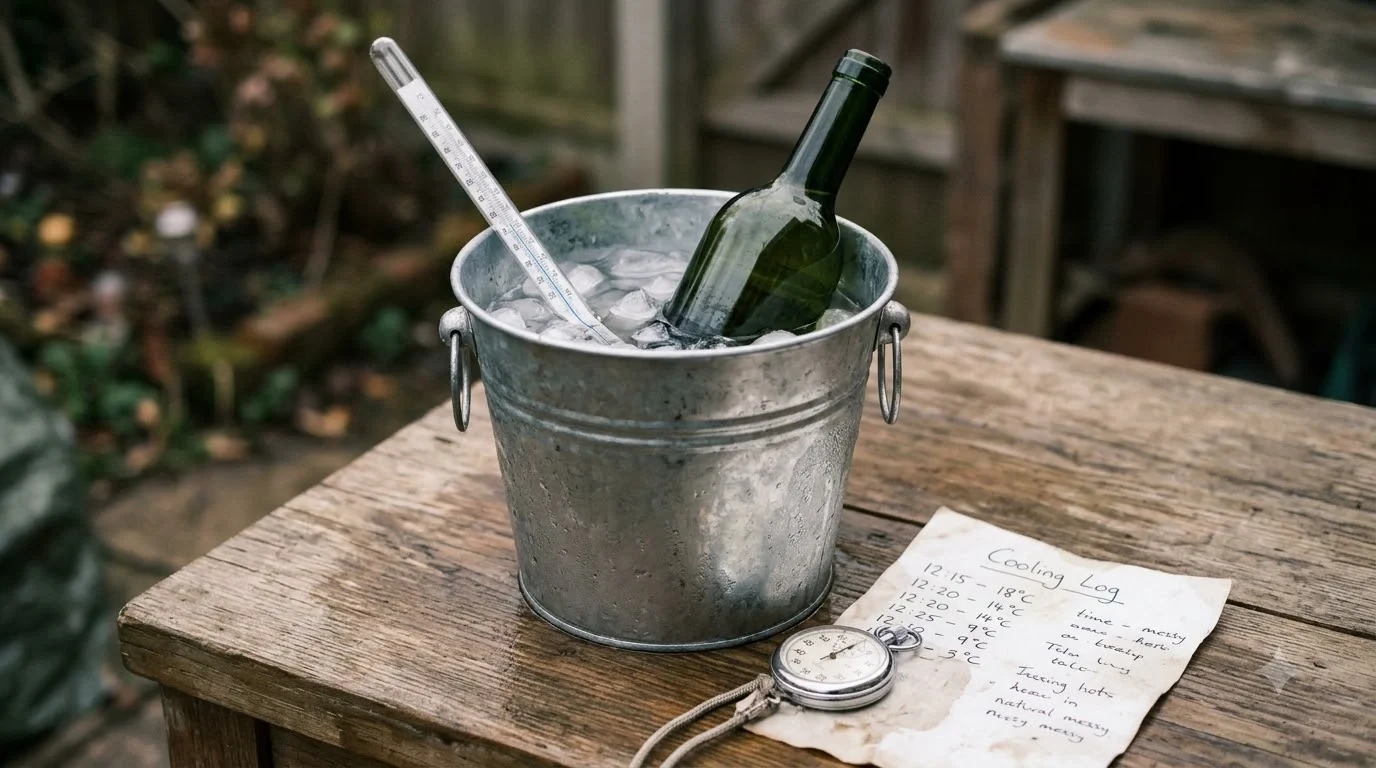
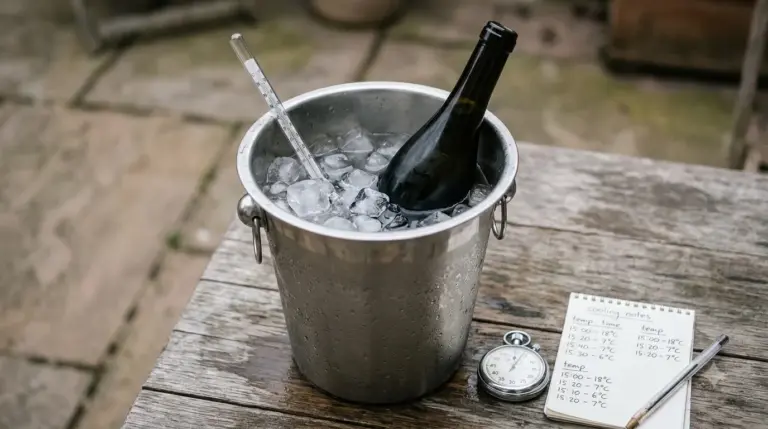
A classic ice bucket filled with a fifty-fifty slurry of ice and cold water remains the fastest non-electric way to chill wine—and the only passive vessel capable of submerging oversized sparkling bottles or holding multiple bottles at once.
Why it stands out: Water conducts heat roughly twenty-five times faster than air, so surrounding a bottle with ice water drops its temperature far quicker than a standard kitchen refrigerator or dry sleeve ever could. Sommeliers and hosts interviewed in Wine Enthusiast’s outdoor entertaining guide note that larger stainless steel or hammered-metal tubs effortlessly accommodate wide-shouldered Champagne bottles, magnums, and mixed assortments of white, rosé, and light red wines during backyard parties. Single-pressed smooth metal tubs also prevent slow leaks over multi-hour events.
Keep in mind and best for: The trade-off for maximum cooling power is water mess: you will need a side towel to wipe drips before every pour, and soaking labels may peel off collectible bottles. If you fill a bucket with dry ice cubes alone rather than ice plus water, air gaps between the cubes will leave the bottle sitting unevenly and slow down heat transfer. Ice buckets are best for sparkling wine lovers, outdoor hosts, and anyone entertaining groups who go through several bottles in an evening.

- Capacity
- One 750 ml bottle
- Material
- Stainless steel
- Walls
- Double wall insulated
- Size
- 6.25 x 7.5 in
A classic tabletop bucket for white wine or champagne, sized to hold one standard 750 ml bottle. Double-wall stainless steel insulation helps the contents stay at serving temperature longer, and it also keeps red wine at cellar temperature. It works indoors or outdoors, at the table, in the kitchen or at the bar. Hosts with several bottles will need more than one.
Pros & ConsView
- Double-wall insulation holds serving temperature
- Suits white wine, champagne or reds
- Works indoors and outdoors
- Holds a single bottle
- Hand wash only
Best for Aesthetic Tablescapes: Marble and Stone Chillers
Carved from solid marble, travertine, or stoneware, heavy stone chillers rely on natural thermal mass to keep a pre-chilled bottle cool while anchoring a dining table or bar cart as a permanent decorative piece.
Why it stands out: Dense natural stone absorbs cold temperatures efficiently when placed in the refrigerator or freezer for an hour before guests arrive, creating a chilled microclimate around the bottle without clanking metal or synthetic sleeves. Interior designers and beverage directors frequently favor marble and terracotta cylinders because their weight prevents accidental tipping when guests reach across a crowded table, and their sculptural silhouettes double as utensil crocks or flower vases between dinner parties. Felt or cork pads along the base keep the heavy stone from scratching marble countertops or hardwood dining tables.
Keep in mind and best for: Stone offers shorter thermal retention than vacuum-sealed stainless steel, typically holding a crisp chill for ninety minutes to two hours before warming to room temperature. Because natural stone is slightly porous, a very cold cylinder pulled straight from the freezer can develop light surface sweating in humid rooms. A marble or stone chiller is best for hosts who prioritize tabletop aesthetics and moderate meal-length cooling over all-afternoon outdoor endurance.

A marble bucket that doubles as a tablescape piece. Made of solid marble, it holds most 750 ml wine and champagne bottles, and the natural stone gives a modern look on a dining table or at a picnic. When the party is over it can serve as a utensil holder, supply cup or flower vase. At 2.8 kilograms it is substantial, so carry it empty.
Pros & ConsView
- Solid marble with a natural stone look
- Holds most 750 ml wine and champagne bottles
- Reusable as a vase or utensil holder
- Heavy at 2.8 kilograms
- Listing does not mention insulated walls
Best for Custom Temperatures on Demand: Electric Countertop Chillers
Compact electric single-bottle chillers use either thermoelectric cooling plates or motorized ice-water circulation to bring warm bottles to an exact target temperature at the touch of a button.
Why it stands out: Guessing when a bottle is cold enough often leads to overly muted whites or overly warm reds, whereas digital countertop units let you dial in specific serving ranges for Pinot Noir, Chardonnay, or Brut Champagne. Spun-ice electric models rotate a warm bottle inside an ice-and-water bath to chill it in under ten minutes without shaking up carbonation, while dry thermoelectric cradles maintain steady, customizable temperatures indefinitely on a home bar or office credenza without needing ice refills. Compared with full-size wine chillers, these single-bottle appliances occupy less footprint than a toaster.
Keep in mind and best for: Electric chillers tether you to a wall outlet, introduce minor fan or motor hum into quiet dining rooms, and feature fixed interior chambers that rarely accept wide Champagne punts or irregular magnum bottles. They also require counter space near an outlet rather than tucking flat into a drawer. Choose an electric countertop chiller if you want push-button precision for red and white serving temperatures without dedicating floor space to a full wine refrigerator.

- Capacity
- 12 bottles
- Cooling
- Compressor with fan
- Range
- 41 to 64 F
- Power
- 120V
For precise serving temperatures, this countertop fridge uses a compressor and fan to hold a set temperature between 41 and 64 degrees F, wide enough for sparkling wine through reds. Touch controls adjust it, a double-paned UV-resistant glass door protects the bottles, and LED lighting shows the labels. Three removable racks hold up to 12 bottles in one zone.
Pros & ConsView
- Adjustable 41 to 64 F compressor cooling
- UV-resistant double-paned glass door
- Three removable racks hold 12 bottles
- Single zone, one temperature for all bottles
- Needs a 120V outlet and counter space
How to Choose
Start by deciding whether you need to lower a warm bottle’s temperature or simply maintain a bottle that is already cold. Passive designs—such as vacuum-insulated cylinders and marble sleeves—excel at holding refrigerator temperatures over dinner, whereas active systems like freezable gel sleeves, ice-water buckets, and electric units actually pull heat out of room-temperature wine.
Next, check the bottle silhouettes you drink most often. Standard 750 ml Bordeaux bottles have straight sides and fit nearly every rigid cylinder, while sloping Burgundy shoulders, tall German Riesling flutes, and wide-based sparkling bottles need either a wider internal diameter or a flexible wrap-around sleeve. If you plan to use your chiller outdoors, prioritize unbreakable stainless steel or neoprene over stone or glass, and consider how many pours you want to keep cold—a standard bottle holds about five glasses, which helps determine whether a single-bottle sleeve or a multi-bottle tub makes more sense for your guest list (see our breakdown of how many glasses in a bottle of wine for party planning).
Tip: When using an ice bucket, fill it halfway with ice cubes and top up with cold tap water before sliding in the bottle. Adding water eliminates insulating air pockets around the glass and chills wine in roughly half the time of ice alone—and tossing in a small handful of kosher salt drops the freezing point even further for emergency sparkling-wine chilling.
Frequently Asked Questions
How long does it take to chill a bottle of wine in different chillers?
An ice-and-water bucket or a freezable gel sleeve typically brings a room-temperature white wine down to serving temperature in 15 to 20 minutes. Motorized spun-ice electric chillers can accomplish the same drop in under 10 minutes, while passive vacuum-insulated cylinders and marble chillers do not actively chill warm wine and should only be used with pre-refrigerated bottles.
Do iceless wine chillers fit Champagne and sparkling wine bottles?
Many rigid stainless steel and marble cylinders have internal diameters tailored to standard 750 ml Bordeaux bottles, making wide-based Champagne bottles a tight or impossible fit. If you drink sparkling wine regularly, look for an open-top chiller with at least a 3.75-inch interior diameter, a flexible wrap-around gel sleeve, or a traditional ice bucket.
What is the ideal serving temperature for white, sparkling, and red wines?
Sparkling wines taste crisper and hold their bubbles longest between 40°F and 45°F, while most dry whites and rosés shine between 45°F and 52°F. Light-bodied reds such as Beaujolais or Pinot Noir benefit from a gentle chill around 55°F, whereas full-bodied reds show best near cellar temperature at 60°F to 65°F.
Can you put a marble or stainless steel wine chiller in the freezer?
Solid marble and stoneware chillers can safely go into the refrigerator or freezer for an hour or two before dinner to build up cold thermal mass, though rapid temperature swings can occasionally stress veined natural stone. Vacuum-insulated stainless steel chillers should never go in the freezer because their sealed air gap blocks cold transfer—chill the wine bottle itself instead.
Choosing the right bottle chiller comes down to matching your usual prep habits with the styles of wine on your table. Keep a freezable gel sleeve tucked in the freezer for spontaneous weeknight pours, rely on a double-walled cylinder for drip-free dinner hosting, or browse our full collection of Chillers & Buckets to compare specific models across every material and capacity.
More in Chillers & Buckets
 The Best Insulated Wine Bottle for Picnics, Events, and ServingUpdated Nov 18, 2026
 Best Wine Chiller Stick for Fast, Undiluted Cooling at HomeUpdated Nov 18, 2026
 Best Wine Cooler Sleeve: Which Chilling Sleeve Fits Your PoursUpdated Nov 18, 2026
 The Best Wine Travel Bag for Every Trip, From Flights to Road TripsUpdated Nov 18, 2026
 Best Wine Tote Styles for Safe, Chilled Bottle TravelUpdated Nov 18, 2026
 Best Wine Buckets for Crisp, Drip-Free Chilling at Any TableUpdated Nov 18, 2026