

We may earn a commission when you buy through links on this page, at no extra cost to you. Learn more.
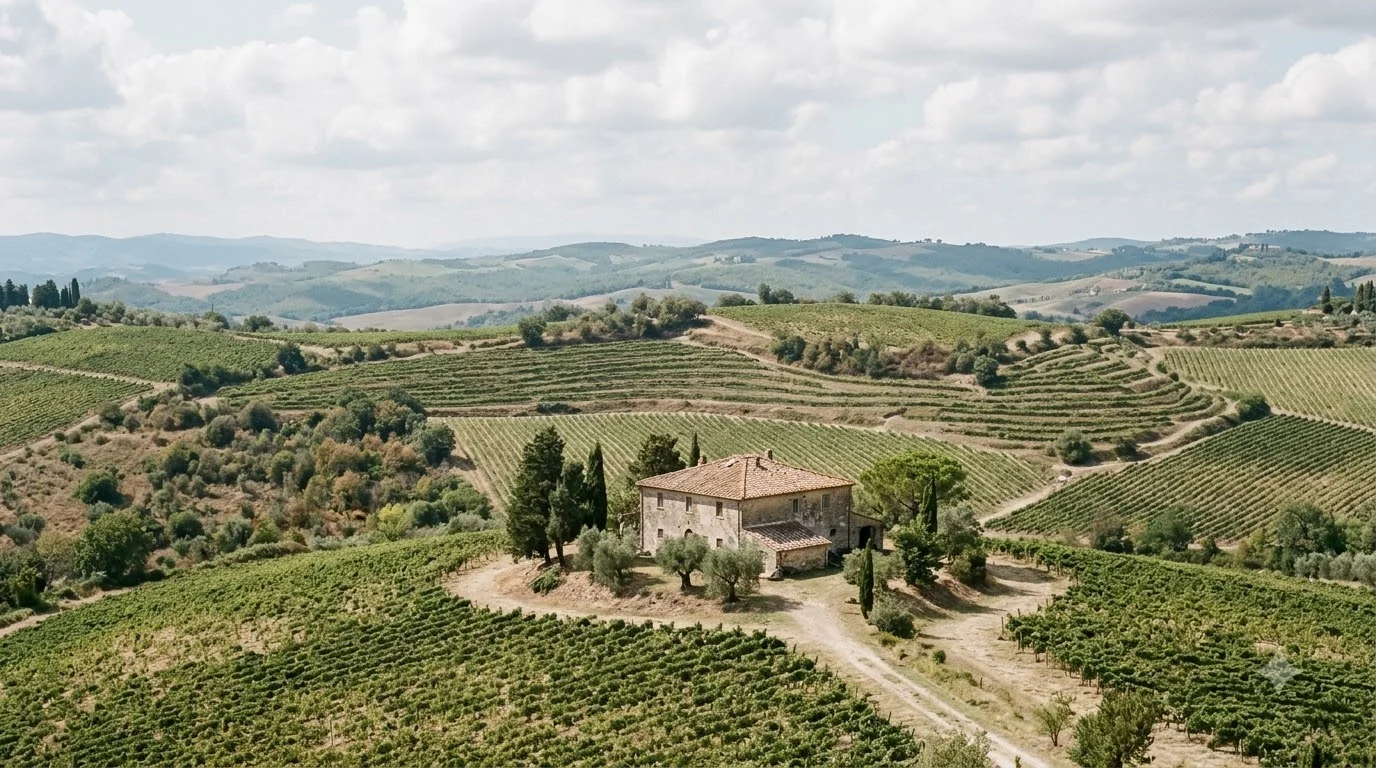
Beaujolais history stretches from Roman-era viticulture and medieval vineyard development to the rise of Gamay and the international success of Beaujolais Nouveau. Located north of Lyon in eastern France, Beaujolais developed a distinctive identity through its productive vineyards, river-based wine trade, and close relationship with the city of Lyon. Its modern reputation rests on traditional village wines, ten recognized crus, and a celebrated annual release that transformed a regional wine into an international event.
Beaujolais is often associated with young, fruity red wine, but its history is considerably more complicated than the November celebrations suggest. Centuries of agricultural development, political decisions, changing transportation networks, and increasingly precise appellation rules shaped the region. Understanding these developments makes it easier to appreciate why Gamay became so important and why wines from Fleurie, Morgon, Moulin-à-Vent, and other villages can have remarkably different personalities.
Roman Roots and the Medieval Origins of Beaujolais
Beaujolais has a long agricultural history, with viticulture developing before the region acquired its modern name. Roman influence helped establish early vineyard cultivation, while medieval landowners and religious institutions gradually expanded winegrowing across the hills north of Lyon.
The Romans were among the first to develop viticulture in the area. Although precise records of the earliest individual vineyards are limited, the historical association between Roman settlement and winegrowing is an important part of the region’s identity. Juliénas, one of the villages that later became a recognized Beaujolais cru, is traditionally associated with Julius Caesar. The connection is frequently mentioned in regional historical accounts, although the precise origin of the village name should not be treated as definitively established.
During the Middle Ages, the vineyards developed under the influence of powerful landowners. The Counts of Mâcon, Archbishops of Lyon, and Abbots of Cluny all held property in the wider Beaujolais area. Their involvement helped establish viticulture as a significant agricultural activity rather than an occasional supplement to local farming.
The region’s name emerged from the medieval seigneury of Beaujeu. During the 13th century, the lordship of Beaujeu became influential enough to give its name to the vineyards located north of Lyon. Beaujeu consequently holds an important place in the region’s historical identity, even though Villefranche-sur-Saône later became the area’s official administrative center.
One particularly interesting early reference concerns Beraud, identified as the first Lord of Beaujeu, and his wife Vandelmode. They are traditionally associated with donating a vineyard plot near Villié-Morgon during the 10th century. This account illustrates how vineyard ownership and religious or charitable land transfers contributed to the development of medieval winegrowing.
However, the expansion of vineyards was not uninterrupted. Regional conflicts affected the Lords of Beaujeu for centuries, making consistent agricultural development difficult. The surrounding countryside gradually became more stable, allowing vineyards to expand and wine production to become a more recognizable part of the local economy.
Gamay and the Burgundy Connection
The relationship between Beaujolais and Burgundy is central to understanding the region’s wine history. Gamay eventually became the defining grape of Beaujolais partly because of a political decision made by the Duke of Burgundy in 1395, which restricted the grape’s cultivation on his lands.
During the medieval period, Gamay was appreciated for its productivity. Compared with Pinot Noir, it could produce larger crops and generally matured earlier. These characteristics made it attractive to growers who needed reliable harvests and commercially accessible wine.
However, the Dukes of Burgundy pursued a different approach to their most prestigious vineyards. Philip the Bold, who ruled Burgundy from 1363 to 1404, issued an ordinance in 1395 condemning Gamay and requiring its removal from his lands in favor of Pinot Noir.
The decision reflected competing ideas about wine quality. Gamay’s ability to produce abundant crops made it useful to ordinary agricultural producers, while the Burgundian court favored Pinot Noir for wines intended to demonstrate regional prestige. The duke’s criticism was therefore not simply a matter of taste; it was also connected to agricultural policy and commercial reputation.
The decree did not eliminate Gamay from every surrounding vineyard. Rather, it restricted cultivation within the historical Burgundian territory governed by the ordinance. South of the core Burgundian wine areas, Gamay retained an important agricultural role. Beaujolais became its principal stronghold.
This separation helped establish two different regional identities. Burgundy developed its international reputation around Pinot Noir and Chardonnay, while Beaujolais became particularly associated with Gamay. The distinction remains useful today, although the two regions share a broader historical and geographical relationship.
Why Gamay suited Beaujolais
Gamay was well suited to the region’s growing conditions and commercial requirements. It offered relatively dependable production and could produce approachable wines with vivid fruit character. Depending on vineyard location and winemaking decisions, those wines could also develop considerable structure and complexity.
Gamay’s versatility eventually became one of Beaujolais’s greatest strengths. Producers could make fresh, early-drinking wines for immediate enjoyment or more structured bottlings from selected vineyards. This flexibility allowed the region to serve everyday consumers while also building a reputation for serious, age-worthy wines.
Readers interested in how these historical developments relate to Burgundy’s most famous red grape can also explore Pinot Noir history and the different paths taken by the two neighboring wine regions.
River Trade and the Rise of Lyon’s Wine Culture
Beaujolais became a commercially important wine region through its relationship with Lyon. During the 17th century, improving trade and access to the Saône and Rhône rivers helped vineyards expand, while Lyon provided a substantial market for the region’s wines.
Winegrowing remained relatively limited during the 16th century compared with other agricultural activities. Much of the wine produced was consumed locally, and the region had not yet developed the extensive commercial reputation it would later enjoy.
The 17th century brought a significant change. Vineyard development accelerated as the surrounding towns expanded and demand from Lyon increased. The Saône River offered a practical transportation route, allowing wine to reach consumers more efficiently than relying exclusively on overland movement.
Lyon became the most important nearby commercial destination. Its traditional bouchons, the city’s distinctive restaurants and taverns, became major outlets for Beaujolais wine. These establishments served wine alongside regional dishes, making the local red wine an established part of Lyon’s dining culture.
The traditional serving format also reflected the social role of wine. Beaujolais was commonly served in pots, shared at tables, and consumed as part of everyday meals. Rather than functioning exclusively as a luxury product, it became an accessible regional beverage with a strong connection to local food traditions.
The relationship became so important that Beaujolais acquired the nickname of Lyon’s third river, alongside the Rhône and Saône. This expression captures the commercial and cultural importance of the vineyards to the city.
Transportation networks later expanded beyond the immediate Lyon market. Beaujolais wine increasingly reached Paris, where merchants and distributors helped establish a broader national audience. The development of more efficient commercial distribution allowed the region to move beyond its original local customer base.
By the 19th century, professional wine merchants played an increasingly important role in the marketing of Beaujolais. Some purchased wine soon after production and arranged its delivery to restaurants, bars, and distributors in major French cities. This early trading activity helped prepare the commercial foundations for the later popularity of Beaujolais Nouveau.
Tip: Beaujolais is not simply one style of wine. A basic Beaujolais bottling, a Beaujolais Villages wine, and a cru from Morgon or Moulin-à-Vent can offer substantially different levels of structure, concentration, and aging potential.
The Appellation System and the Ten Beaujolais Crus
The modern identity of Beaujolais became more clearly defined through the French appellation system during the 20th century. Between 1936 and 1988, the region established a framework that recognized its principal winegrowing areas and distinguished village wines from individual crus.
Before these designations were established, the region already contained villages with distinctive vineyard conditions and wine styles. Producers increasingly wanted formal recognition for their local identities, particularly in the northern areas where wines could show greater structure and aging potential.
The first important milestone came in 1936, when five appellations received recognition: Chiroubles, Chénas, Fleurie, Morgon, and Moulin-à-Vent. These designations helped establish the foundations of the modern cru system.
Beaujolais AOC followed in 1937. This designation recognized the broader regional wine identity and provided a formal geographical framework for production. In 1938, Brouilly, Côte de Brouilly, and Juliénas received their own appellation recognition.
Saint-Amour followed in 1946, and Beaujolais Villages was established in 1950. Régnié became the tenth cru in 1988, completing the familiar group of ten named Beaujolais crus.
The ten crus and their historical identity
The ten crus are located in the northern part of the region and are recognized as individual appellations rather than simply informal village descriptions. Their names represent different vineyard areas, soils, exposures, and established winegrowing traditions.
| Milestone | Year | Historical significance |
|---|---|---|
| Chiroubles, Chénas, Fleurie, Morgon, Moulin-à-Vent | 1936 | First five cru appellations recognized |
| Beaujolais AOC | 1937 | Regional appellation established |
| Brouilly, Côte de Brouilly, Juliénas | 1938 | Three additional cru appellations recognized |
| Saint-Amour | 1946 | Ninth cru appellation recognized |
| Beaujolais Villages | 1950 | Separate village-level designation established |
| Régnié | 1988 | Tenth cru appellation recognized |
The ten crus are Brouilly, Côte de Brouilly, Régnié, Morgon, Chiroubles, Fleurie, Moulin-à-Vent, Chénas, Juliénas, and Saint-Amour. Their geographical differences help explain why Beaujolais cannot accurately be described as a single uniform wine style.
For example, Fleurie is frequently associated with floral aromas and elegant structure, while Moulin-à-Vent has a reputation for firmer, more concentrated wines. Morgon is particularly associated with wines that can develop additional complexity with bottle age. Saint-Amour is often recognized for its expressive fruit character.
The broader Beaujolais Villages designation covers a collection of communes whose wines generally occupy an intermediate position between regional Beaujolais and the individual crus. The regional Beaujolais designation remains the broadest expression of the area’s identity.
For a closer look at the differences between the region’s red, white, and rosé expressions, see Beaujolais color.
Beaujolais Nouveau and the November Wine Tradition
Beaujolais Nouveau transformed the region’s international reputation by turning the release of young wine into an annual celebration. The first commercial release took place in 1951, and the modern third-Thursday-of-November tradition was established in 1985.
The concept of drinking young wine is much older than the modern Beaujolais Nouveau phenomenon. The French Ministry of Agriculture explains that early-release wine traditions existed in antiquity and continued through the Middle Ages. In medieval France, some wines reached the market approximately 15 days after harvest.
However, the commercial identity of Beaujolais Nouveau developed during the early 1950s. In 1951, a French ministerial decision prohibited the sale of appellation wines before December 15 of the harvest year. Beaujolais producers challenged the restriction because their traditional early-release wines depended on reaching the market sooner.
The producers eventually obtained permission to sell wines earlier under the designation vin primeur, provided that the bottles clearly identified their early-release status. November 15, 1951, became the first important commercial milestone for Beaujolais Nouveau.
The tradition gained momentum because Gamay was particularly suitable for making fresh, approachable wine shortly after harvest. The production approach emphasized youthful fruit, supple texture, and immediate drinkability rather than the additional structure and development associated with wines intended for longer aging.
Why the release date became a major event
As distribution expanded, producers and merchants increasingly coordinated the arrival of the new wine. Restaurants, wine merchants, and distributors began treating the release as a shared commercial occasion rather than an ordinary seasonal shipment.
In 1985, a decree established the third Thursday of November as the official Beaujolais Nouveau release date. The decision helped simplify distribution and sales. Regional industry figures reported approximately 500,000 hectoliters of Nouveau production annually in connection with the introduction of the release-date arrangement.
The new date created a recognizable annual event. Restaurants and wine bars could organize celebrations, merchants could coordinate shipments, and consumers could anticipate the arrival of the latest harvest.
Beaujolais Nouveau eventually became an international phenomenon. Its release attracted attention in markets well beyond France, helping introduce the region to consumers who might otherwise have known little about its villages or traditional wines. The French Ministry of Agriculture provides an additional historical overview in its official explanation of Beaujolais wines and their appellations.
Nevertheless, Nouveau represents only one part of the region’s production. It should not be treated as a complete representation of Beaujolais. Many producers make wines designed for longer development, particularly in the ten crus, where vineyard selection and more structured winemaking can produce substantially different results.
The distinction between early-release and age-worthy wines remains important. Nouveau generally emphasizes freshness and uncomplicated fruit, while cru wines can offer deeper flavors, firmer structure, and greater bottle-aging potential.
Modern Beaujolais: Terroir, Producers, and Wine Styles
Modern Beaujolais is defined by a combination of historical continuity and greater attention to individual vineyard conditions. Its producers work across varied soils and geographical settings, making the region considerably more diverse than its reputation for youthful Gamay might suggest.
The region extends across the northern Rhône department and into a small part of Saône-et-Loire. Its vineyards occupy slopes between the Saône River to the east and the Beaujolais hills to the west. This geographical arrangement creates a range of exposures, elevations, and soil conditions.
The soils are particularly important. Northern Beaujolais contains substantial granite and schist formations, while the southern Pierres Dorées area includes clay-limestone soils. These differences contribute to the variation in wine styles across the wider region.
The northern crus are especially important for understanding the diversity of Beaujolais. Although Gamay remains the principal red grape, vineyard location and production decisions can influence concentration, acidity, tannin, and aromatic character.
From regional wines to individual vineyard expressions
Modern producers increasingly communicate the differences between their vineyards and villages. This approach places greater emphasis on origin rather than relying exclusively on the broad Beaujolais name.
In Morgon, for example, producers can make structured wines that develop savory and earthy characteristics with age. Moulin-à-Vent is also associated with substantial structure and the ability to evolve in the bottle. By comparison, Fleurie is often recognized for a more delicate and aromatic expression.
These differences demonstrate why a single description cannot adequately explain every Beaujolais wine. The region includes uncomplicated wines intended for early consumption, village bottlings with greater concentration, and cru wines that can benefit from additional cellaring.
Another important development involved the organization and promotion of the regional wine industry. The first Beaujolais wine cooperative opened in 1927 in Fleurie under the name Cave des Producteurs des Grands Vins de Fleurie. This represented an important step toward collective organization among local producers.
Later developments strengthened the region’s tourism infrastructure. The first cellar devoted specifically to tasting and selling Beaujolais wines opened in Morgon in 1953, at the Château de Foncrenne. The Beaujolais Wine Route followed on July 11, 1955, creating another way for visitors to discover the vineyards and their individual communities.
Researching the region’s soils
Modern vineyard research has also provided a clearer understanding of Beaujolais terroir. A survey conducted over eight years, from 2009 to 2017, examined the region’s soil characteristics and potential vineyard areas.
According to the Beaujolais vineyard organization, the project analyzed 32,073 potentially plantable hectares and produced 40,687 mapped polygons. The results helped provide detailed information about soil composition and geographical differences throughout the region.
This research reinforces the importance of considering vineyard origin when evaluating Beaujolais. The name identifies a historic wine region, but the individual landscapes within it contribute significantly to the character of its wines.
How Beaujolais History Helps You Understand the Wine Today
The historical development of Beaujolais explains why its wines range from light, youthful reds to structured bottles suitable for extended cellaring. Gamay’s versatility, the region’s varied soils, and the development of individual appellations all contribute to this diversity.
Understanding the three principal geographical levels is a useful starting point. Beaujolais represents the broader regional designation, Beaujolais Villages identifies a collection of village-producing areas, and the ten crus represent individual appellations with their own established geographical identities.
Recognizing the different styles
A standard Beaujolais is generally associated with fresh red-fruit flavors, approachable acidity, and relatively light structure. It is often a good introduction for someone who enjoys lighter reds but wants something different from Pinot Noir.
Beaujolais Villages typically offers a more distinctive expression of its growing area. These wines can show additional concentration and structure while retaining the recognizable fruit character of Gamay.
Cru Beaujolais offers the greatest opportunity to explore individual village identities. Wines from Morgon and Moulin-à-Vent, for example, can develop substantial complexity, while Fleurie and Chiroubles often appeal to drinkers who prefer more aromatic and elegant reds.
Serving and food pairing
Beaujolais is particularly versatile at the dinner table because Gamay generally offers bright acidity and moderate tannin. The lighter styles work well with roast chicken, charcuterie, grilled sausages, and mushroom dishes.
More structured crus can accompany roast duck, pork shoulder, beef dishes, and grilled lamb. Their additional concentration makes them suitable for richer preparations, while their acidity helps balance the food.
Serving temperature also influences the wine’s presentation. Lighter Beaujolais styles are often enjoyable around 55–60°F, while fuller cru bottlings can be served closer to 60–65°F. A slight chill can emphasize freshness and make a lighter bottle particularly refreshing.
For additional practical advice, including the difference between serving a light red cool and serving a structured red warmer, read should Beaujolais be chilled.
The history also explains why Beaujolais Nouveau should not define expectations for every bottle. Its November release celebrates the new harvest, but the region’s longer-established appellations offer wines with different levels of complexity and aging potential. Understanding the distinctions makes it easier to choose a bottle that suits the occasion.
Beaujolais therefore occupies an important position within the wider history of French wine. It developed a recognizable identity through Gamay, commercial connections with Lyon, and a formal appellation system that preserved the names of its individual winegrowing communities. Readers exploring other regional and grape-based wine traditions can continue with Wine by Type.
Frequently Asked Questions
Was Beaujolais historically part of Burgundy?
Beaujolais and Burgundy share geographical and historical connections, but they developed distinct regional wine identities. Their historical relationship is especially visible in the medieval Gamay controversy, when Philip the Bold restricted the grape on his Burgundian lands in 1395. Modern Beaujolais has its own appellation framework and is not simply a subdivision of the Côte d’Or wine region.
Did Beaujolais historically produce white wine?
Yes. Although red wine dominates the region’s reputation, Beaujolais also produces white and rosé wines. White Beaujolais is principally associated with Chardonnay, offering an alternative to the Gamay-based red wines that define the region’s international identity.
What is the difference between Beaujolais Nouveau and Beaujolais Primeur?
Beaujolais Nouveau is the familiar named early-release wine associated with the region’s November celebration. Primeur is a broader French term describing wine marketed soon after harvest, before the usual aging period associated with more developed wines. The terminology therefore describes related concepts but is not interchangeable across every French wine region.
Can Beaujolais wines be made from grapes other than Gamay?
Gamay is the defining grape for red Beaujolais, and Beaujolais Nouveau is made exclusively from Gamay. However, the regional appellation also permits white and rosé expressions under their respective production rules. Chardonnay is the principal grape associated with Beaujolais white wine, while rosé production uses authorized red grape varieties.
What does the word cru mean in Beaujolais?
Cru identifies one of the region’s ten individual appellations, each associated with a specific geographical area. Unlike some French regions where cru can refer to a particular vineyard estate or classified vineyard, Beaujolais cru names such as Fleurie, Morgon, and Brouilly identify entire appellation areas. This makes the village name an important indication of geographical origin.
Beaujolais developed from a medieval agricultural landscape into one of France’s most recognizable wine regions through centuries of vineyard cultivation, river commerce, and appellation recognition. Its history explains why Gamay remains so closely associated with the region and why its ten crus offer far more diversity than the familiar image of November’s Nouveau celebrations suggests. Exploring different villages and production styles is one of the best ways to appreciate the full character of Beaujolais.
More in Wine Types & Grapes
 What Is Auslese? How to Read, Serve, and Pair This German WineUpdated Nov 21, 2026
 What Is Arneis? Tasting Notes, Origins, and Pairing GuideUpdated Nov 21, 2026
 What Is Airen? A Guide to Spain’s Most-Planted White GrapeUpdated Nov 21, 2026
 What Is Aglianico? A Guide to Italy’s Bold Southern Red WineUpdated Nov 21, 2026
 What Is Alicante Bouschet: The Rare Red-Fleshed Grape Behind Bold RedsUpdated Nov 21, 2026
 What Glass for Sparkling Wine Brings Out the Best Bubbles and AromaUpdated Nov 21, 2026