


We may earn a commission when you buy through links on this page, at no extra cost to you. Learn more.
If you are wondering what is auslese, it is a German wine classification meaning “select harvest” that designates wines made from hand-selected, fully ripe grape bunches. Sitting at the third tier of Germany’s official Prädikatswein quality pyramid, Auslese wines are most famous as luscious, honeyed white wines crafted from Riesling, though winemakers also produce rare dry versions. Because the grapes hang longer on the vine and often develop noble rot, these bottles offer intense orchard fruit flavors balanced by razor-sharp acidity.
Walking down a wine shop aisle and seeing a long German label can feel intimidating if you do not know how the terminology works. Unlike American wine labels that focus primarily on grape variety and region, traditional German labels tell you the exact ripeness of the grapes at the moment they were picked.
What Auslese Actually Means
In the German wine classification system, Auslese refers strictly to the natural sugar level of the grapes at harvest rather than how sweet the finished wine tastes. According to the German Wine Institute (Wines of Germany), Auslese sits above Kabinett and Spätlese as the third tier of the six-level Prädikatswein system, meaning every bottle must pass an official quality test and cannot have extra sugar added before fermentation.
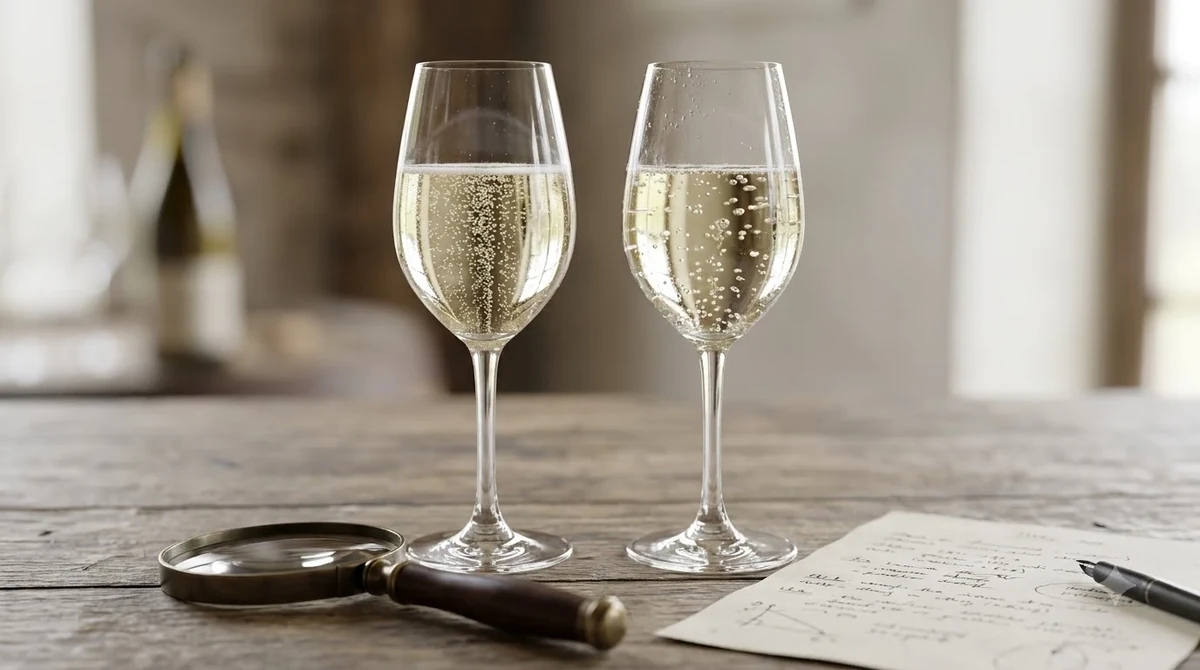
The word translates literally to “select harvest,” which describes the labor-intensive work required in the vineyard. During autumn, pickers walk through the rows by hand and select only the ripest, healthiest grape bunches while leaving unripe or damaged berries behind. Because this sorting process takes multiple passes through steep vineyards, producers usually reserve the Auslese designation for their best fruit in warm, sunny vintages.
To qualify legally as Auslese in Germany, the freshly pressed grape juice must reach a minimum must weight measured on the Oechsle scale, typically ranging from 83 to 100 degrees Oechsle depending on the grape variety and growing region. In neighboring Austria, the same category exists under the Austrian wine law, requiring a minimum must weight of 21 degrees KMW, which equals roughly 105 degrees Oechsle. By outlawing chaptalization—the practice of adding cane or beet sugar to boost alcohol—the law guarantees that all of the concentration in your glass comes directly from sunshine and vine ripeness.
Flavor Profile and Style Variations
Most Auslese wines are vinified in a medium-sweet to nobly sweet style bursting with ripe stone fruit, tropical nectar, and floral aromatics, though a small percentage are fermented completely dry. On the palate, classic sweet examples deliver waves of ripe apricot, white peach, baked pear, pineapple, and wildflower honey, all kept lively by natural acidity that prevents the wine from feeling syrupy.
A major driver behind the signature complexity of Auslese is Botrytis cinerea, a beneficial vineyard fungus known as noble rot. When misty autumn mornings give way to warm, breezy afternoons, this fungus punctures the grape skins and allows water to evaporate without spoiling the fruit. The remaining juice becomes concentrated in sugar, acid, and aromatic compounds, adding notes of orange marmalade, beeswax, saffron, and candied ginger to the finished wine.
Because the Prädikat label only measures initial grape sugar, winemakers have the freedom to ferment all of that sugar into alcohol or stop fermentation early to preserve natural sweetness. If you are trying to figure out whether an Auslese is sweet or dry, check the label for the word trocken or look at the alcohol percentage. Traditional sweet Auslese bottles usually sit between 7.5% and 9.5% ABV, whereas dry versions—often labeled Auslese trocken or bottled as top-tier dry vineyard wines—ferment to around 13% to 14% ABV and taste powerful, full-bodied, and savory.
| Prädikat Level | Translation | Minimum Must Weight (Germany) | Typical Style & Sweetness | Noble Rot (Botrytis) |
|---|---|---|---|---|
| Kabinett | Cabinet / Reserve | 67–82 °Oechsle | Light-bodied, crisp; dry to off-dry | None |
| Spätlese | Late Harvest | 76–90 °Oechsle | Medium-bodied, ripe fruit; dry to medium-sweet | Rare |
| Auslese | Select Harvest | 83–100 °Oechsle | Rich, intense; usually sweet, occasionally dry | Often present |
| Beerenauslese (BA) | Berry Select Harvest | 110–128 °Oechsle | Luscious, honeyed dessert wine | Almost always |
| Eiswein | Ice Wine | 110–128 °Oechsle | Pure, laser-sharp sweet dessert wine | None (pressed frozen) |
| Trockenbeerenauslese (TBA) | Dry Berry Select Harvest | 150–154 °Oechsle | Rare, syrupy, raisined nectar | Essential |
Key Growing Regions and Grape Varieties
While Auslese can be produced across any of Germany’s 13 official wine regions as well as in Austria, the style reaches its pinnacle along steep, river-hugging vineyards where cool climates preserve vibrant acidity. Riesling is the undisputed star of the category because its thick skins handle noble rot gracefully and its naturally high malic and tartaric acids balance rich residual sugar.
The Mosel Valley is widely considered the spiritual home of classic, low-alcohol Riesling Auslese. Here, vines cling to vertiginous slate slopes above the winding Mosel River, soaking up reflected sunlight during the day while morning river mists encourage delicate noble rot. Producers in neighboring Nahe and Rheingau also craft benchmark examples that tend to carry slightly fuller body and pronounced stone-fruit weight alongside a firm mineral backbone.
Although Riesling dominates American wine shop shelves, winemakers in warmer southern regions like Pfalz, Rheinhessen, and Franken frequently bottle Auslese made from other aromatic grapes. Look out for Scheurebe, which adds a vibrant burst of pink grapefruit and blackcurrant leaf, or Gewürztraminer, which brings rose petal and lychee aromatics. You will occasionally spot Pinot Blanc (Weissburgunder), Pinot Gris (Grauburgunder), and even late-ripening Pinot Noir (Spätburgunder) bottled at Auslese ripeness, especially in dry or oak-aged styles.
How to Serve and Cellar Auslese
Serving Auslese at the proper temperature keeps its natural sweetness refreshing rather than heavy, while giving its intricate floral and honeyed aromatics room to open up. Sommeliers and the German Wine Institute generally recommend serving sweet Auslese chilled between 46°F and 52°F (8°C to 11°C), which is slightly warmer than a standard refrigerator.
If your bottle has been resting in a kitchen fridge at around 39°F, take it out 15 to 20 minutes before pouring so the cold does not mute the delicate peach and blossom notes. Pour it into a standard tulip-shaped white wine glass rather than a tiny liqueur glass; the wider bowl captures complex aromatics while keeping the wine cool. For mature bottles that have spent 15 or more years in a cellar, a gentle 20- to 30-minute decant helps blow off any bottle-age reduction and lets nutty, caramelized notes shine.
Thanks to the natural preservative power of high acidity and residual sugar, Auslese is one of the longest-lived white wines in the world. Younger bottles burst with primary orchard fruit right away, while well-stored bottles easily evolve for 20 to 50 years in a cool, dark cellar. Over the decades, the bright yellow color deepens to burnished gold, and the fruit transforms into layers of toasted hazelnut, beeswax, dried apricot, and the classic slate-like petrol nuance prized by Riesling collectors.
Tip: When browsing German labels for an extra-rich sweet style, look for the term Goldkapsel (gold capsule) on the foil covering the cork, which producers use to signal an even riper, more botrytis-affected selection within their Auslese lineup.
Food Pairings That Shine
Because classic Auslese pairs generous sweetness with electric acidity, it solves some of the trickiest culinary matching challenges at the dinner table. When planning Auslese food pairings, think of the wine as a versatile partner for bold spice, salty cheeses, and rich savory dishes rather than restricting it strictly to the dessert course.
The residual sugar acts as a natural fire extinguisher for chili heat, making sweet Riesling Auslese a favorite match for Thai green curry, Sichuan dishes, spicy Indian vindaloo, and sticky Korean barbecue. At the same time, its brisk acidity cuts cleanly through rich, fatty meats like slow-roasted pork belly, glazed duck breast, or foie gras. If you prefer a cheese board, try pouring a chilled glass alongside salty blue cheeses such as Roquefort or Gorgonzola, or aged washed-rind varieties where the sweet-and-salty contrast creates instant harmony.
If you do serve Auslese after dinner, follow one classic sommelier rule: make sure the wine is slightly sweeter than the dish on your plate, otherwise the dessert will make the wine taste thin and tart. Fruit-driven desserts like warm apple tart, poached pears, apricot galette, and lightly sweetened vanilla panna cotta work wonderfully, while rich dark chocolate can overwhelm the wine’s delicate floral profile.
How to Choose a Great Bottle
Finding a rewarding bottle of Auslese comes down to reading a few key clues on the front label so you know whether you are buying a crisp, low-alcohol crowd-pleaser or a powerful dry white. As Wine Folly’s guide to German Riesling labels notes, checking the alcohol by volume (ABV) is the fastest shortcut to predicting sweetness on any German bottle.
If the label lists an ABV between 7.5% and 9.5%, fermentation was stopped early, leaving plenty of luscious residual sugar balanced by bright acidity. If the ABV reads 12.5% to 14% or includes the word trocken, the yeast consumed virtually all the natural grape sugar, giving you a dry, concentrated wine suited for main-course poultry or seafood. Exploring how ripeness levels shape different wine styles makes it much easier to pick the exact profile you want before pulling the cork.
You can also look for the small black eagle emblem carrying a cluster of grapes on the bottle’s neck capsule. This symbol identifies members of the VDP (Verband Deutscher Prädikatsweingüter), an association of roughly 200 top German wine estates committed to strict vineyard yields and hand harvesting. Whether you buy a single-vineyard Mosel bottle or a regional blend from a trusted family estate, checking the vintage date helps too—warmer harvests like 2018, 2019, and 2022 produced opulent, fruit-forward Auslesen, while cooler years like 2021 offer razor-sharp precision.
Frequently Asked Questions
Is Auslese always a sweet wine?
No, Auslese is not always sweet, even though most bottles sold in the United States contain noticeable residual sugar. The term measures grape ripeness at harvest rather than final sweetness, so winemakers can ferment all the sugar to make a powerful dry wine labeled Auslese trocken. Checking the alcohol percentage is the easiest clue: 7.5% to 9.5% ABV indicates a sweet style, while 13% or higher indicates a dry wine.
What is the difference between Spätlese and Auslese?
Both sit on Germany’s Prädikatswein quality ladder, but Auslese requires riper grapes and stricter hand-sorting than Spätlese. While Spätlese (“late harvest”) uses ripe bunches picked later in autumn, Auslese (“select harvest”) involves selectively picking only the ripest clusters, often affected by noble rot. As a result, Auslese wines are richer, more concentrated, sweeter on average, and capable of aging even longer.
How long can you keep an open bottle of Auslese in the fridge?
Thanks to its high natural acidity and residual sugar, a sweet Auslese stays fresh in the refrigerator much longer than a standard dry white wine. Once recorked tightly and stored upright in the fridge, an opened bottle typically drinks well for one to two weeks, and sometimes even longer without losing its vibrancy. Dry Auslese styles behave more like regular white wines and should be finished within three to five days.
Does Auslese have to be made from Riesling?
No, German and Austrian wine laws allow producers to make Auslese from several permitted grape varieties as long as the grapes reach the required minimum sugar level. Riesling is by far the most common and celebrated grape for the style, especially in the Mosel and Rheingau regions. However, you can also find expressive Auslese bottlings made from Scheurebe, Gewürztraminer, Pinot Gris, Pinot Blanc, and occasionally Pinot Noir.
Understanding Auslese unlocks one of the most expressive and age-worthy categories in the wine world, bridging the gap between crisp table wines and rich dessert bottles. Once you know how to spot the ripeness tier, read the alcohol level, and pair its bright acidity with spicy or savory dishes, choosing the right bottle becomes effortless.
More in Wine Types & Grapes
 What Is Black Muscat? Flavor, Styles, and How to Serve ItUpdated Nov 21, 2026
 What Is Baco Noir? Origins, Flavor Profile, and Pairing GuideUpdated Nov 21, 2026
 What Is Alvarinho? A Complete Look at Portugal’s Crisp Coastal GrapeUpdated Nov 21, 2026
 What Is Arneis? Tasting Notes, Origins, and Pairing GuideUpdated Nov 21, 2026
 What Is Airen? A Guide to Spain’s Most-Planted White GrapeUpdated Nov 21, 2026
 What Is Aglianico? A Guide to Italy’s Bold Southern Red WineUpdated Nov 21, 2026