

We may earn a commission when you buy through links on this page, at no extra cost to you. Learn more.
The best augusta wineries to visit are Mount Pleasant Estates, Augusta Winery, Montelle Winery, Balducci Vineyards, and Noboleis Vineyards in Augusta, Missouri. Each offers a different combination of regional wine, vineyard scenery, food, history, and hospitality. Whether you prefer a historic estate, a relaxed outdoor tasting, Italian-inspired food, or elevated views of the Missouri River Valley, Augusta makes it possible to explore several distinctive wineries in one trip.
Augusta deserves attention from wine travelers for a reason beyond its attractive countryside. The town sits within the first federally recognized American Viticultural Area (AVA), designated in 1980, and its wine heritage stretches back to the mid-19th century. Its wineries are close enough to make a multi-stop itinerary practical, while their different settings and tasting experiences give visitors a reason to spend more than a single afternoon. This guide covers the wineries worth prioritizing, what to look for in their wines, and how to organize a visit without rushing through the experience.
Who This Augusta Wine Country Guide Is For
Augusta is particularly appealing to travelers who want a compact wine-country destination with historic character, scenic vineyard properties, and several distinct tasting experiences. Its approximately 15-square-mile AVA offers a different experience from much larger American wine regions, making it suitable for a relaxed weekend or a carefully planned day trip.
First-time visitors should begin by understanding that Augusta is both a town and the name of an officially recognized grape-growing region. The Augusta AVA received federal recognition on June 20, 1980, eight months before Napa Valley received its designation. That distinction gives the area an important place in American wine history, although its appeal today is just as much about its wineries, hospitality, and landscape. The Missouri Wine and Grape Board’s overview of Missouri wine regions provides additional background on the state’s distinctive wine-growing areas.
This destination works especially well for couples, small groups, wine enthusiasts, and travelers interested in regional American wines. Someone who enjoys comparing different producers can visit a historic property such as Mount Pleasant Estates, then move to Augusta Winery for another perspective on Missouri wine. Visitors interested in outdoor seating and vineyard scenery may prefer Montelle or Noboleis.
Augusta is also a useful destination for people who want to learn about American wine beyond familiar California labels. Missouri has its own grape-growing traditions, including Norton, the state’s official grape. Rather than expecting every tasting room to reproduce a California Cabernet Sauvignon experience, visitors should approach Augusta with an interest in regional styles and locally produced wines.
Travelers planning a longer wine-country vacation can also compare this destination with the best Temecula wineries in Southern California or the best Paso Robles wineries in California’s Central Coast. Those destinations offer different climates, wine traditions, and geographical experiences, while Augusta stands out for its compact historic AVA and Missouri River Valley scenery.
One practical consideration is transportation. Wine tastings involve alcohol, and visitors should arrange a designated driver or another safe transportation option before visiting multiple properties. A shorter itinerary with two or three meaningful stops is generally more enjoyable than trying to fit every winery into a tight schedule.
Key Factors to Compare at Augusta Wineries
The best winery for your visit depends on more than the wine list. Compare the setting, available food, tasting format, opening schedule, and opportunities to enjoy the property before deciding where to spend your afternoon.
| Winery | Established | Main appeal | Best suited to |
|---|---|---|---|
| Mount Pleasant Estates | 1859 | Historic estate and broad wine selection | History and traditional tastings |
| Augusta Winery | 1988 | Tasting room and Wine & Beer Garden | Casual visits and live music |
| Montelle Winery | 1970 | Hilltop views of the Missouri River Valley | Scenery and outdoor relaxation |
| Balducci Vineyards | 2001 | Italian-inspired food and Missouri wines | Food-focused wine outings |
| Noboleis Vineyards | Not specified here | 84-acre property and estate-grown wines | Vineyard atmosphere and picnics |
These five wineries provide a useful starting point for comparing Augusta’s main experiences. The establishment dates are particularly useful for understanding the region’s history: Mount Pleasant Estates dates to 1859, Montelle to 1970, Augusta Winery to 1988, and Balducci Vineyards to 2001. Their different histories and property styles help explain why a visit to each can feel different even though they share the same general wine region.
Location is another important consideration. Augusta Winery, Montelle Winery, Balducci Vineyards, and Mount Pleasant Estates are positioned within roughly a 10-mile stretch, according to Visit Augusta. This makes a multi-winery itinerary realistic without spending most of the day driving. Noboleis Vineyards is another worthwhile stop for visitors who want an estate setting and outdoor space.
Food availability can also influence the choice. Balducci is associated with Italian-inspired dining, while Noboleis offers café-style pizzas and seasonal flatbreads. Mount Pleasant has its Appellation Café, and Augusta Winery provides a Wine & Beer Garden experience. These differences matter if you plan to spend several hours at one property instead of moving between tasting rooms.
For a more productive tasting, compare wines using the same basic criteria at each stop: grape variety, sweetness, acidity, tannin, alcohol level, and finish. A dry red and a sweet white should not be judged by the same expectations. If you enjoy lighter wines, ask about aromatic whites and rosé. If you prefer fuller-bodied reds, ask which locally produced varieties have more structure.
Tip: Decide on one main experience before choosing your stops. A history-focused day can start at Mount Pleasant Estates, while a scenery-focused itinerary may prioritize Montelle and Noboleis. This makes the schedule easier to manage and leaves more time to enjoy each tasting.
Step-by-Step: How to Plan an Augusta Winery Visit
A successful Augusta wine trip begins with a manageable itinerary and a little preparation. Two or three wineries are a sensible target for a relaxed afternoon, particularly if you want time for food, conversation, and vineyard scenery.
-
Choose your preferred experience.
Decide whether you care most about history, wine selection, food, or scenery. Mount Pleasant Estates is a logical first stop for historic character, Augusta Winery suits a casual tasting-room visit, and Montelle is particularly appealing for its elevated Missouri River Valley setting.
-
Check opening hours and event schedules.
Several Augusta properties list daily operating hours of 11 AM to 5 PM, but special events and private functions can affect availability. Augusta Winery advertises weekend live music from April through October, while Mount Pleasant Estates lists weekend performances from April through mid-November. Noboleis schedules live music on Fridays, Saturdays, and Sundays from mid-April through early November.
-
Choose your starting winery.
For a history-oriented visit, begin at Mount Pleasant Estates, which dates to 1859. If you prefer a more casual introduction, Augusta Winery provides a tasting room and Wine & Beer Garden. Starting with the experience you care about most helps avoid disappointment if later stops become busy.
-
Allow time for each tasting.
Give each winery approximately 60 to 90 minutes as a planning allowance, rather than treating this as a guaranteed tasting duration. A longer visit may be appropriate when food, live music, or outdoor seating is part of the experience. Avoid scheduling several tastings too closely together.
-
Ask about regional grape varieties.
Missouri’s Norton/Cynthiana grape has a particularly important place in state wine history. Ask tasting-room staff which wines feature locally grown grapes and how their flavor profiles differ from familiar international varieties. This can make the tasting more informative than simply selecting wines by color.
-
Plan a proper meal or picnic.
Food is useful for breaking up a tasting itinerary. Balducci Vineyards offers Italian-inspired food, Noboleis has café-style pizzas and seasonal flatbreads, and Mount Pleasant operates the Appellation Café. Augusta Winery also provides its Wine & Beer Garden setting.
-
Arrange safe transportation and finish without rushing.
Choose a designated driver or appropriate transportation before the first tasting. Keep time available for purchasing bottles, enjoying the scenery, and visiting Augusta’s historic surroundings instead of attempting to squeeze in every property before closing.
For visitors arriving from the St. Louis area, Augusta is a practical wine-country excursion. Mount Pleasant Estates describes its location as approximately 45 minutes from the greater St. Louis area. Actual journey times depend on the starting point, traffic, and road conditions, so leave extra time rather than building a schedule around an exact arrival estimate.
Advance planning becomes especially important for large groups. Augusta Winery states that regular tastings are first-come, first-served, while groups arriving by bus, RV, or limousine should arrange their visit in advance. Private tastings and larger-group experiences may have separate arrangements.
Augusta Wineries and Their Distinctive Experiences
Augusta’s wineries are not interchangeable. Some emphasize history, others focus on views or food, and some are better suited to an informal afternoon with friends.
Mount Pleasant Estates: Best for Historic Wine Country
Mount Pleasant Estates is the natural starting point for visitors interested in the historical side of Augusta wine. Established in 1859, it is identified as the oldest winery in the area. Its campus is also associated with the historic signing place of America’s first AVA, giving the property a connection to the region’s landmark designation.
The wine selection ranges from dry red wines to sweet dessert ports. This range makes Mount Pleasant particularly useful for visitors who want to compare contrasting styles during one visit. A tasting-room conversation can help explain how sweetness, acidity, and tannin influence the overall impression of each wine.
The estate lists daily opening hours of 11 AM to 5 PM, with live music on Saturdays and Sundays from April through mid-November. Its Appellation Café closes 30 minutes before the winery, so visitors planning to eat should avoid arriving close to the end of the day. The address is 5634 High Street in Augusta.
Augusta Winery: Best for a Relaxed Afternoon
Augusta Winery offers a welcoming tasting-room experience for visitors who want to enjoy Missouri wine without making the outing overly formal. Established in 1988, the winery combines its tasting room with a Wine & Beer Garden, providing an alternative to spending the entire visit indoors.
Its tasting program includes a Core Tasting featuring four wines and a Premium Tasting featuring four premium, limited-production wines. The distinction gives visitors an opportunity to choose between a general introduction and a tasting that focuses on a more specialized selection.
Augusta Winery lists daily opening hours of 11 AM to 5 PM and weekend live music from April through October. The property is located at 5601 High Street. Its first-come, first-served tasting policy makes it relatively straightforward for smaller groups, although larger parties should contact the winery beforehand.
Montelle Winery: Best for Missouri River Valley Views
Montelle Winery is especially appealing to visitors who consider the setting an important part of the wine-country experience. Established in 1970, it is known for its hilltop position overlooking the Missouri River Valley. The elevated landscape offers a different perspective from a traditional town-based tasting room.
The scenery makes Montelle a particularly attractive stop for visitors interested in photography, outdoor relaxation, and an unhurried afternoon. Its position also makes it a natural choice for travelers who want to appreciate Augusta’s geography rather than focus exclusively on wine production.
Montelle is part of the group of four Augusta wineries that Visit Augusta places within approximately 10 miles of one another. This makes it practical to combine a visit with Mount Pleasant Estates or Augusta Winery. Confirm the day’s tasting and food arrangements before setting out, especially if your visit is organized around a particular event.
Balducci Vineyards: Best for Italian-Inspired Food
Balducci Vineyards adds a food-focused experience to the Augusta wine scene. Established in 2001, the property combines Missouri wines with Italian-inspired food, making it an appealing option for visitors who want their wine outing to include a meal or a more social gathering.
The vineyard setting and food offerings make Balducci particularly suitable for groups with mixed interests. Someone interested in wine can focus on the tasting, while another visitor can enjoy the food and relaxed atmosphere. Live music and special events also contribute to its social appeal.
For a longer afternoon, consider scheduling Balducci as a meal stop rather than trying to fit it into a short tasting window. Its position within Augusta’s compact winery cluster makes it convenient to combine with another property, although the actual schedule should account for meal service and event availability.
Noboleis Vineyards: Best for Estate-Grown Wines and Picnics
Noboleis Vineyards provides another appealing option for visitors who want open vineyard surroundings. The winery occupies an 84-acre property and offers estate-grown wines produced and bottled on the property. Its family- and female-owned identity also distinguishes it from the other winery experiences in the region.
Food options include café-style pizzas and seasonal flatbreads, and visitors can bring their own picnic to enjoy on the grounds. This flexibility makes Noboleis a useful choice for travelers who prefer an informal outdoor meal rather than a traditional restaurant experience.
The tasting room lists daily hours of 11 AM to 5 PM. Live music is scheduled on Fridays, Saturdays, and Sundays from mid-April through early November. Its address is 100 Hemsath Road, Augusta, Missouri. Visitors should contact the property about group arrangements and review its visitor policies before bringing pets or planning a large gathering.
Together, these five properties offer several different ways to experience Augusta. Visitors who have only one afternoon can prioritize two wineries according to their interests, while a weekend allows more time to explore all five without turning the experience into a checklist.
Common Mistakes When Visiting Augusta Wine Country
The biggest mistake is assuming every Augusta winery offers the same tasting format and atmosphere. A little research into opening schedules, food service, and property policies can prevent an otherwise enjoyable trip from becoming unnecessarily rushed.
One common error is visiting too many wineries in a single afternoon. Although four of the prominent properties are within roughly 10 miles of one another, driving distance is only one part of the schedule. Tastings, meals, live performances, and time spent outdoors can quickly fill several hours. Two or three carefully selected stops often provide a better experience than five rushed visits.
Another mistake is treating all Missouri wines as if they should taste like familiar California or European wines. Augusta has its own viticultural history, and Missouri’s Norton grape is particularly important to the state’s identity. Visitors should ask about regional varieties rather than judging the entire selection against a single Cabernet Sauvignon or Pinot Noir benchmark.
Ignoring sweetness is another source of confusion during tastings. A dry red, an off-dry white, and a sweet dessert wine serve different preferences and food pairings. If you normally drink dry wines, explain that preference before choosing a tasting flight. If you enjoy sweeter wines, ask about dessert selections and ports, particularly at Mount Pleasant Estates.
Visitors also sometimes underestimate how much food matters during a multi-stop outing. A tasting itinerary that begins at 11 AM and continues through the afternoon should include a proper meal or substantial snacks. Balducci, Noboleis, and Mount Pleasant each provide food-related options, but their offerings and service times should be checked separately.
Seasonal scheduling can cause problems as well. Augusta Winery’s weekend music schedule runs from April through October, while Mount Pleasant lists weekend performances from April through mid-November. Noboleis has a separate mid-April to early-November music schedule. Someone planning a winter trip should not assume that summer entertainment or outdoor arrangements will be available.
Finally, do not assume that a winery’s advertised general opening hours guarantee that every tasting experience is available throughout the day. Private functions, special events, and group requirements can affect service. Confirm any important arrangements before traveling, particularly if you are organizing transportation for a larger party.
Care, Storage, and Buying Wine to Take Home
Buying bottles during a winery visit is a good way to remember the trip, but proper transportation and storage matter. Wine can deteriorate when exposed to prolonged heat, direct sunlight, or repeated temperature changes, particularly during a long journey home.
Start by deciding what you actually enjoy drinking. A bottle from a historic winery may be an interesting souvenir, but a wine that matches your preferences is more likely to be enjoyed after the trip. If you prefer crisp whites, look for wines with refreshing acidity. If you enjoy fuller reds, ask about body, tannin, and the grape varieties used. Visitors who prefer sweeter styles can ask about dessert wines and ports.
Missouri’s Norton grape deserves particular attention. Norton/Cynthiana became Missouri’s official state grape through legislation in 2003. It provides a useful opportunity to explore a regional red variety instead of limiting purchases to familiar international grapes. Ask the tasting-room staff about its flavor, structure, serving temperature, and food-pairing possibilities.
For food pairing, remember a few practical principles. Wine should generally be at least as sweet as the dessert served alongside it, or the wine may taste unusually sharp. Acidic dishes work best with wines that have comparable or higher acidity. Salt and fat can soften the perception of tannin, while spicy dishes may make high-alcohol and tannic wines seem hotter. These principles are useful when selecting bottles for a meal at home.
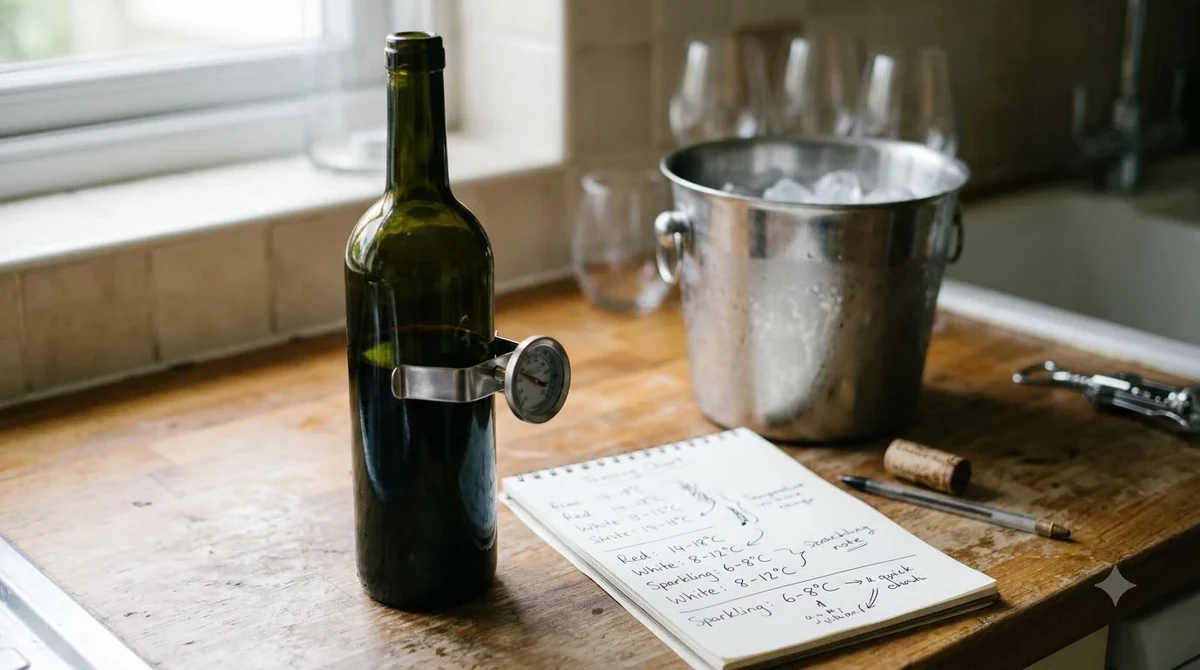
Serving temperature also changes the experience. Sparkling wines generally show well around 40 to 50 degrees Fahrenheit, light whites and rosés around 45 to 50 degrees, and fuller-bodied whites around 50 to 55 degrees. Light reds are generally served around 55 to 60 degrees, while fuller reds benefit from approximately 60 to 65 degrees. Sweet whites are commonly served around 43 to 50 degrees.
Once home, store unopened bottles away from sunlight and major temperature fluctuations. Bottles with natural cork closures are generally stored on their sides, with approximately 55 degrees Fahrenheit serving as a useful storage target. Avoid placing wine next to ovens, radiators, or other heat sources. A cool, dark storage area is preferable to a kitchen counter.
Opened bottles require different handling. Refrigeration helps preserve both white and red still wines after opening, and most are best enjoyed within approximately three to five days. Sparkling wine generally lasts one to three days with a suitable sparkling-wine stopper, while fortified wines may remain enjoyable for several weeks depending on their style and storage conditions.
For the trip itself, avoid leaving purchased bottles in a hot parked vehicle. Keep wine protected from direct sunlight and temperature extremes, and transport bottles securely so they cannot roll around or break. If your journey involves air travel or international customs, investigate the applicable baggage, import, and alcohol transportation rules before purchasing multiple bottles.
Think about how each purchase will be used. A lighter white may be a practical choice for an outdoor meal, while a structured red may be better suited to a substantial dinner. A sweet port can work as an after-dinner selection. Buying a few contrasting styles is often more interesting than purchasing several bottles that all serve the same purpose.
Frequently Asked Questions
What was the first American wine region officially recognized?
Augusta, Missouri, received the first American Viticultural Area designation on June 20, 1980. The AVA system is administered federally and identifies grape-growing areas through geographical characteristics rather than simply recognizing a town or tourism destination. Its boundaries distinguish the Augusta grape-growing region from surrounding areas.
What is the official Missouri state grape?
Norton, also known as Cynthiana, is Missouri’s official state grape. The designation was established through state legislation in 2003. Norton is particularly relevant to visitors interested in understanding Missouri’s distinctive winemaking traditions rather than focusing exclusively on internationally familiar grape varieties.
Can Augusta wineries accommodate visitors who do not drink alcohol?
Augusta’s properties offer experiences beyond wine tasting, including food, outdoor settings, and live entertainment. A non-drinking visitor can still enjoy the scenery, a meal, or the social atmosphere. However, nonalcoholic beverage selections vary by property, so contact the winery if a specific alternative is important to your plans.
Is Augusta connected to the Katy Trail?
Yes. Augusta’s surrounding area provides access to the Katy Trail experience, which is a well-known Missouri recreational trail. The trail is an additional attraction for travelers who want to combine outdoor recreation with wine-country sightseeing. Check the relevant trail access information and current conditions when planning a cycling or walking excursion.
Why is Augusta historically important to French vineyards?
Missouri viticulture played an important role in responding to the phylloxera crisis that devastated European vineyards during the late 19th century. Missouri grape rootstocks resistant to the pest were shipped to France and used in vineyard recovery efforts. The story is an important part of the wider history of American grape-growing and international wine production.
Augusta offers an appealing combination of American wine history, approachable tasting rooms, regional grape varieties, and Missouri River Valley scenery. Start with Mount Pleasant Estates, Augusta Winery, Montelle, Balducci, or Noboleis according to the experience you value most, and leave enough time to enjoy each property. A thoughtfully planned visit makes it easier to appreciate why this small Missouri destination holds such an important place in American wine history.
More in Wine Buying Guides
 Riesling Gift: Choose a Bottle They’ll LoveUpdated Nov 21, 2026
 Sweet Red Wine Gift: Choose a Bottle They’ll LoveUpdated Nov 21, 2026
 Malbec Gift: How to Choose a Memorable Bottle for Any OccasionUpdated Nov 21, 2026
 Sherry Gift Ideas That Match Every Wine LoverUpdated Nov 21, 2026
 Moscato Gift: How to Choose a Sweet Wine They’ll LoveUpdated Nov 21, 2026
 Merlot Gift: How to Choose a Bottle They’ll AppreciateUpdated Nov 21, 2026