

We may earn a commission when you buy through links on this page, at no extra cost to you. Learn more.
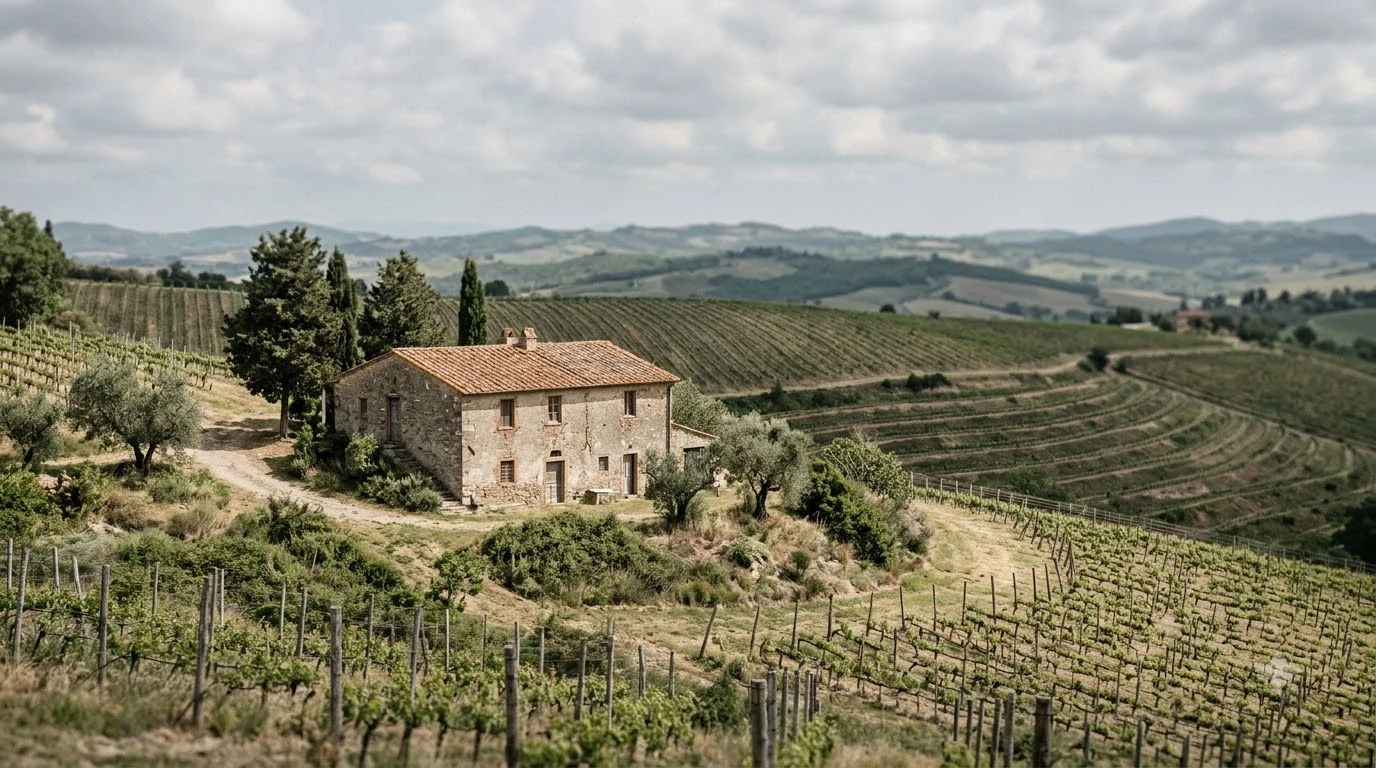
Arkansas wine country centers on the Arkansas River Valley and the southern foothills of the Ozark Mountains, anchored by the historic town of Altus in the northwestern part of the state. Established as a commercial winegrowing hub in the 1870s and 1880s by Swiss-German and Italian immigrants, the region encompasses three overlapping American Viticultural Areas: the Altus AVA, the Arkansas Mountain AVA, and the multi-state Ozark Mountain AVA. Growers cultivate an unusually broad mix of European vinifera, French-American hybrids, and native North American grapes, most notably Cynthiana—Arkansas’s official state grape—alongside sweet Muscadine.
While coastal states dominate national shelf space, Arkansas holds one of the oldest continuous winemaking traditions in the American South. Long before Prohibition forced more than 150 bonded wineries across the state to close or pivot to table grapes, Arkansas ranked among the top wine-producing states in the country. Today, a tight-knit community of multi-generational family estates and modern boutique cellars keeps that heritage alive across rolling plateaus overlooking the Arkansas River.
Overview of Arkansas Wine Country
Arkansas wine country stretches primarily across the northwestern quadrant of the state, following the elevated benches between the Boston Mountains to the north and the Arkansas River Valley to the south. Most commercial vineyards cluster within a compact stretch of Franklin and Johnson counties around Altus, with additional pockets extending northwest toward Springdale, Tontitown, and Eureka Springs.
Viticulture here is shaped by geography that breaks the standard pattern of the eastern United States. Because the Ozark and Ouachita mountain ranges run east-to-west rather than north-to-south, their ridges act as a natural barrier against harsh Arctic air masses sweeping down from the Great Plains. At the same time, hilltop plateaus between 500 and 700 feet in elevation promote steady air drainage, reducing the risk of late spring frosts and allowing cool night breezes to temper hot, humid summer afternoons.
According to the Encyclopedia of Arkansas, the state’s modern industry traces its roots to the late nineteenth century, when Catholic Swiss-German settlers arrived near Altus and Italian immigrants established vineyards farther north in Tontitown. Those early pioneers recognized that the sandy, well-drained hillside soils mirrored the foothill vineyards of central Europe. Even after Prohibition decimated the broader statewide industry and left roughly half of Arkansas’s counties dry, core family estates in Altus survived by supplying sacramental wine and rebuilding immediately after repeal in 1933.
Sub-Regions and Appellations
Arkansas wine country is defined by a nested hierarchy of three federally recognized American Viticultural Areas (AVAs), all established in 1986. Rather than representing separate corners of the state, these appellations stack inside one another like concentric rings, moving from a broad multi-state mountain zone down to a single hilltop plateau.

At the broadest level sits the Ozark Mountain AVA, which spans more than 3.5 million acres across northwestern Arkansas, southern Missouri, and eastern Oklahoma. Wine Enthusiast notes that this continental growing zone features limestone, sandstone, and clay soils with around 4,500 planted acres and roughly 70 wineries across the three-state footprint. Within Arkansas, wineries located outside the immediate river valley—such as estates near Springdale and Eureka Springs—typically bottle under this overarching appellation.
Nested inside that border is the Arkansas Mountain AVA, covering roughly 2.9 million acres north of the Arkansas River from Conway west to Fort Smith. Although it encompasses diverse microclimates across the Boston Mountains, relatively few producers print Arkansas Mountain on their labels, preferring either the broader Ozark designation or the hyper-specific sub-appellation inside it. That sub-appellation is the Altus AVA, a compact 12,000- to 13,000-acre plateau in Franklin and Johnson counties. According to the Encyclopedia of Arkansas, Altus is the only place in the state where all four major grape species and interspecific hybrids grow commercially side by side, aided by roughly 45 inches of annual rainfall and acidic, gravelly sandy loam soils.
| Appellation | Year Established | Approximate Size | Geographic Scope | Primary Soil Profile |
|---|---|---|---|---|
| Altus AVA | 1986 | 12,000–13,000 acres | Hilltop plateau in Franklin and Johnson counties, AR | Fine to gravelly sandy loam over sandstone bedrock |
| Arkansas Mountain AVA | 1986 | 2.9 million acres | North of the Arkansas River from Conway to Fort Smith, AR | Stony clay and fine sandy loam across foothill ridges |
| Ozark Mountain AVA | 1986 | Over 3.5 million acres | Northwestern Arkansas, southern Missouri, and eastern Oklahoma | Limestone, weathered sedimentary rock, sandstone, and clay |
Key Grapes and Wine Styles
No single grape defines every cellar in Arkansas; instead, the state’s vineyards stand out for genetic diversity rarely seen in one American region. Warm, humid summers and occasional winter freezes require growers to match specific grape species to each microclimate, resulting in everything from dry, barrel-aged reds to sweet porch-sipping fruit and native wines.
The flagship red grape is Cynthiana—genetically identical to Norton and designated as Arkansas’s official state grape. A native Vitis aestivalis variety resistant to fungal pressure and winter cold, Cynthiana yields deeply pigmented, full-bodied dry red wines with brisk natural acidity, dark berry fruit, and earthy spice. Alongside Cynthiana, French-American hybrids such as Chambourcin for reds and Vidal Blanc, Seyval Blanc, Vignoles, and Traminette for whites thrive across the Ozark foothills, producing crisp dry whites, aromatic off-dry bottlings, and bright rosés.
On the elevated, well-drained sandy loam of the Altus plateau, growers also cultivate classic Vitis vinifera varieties including Cabernet Sauvignon, Merlot, Chardonnay, Pinot Noir, and Riesling—a rarity in the humid South. Rounding out the regional identity are wines made from native Muscadine (Vitis rotundifolia), Concord, Niagara, and Catawba. Muscadine remains a staple of Arkansas tasting rooms, bottled in sweet red and white styles prized for their unmistakable candied-grape aromatics and lush, fruity finish. Much like exploring wine regions across North America, tasting through an Arkansas flight highlights how local climate shapes grape selection.
Notable Producers in Arkansas
Because Arkansas’s wine industry remained concentrated in a handful of resilient farming communities after Prohibition, many of the state’s most influential wineries are multi-generation family operations centered in Altus, alongside newer boutique estates in the northern Ozarks.
In Altus, Wiederkehr Wine Cellars dates back to 1880, when Swiss immigrant Johann Wiederkehr carved an underground cellar into the hillside of what is now Wiederkehr Village. The estate remains a cornerstone of the region, producing European-style varietals, Swiss-inspired blends, and native wines while operating its historic cellar restaurant. Nearby, Post Familie Vineyards and Winery traces its lineage to the 1870s, when founder Jacob Post first planted vines on St. Mary’s Mountain. Now spanning five generations, the Post family farms extensive acreage of Cynthiana, Muscadine, and hybrid grapes, while an offshoot branch of the family operates Mount Bethel Winery just down the road, known for its traditional native varietals, fruit wines, and fortified ports.
Chateau Aux Arc Vineyards and Winery brought a modern wave to Altus when founder Audrey House began cultivating Arkansas’s first commercial Chardonnay vineyard in 1998, bottling her inaugural vintage in 2001. Today the 50-acre estate is widely recognized for dry, structured Cynthiana alongside vinifera releases. Outside Altus, notable stops include Cowie Wine Cellars in Paris—home to the Arkansas Historic Wine Museum—Tontitown Winery, which preserves the Italian winemaking heritage of the Ranalli family, and Sassafras Springs Vineyard and Winery near Springdale.
Visiting Tips for the Wine Trail
Planning a trip through Arkansas wine country requires a bit more logistics than touring coastal wine regions, largely because of distance between clusters and local county alcohol laws. The compact Altus Wine Trail sits roughly two hours northwest of Little Rock and forty-five minutes east of Fort Smith just off Interstate 40, making it an easy half-day or full-day loop.
Because the four primary Altus wineries—Wiederkehr, Post Familie, Mount Bethel, and Chateau Aux Arc—sit within a few miles of one another on St. Mary’s Mountain and the surrounding plateau, visitors can comfortably tour all four in a single afternoon. Spring (April through May) and autumn (September through October) offer the most pleasant weather for outdoor barrel patios and vineyard walks, as mid-summer temperatures regularly climb into the nineties with high humidity. If you plan to combine Altus with Northwest Arkansas wineries around Springdale, Tontitown, and Eureka Springs, budget a full weekend to cover the scenic drive through the Boston Mountains.
Tip: Check local county rules before planning a picnic or roadside stop—roughly half of Arkansas’s counties are dry, meaning retail alcohol sales outside licensed winery tasting rooms can be restricted depending on which county line you cross.
Travelers who enjoy relaxed, small-town vineyard stops similar to hill country wine tasting or Texas Hill Country wine tasting will find Arkansas tasting rooms notably unpretentious. Winemakers and family members frequently pour behind the counter themselves, and several properties feature on-site cafés or historic dining rooms where you can pair local flights with regional fare.
How to Buy Arkansas Wines
Purchasing bottles from Arkansas wineries takes a slightly different approach than shopping for national supermarket labels, as most producers operate on a small-to-regional scale with limited out-of-state distribution.
The widest selection—especially small-lot dry Cynthiana, estate Chardonnay, and limited hybrid releases—is available directly at winery tasting rooms in Altus, Paris, and Northwest Arkansas. Within the state, flagship bottlings from larger producers such as Post Familie and Wiederkehr are widely stocked at independent liquor stores and grocery wine aisles located in wet counties. Under Act 675, passed by the Arkansas General Assembly in 2025, licensed wineries are also permitted to ship wine directly to consumers residing in wet Arkansas counties.
For buyers outside Arkansas, direct-to-consumer shipping laws vary by destination state, and smaller family wineries do not always maintain national e-commerce fulfillment. Calling the tasting room directly remains the most reliable way to confirm current interstate shipping eligibility or locate regional distributors in neighboring states such as Missouri, Oklahoma, and Texas. Much like discovering lesser-known European regions such as Slovenia wine country, tracking down a bottle of dry Arkansas Cynthiana rewards curiosity with a distinct sense of place.
Frequently Asked Questions
Where is Arkansas wine country located?
Arkansas wine country is concentrated in the northwestern part of the state, primarily in the Arkansas River Valley and the southern foothills of the Ozark Mountains. The historic hub is the small town of Altus in Franklin County, with additional wineries located nearby in Paris and farther north around Springdale, Tontitown, and Eureka Springs.
What is Arkansas best known for in winemaking?
Arkansas is best known for wines made from Cynthiana (also called Norton), its official state grape, which produces bold, dry, full-bodied red wines with high natural acidity. The region is also famous for sweet native Muscadine wines and for being one of the few places in the American South capable of growing European vinifera grapes like Chardonnay and Cabernet Sauvignon alongside French-American hybrids.
How many wineries are in Altus, Arkansas?
Altus is home to four primary commercial estate wineries—Wiederkehr Wine Cellars, Post Familie Vineyards and Winery, Mount Bethel Winery, and Chateau Aux Arc Vineyards and Winery—alongside a couple of smaller craft producers. Because all four major estates sit within a few miles of one another on the Altus plateau, visitors can easily tour them on a single day trip.
Are Arkansas wines all sweet?
No, while sweet Muscadine, Niagara, and fruit wines remain popular local traditions, Arkansas wineries produce a full spectrum of dry and off-dry wines. Dry, oak-aged Cynthiana, crisp Vidal Blanc and Seyval Blanc, and estate-grown Chardonnay and Merlot are widely available across regional tasting rooms.
From nineteenth-century Swiss and Italian cellar traditions to modern dry Cynthiana vintages, Arkansas wine country offers a distinctive chapter in American viticulture. Whether you plan a weekend drive along the Altus plateau or seek out a bottle of native Arkansas red for dinner, the state’s vineyards reward anyone willing to look beyond the usual coastal wine map.
More in Wine Regions
 Willcox Wine Trail: Discover Arizona’s High-Elevation Wine CountryUpdated Nov 20, 2026
 Yakima Valley Wine Region: Find the Best Styles to TryUpdated Nov 20, 2026
 Vosne Romanee Wine Tasting: Identify Aromas and Choose Better PairingsUpdated Nov 20, 2026
 Yakima Valley Wine Festival: Find the Best Seasonal Wine EventsUpdated Nov 20, 2026
 Wales Vineyards: Discover Cool-Climate Wines and Where to VisitUpdated Nov 20, 2026
 Yountville Wine Festival: Discover Napa Wines and Local FoodUpdated Nov 20, 2026