

We may earn a commission when you buy through links on this page, at no extra cost to you. Learn more.
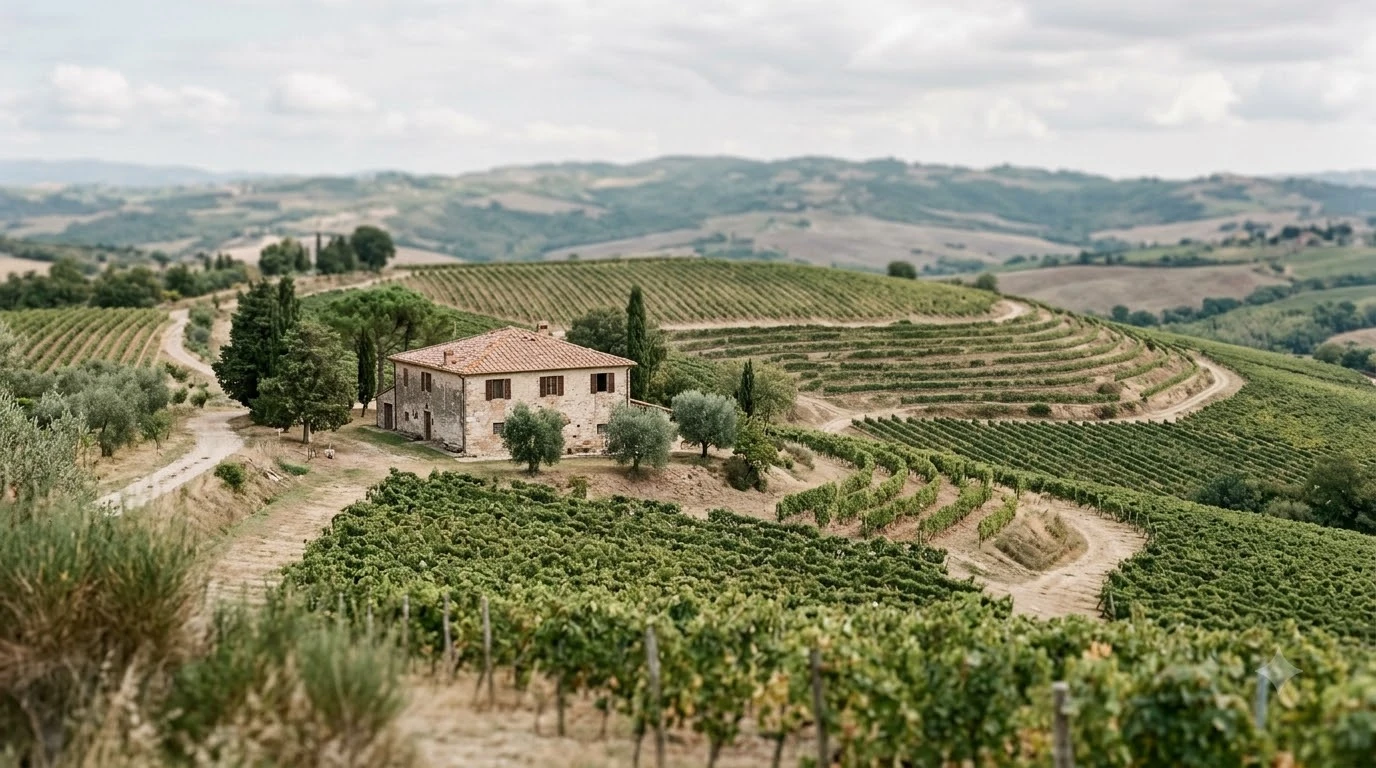
Slovenia wine country spans three official wine regions—Primorska in the west, Podravje in the northeast, and Posavje in the southeast—divided into nine distinct winegrowing districts. Situated between Italy, Austria, Hungary, and Croatia at the crossroads of the Alps and the Adriatic Sea, the country cultivates roughly 60 grape varieties across steep, dry-farmed terraces. White wines account for about 70 percent of national production, ranging from crisp Alpine-influenced Sauvignon Blanc and Šipon to world-renowned skin-contact orange wines made from Rebula.
Roughly the size of New Jersey, this Central European nation packs remarkable viticultural variety into a compact footprint, offering travelers and wine drinkers an appealing alternative to crowded western European wine routes. Whether you are planning a trip or exploring Wine Regions from your local shop, understanding how Slovenia’s geography shapes its bottles makes navigating its labels straightforward and rewarding.
Overview of Slovenia Wine Country
Viticulture in Slovenia dates back to the 5th and 4th centuries BC, long before the arrival of the Romans, and remains deeply rooted in small, family-run estates that rely on manual hillside harvesting. Today, the country balances centuries-old cellar traditions with a modern, eco-conscious renaissance that has made it a global leader in low-intervention and skin-contact winemaking.
Because Slovenia sits at roughly 45 to 47 degrees north latitude—the same belt as Burgundy and the northern Rhône—its vineyards benefit from cool nights and long growing seasons that preserve bright natural acidity. At the same time, dramatic shifts in elevation and weather patterns divide the country into three distinct climatic zones: a sub-Mediterranean coast in the west, a continental climate with Alpine influences in the northeast, and a hilly, forested continental zone in the southeast.
Following Slovenia’s independence in 1991, winemakers shifted decisively away from bulk cooperative production toward low-yield, terroir-driven bottling. Most vineyards are dry-farmed on steep slopes where mechanical harvesters cannot operate, encouraging sustainable and organic farming practices across the country’s roughly 28,000 registered agricultural holdings. While the majority of Slovenian wine is enjoyed domestically, a growing share of its top-tier bottles now reaches specialty wine shops in the United States.
The Three Wine Regions and Nine Districts
Slovenia organizes its vineyards into three primary regions—Primorska, Podravje, and Posavje—which break down further into nine official winegrowing districts. Knowing which region appears on a bottle immediately tells you whether to expect a textured coastal white, an aromatic continental wine, or a light-bodied local red.

Primorska, whose name translates to “lying along the sea,” covers 6,332 hectares in western Slovenia along the Italian border and the Adriatic coast. It is Slovenia’s largest and most internationally recognized wine region, shaped by warm Mediterranean sunshine, limestone-rich flysch soils, and the fierce northerly Burja wind that keeps vineyards dry and disease-free. Primorska contains four districts: Goriška Brda (which sits directly adjacent to Italy’s Collio), Vipava Valley, Kras (famous for iron-rich red terra rossa soils), and Slovenska Istra on the Adriatic peninsula.
Podravje, named after the Drava River in the northeast near Austria and Hungary, accounts for roughly half of Slovenia’s total wine output. Its continental climate and steep marl slopes produce vibrant, aromatic white wines with racy acidity across two districts: Štajerska Slovenija and Prekmurje. Meanwhile, Posavje in the forested southeast along the Sava River is the smallest region at 2,400 hectares. Divided into Dolenjska, Bela Krajina, and Bizeljsko-Sremič, Posavje is known for family-scale cellars, crisp sparkling wines, and light-alcohol everyday reds.
| Region | Location and Climate | Official Districts | Signature Grapes and Styles |
|---|---|---|---|
| Primorska | West coast; sub-Mediterranean with strong Burja winds | Goriška Brda, Vipava Valley, Kras, Slovenska Istra | Rebula, Malvazija Istarska, Zelen, Pinela, Refošk, skin-contact orange wines |
| Podravje | Northeast; continental with Alpine and Pannonian influences | Štajerska Slovenija, Prekmurje | Laški Rizling, Šipon (Furmint), Sauvignon Blanc, Renski Rizling, Pinot Noir |
| Posavje | Southeast; hilly continental along the Sava River | Dolenjska, Bela Krajina, Bizeljsko-Sremič | Žametovka, Modra Frankinja, Cviček (light red-white blend), traditional-method sparkling |
Key Grapes and Wine Styles
Slovenian growers cultivate around 60 grape varieties—38 white and 22 red—combining indigenous Central European cultivars with familiar international grapes like Chardonnay, Sauvignon Blanc, and Merlot. White varieties dominate the national landscape, making up roughly 70 to 75 percent of total wine production.
In Primorska, Rebula (known across the Italian border as Ribolla Gialla) is the undisputed star. Vinified in stainless steel, Rebula delivers crisp flavors of lemon, green apple, and chalky minerality. However, winemakers in Goriška Brda and the Vipava Valley also spearheaded the modern revival of orange wine—white grapes fermented on their skins for weeks or months—turning Rebula into a deep amber, structured wine with notes of dried apricot, orange peel, walnut, and black tea. Other regional whites include floral, honeyed Malvazija Istarska in Slovenska Istra and rare native grapes like Zelen and Pinela in the Vipava Valley.
In the cooler northeast of Podravje, aromatic whites take center stage. Laški Rizling (Welschriesling) is Slovenia’s most widely planted grape, yielding light, citrus-driven dry whites alongside celebrated sweet ice wines. Šipon (Furmint) produces dry whites with punchy acidity and stony minerality, as well as luscious late-harvest bottlings. On the red side, Kras is famous for Teran, a brisk, iron-toned red made from the Refošk (Refosco) grape grown in red limestone soil, while Posavje produces Cviček, a traditional dry blend of red and white grapes capped at 10 percent ABV.
Notable Slovenian Producers
Slovenia’s wine scene is defined by multi-generational family estates alongside historic monastic cellars that have operated for centuries. According to Wine Enthusiast, both boutique organic pioneers and historic cellars anchor the country’s modern reputation.
In Primorska, Movia and Edi Simčič in Goriška Brda are among Slovenia’s best-known estates internationally. Movia is renowned for organic and biodynamic farming as well as expressive skin-contact bottlings like its Lunar label, while Edi Simčič earns wide acclaim for barrel-aged Chardonnay, Malvasia, and structured Bordeaux-style red blends. Nearby in Goriška Brda, the Jakončič family has crafted wine since 1847, maturing its Uvaia orange wine in wooden egg-shaped barrels, while Klinec is celebrated for low-intervention skin-contact wines.
In the northeast, Pullus operates out of Ptuj in Štajerska, stewarding Slovenia’s oldest wine cellar—dating back to 1239—while producing crisp Sauvignon Blanc, Pinot Noir, and the local white blend Haložan. Also in Štajerska, the historic monastery estate Dveri-Pax produces benchmark Šipon, and Zlati Grič combines hillside vineyards with guest accommodations and a cellar in Slovenske Konjice. In Posavje, Penine Istenič has pioneered traditional-method sparkling wines in Bizeljsko-Sremič using local varieties like Šipon and Modra Frankinja (Blaufränkisch).
Tips for Visiting Slovenia Wine Country
Because Slovenia is compact, travelers can easily base themselves in the capital city of Ljubljana and reach any of the three wine regions within roughly one to two hours by car. Renting a car is the most practical way to explore terraced hillside villages, as public transit between rural vineyard estates is limited.
Unlike major wine regions in France or California that maintain daily walk-in tasting rooms, many Slovenian wineries remain working family farms where the winemaker personally hosts guests. Booking appointments several days in advance is essential, especially at smaller estates in Goriška Brda and the Vipava Valley. For travelers staying in Ljubljana without a car, city wine bars such as Grajska Vinoteka at Ljubljana Castle, Vinoteka Movia, and Wine Bar Šuklje offer curated flights spanning all nine districts.
In northeast Slovenia, wine travelers should also stop in Maribor to see Stara Trta (the Old Vine), a Žametovka vine growing along the Drava River that is recognized as the oldest living noble grapevine in the world at over 400 years old. For travelers who already enjoy relaxed hill country wine tasting or scenic arkansas wine country routes back home, Slovenia’s agritourism farms—known locally as turistične kmetije—pair cellar tastings with homemade prosciutto, local cheeses, and farm-to-table meals.
Tip: When shopping for Slovenian bottles in the US, look for the word Vrhunsko on the label—it designates Slovenia’s highest quality tier for wines made from specific geographic origins and ripe, low-yield harvests.
How to Buy Slovenian Wine in the US
Because Slovenian winemakers consume most of their production domestically and export only a fraction of their annual output, bottles are rarely found in big-box grocery chains. Instead, independent bottle shops, natural wine retailers, and specialty online merchants are the best places to source authentic selections.
When reading a Slovenian wine label, look first for the region name—Primorska, Podravje, or Posavje—alongside the grape variety. Note that Slovenian grape names often reflect local spelling: Renski Rizling is true Rhine Riesling, Laški Rizling is Welschriesling, Sivi Pinot is Pinot Gris, Modri Pinot is Pinot Noir, and Modra Frankinja is Blaufränkisch. Understanding these translations helps prevent surprises at the register, especially since Laški Rizling is unrelated to German Riesling.
If you are new to the country’s wines, start with a dry, stainless-steel Rebula from Goriška Brda or a crisp Sauvignon Blanc or Šipon from Podravje. Once you are familiar with Slovenia’s bright acidity and mineral backbone, step up to a skin-contact orange Rebula or a savory, iron-rich Teran from Kras to experience the country’s most distinctive styles. According to the official Wines of Slovenia portal, dry farming and steep manual viticulture unite all nine districts, giving even entry-level bottles a clear sense of place.
Frequently Asked Questions
What is Slovenia best known for in wine?
Slovenia is best known for crisp, aromatic white wines and its leading role in the modern orange wine movement. Winemakers in the western Primorska region helped revive skin-contact white winemaking in the 1990s using the native Rebula grape, creating amber-hued wines with savory depth and firm tannins.
Is Slovenian wine mostly red or white?
Slovenian wine is predominantly white, with white grape varieties accounting for roughly 70 to 75 percent of national production. However, the country also produces standout cool-climate reds, including iron-rich Refošk (Teran) in Kras, Blaufränkisch, and elegant Pinot Noir.
What does Cviček taste like?
Cviček is a traditional red-and-white field blend from the Posavje region that is pale ruby in color, bone-dry, and remarkably light in alcohol at no more than 10 percent ABV. Made primarily from red Žametovka and Blaufränkisch blended with white Kraljevina and Welschriesling, it delivers tart red-berry flavors and brisk acidity.
When is the best time to visit Slovenian wineries?
Late spring (May through June) and early autumn (September through October) offer the best weather and vineyard scenery for touring Slovenia wine country. September and October coincide with the grape harvest, while November brings St. Martin’s Day celebrations across the country when young wines are officially blessed and poured.
From the sea-breezed terraces of Goriška Brda to the ancient cellars of Štajerska, Slovenia wine country rewards curious drinkers who look beyond mainstream European labels. Whether you uncork a mineral-driven Rebula at home or map out an itinerary between Ljubljana and the Adriatic, this small Central European powerhouse offers world-class craftsmanship in every glass.
More in Wine Regions
 Willcox Wine Trail: Discover Arizona’s High-Elevation Wine CountryUpdated Nov 20, 2026
 Yakima Valley Wine Region: Find the Best Styles to TryUpdated Nov 20, 2026
 Vosne Romanee Wine Tasting: Identify Aromas and Choose Better PairingsUpdated Nov 20, 2026
 Yakima Valley Wine Festival: Find the Best Seasonal Wine EventsUpdated Nov 20, 2026
 Wales Vineyards: Discover Cool-Climate Wines and Where to VisitUpdated Nov 20, 2026
 Yountville Wine Festival: Discover Napa Wines and Local FoodUpdated Nov 20, 2026