

We may earn a commission when you buy through links on this page, at no extra cost to you. Learn more.
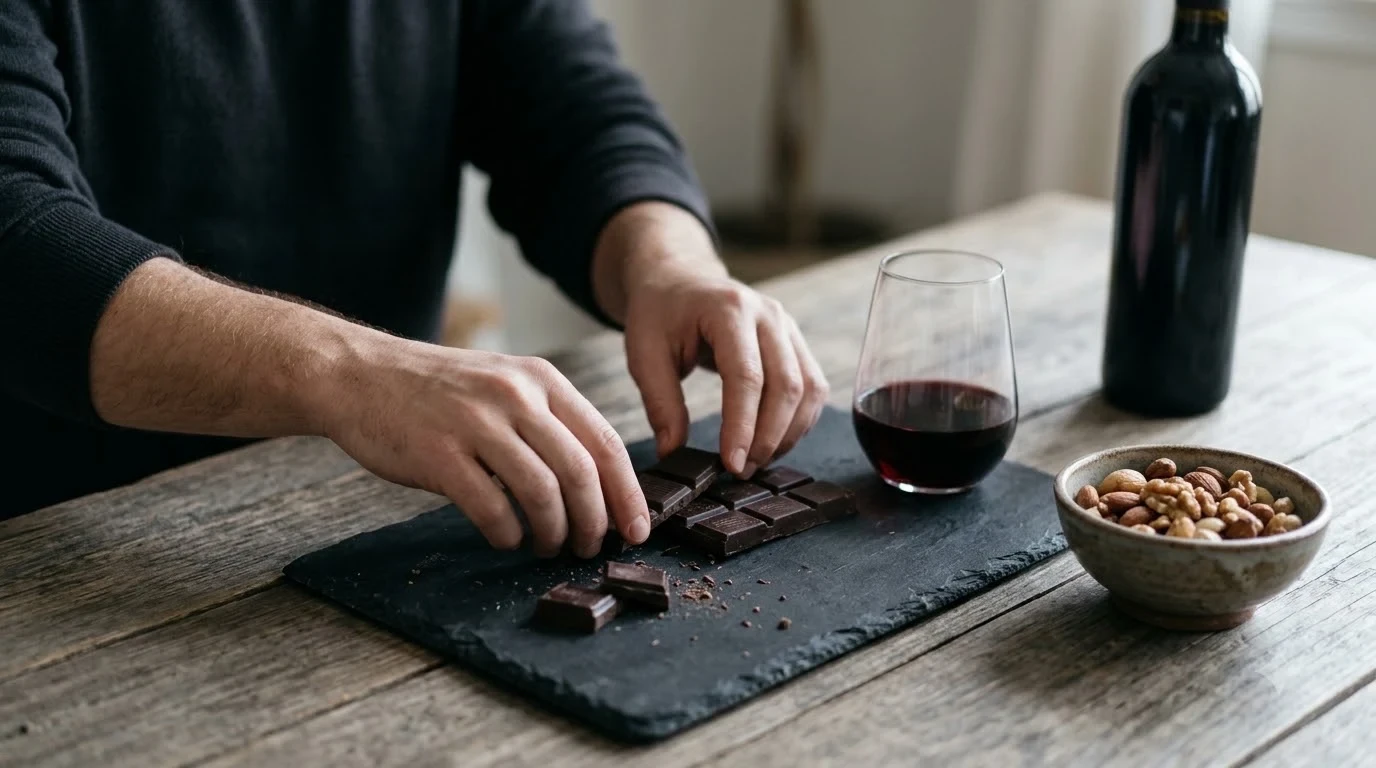
The best answer to what wine goes with dark chocolate is a sweet, fortified red such as Ruby Port or Banyuls, whose concentrated fruit and sweetness can balance cacao’s bitterness. These wines have enough intensity to stand beside a dense square of chocolate without disappearing. A ripe, softer red can also work with some bars, but very dry, tannic wine is a less dependable choice. The most useful starting point is to match sweetness first, then consider cocoa percentage, texture, and added flavors.
Dark chocolate ranges from mildly bittersweet to intensely bitter, and a bar’s cacao percentage does not tell the whole story. A 60% bar with caramelized nuts can need a different wine from an 85% bar with sea salt. Use the pairings below as a practical starting point, then adjust the pour to the chocolate in front of you.
The Best Starting Point: Ruby Port and Banyuls
Ruby Port and Banyuls are two of the most reliable wines for dark chocolate because both combine sweetness with ripe, concentrated fruit. Ruby Port leans toward blackberry, black cherry, and spice, while Banyuls often brings dark berries, dried fruit, and savory complexity.
Port is a fortified wine from Portugal’s Douro Valley. Ruby Port keeps a vivid fruit character, making it a natural partner for a plain 65% or 70% bar. Choose Ruby or Late Bottled Vintage (LBV) Port for a straightforward, fruit-led match; Vintage Port can be more structured and tannic, so it is not always the easiest option with very bitter cacao.
Banyuls comes from Roussillon in southern France and is commonly made in a sweet, fortified style from Grenache. Its darker fruit suits high-cacao bars, truffles, and flourless cake. Maury, also from Roussillon, offers a related style; choose a sweet red version rather than assuming every bottle from the region tastes alike.
For a first tasting, pour Ruby Port beside a square of 65% chocolate, then repeat with Banyuls. Sip while the cocoa is still present and notice whether the wine tastes fruitier and rounder or whether the chocolate makes it seem sharp. The better match leaves both flavors recognizable.
Why Dark Chocolate Can Challenge Dry Wine
Chocolate combines sweetness, bitterness, and fat, while many dry wines bring acidity, tannin, and alcohol. When the chocolate is sweeter than the wine, the wine can seem sour or thin; when both partners carry a strong bitter or drying sensation, the finish can become harsh.
The safest dessert-pairing rule is to choose a wine at least as sweet as the food. Liquor.com notes that a less-sweet wine can taste sour and overly bitter beside chocolate, and lists Banyuls, Maury, Pedro Ximénez Sherry, Recioto della Valpolicella, and Vin Santo among fortified or sweet options for dark chocolate. See its wine and chocolate pairing guide for more examples.
Sweetness is not the only issue. Dark chocolate has bitter compounds, and red wine tannin can add a drying sensation to the same sip. Cabernet Sauvignon is typically high in tannin and Syrah often medium-plus to high, while Merlot is softer at medium tannin and Pinot Noir is generally low-to-medium in tannin with higher acidity. A fruit-forward Merlot or supple Pinot Noir is often a more forgiving dry-red experiment than a firm young Cabernet.
There are exceptions. Wine Enthusiast describes 67% to 72% dark chocolate as a useful range for trying fuller reds and reports an unusual match between 85% chocolate and Oregon Chardonnay. Texture, salt, acidity, and the individual wine all matter, but sweet fortified wine remains the safer first pour.
Match the Pour to Cocoa Percentage
Cacao percentage is a helpful clue, not a complete flavor description. As the percentage rises, a bar often becomes less sweet and more intense, but roasting, origin, added sugar, and inclusions can change its balance.
The table offers starting points rather than fixed rules. The percentages describe the cacao content printed on many chocolate bars; they are practical bands for choosing a wine, not formal legal categories.
| Dark chocolate | Suggested first pour | Why it can work |
|---|---|---|
| 50%–60% | Ruby Port or a fruit-forward sweet red | Moderate cacao bitterness leaves room for ripe berry fruit and sweetness. |
| 61%–72% | Ruby Port, Banyuls, or Maury | Concentrated fruit and sweetness meet the bar’s stronger cocoa flavor. |
| 73%–85% | Banyuls, Maury, or Pedro Ximénez Sherry | A sweet, intense wine can balance a drier, more bitter bar. |
| 86%–100% | A small pour of Banyuls or Pedro Ximénez | Very high cacao can be forceful, so sweetness and concentration are useful counterweights. |
A 70% bar is a sensible starting point: it has clear cocoa intensity without always being as austere as an extra-dark bar. Try Ruby Port first, then compare a medium-bodied Merlot. If the dry red turns bitter or loses its fruit, return to the Port.
With an 80% or 85% bar, notice the finish. Dry, smoky, or roasted flavors may favor Banyuls or PX Sherry, while a fruity or salted bar may suit a less expected match. Use the printed percentage as a clue, then let the actual taste decide.
Fortified Wines Beyond Port
Port is the familiar choice, but dark chocolate also suits several other fortified and naturally sweet wines. Banyuls and Maury bring southern French Grenache character, while Pedro Ximénez Sherry offers dense raisin, fig, and molasses-like notes.
PX is a very sweet style of Sherry that can stand up to intense chocolate. Its dried-fruit character suits a piece containing espresso, toasted nuts, or dried cherries. Because it is concentrated, a small pour is enough; it becomes part of the dessert rather than a refreshing contrast.
Recioto della Valpolicella is a sweet red from Italy with ripe cherry and dark-fruit flavors. Recioto di Soave is a sweet white, better suited to lighter chocolate desserts or fruit accents. Vin Santo often shows dried-fruit and nut-like notes that suit toasted almonds or hazelnuts. Madeira is another option with chocolate containing nuts, caramel, or coffee, but choose a richer, sweeter style rather than a dry one. The same applies to Sherry: Pedro Ximénez is a better fit for a sweet chocolate course than very dry Fino. These wines are not interchangeable, so choose according to the chocolate’s flavor.
For more examples of the styles that suit different chocolates, Decanter’s wine and chocolate pairing recommendations discusses Banyuls, Recioto, skin-contact whites, and fruit-forward reds. Its contributors also point out that the chocolate’s texture, sweetness, acidity, and added ingredients can change which wine feels balanced.
Use Fruit, Salt, Nuts, and Spice to Refine the Pairing
Once the wine and chocolate have a similar level of intensity, use the additions in the chocolate to make the match more precise. A hint of orange, a handful of almonds, or a pinch of sea salt can shift the best wine choice without changing the base chocolate.
Dark chocolate with orange peel or candied citrus can work with sweet Moscatel or another fortified wine showing orange, apricot, or dried-fruit notes. Cherry-filled chocolate may suit Recioto della Valpolicella, while raspberry or strawberry pieces call for clear red-fruit character rather than heavy oak. For chocolate with almonds, hazelnuts, or praline, consider Tawny Port, Madeira, or nutty, oxidative Sherry; its dried-fruit, caramel, and nut notes echo roasted flavors. For a plain, sharply bitter bar, Ruby Port or Banyuls remains the better first experiment.
Salted dark chocolate can contrast well with a bright, fruit-forward wine. Decanter suggests a lightly skin-contact white, while Wine Enthusiast describes 85% chocolate with Oregon Chardonnay. These are more adventurous than Port, but they show why salt and acidity can change the match; try a rounded Chardonnay rather than assuming every dry white will work.
Be cautious with chili chocolate. Alcohol can make chili heat feel stronger, and tannin can add to the drying impression. A sweet, lower-tannin wine is generally a safer direction than a high-alcohol, highly structured red. If the chocolate is strongly spicy, keep the serving small and choose a wine whose sweetness is obvious enough to balance the heat.
Serve the Wine and Chocolate at Their Best
Serving temperature and portion size affect how clearly you perceive the match. A wine served too warm can seem heavy or alcoholic, while very cold chocolate can hide some of its aroma and texture.
Serve full-bodied reds around 60–65°F and lighter reds around 55–60°F. Sweet white wines are generally served around 43–50°F. Avoid serving fortified reds hot; a Ruby Port, sweet Muscat, and dry Pinot Noir have different structures and should not all be treated alike.
Let chocolate come close to room temperature before tasting. Break it into small squares and allow each piece to soften on the tongue. A 5-ounce wine pour is a standard serving, and a 750 ml bottle provides about five glasses. Use smaller pours when comparing several wines. Taste the chocolate alone, taste the wine alone, then taste them together; ask whether the chocolate makes the wine sour, whether the wine makes the chocolate harsher, and whether both flavors remain clear.
Tip: Compare one wine at a time with the same square of chocolate. Start with Ruby Port, then try Banyuls or a softer red; changing the chocolate and wine together makes it difficult to tell which part improved the match.
A young, full-bodied red may benefit from 30–60 minutes of decanting, but air cannot correct a sweetness mismatch. Fortified wines are often ready to pour once opened; seal and refrigerate the bottle as appropriate.
Pairing Dark Chocolate Desserts and Menus
A plain chocolate bar is easier to match than a layered dessert because cakes, cookies, and truffles add sugar, dairy, flour, fruit, or coffee. Choose the wine for the whole bite rather than the chocolate component alone.
For flourless chocolate cake or a dense torte, Ruby Port, Banyuls, or PX Sherry can meet the dessert’s richness. Cherry filling may favor a sweet red; espresso may suit dried-fruit and roasted notes. See what wine goes with chocolate cake for cake styles and fillings.
Truffles may contain cream, nuts, fruit, or spirits: dark ganache can work with Banyuls or Port, while an orange-filled piece may suit Moscatel. Chocolate chip cookies add buttery dough, vanilla, and sometimes nuts; a fruit-forward, lightly sweet red or Ruby Port can work with a darker cookie, while a sweeter white may suit a more buttery version. See what wine goes with chocolate chip cookies for chewy, crisp, and nut-filled styles.
Milk chocolate is creamier and sweeter, so Brachetto d’Acqui, sweet Riesling, or softer Tawny Port may be better than the most concentrated dark-chocolate wines. Read what wine goes with milk chocolate for more options, or use the broader Wine Pairing guidance for acidity, salt, fat, and spice. For an after-dinner board, offer two chocolates—one around 65% cacao and one with nuts or sea salt—and compare Ruby Port with Banyuls or Tawny Port.
Frequently Asked Questions
Can I serve dark chocolate with Champagne?
It can work with a less-sweet, high-cacao chocolate when the Champagne has enough body, but a very dry Brut is often a difficult match for a sweet dessert. A demi-sec sparkling wine is a more promising option with chocolate that has noticeable sugar. Try a small piece first because Champagne’s acidity and bubbles create a different texture from still fortified wine.
Is 100% cacao chocolate too bitter for wine?
It is a demanding match because unsweetened chocolate has little or no added sugar and can taste intensely bitter. Pair a small piece with a concentrated sweet wine such as PX Sherry or Banyuls rather than a dry Cabernet Sauvignon. Some people prefer 100% bars as a tasting ingredient instead of a dessert, so the best match may be a very small pour.
Should I decant Vintage Port before serving it with chocolate?
Vintage Port can contain sediment as it ages, so older bottles are commonly decanted to separate the clear wine from the deposit. Young Ruby Port and many LBV bottlings are generally simpler to serve and do not call for the same routine. Follow the producer’s guidance for the individual bottle, especially for an older vintage.
Can sparkling red wine pair with dark chocolate?
Yes, a sweet or off-dry sparkling red can be a lively match with chocolate that is not extremely bitter. Brachetto d’Acqui is a fragrant example, while a sweeter Lambrusco can offer berry fruit and bubbles. Choose a version with enough sweetness to stand alongside the chocolate rather than a bone-dry style.
Does the origin of the cacao affect the wine pairing?
It can. Chocolate from different growing regions and makers can show different fruit, floral, earthy, or roasted notes even at the same cacao percentage. A bar with red-fruit character may flatter a wine with cherry or berry notes, while a more roasted bar may be friendlier with a nutty or caramelized fortified wine.
For most dark chocolate, begin with Ruby Port or Banyuls, then adjust for cacao intensity and ingredients such as orange, nuts, or sea salt. A softer red or a sweet white can make an interesting alternative, but sweetness and balance should guide the final choice. Taste the wine and chocolate together in small portions, and let the pairing that keeps both flavors clear decide the winner.
More in Food & Wine Pairing
 Risotto With White Wine Recipe: Make a Creamy Dinner at HomeUpdated Nov 20, 2026
 Wassail With Wine Recipe for a Festive Spiced Holiday DrinkUpdated Nov 20, 2026
 Spritz Veneziano Recipe: Make a Classic Venetian Aperitivo at HomeUpdated Nov 20, 2026
 Summer Wine Punch Recipe for Easy Homemade EntertainingUpdated Nov 20, 2026
 Bishop Recipe: How to Make a Bright, Citrus-Forward Red Wine CocktailUpdated Nov 20, 2026
 Wine Cupcakes Recipe: Bake Rich Chocolate Cupcakes at HomeUpdated Nov 20, 2026