
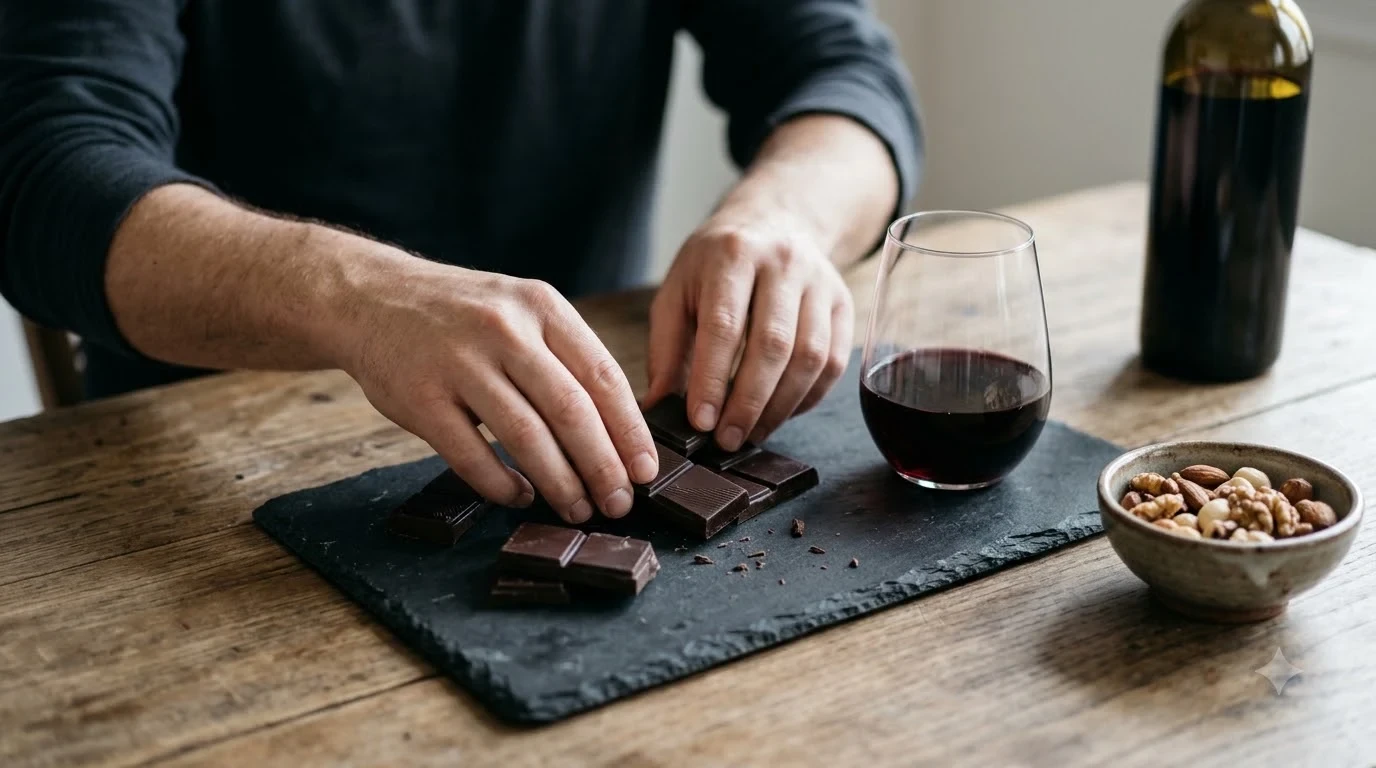

We may earn a commission when you buy through links on this page, at no extra cost to you. Learn more.
What wine goes with milk chocolate? Brachetto d’Acqui, Ruby Port, Tawny Port, and sweet Moscato are excellent choices because their sweetness and fruity flavors complement milk chocolate’s creamy texture. The wine should generally be at least as sweet as the chocolate to avoid an unpleasant bitter or sour contrast. Choose sparkling Brachetto for berries, Ruby Port for ripe fruit, or Tawny Port for caramel and nuts. The chocolate’s filling and cocoa intensity help determine which bottle works best.
Milk chocolate is one of the more approachable chocolates to pair with wine, but choosing the right bottle still makes a difference. Its combination of cocoa, sugar, milk solids, and cocoa butter creates a sweet, creamy flavor that can overwhelm dry wines or make tannic reds seem harsh. Fortunately, several dessert wines and sweet reds have the fruit, richness, and balanced sweetness to complement it. Whether you are serving a simple chocolate bar, homemade truffles, or filled chocolates, attention to sweetness and texture will help you find a satisfying match.
Why Sweet Wine Works Best With Milk Chocolate
Sweetness is the most important factor when pairing milk chocolate with wine. The wine should generally be at least as sweet as the chocolate, while its body and flavor intensity should be substantial enough to stand alongside the creamy cocoa.
Milk chocolate contains sugar, cocoa solids, milk solids, and cocoa butter. Compared with dark chocolate, it generally has a softer cocoa flavor and more noticeable sweetness. Le Cordon Bleu describes milk chocolate as containing up to 40% cocoa solids, with a higher proportion of sugar than darker varieties. This difference explains why a wine suited to an intensely bitter chocolate bar may be unnecessarily powerful for a creamy milk chocolate confection.
Sweet foods can change how wine tastes. A dry wine served alongside a sweet dessert can seem thinner, more acidic, or bitter than it did when tasted by itself. This is particularly noticeable with Cabernet Sauvignon and other reds that have substantial tannin. The chocolate’s sweetness can make the wine’s drying characteristics more obvious, while its cocoa flavor adds another potential source of bitterness.
Sweet dessert wines avoid much of this problem. Their residual sugar helps maintain balance, while ripe fruit flavors complement the chocolate’s sweetness. Fortified wines such as Port offer additional concentration, making them useful with richer chocolate desserts. A naturally sweet sparkling red provides another option, especially when you want something lighter and more refreshing.
There is also a texture consideration. Milk chocolate’s fat softens its cocoa character and gives it a smooth, lingering mouthfeel. A wine with good fruit concentration and a rounded texture can complement that richness. Some sparkling wines provide a refreshing contrast, while fortified wines offer a fuller, more concentrated experience.
Think of the pairing as a balance of three elements:
- Sweetness: The wine should meet or exceed the sweetness of the chocolate.
- Body: The wine should have enough concentration to remain noticeable beside creamy chocolate.
- Flavor: Berry, caramel, dried fruit, floral, and nutty characteristics can complement different chocolate styles.
For a broader understanding of how these elements work together, the principles in our Wine Pairing guide provide a useful starting point. Once sweetness is accounted for, matching specific flavors becomes much easier.
Brachetto d’Acqui Is a Standout Choice
Brachetto d’Acqui is one of the most appealing wines to serve with milk chocolate because its natural sweetness, sparkling character, and red-fruit aromas complement chocolate without making the combination feel excessively heavy.

Produced in Piedmont, Italy, Brachetto d’Acqui is a sweet red wine made from the Brachetto grape. Its aromatic profile commonly includes strawberries, raspberries, floral notes, and ripe red fruit. The wine’s gentle bubbles provide a refreshing contrast to the cocoa butter in milk chocolate, while its sweetness keeps the combination balanced.
Unlike a powerful dry red, Brachetto is generally lighter in body and softer in its tannin profile. That makes it particularly suitable for milk chocolate bars, chocolate-covered strawberries, and creamy truffles. Its red-fruit character also gives it enough flavor to complement chocolate without overwhelming the dessert.
Best chocolates for Brachetto
Try Brachetto d’Acqui with plain milk chocolate, raspberry-filled chocolates, chocolate mousse, or strawberry-dipped chocolate. The fruit aromas create a natural connection with berry fillings, while the wine’s sweetness works with the chocolate itself.
It is also an excellent choice for an informal dessert gathering. Its sparkling texture makes it feel festive, and the relatively light style works well when guests are enjoying several different sweets rather than one rich dessert.
Wine Folly specifically recommends Brachetto d’Acqui with milk chocolate and chocolate mousse. Its recommendations also include other sweet red wines from Italy and France, making Brachetto a useful starting point rather than the only possibility.
Producer Gancia describes its Brachetto d’Acqui as sweet and gently sparkling, with rose and ripe-fruit aromas. Its published serving recommendation is 6–8°C, and the producer specifically lists chocolate among its food matches. These details make it a particularly practical choice for a chocolate dessert.
For additional information, see Gancia’s Brachetto d’Acqui producer description and serving recommendations.
How to serve Brachetto
Serve sparkling Brachetto chilled, around 40–50°F. This temperature helps preserve its refreshing character and makes its fruit aromas enjoyable alongside rich chocolate. Use smaller pours so the wine stays cold while guests enjoy their dessert.
A standard 5-ounce wine pour is a useful reference, although smaller tasting pours work particularly well when serving several dessert combinations. Open the bottle shortly before serving and keep the remaining wine refrigerated. Because it is sparkling, it is best enjoyed relatively soon after opening.
If you want one bottle that feels different from conventional dessert wine, Brachetto d’Acqui is an excellent place to begin.
Ruby Port and Tawny Port Offer Two Different Matches
Port is an excellent choice for milk chocolate because its sweetness, concentrated fruit, and fuller texture can stand up to rich cocoa and cream. Ruby and Tawny Port offer different flavor profiles, so the better choice depends largely on whether your chocolate is fruity, nutty, or caramel-filled.
Port is a fortified wine from Portugal’s Douro region. Fortification involves adding grape spirit during fermentation, preserving natural grape sweetness and producing a wine with greater alcohol strength than most ordinary table wines. The result is a concentrated drink that can accompany sweet foods without disappearing beside them.
Ruby Port for berries and straightforward milk chocolate
Ruby Port is generally the more fruit-forward option. It commonly displays flavors associated with ripe cherries, blackberries, plums, and other dark fruits. These characteristics work especially well with the straightforward sweetness of a milk chocolate bar.
Choose Ruby Port for chocolate truffles, berry-filled chocolates, and milk chocolate-covered strawberries. Its fruit character complements the dessert without requiring additional flavors such as caramel or roasted nuts. It is also a useful option when serving a mixed chocolate assortment because its concentrated fruit profile can accommodate several different fillings.
Wine Folly identifies Ruby Port as a suitable milk chocolate pairing because its berry-driven and spiced characteristics complement the chocolate. This makes it a dependable choice for people who prefer rich red-fruit flavors over floral or citrus aromas.
Tawny Port for caramel and roasted nuts
Tawny Port develops a different flavor profile through aging. Depending on the style, it can display notes of toasted nuts, dried fruit, caramel, toffee, and spice. Those characteristics make it particularly appealing with milk chocolate containing hazelnuts, almonds, praline, or caramel.
For example, serve Tawny Port with a hazelnut milk chocolate bar or a caramel-filled chocolate assortment. The wine’s nutty and caramel-like characteristics complement the filling, creating a more layered pairing than plain milk chocolate alone.
A younger Tawny is suitable for straightforward dessert occasions, while older age-designated styles can offer more pronounced dried-fruit and nut characteristics. A 10-year Tawny is a useful style to explore when you want a recognizable aged profile without moving to the most mature categories.
| Wine style | Main flavors | Best milk chocolate match |
|---|---|---|
| Ruby Port | Cherry, blackberry, plum | Plain bars and berry fillings |
| Tawny Port | Caramel, toasted nuts, dried fruit | Hazelnut and caramel chocolates |
| Brachetto d’Acqui | Strawberry, raspberry, flowers | Chocolate-covered strawberries |
| Sweet Moscato | Peach, citrus, floral notes | Light milk chocolate desserts |
| Rutherglen Muscat | Raisin, dried fruit, rich sweetness | Rich chocolate truffles |
| Amontillado Sherry | Almond, hazelnut, savory nuttiness | Nut-filled milk chocolate |
Both Ruby and Tawny Port are relatively concentrated, so you do not need a large serving. Start with approximately 2–3 ounces per person and adjust according to the dessert. This smaller serving allows guests to enjoy the wine’s intensity without overwhelming the chocolate.
For chocolate with a stronger cocoa flavor, you may also want to explore what wine goes with dark chocolate. The more pronounced bitterness and cocoa intensity of dark chocolate can call for a different balance of sweetness and concentration.
Moscato and Other Sweet Whites Provide Lighter Alternatives
Sweet white wines are useful alternatives when you want something aromatic, fruity, and less concentrated than Port. Moscato, Muscat-based wines, and selected late-harvest whites can complement milk chocolate, particularly when the dessert is creamy rather than intensely cocoa-focused.
Moscato is known for its floral aromas and flavors of peach, orange blossom, citrus, and ripe fruit. Moscato d’Asti from Piedmont is a particularly appealing option because its sweetness and gentle effervescence suit lighter chocolate desserts.
Its refreshing character provides a contrast to the richness of milk chocolate. Pair it with chocolate mousse, milk chocolate-covered fruit, or small pieces of creamy chocolate. It is also a good choice for guests who prefer aromatic white wines to fortified reds.
Pay attention to the sweetness level, however. Not every wine made from Muscat grapes is equally sweet. A dry Muscat can taste noticeably sharper beside a sweet chocolate dessert, so choose a clearly sweet version for the most reliable result.
Rutherglen Muscat for concentrated sweetness
Rutherglen Muscat comes from Victoria, Australia, and is known for its rich, concentrated character. It is made from Muscat grapes and can develop flavors of raisins, dried apricots, caramel, and other concentrated fruit notes.
This is a more substantial alternative to Moscato d’Asti. Its sweetness makes it particularly suitable for rich truffles, creamy chocolate desserts, and milk chocolate with dried-fruit fillings. Because it has considerable intensity, smaller pours are generally sufficient.
Rutherglen Muscat is especially interesting for anyone who wants a dessert wine that can match the richness of chocolate rather than simply refresh the palate.
Late-harvest white wines
Late-harvest wines can also work well when their sweetness is sufficient for the chocolate. These wines are produced from grapes harvested later than usual, often allowing additional ripeness and sugar concentration to develop.
A sweet late-harvest Riesling can offer fruit flavors such as peach, apricot, and citrus, with acidity that keeps the wine from feeling overly heavy. It is a particularly interesting choice with milk chocolate desserts containing fruit or a light cream filling.
For a different aromatic profile, consider sweet Gewürztraminer. Its floral, lychee, and spice characteristics can complement chocolate with fragrant ingredients. Select a sweeter bottling rather than assuming every wine from the variety will be suitable.
These whites are generally best with lighter milk chocolate preparations. For a particularly dense ganache or a heavily caramelized chocolate dessert, Ruby Port or Tawny Port will usually provide more concentration.
Match the Wine to the Chocolate Filling and Dessert
The filling can change the best wine choice even when the chocolate coating remains the same. Caramel, nuts, fruit, coffee, and cream introduce additional flavors that can either reinforce the wine’s characteristics or make a previously suitable bottle seem less balanced.
Start by identifying the dominant flavor in the chocolate rather than choosing wine based only on the word milk chocolate. A plain bar is relatively straightforward, but a filled chocolate may have more noticeable flavors from its center than from its cocoa coating.
Caramel and toffee chocolates
Caramel-filled milk chocolates work particularly well with Tawny Port. Its dried-fruit, toasted-nut, and caramel characteristics echo the filling, while the wine’s sweetness maintains balance.
Madeira is another interesting option. Depending on the style, it can offer notes of roasted nuts, dried fruit, and caramel. A sweeter Malmsey Madeira is worth considering with creamy chocolate desserts that have a caramel or toffee component.
These pairings are especially suitable for chocolate assortments featuring caramel centers, soft toffee, or salted caramel. The salt can also soften the perception of tannin, although a sweet wine remains the more dependable choice.
Hazelnut and almond chocolates
Nut-filled chocolates call for wines with complementary roasted or nutty flavors. Tawny Port is an obvious option, while Amontillado Sherry offers a more distinctive alternative.
Amontillado develops nutty, savory characteristics that can work particularly well with almonds and hazelnuts. Decanter specifically identifies this Sherry as a possible match for milk chocolate containing these ingredients.
Another possibility is a sweeter Madeira with pronounced nut and dried-fruit flavors. These wines can provide enough character to complement the filling without requiring a particularly dark or bitter chocolate coating.
Strawberry and raspberry chocolates
Fruit-filled milk chocolate is a natural match for Brachetto d’Acqui. Its strawberry and raspberry characteristics complement the fruit filling, while its sweetness accommodates the chocolate coating.
Ruby Port is another suitable choice, particularly when the chocolate has a cherry or raspberry center. For a lighter alternative, consider a sweet Lambrusco. Lambrusco di Sorbara is especially interesting because of its delicate strawberry and peach characteristics.
Chocolate mousse and creamy desserts
Chocolate mousse has a different texture from a solid chocolate bar. Its airy consistency and cream content create a softer dessert, making sparkling and aromatic wines especially attractive.
Brachetto d’Acqui works well because its bubbles provide contrast to the mousse’s smooth texture. Moscato d’Asti is another option, particularly when the mousse has a mild chocolate flavor rather than a very intense cocoa profile.
For richer chocolate cakes, brownies, and baked desserts, a more concentrated wine may be necessary. Explore what wine goes with chocolate cake for pairings that account for butter, frosting, cocoa intensity, and other ingredients.
Serving Temperature and Pouring Tips for Chocolate Pairings
Serving temperature can change how sweet, fruity, and alcoholic a wine seems. The best approach is to serve sparkling and aromatic wines properly chilled, while allowing fortified wines to show their flavors without becoming warm or heavy.
Brachetto d’Acqui and Moscato d’Asti are best served chilled, generally around 40–50°F for sparkling wines. This preserves their freshness and helps their bubbles contrast with creamy chocolate. Sweet still whites can be served around 43–50°F, depending on their weight and style.
Port requires a slightly different approach. Avoid serving it excessively warm, especially in a heated room. A moderate serving temperature helps keep the alcohol from dominating the wine’s fruit and nutty aromas.
Practical serving guide
- Brachetto d’Acqui: Serve around 40–50°F for a refreshing sparkling experience.
- Moscato d’Asti: Serve chilled, around 40–50°F, to emphasize its floral and fruit character.
- Sweet still Muscat: Serve around 43–50°F, adjusting slightly according to concentration.
- Ruby Port: Serve slightly cool rather than warm to preserve its fruit-forward character.
- Tawny Port: Serve moderately cool so its caramel and nutty characteristics remain expressive.
Use approximately 5 ounces as a standard serving for ordinary still wine. A 750-milliliter bottle provides about five standard glasses. For fortified dessert wines, smaller pours of 2–3 ounces are often more appropriate because of their concentration and higher alcohol content.
Tip: Taste the chocolate before pouring the wine. If it is particularly sweet, choose a wine with more sweetness rather than relying on a dry red to provide contrast. Start with a small pour of Brachetto, Ruby Port, or Moscato, then adjust your selection according to the chocolate’s filling and intensity.
Presentation also matters. Arrange chocolates in separate groups according to their fillings instead of mixing everything on one plate. This makes it easier to identify which combinations work best and prevents a strongly flavored chocolate from dominating the tasting.
When serving several wines, begin with the lighter sparkling options before moving to richer fortified wines. For example, start with Brachetto d’Acqui, move to Moscato, and finish with Ruby or Tawny Port. This sequence allows guests to appreciate the differences in concentration and flavor without beginning with the most intense wine.
For a chocolate tasting, cut larger bars into small pieces and offer water between combinations. Keep the chocolate at a comfortable room temperature so its texture and aromas are easy to appreciate. Avoid serving it directly from a very cold refrigerator, where the flavors and texture can seem muted.
Frequently Asked Questions
Can you drink Cabernet Sauvignon with milk chocolate?
It is possible, but Cabernet Sauvignon is generally a difficult match because it has relatively high tannin. A particularly ripe, fruit-forward example may work with a less-sweet chocolate dessert containing substantial butter or cream. For a conventional sweet milk chocolate bar, a sweeter wine is usually more dependable.
Is chocolate-covered fruit easier to pair than plain chocolate?
Often, yes, because the fruit introduces another flavor that can connect naturally with the wine. Strawberry-filled chocolates are especially suitable for Brachetto d’Acqui, while cherry-filled chocolates can work with Ruby Port. The amount of sugar in the fruit filling still matters when selecting the wine.
Does chocolate percentage affect wine pairing?
Yes. A milk chocolate bar with a higher cocoa percentage can have a more pronounced cocoa flavor and less obvious sweetness than a conventional creamy bar. That change may make a more concentrated wine appropriate. Le Cordon Bleu distinguishes milk chocolate, generally containing up to 40% cocoa solids, from dark chocolate, which it identifies as beginning at 50% cocoa solids.
Can you pair milk chocolate with Champagne?
Yes, provided the Champagne has enough sweetness to balance the chocolate. A sweeter style such as Demi-Sec is a more suitable starting point than Brut Nature or Extra Brut. The latter styles have very little residual sugar and can taste particularly sharp alongside a sweet confection.
Why can chocolate make a wine taste different after a few bites?
Chocolate leaves a coating of cocoa butter and other flavor compounds on the palate, which can influence how the next sip is perceived. Its sugar and cocoa components also affect the balance of sweetness and bitterness. This is why tasting a small piece of chocolate before drinking wine can produce a different impression from tasting the wine on its own.
For most milk chocolate, Brachetto d’Acqui, Ruby Port, and Tawny Port are excellent starting points, with Moscato and other sweet whites providing lighter alternatives. Choose the wine according to the chocolate’s sweetness, filling, and texture rather than relying on grape color alone. With the right balance, even a simple milk chocolate bar can become a memorable dessert pairing.
More in Food & Wine Pairing
 Risotto With White Wine Recipe: Make a Creamy Dinner at HomeUpdated Nov 20, 2026
 Wassail With Wine Recipe for a Festive Spiced Holiday DrinkUpdated Nov 20, 2026
 Spritz Veneziano Recipe: Make a Classic Venetian Aperitivo at HomeUpdated Nov 20, 2026
 Summer Wine Punch Recipe for Easy Homemade EntertainingUpdated Nov 20, 2026
 Bishop Recipe: How to Make a Bright, Citrus-Forward Red Wine CocktailUpdated Nov 20, 2026
 Wine Cupcakes Recipe: Bake Rich Chocolate Cupcakes at HomeUpdated Nov 20, 2026