

We may earn a commission when you buy through links on this page, at no extra cost to you. Learn more.
If you want to know how to pronounce spatlese, say it as three crisp syllables with the stress on the first: SHPAYT-lay-zuh. Written in German as Spätlese, the opening “sp” takes an “sh” sound, the umlauted “ä” stretches into a long “ay” like the vowel in “late,” and the final “e” is spoken aloud as a soft “uh” rather than dropped.
German wine labels intimidate plenty of American wine drinkers, mostly because compound words look like tongue-twisters on a restaurant list. Once you break down the three phonetic rules hiding inside Spätlese, you can order a bottle at a wine bar or ask a shop clerk for a recommendation without second-guessing yourself.
Syllable-by-Syllable Pronunciation Breakdown
Saying Spätlese like a native speaker comes down to three simple German pronunciation rules that apply across dozens of other wine terms. Master those three building blocks once, and every bottle from the Mosel or Rheingau suddenly becomes easy to read aloud.
Start with the first syllable, Spät, which rhymes directly with the English word “late” after you swap the opening consonant blend. In standard German, whenever the letters “sp” or “st” appear at the beginning of a word or root, the “s” shifts into an “sh” sound. That turns “sp” into “shp,” giving you SHPAYT rather than “spayt” or “spat.” Notice that the two dots over the “ä”—called an umlaut—pull the short “a” sound forward into a clean, long “ay” vowel, which is why casual English spelling drops the dots and writes “spatlese” even though the vowel stays long.
Move next to the middle syllable, le, pronounced lay. Hold the vowel steady like the “ay” in “say” without sliding upward into a pinched “ee” sound at the end. Because German keeps its vowels pure and even, giving that middle syllable a relaxed, open “lay” keeps the rhythm natural and prevents the word from sounding rushed.
Finish strong on the final syllable, se, pronounced zuh. Unlike English, where a trailing “e” at the end of a word is almost always silent, a final “e” in German is consistently voiced as a soft schwa sound, just like the “a” at the end of “sofa.” At the same time, a single “s” sandwiched between two vowels in German vibrates like an English “z,” which turns “-se” into a gentle zuh and gives the full word its three-beat cadence: SHPAYT-lay-zuh.
| Syllable | German Spelling | Phonetic Sound | English Sound-Alike | Key Rule to Remember |
|---|---|---|---|---|
| 1 (Stressed) | Spät | SHPAYT | Rhymes with “late” | Initial “sp” sounds like “shp”; umlaut “ä” is a long “ay” |
| 2 | le | lay | Like “lay” | Keep the vowel pure and steady without gliding |
| 3 | se | zuh | Like the end of “sofa” | Intervocalic “s” buzzes like “z”; final “e” is never silent |
Common Pronunciation Mistakes English Speakers Make
Most mispronunciations happen because English readers apply familiar English phonics rules to German spelling. Catching the three most common slip-ups will immediately clean up how the word sounds when you say it out loud.
The first trap is treating the word as two syllables and saying “SHPAYT-lays” or “SPAT-lays.” Because English speakers are conditioned to ignore a final “e” in words like “late” or “case,” dropping the last syllable feels instinctive. In German, leaving off that trailing “uh” actually cuts off half the root word Lese (harvest) and makes the term sound incomplete to anyone familiar with German wine.
The second mistake is pronouncing the “a” like the flat vowel in “spat” or “cat,” especially when menus print the anglicized spelling “spatlese” without the umlaut. When English typesetters omit the two dots over the “ä,” readers assume it is a short “a” and say “SPAT-leez.” Even when the umlaut is missing in print, the vowel retains its long “ay” sound, so you should always pronounce the first syllable as SHPAYT.
The third habit to watch is a hard, hissing “s” at the start of the word or in the middle syllable. Saying “SPAYT-lay-suh” sounds stiff because it misses both the opening “shp” shift and the soft, buzzing “z” in the middle. If you have ever practiced how to pronounce cuvee or worked through how to pronounce chardonnay, you already know that French wine terms require ignoring silent letters; German works in the opposite direction by asking you to voice every vowel while softening the consonants around them.
Tip: Picture the English phrase “shaped laser” without the final “r”—SHPAYT-lay-zuh—and place your emphasis on the first beat so the last two syllables roll off smoothly.
What Spätlese Actually Means on a Wine Label
Once you know how to say the word, it helps to know what you are actually ordering, because Spätlese tells you when the grapes were picked rather than how sweet the finished wine tastes. Literally translated from German, spät means “late” and Lese means “harvest,” making Spätlese a legal ripeness designation for wines made from fully ripe grapes picked after the main harvest.
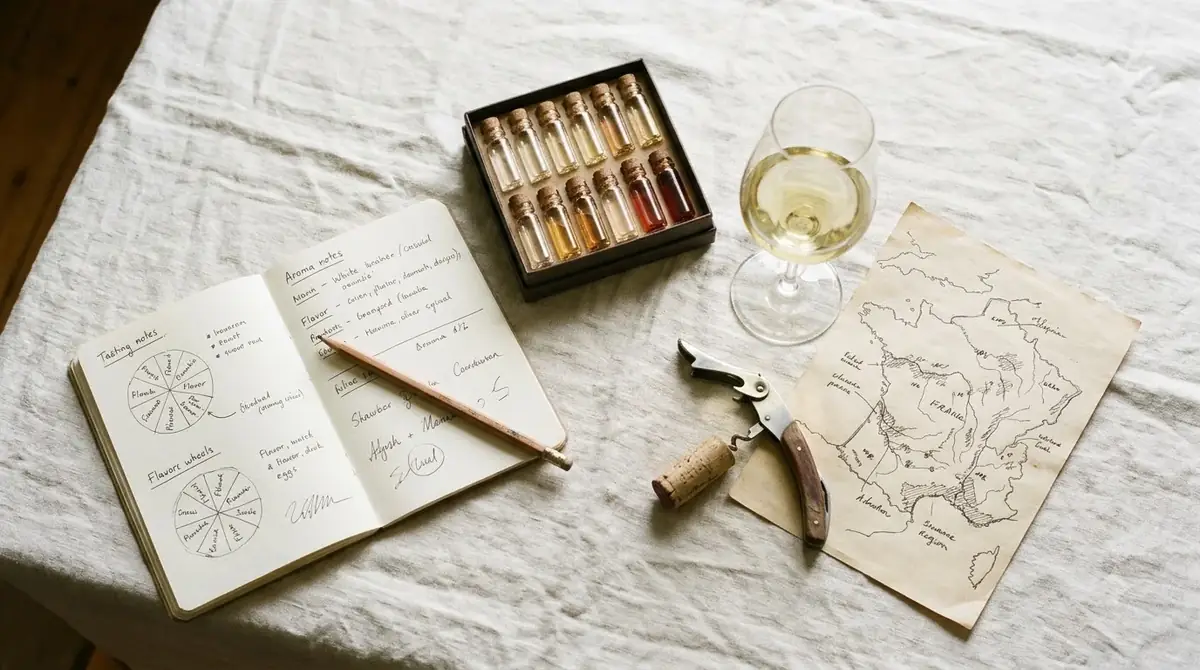
Under German wine law, Spätlese sits as the second tier in the Prädikat classification system, one step riper than Kabinett and one step below Auslese. According to Wine Folly’s guide to German Riesling labels, grapes harvested for Spätlese must reach a minimum natural sugar level of 76 to 90 degrees Oechsle (roughly 172 to 209 grams per liter of potential sugar in the grape juice), depending on the growing region and grape variety, with no extra sugar allowed to be added before fermentation.
Because the grapes hang on the vine longer into autumn, they develop deeper stone-fruit concentration, fuller body, and richer aromatics than crisp, early-picked Kabinett wines. While Riesling is by far the most famous grape bottled at the Spätlese level in regions like the Mosel, Rheingau, and Pfalz, winemakers also apply the designation to Pinot Gris (Grauburgunder), Pinot Blanc (Weissburgunder), and Silvaner. Exploring how ripeness tiers shape white wine styles is one of the fastest ways to navigate Wine by Type when browsing an international shop shelf.
Is Spätlese Always Sweet? How to Read the Rest of the Label
Many American shoppers assume every bottle labeled Spätlese is a sugary dessert wine, yet winemakers produce Spätlese across the entire sweetness spectrum from bone-dry to lusciously off-dry. The Prädikat term only measures grape ripeness at harvest; how sweet the wine tastes in your glass depends on when the winemaker stops fermentation.
If a winemaker allows yeast to ferment nearly all of that ripe grape sugar into alcohol, the resulting wine is completely dry and typically labeled Spätlese trocken (pronounced TROCK-en). Dry Spätlese wines usually carry around 11% to 13% ABV and deliver intense, mouth-filling orchard fruit balanced by mouthwatering acidity rather than noticeable sugar. When a label says halbtrocken or feinherb, the wine sits in a gently off-dry middle ground.
When neither “trocken” nor “feinherb” appears on the bottle, a traditional Spätlese—especially from cooler valleys like the Mosel—usually retains noticeable residual sugar balanced by brisk acidity, often landing around 7.5% to 9.5% ABV. According to Wine Enthusiast’s breakdown of Riesling sweetness levels, checking the alcohol percentage on the front or back label is one of the quickest real-world clues: bottles around 8% ABV lean distinctly off-dry or sweet, whereas bottles closer to 12% ABV have fermented dry.
Serving Temperature and Food Pairings for Spätlese
Serving Spätlese at the right temperature keeps its lively acidity sharp while letting its aromatics open up in the glass. Too much chill locks down the floral and stone-fruit bouquet, while serving it too warm makes off-dry styles feel heavy.
For classic off-dry or lightly sweet Spätlese bottles, aim for fridge-cold temperatures around 43°F to 48°F (6°C to 9°C), which usually takes about 90 minutes to two hours in a standard kitchen refrigerator. If you are pouring a dry Spätlese trocken, serve it slightly warmer at 48°F to 52°F (9°C to 11°C) so its richer texture and mineral depth shine through without feeling austere.
At the dinner table, off-dry Spätlese is one of the most versatile food wines you can open, especially alongside dishes that normally clash with dry reds or oaked whites. The touch of natural sweetness cools the burn of chili heat in Thai curries, Sichuan stir-fries, and spicy Indian dishes, while razor-sharp acidity cuts cleanly through salty pork belly, glazed ham, and triple-cream cheeses. Dry Spätlese trocken pairs effortlessly with roast chicken, seared scallops, Dungeness crab, and herbed goat cheese, offering the same kind of meal-friendly structure you look for when learning how to pronounce claret for classic red-meat pairings.
Related German Wine Terms That Follow the Same Rules
Once you master the pronunciation of Spätlese, you have already unlocked the phonetic pattern for almost the entire German Prädikat ladder. Several neighboring terms on a German wine list share the exact same root word Lese or the same opening Spät- sound.
The next step up the ripeness ladder is Auslese, pronounced OWS-lay-zuh. It uses the exact same two-syllable ending—lay-zuh—paired with Aus (“out” or “selected”), referring to specially selected, extra-ripe grape bunches. Further up the scale sit Beerenauslese (BAIR-en-ows-lay-zuh) and Trockenbeerenauslese (TROCK-en-bair-en-ows-lay-zuh), both keeping that identical -lay-zuh cadence at the finish.
You will also spot the exact same opening syllable whenever you order German Pinot Noir, which is labeled as Spätburgunder and pronounced SHPAYT-boor-goon-der. As noted in Vinolingo’s German wine pronunciation breakdown, recognizing recurring prefixes and suffixes turns intimidating multi-syllable German labels into predictable building blocks you can read at a glance.
Frequently Asked Questions
How do you pronounce spatlese in English?
In American English, pronounce spatlese as SHPAYT-lay-zuh, putting the main stress on the first syllable. Start with an “sh” sound before the “p,” rhyme the first syllable with “late,” and pronounce the final “e” as a soft “uh” rather than leaving it silent.
Is the final “e” in Spätlese silent?
No, the final “e” is always pronounced in German as a short, unstressed “uh” sound. That gives Spätlese three distinct syllables (SHPAYT-lay-zuh) rather than two, and the same rule applies to related terms like Auslese and Beerenauslese.
Why is Spätlese sometimes spelled without the two dots over the “a”?
English-language menus, wine shops, and search engines often drop the German umlaut over the “ä” because standard US keyboards do not have a dedicated umlaut key. Even when written simply as “spatlese,” the pronunciation stays exactly the same: SHPAYT-lay-zuh.
What is the difference between Kabinett and Spätlese?
Kabinett is the lightest, earliest-picked tier in Germany’s Prädikat ripeness system, producing crisp, delicate wines with lower sugar and lighter body. Spätlese is harvested later from riper grapes with higher natural sugar levels, giving the wine fuller body, richer stone-fruit flavor, and greater aging potential.
Saying SHPAYT-lay-zuh out loud takes a little practice the first time you see it on a wine list, yet the three phonetic rules behind it never change. Keep the opening “shp,” hold the long “ay” vowel, and voice that final “uh,” and you can order any dry or off-dry German Spätlese with total confidence.
More in Wine Types & Grapes
 Zinfandel Sugar Content: Dry Red vs. White Zinfandel GramsUpdated Nov 21, 2026
 Best Zinfandel Substitute Options for Sipping and CookingUpdated Nov 21, 2026
 Zweigelt Food Pairing: Best Dishes, Cheeses, and Serving TipsUpdated Nov 21, 2026
 Zinfandel Tannins Explained: How Structure Shapes Every BottleUpdated Nov 21, 2026
 Zinfandel Sweetness Level: Dry Red vs. Sweet White Zin ExplainedUpdated Nov 21, 2026
 Xinomavro Food Pairing: Best Dishes, Styles, and Serving TipsUpdated Nov 21, 2026