

We may earn a commission when you buy through links on this page, at no extra cost to you. Learn more.
Amarone food pairing works best with savory, deeply flavored dishes such as braised beef, game, rich ragù, and aged cheese. This dry red from Valpolicella has concentrated dried-fruit character, substantial alcohol, and enough acidity to meet flavorful cooking. The most reliable matches bring depth without piling on excessive fat, black pepper, or chile heat.
Amarone is a special-occasion wine, but it does not need an elaborate menu to make sense at the table. Start with its weight and flavor, then choose food with a similarly layered profile: slow-cooked meat, mushrooms, roasted squash, aged cheese, or a savory sauce. These ideas draw on the cooking traditions of Veneto while leaving room for practical American dinner menus.
How Amarone’s Structure Shapes the Plate
Amarone is a full-bodied dry red from Valpolicella, the wine-growing area north of Verona in Italy’s Veneto region. Its grapes are dried after harvest before fermentation, concentrating flavor and extract; the finished wine often shows ripe cherry, plum, raisin, dark berry, cocoa, and baking-spice notes. VinePair describes Amarone as fully fermented from dried grapes, which distinguishes it from the region’s sweet Recioto.
The drying process is central to the wine’s intensity. According to Decanter’s Amarone pairing analysis, the wine commonly reaches about 15% alcohol and can climb to 17%, while its concentrated extract and occasional trace of residual sugar contribute to a broad, weighty palate. The blend usually draws on local varieties such as Corvina, Corvinone, and Rondinella, with other permitted grapes sometimes included. Oak aging and bottle age can add savory, spice, and dried-herb details.
That combination suggests a useful pairing rule: choose foods with enough flavor to keep pace, but do not assume that the richest or fattiest dish is automatically best. Amarone has high acidity and typically rounded, relatively soft tannins. Decanter notes that the tannin is not forceful enough to cut through very fatty preparations in the way a firmer, more tannic red might. A dish with moderate richness, savory depth, and a measured amount of fat is often a safer fit than a heavily marbled steak.
Braised Beef, Lamb, and Game
Slow-cooked beef, lamb, and game are among the most dependable partners for Amarone because long cooking creates concentrated savory flavors that match the wine’s intensity. Think beef short ribs, pot roast, lamb shanks, venison stew, or wild boar ragù, with herbs and a restrained sauce rather than a hot pepper crust.
For a classic Veneto-inspired dinner, make brasato all’Amarone: beef slowly braised with the wine, aromatics, and stock until tender, then served with soft polenta. The wine in the braising liquid echoes the glass without requiring the dish to taste sugary. Brown the meat well, soften onion, carrot, and celery, then add a modest pour of Amarone, stock, and herbs. Simmer gently until the beef yields easily to a fork; reduce the cooking liquid until it lightly coats a spoon.
Lamb shanks and shoulder also work when cooked until tender and served with rosemary, thyme, or a restrained red-wine jus. For game, choose venison, pheasant, or wild boar with earthy mushrooms and root vegetables. Decanter highlights pheasant, grouse, and woodcock as local matches, as well as game preparations with a sweet-savory or cocoa element. Keep pepper and chile moderate: alcohol around 15% or higher can make sharp heat feel stronger.
Pasta, Risotto, and Polenta
Amarone can be excellent with substantial pasta and rice dishes, especially recipes built around slow-cooked meat, mushrooms, or aged cheese. The best versions have a creamy or savory texture, not a sharp tomato sauce or a bright splash of vinegar that would pull attention away from the wine.
Risotto all’Amarone is the most direct regional match: rice cooked with stock and a measured amount of Amarone, then finished with butter and finely grated aged cheese. The wine adds dark-fruit and spice notes while the rice gives the meal a soft, substantial texture. Use enough wine to register in the dish without making it taste tannic or alcoholic, and finish with a little butter for gloss. A side of roasted mushrooms or braised beef makes the course more substantial, though the risotto can also stand on its own.
Another strong choice is pappardelle or tagliatelle with beef, duck, or wild-boar ragù. Decanter explains that local “lasagnette” refers to hand-cut egg pasta ribbons served with meat sauce, rather than the layered baked dish many American readers associate with lasagna. Polenta is also a natural partner for braised meat because its mild corn flavor softens the sauce and gives the wine room to show its fruit. For tomato-forward pasta, consider a brighter, higher-acid red such as Barbera; see our Barbera food pairing ideas for that style.
Poultry, Pork, and Vegetable Dishes
Amarone is not limited to beef and game. Duck, roast chicken with concentrated pan juices, pork shoulder, and savory vegetable dishes can all work, provided their seasoning and texture have enough depth for a powerful red wine.
Duck is especially promising because its dark meat and browned skin bring more flavor than a delicate white-meat preparation. Try roast duck with orange sauce, but keep the citrus rounded and the sauce more savory than sweet. Decanter reports that Allegrini’s Marilisa Allegrini has suggested duck in orange sauce as a match, and also points to bittersweet dishes in Asian cooking. That is a useful direction for home cooks: pair the wine with roasted or glazed flavors, not a dish dominated by fresh lime, vinegar, or hot chiles.
Roast chicken can work when served with a concentrated mushroom gravy, roasted garlic, or a spoonful of chicken-liver-rich sauce. Decanter recounts a regional pairing of pumpkin soup with roast chicken liver and a lighter, more elegant Amarone. For a meatless plate, try roasted winter squash with browned butter and sage, wild mushrooms over soft polenta, or lentils with caramelized onions and herbs. These ingredients offer earthiness and savory depth; keep sweetness restrained so the wine’s dried-fruit character does not make the food seem cloying.
Aged Cheese and the After-Dinner Course
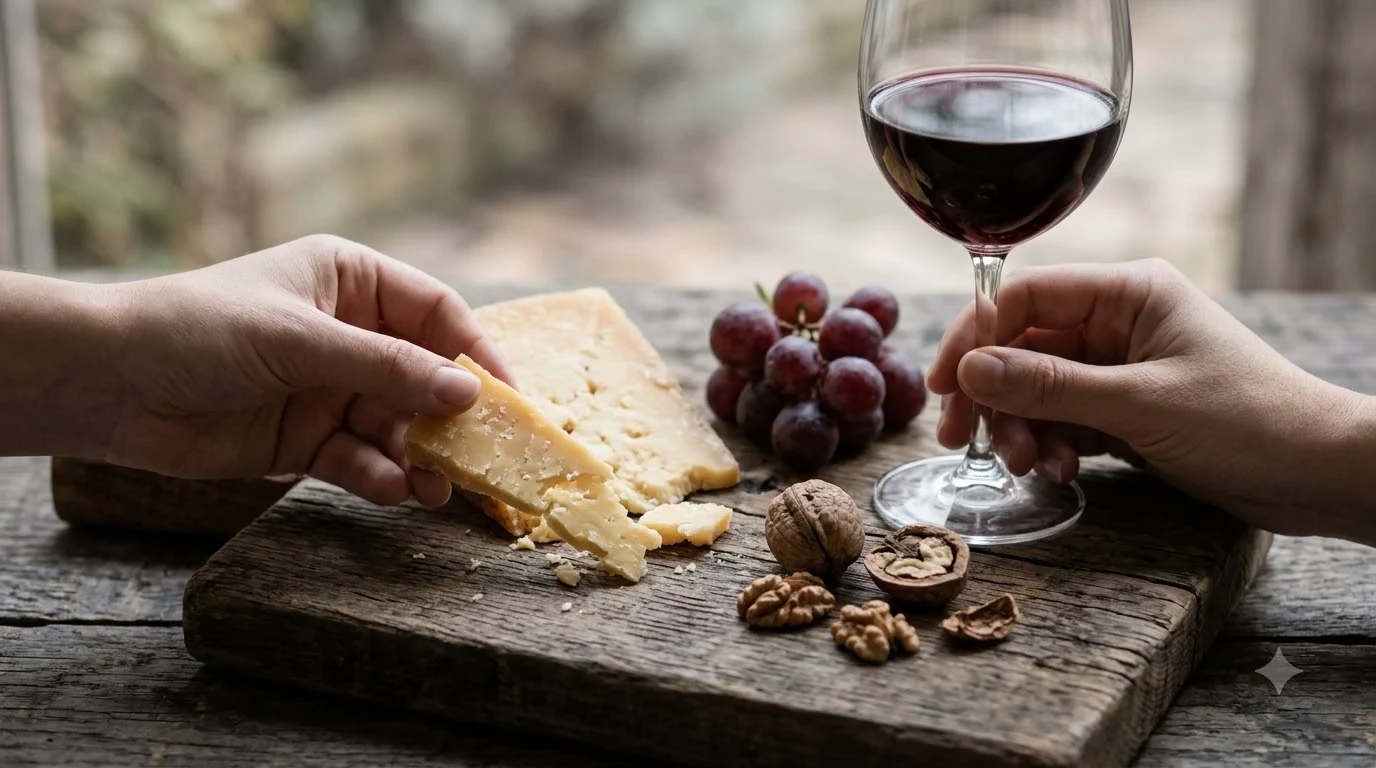
Aged cheese may be the easiest way to serve Amarone without cooking a full meal. Choose firm, savory cheeses with concentrated flavor, such as Parmigiano-Reggiano, Monte Veronese, or an aged Pecorino, and offer bread, toasted nuts, or dried fruit in modest amounts.
Monte Veronese is a particularly fitting regional option. Decanter describes its connection to the Lessini mountains and notes aromas that can suggest straw and toffee, which complement the dried-fruit and mineral tones of Amarone. Parmigiano-Reggiano is another classic match: its salt, umami, nutty flavor, and crystalline texture can meet the wine’s concentration. Wine Enthusiast’s guide to Parmigiano-Reggiano also describes Amarone as a traditional partner for the cheese, including when it is served alone or used as the leading ingredient in pasta and risotto.
Build a restrained cheese plate rather than an oversized assortment. A few pieces of aged Parmigiano-Reggiano, a wedge of Monte Veronese, toasted hazelnuts, and slices of pear offer different textures without creating too many competing flavors. Blue cheese can work with some Amarone bottlings, but its intense salt and mold character may dominate a lighter, more delicate wine. Taste the wine before adding sweet accompaniments; dried figs or dates can be pleasant, but too much sweetness can make the finish seem bitter by contrast.
Pairings to Avoid and Menus to Build
Amarone is not a universal match for every rich dish. Very fatty preparations, strongly peppered steaks, chile-heavy food, delicate fish, and sharp acidic sauces can make the wine seem hotter, heavier, or less balanced than it does on its own.
The tannins in Amarone are generally rounded, and its acidity is high, but Decanter cautions that the wine’s softer tannin can make very fatty food a poor fit. A thick layer of rich fat may leave the palate coated rather than refreshed. That does not rule out braised meat: a sauce with enough acidity, stock, herbs, and moderate fat can create balance. It does suggest choosing a trimmed short rib or leaner braise over an extremely fatty cut, and serving vegetables or polenta alongside the meat.
Black pepper and red chile are another risk because alcohol can amplify their warming effect. Season a steak with salt and herbs rather than a thick black-pepper crust, and avoid dishes built around hot peppers or fiery chili oil. Most delicate white fish and raw seafood are also overwhelmed by Amarone’s body and alcohol. For grilled fish, shellfish, or lemony seafood pasta, a high-acid white such as Albariño is a better direction; explore our Albariño food pairing suggestions. A fragrant, herb-led meat dish may suit a Rhône red better, and our Châteauneuf-du-Pape food pairing article offers another route for that style. For the broader principles behind matching body, acidity, sweetness, and texture, see our Wine Pairing guide.
| Dish | Why it works | Practical serving cue |
|---|---|---|
| Beef short ribs or brasato | Slow-cooked savory depth matches Amarone’s concentration | Serve the wine at 60–65°F; decant a young bottle for 30–60 minutes |
| Wild-boar ragù with pappardelle | Game, herbs, and pasta give the wine a substantial partner | Use a 5-ounce pour with the main course |
| Risotto all’Amarone | Rice, stock, butter, and aged cheese echo the wine’s texture | Finish with finely grated cheese just before serving |
| Parmigiano-Reggiano or Monte Veronese | Salt and savory aged flavors balance ripe fruit | Offer a few small pieces after the main course |
| Grilled sea bass or shrimp | Delicate texture and clean flavors are easily overwhelmed | Choose Albariño or another high-acid white instead |
For a complete dinner, keep the progression simple. Start with a small portion of roasted squash soup or a savory mushroom appetizer, move to braised beef with polenta or wild-boar pasta, and finish with aged cheese. This gives the wine a clear role and avoids a succession of dishes that compete for attention. If the meal includes a spicy course, serve that with a different wine rather than asking Amarone to cover every plate.
Serving Temperature, Glassware, and Timing
Serve Amarone slightly cool for a full-bodied red, around 60–65°F, rather than warm room temperature. A large-bowled red wine glass gives the wine space to release aromas, while a measured pour lets its alcohol and concentrated flavor remain in balance with the food.
If the bottle is young and tightly wound, decant it for about 30–60 minutes before dinner. This is a useful starting point for a youthful, full-bodied red, not a rule that every Amarone needs hours of air. Older bottles can be more delicate, so open them carefully and taste before deciding whether to decant. If the room is warm, place the bottle in a cool spot briefly before serving; the goal is freshness, not a chilled red that hides its aromas.
Plan portions with the wine’s richness in mind. A standard 750 ml bottle gives about five 5-ounce glasses, which is often enough for a small dinner party when Amarone is served with one main course and a cheese course. Open the bottle shortly before the meal, pour a small taste, and then adjust the timing based on how the wine develops in the glass. The meal should be paced around the wine rather than rushed through several courses.
Tip: Chill the bottle briefly if your dining room is warm, then pour Amarone at 60–65°F. Start with a 5-ounce serving and pair it with one savory main course or a focused cheese plate.
Frequently Asked Questions
These answers clarify the region’s related wine styles, the meaning of Amarone’s name, and what to expect from bottle age and sweetness.
Is Amarone the same wine as Valpolicella Ripasso?
No. Both come from the Valpolicella area and use overlapping local grape varieties, but Ripasso is made by refermenting a Valpolicella base wine with grape skins left from Amarone or Recioto production. Amarone is fermented from the dried grapes themselves, giving it a fuller and more concentrated style.
What does the name Amarone mean?
VinePair explains that Amarone translates as “great bitter.” The name points to its dry, gently bitter character, which contrasts with the sweeter Recioto made from dried grapes in the same region.
Can Amarone age in the bottle?
Yes. VinePair notes that Amarone can last for 10 years or more and may improve with bottle age. Mature examples can develop additional dried-fig, cocoa, balsamic, and tobacco-like notes, so an older bottle may show a more savory profile than a young release.
How is Amarone different from Recioto della Valpolicella?
The two wines use dried grapes, but fermentation determines their style. Recioto fermentation is stopped before all the grape sugar converts to alcohol, leaving a sweet wine; Amarone ferments much further toward dryness. Recioto is therefore the more direct choice for sweet desserts.
Does Amarone always taste sweet?
No. Amarone is made as a dry wine, although concentrated raisin, plum, and dried-cherry flavors can create a sweet impression. A little residual sugar can be present in some bottlings, but the style is not equivalent to a dessert wine.
For the most reliable Amarone dinner, choose one deeply savory centerpiece, add a restrained side, and keep aged cheese for the finish. Braised beef, wild-boar pasta, duck, and Parmigiano-Reggiano all provide strong starting points; a lighter dish or a different wine is often the better choice for seafood and chile heat.
More in Food & Wine Pairing
 Risotto With White Wine Recipe: Make a Creamy Dinner at HomeUpdated Nov 20, 2026
 Wassail With Wine Recipe for a Festive Spiced Holiday DrinkUpdated Nov 20, 2026
 Spritz Veneziano Recipe: Make a Classic Venetian Aperitivo at HomeUpdated Nov 20, 2026
 Summer Wine Punch Recipe for Easy Homemade EntertainingUpdated Nov 20, 2026
 Bishop Recipe: How to Make a Bright, Citrus-Forward Red Wine CocktailUpdated Nov 20, 2026
 Wine Cupcakes Recipe: Bake Rich Chocolate Cupcakes at HomeUpdated Nov 20, 2026