

We may earn a commission when you buy through links on this page, at no extra cost to you. Learn more.
Sancerre vs sauvignon blanc is mostly a comparison of place and style, because Sancerre is a French appellation in the Loire Valley that makes its white wine from sauvignon blanc. That means every Sancerre is a sauvignon blanc, but not every sauvignon blanc is a Sancerre. The Loire version tends to taste flinty, savory and tightly structured, while many sauvignon blancs from other regions show a fruitier, more tropical profile.
This guide explains what sets Sancerre apart from the wider grape, how the two styles taste, and how terroir shapes each bottle. It also covers food pairings, buying tips and serving habits so you can pick the right bottle for your meal and your budget.
What Sancerre Is and How It Relates to Sauvignon Blanc
Sancerre is a place-based name, not a grape name. The appellation sits in the Centre area of the Loire Valley, and the white wines made there are sauvignon blanc. Wine Folly describes Sancerre as one of the top appellations for sauvignon blanc in the Loire, alongside Pouilly-Fumé and greater Touraine.
Because the label names a village-based appellation, you usually will not see the words sauvignon blanc on a Sancerre bottle in large print. Check the back label or the producer’s technical sheet to confirm the grape. The same guide notes that the area also makes some pinot noir in red and rosé styles, so the appellation is not limited to white wine.
The easiest way to think about it is this: sauvignon blanc is the grape, and Sancerre is one specific expression of that grape grown in a specific part of France. The rest of this article looks at how that place changes what ends up in your glass.
Key Differences Between Sancerre and Sauvignon Blanc
Sancerre and sauvignon blanc from other places share the same grape, so the differences come from climate, soil and winemaking choices. The table below sums up the most common contrasts that wine drinkers notice.
| Feature | Sancerre (Loire Valley, France) | Sauvignon blanc from other regions |
|---|---|---|
| Grape | Sauvignon blanc | Sauvignon blanc |
| Typical climate | Cool, semi-continental | Varies, from cool coastal to much warmer sites |
| Typical aromas | Gooseberry, flint, herbs, lemon-lime | Often more tropical or grassy fruit |
| Mouthfeel | Crisp, savory, tightly structured | Often softer and fruit-forward |
| Oak use | Mostly unoaked, with a few producers using oak | Mostly unoaked, with some oak-aged examples |
| Label clue | Look for the Sancerre appellation name | Look for the country, region or varietal name |
The grape is the same, so the main question is how much the place shapes the wine. Sancerre drinkers usually look for a precise, mineral style. Drinkers of other sauvignon blancs often look for a juicier, more aromatic white. Neither style is better, but the difference is clear once you taste them side by side.
Flavor Profile and Acidity in Each Style
Sancerre is known for flinty, savory flavors and a lively acid backbone. Wine Folly’s tasting notes list gooseberry, white peach, lemon-lime, tarragon and flint among the common aromas. Many drinkers also notice a fresh, almost tingling finish that makes the wine feel sharp and clean.
Sauvignon blanc from other regions often leans toward green apple, passion fruit, grass and herbal notes. Warmer sites can push the fruit forward and soften the acidity. That style can feel rounder and more immediately fruity, which some drinkers prefer for a casual evening.
Acidity is the main structural difference to watch. A crisp, high-acid Sancerre cuts through rich foods and feels bright on the palate. A softer sauvignon blanc may feel more generous at first sip. If you like sharp, dry whites, the Loire style is usually the safer pick. If you want a fruit-led white, a New World version may feel more familiar.
Terroir: Loire Valley Versus New World Regions
Terroir is the combination of soil, climate and setting that shapes a wine. Wine Folly describes the Sancerre area as having rolling limestone hills and a semi-continental climate. That setting tends to produce wines with ripe gooseberry aromas, bracing acidity and flinty smoke.
Wine Folly’s Loire guide also notes that Sauvignon Blanc thrives in the cool continental climate of the Centre-Loire. Well-drained, rocky soils often lead to wines with high minerality and lighter body. Those conditions help explain why Sancerre tastes so savory and taut compared with many sauvignon blancs grown elsewhere.
Outside France, sauvignon blanc grows in many countries with different climates and soils. Warmer sites usually produce riper fruit and less pronounced acidity. The grape adapts to its setting, so a New World bottle is not a lesser wine. It simply tends to express the fruit more openly. For a broader look at the Loire, the Loire Valley wine guide from Wine Folly covers how climate and soils shape each subregion.
Food Pairings for Each Style
Food matching works best when you match acidity with acidity and weight with weight. Sancerre’s bright, savory profile suits many classic French and Mediterranean dishes. Its acidity cuts through creamy textures and rich fish without overwhelming delicate flavors.
Goat cheese is one of the most cited partners. Wine Folly points to Crottin de Chavignol, a small goat cheese made in the village of Chavignol, as a natural match for Sancerre. Young Crottin is chalky and tangy, while aged versions turn richer and nuttier, so you can match the age of the cheese to the weight of the wine.
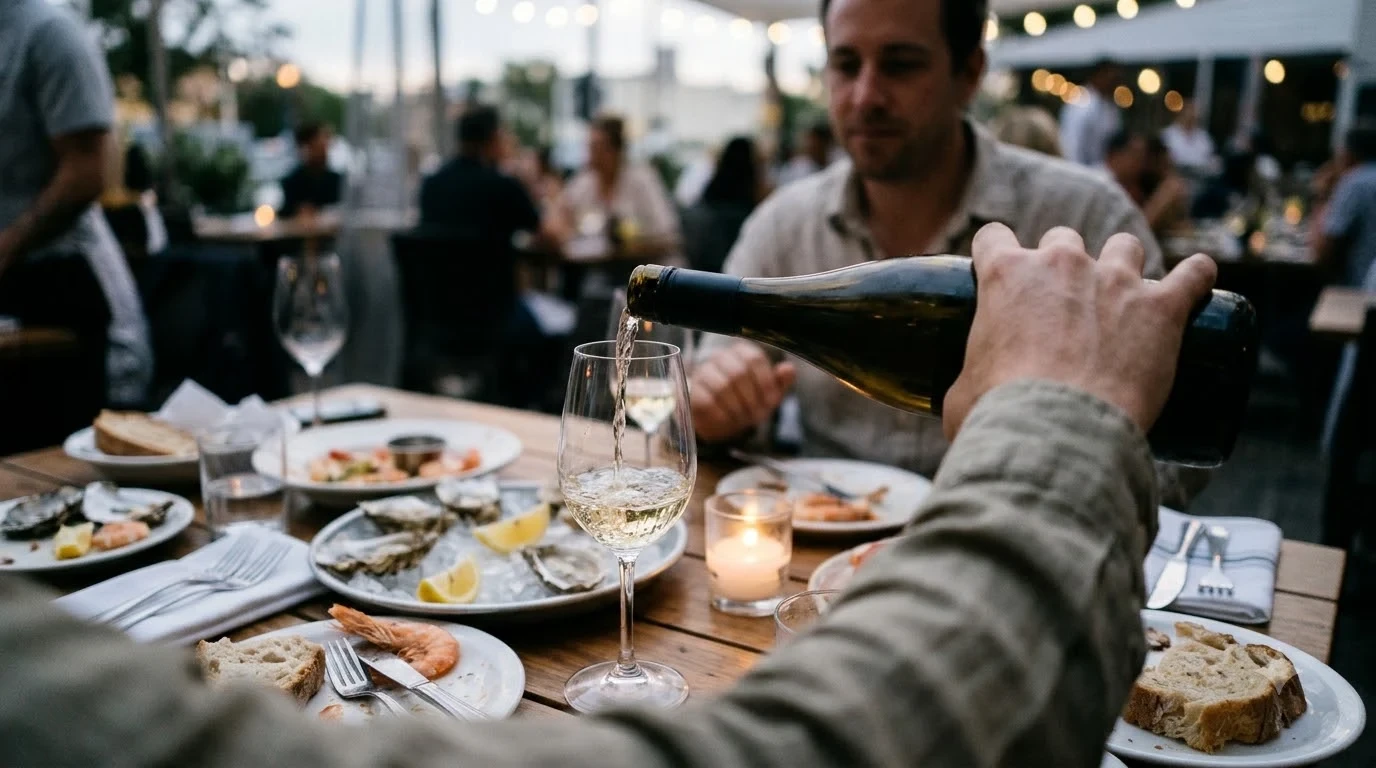
Fresh oysters, steamed mussels, grilled white fish and herb-driven salads all suit Sancerre well. Sauvignon blanc from warmer regions often works with spicy Thai dishes, tropical fruit salsas and lighter chicken dishes, where the fruit can echo the flavors on the plate. Match the wine to the dish’s dominant taste, and you will get the most enjoyment from each glass.
How to Choose, Buy and Serve the Right Bottle
Start by deciding what you want from the bottle. If you want a precise, flinty and savory white, look for a Sancerre. If you want a fruit-forward, aromatic white for a casual meal, a sauvignon blanc from another region may be a better fit.
- Check the label for the Sancerre appellation name, or for the country and region if you are buying a sauvignon blanc.
- Look at the producer’s technical sheet or the back label to confirm the grape and whether the wine was oak-aged.
- Ask the shop staff about the village or producer. Wine Folly notes that Chavignol, Bué and Ménétréol are known for strong Sancerre, so those names can guide you.
- Consider nearby appellations. Pouilly-Fumé, Menetou-Salon, Reuilly and Quincy are also sauvignon blanc based and often share a similar style.
- Pay attention to the vintage and producer rather than chasing the lowest shelf price, since quality differences in Sancerre can be large.
Serving habits matter too. Chill the wine well before pouring, and keep the bottle in the refrigerator until shortly before you open it. Store unopened bottles in a cool, dark place, and reseal opened bottles tightly and refrigerate them. For exact guidance on your specific bottle, check the label or the producer’s website, and always drink responsibly.
Frequently Asked Questions
Is Sancerre the same as sauvignon blanc?
Sancerre is a place-based name for white wine made from sauvignon blanc in the Loire Valley of France. So a Sancerre is a sauvignon blanc, but it is also a regional style with its own character. Many other sauvignon blancs come from different regions and taste fruitier.
Why does Sancerre taste more flinty than other sauvignon blancs?
Wine Folly links Sancerre’s flinty, savory character to the limestone hills and the cool, semi-continental climate of the Centre-Loire. Those conditions tend to give the wine bracing acidity and a mineral edge. Winemaking choices, such as oak use, can also shape the final flavor.
What food goes best with Sancerre?
Sancerre pairs well with goat cheese, especially the Crottin de Chavignol style from its home village. It also suits oysters, shellfish, grilled white fish and herb-driven salads. Its acidity helps it cut through creamy and rich textures.
Should I buy Sancerre or a cheaper sauvignon blanc?
The right choice depends on the style you enjoy. Sancerre offers a precise, savory profile, while other sauvignon blancs often taste fruitier and more generous. Wine Folly notes that some similar Loire appellations can offer a comparable style, often at a better price. Compare bottles by vintage and producer before deciding.
Choosing between sancerre vs sauvignon blanc comes down to whether you want place-driven savory minerality or a fruit-forward white. Taste one of each side by side with a simple meal, and you will quickly learn which style fits your table. For a broader comparison of grapes, you can also read the riesling vs sauvignon blanc guide or the general Wine vs Wine overview.
More in Wine vs Wine
 Nero d’Avola vs Pinot Noir: Taste, Body, and Pairing DifferencesUpdated Nov 21, 2026
 Chenin Blanc vs Pinot Blanc: Key Differences in Taste, Acidity, and PairingsUpdated Nov 21, 2026
 Chardonnay vs Shiraz: Key Differences in Taste, Serving, and PairingUpdated Nov 21, 2026
 Chardonnay vs Verdejo: How Spain’s Crisp White Compares to the World’s ChameleonUpdated Nov 21, 2026
 Chardonnay vs Sancerre: Key Differences in Taste, Grapes, and PairingUpdated Nov 21, 2026
 Chardonnay vs Malbec: Key Differences in Taste, Body, and PairingUpdated Nov 21, 2026