

We may earn a commission when you buy through links on this page, at no extra cost to you. Learn more.
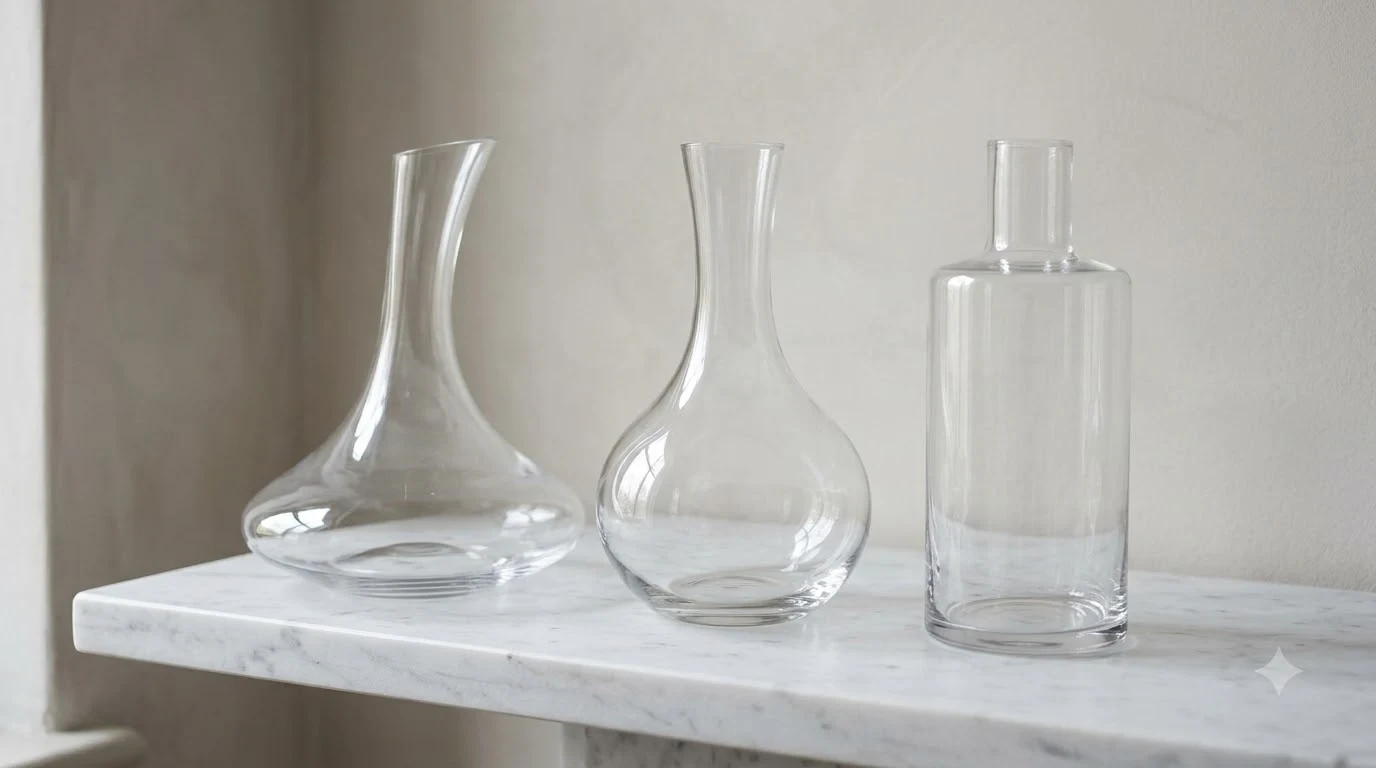
The best tower decanter is a tall, narrow vessel with a slender neck and a stopper, and the right one depends on how much air you want the wine to meet and how much shelf space you have. Tower-style shapes give a long column of wine in contact with air at the top of the pour, while stoppers keep the bottle sealed between uses. Most people use one for everyday reds, a few for dinner guests, and rarely for old bottles.
A decanter does two jobs, and a broader guide to the category is in our wine decanter roundup. It separates clear wine from any sediment in an older bottle, and it lets young wine open up by exposing it to air. A tower decanter is one of several shapes built for that second job, and this guide explains what the shape does, what to look for, and which kinds of buyers should choose which style.
Quick Comparison of Decanter Styles
Decanter shapes differ mostly in how much wine surface meets air and how easy they are to clean. The table compares the main styles you will see on shop shelves. Tower and slender-neck shapes sit at the tall end of the range, while bulb-shaped and carafe-style decanters trade height for a wider base.
| Style | Air contact | Counter footprint | Cleaning |
|---|---|---|---|
| Tower or slender-neck | High at the top of the pour | Narrow | Harder, needs a long brush |
| Classic carafe with stopper | Moderate | Medium | Easy |
| Bulb or sphere | High across a wide surface | Wide | Moderate |
| Open carafe without stopper | Moderate to high | Medium | Easy |
The Wikipedia entry on decanters describes the Venetian style, with a long, slender neck opening into a wide body, as a design that increases the surface area exposed to air. Tower decanters borrow that idea and push it further upward. The trade-off is that the narrow neck makes cleaning harder, so the best tower decanter for you is often the one with the widest mouth that still fits your hand and your shelf.
Best for Dinner Parties and Table Display
If you want the decanter to be part of the table setting, a tall tower shape with clear glass reads well at arm’s length and draws attention when it is poured.
Clear glass lets guests see the colour of the wine as it moves through the vessel. Slim profiles fit into a crowded table without pushing glasses out of reach, which matters more than most buyers expect. A stopper keeps the wine from drying out if the bottle is poured in advance.
The trade-off is that tall, narrow shapes can tip more easily than wide carafes, so set them on a flat, stable surface and fill them only partway if the base is light.
Best for Aerating Young, Tannic Reds
Young red wines with firm tannins are the main reason many people buy a decanter, and a tower shape suits them because the wine has a long path to air as it falls.
Wikipedia notes that decanting is meant to let wine breathe, mimicking the effect of swirling a glass, and that it is thought to soften harsh qualities such as tannins. Experts disagree on how much this matters. Some critics argue that prolonged oxygen exposure can dissipate more aroma than it releases, so a short decant is often enough for a young red.
For this use, look for a decanter with a large internal volume relative to the neck, so that the wine has room to spread out without filling the entire vessel.
Best for Older Bottles with Sediment
Older bottles can throw a deposit that should stay out of the glass, and a decanter lets you pour slowly while the sediment settles at the bottom of the original bottle.
Wikipedia explains that a decanter holds clear wine poured off from its original bottle, leaving sediment behind, and that sediment is more common in very old wines and in wines that were not filtered. A decanter that is wide at the base and narrow at the top gives you a clearer view of the line where the wine and sediment separate, which makes slow pouring easier.
Plan to decant a few hours before serving and keep the bottle upright until you pour, since shaking brings sediment back into suspension. Wikipedia’s entry on decanters also describes decanting cradles and other holders that keep bottles still before pouring, which is a useful habit when you handle older bottles.
Best for Small Kitchens and Tight Storage
If your cabinet space is limited, a narrow tower profile takes up less room than a wide bulb or a large carafe, and it fits on a crowded shelf next to the wine rack.
A slim decanter stores better in a standard cupboard, and it avoids the problem of a wide base sticking out past the rest of the glassware. Keep the stopper in a dry place with the decanter so that the seal does not pick up odours from the kitchen.
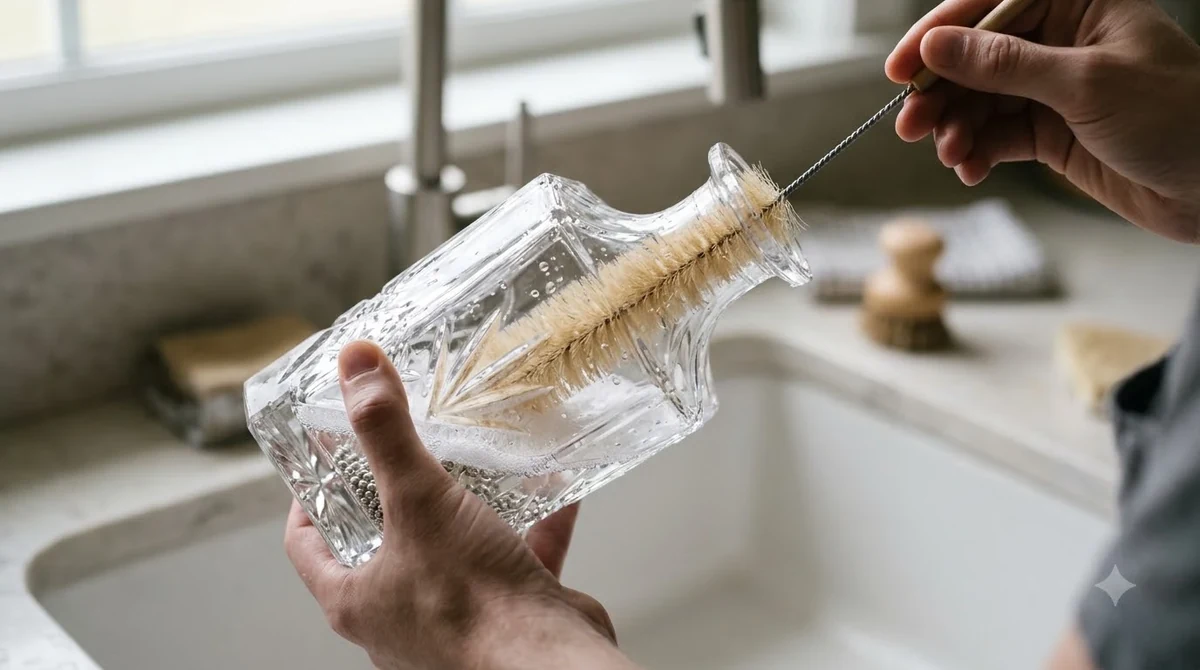
Narrow shapes are harder to dry after washing, so air-dry them upside down on a rack rather than leaving them to sit wet on a towel.
Best for Everyday Use and Easy Cleaning
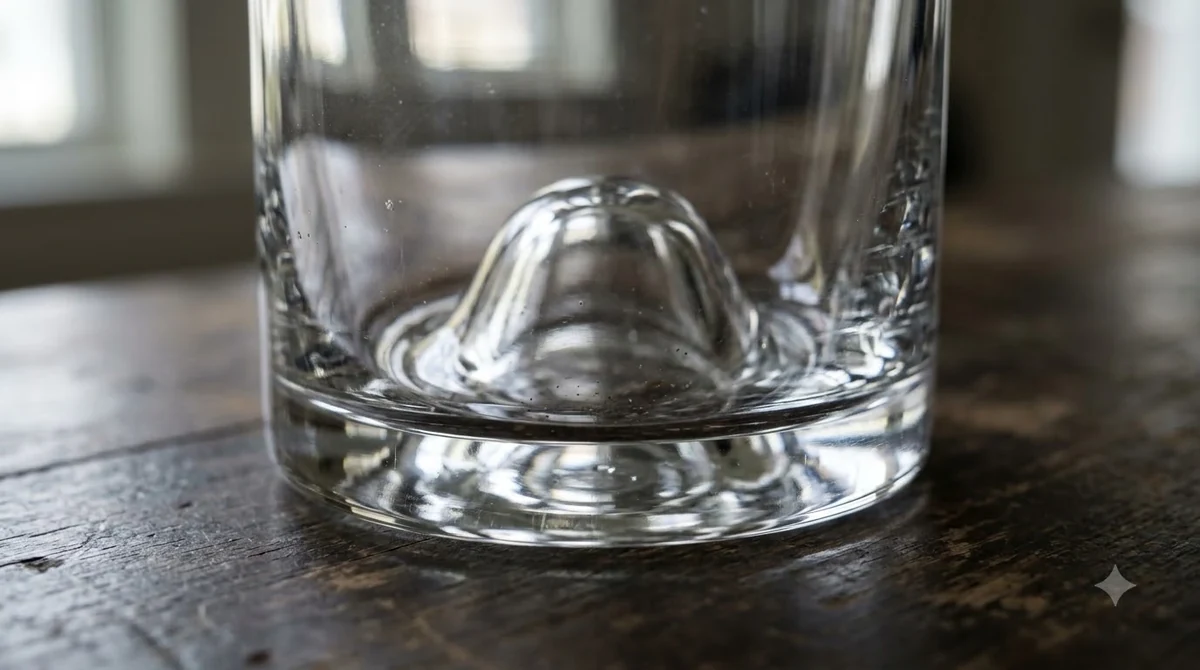
For a decanter you plan to use several times a week, a wider mouth and a simple form make cleaning faster and reduce the chance of leftover residue.
A classic carafe with a stopper is often the practical choice for daily use. It is easier to reach the bottom with a cloth, and a wide mouth allows a small brush to pass through. Tall tower shapes give more air contact, but that benefit matters most when you are opening a young red for a meal.
Rinse the decanter right after use with warm water and a splash of mild soap, then let it dry fully before storing it with the stopper slightly loose so the inside does not stay damp. If you also keep a matching set for guests, the same routine works for the glasses, and a decanter set keeps spare stoppers and pieces together. For a broader look at pieces that pair with decanters, the Aerators & Decanters section lists options by style.
How to Choose a Tower Decanter
Start with the wine you drink most often. Young, tannic reds benefit from a tall column of air contact, while older bottles need a steady pour and a clear view of the sediment.
Tip: Check the mouth width before buying. A wider opening makes cleaning and pouring easier, even if it reduces the tower effect a little.
Next, measure the shelf where the decanter will sit, including the height of the stopper. Think about how often you will open a bottle that needs airing and how long leftover wine lasts once poured, since that affects whether a decanter earns a place in daily use. The guide on how long red wine lasts after opening helps you decide how much you will realistically decant in a week. Tall shapes that look right in a photo can crowd a cabinet. Finally, decide whether the decanter is for display or everyday use. Clear crystal suits the table, while heavier glass suits a working kitchen.
Frequently Asked Questions
Does a tower decanter really help wine breathe?
A decanter exposes wine to air, which is the basis of breathing, but the effect varies by wine and by how long you decant. Young reds often change most in the first hour, while many whites need little or no decanting.
Is a tower decanter good for older wine?
It can be, because a slow pour keeps sediment in the original bottle. Older wines are more fragile, so decant them gently and close to serving time rather than hours ahead.
How do I clean a narrow decanter?
Use warm water with mild soap and a long brush or bottle brush. Rinse well, then drain upside down and let the inside dry fully before you store it with the stopper.
Should I buy a decanter set or a single piece?
A single decanter is enough for most home use. A set makes sense if you host often and want matching pieces for guests, or if you want a stopper and a spare for different wines.
Buying a decanter is less about finding a single perfect shape and more about matching it to your habits. A tall tower works well for a weekly red and a stopper, while a wide carafe may suit a household that opens white wine often. Take an honest look at the bottles you finish each month, then choose the shape that will make those bottles better rather than the one that looks most striking in a shop photo.
A tower decanter works best when it matches your daily wine and your kitchen. Pick the shape that fits your reds, check the cleaning and shelf space, and you will use it more often than a decanter bought for looks alone.
More in Decanters & Aerators
 Best Whiskey and Wine Decanter: Choosing One Vessel for Both DrinksUpdated Nov 18, 2026
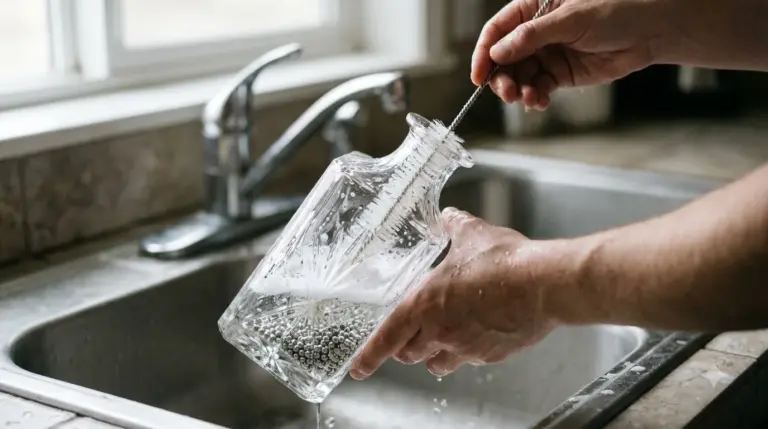 Best Cleaning Brush Decanter Options for Narrow Necks and Deep BowlsUpdated Nov 19, 2026
 Best U Shaped Decanter Picks for Aerating Bold Red WineUpdated Nov 18, 2026
 Best Electric Decanter Styles for Faster, Smoother Wine PoursUpdated Nov 18, 2026
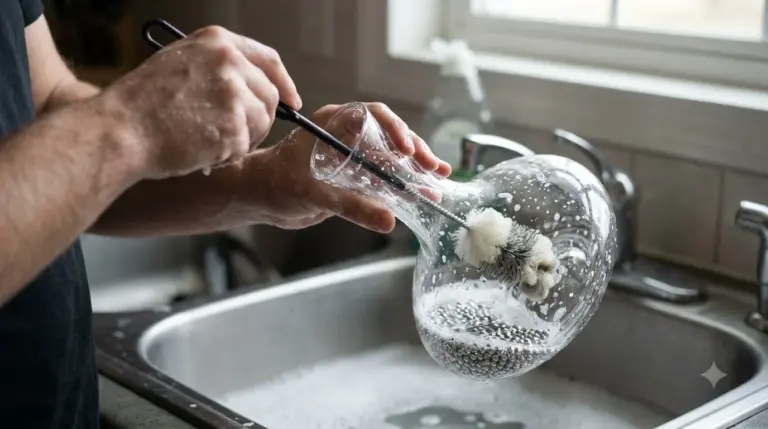 Best Hand Blown Decanter Styles for Every Bottle and TableUpdated Nov 18, 2026
 Best Large Decanter: Top Styles for Magnums, Dinner Parties, and Bold RedsUpdated Nov 18, 2026