

We may earn a commission when you buy through links on this page, at no extra cost to you. Learn more.
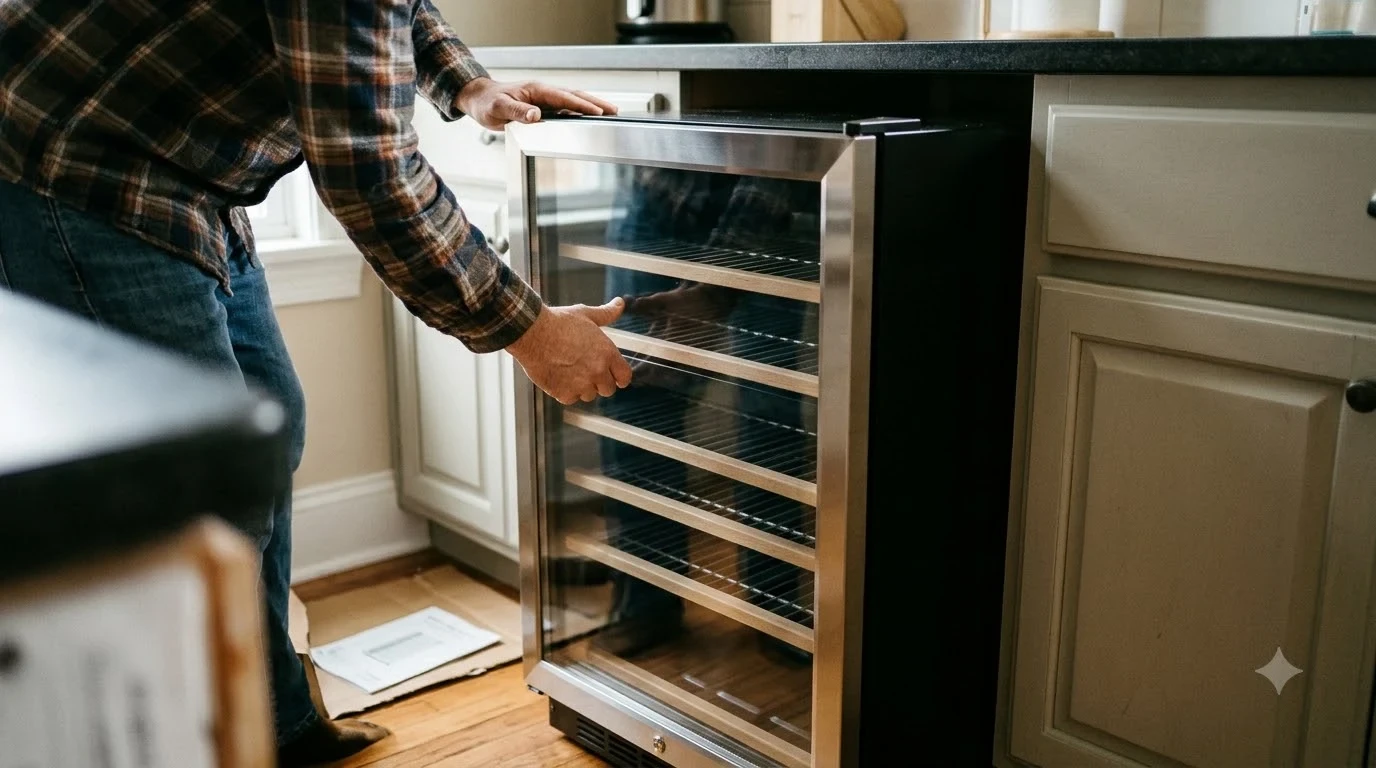
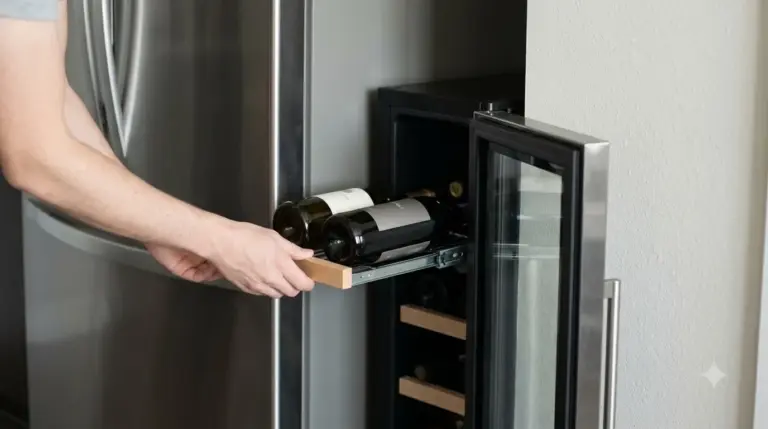
The best 10 inch wine fridge is a slim, freestanding 8-to-12-bottle single-zone cooler that fits tight countertops, bar carts, and narrow apartment alcoves without requiring custom cabinetry. Thermoelectric models work best for ultra-quiet bedrooms and living spaces with mild room temperatures, while compact compressor units handle warmer kitchens and deeper white-wine chilling. If you frequently recork leftovers, look for an upright-bottle shelf design so open bottles stand safely without leaking.
At roughly 10 to 10.5 inches wide, these narrow coolers occupy the smallest footprint in residential wine storage. Most hold between 6 and 12 standard Bordeaux bottles, which translates to roughly 30 to 60 servings once you calculate how many glasses in a bottle of wine you typically pour for dinner or entertaining. Because almost every 10-inch unit vents from the rear or sides rather than the front, choosing the right cooling system and shelf layout matters far more than chasing extra capacity.
Quick Comparison
Each 10-inch wine cooler style trades off cooling power, noise level, and interior shelf geometry to match different rooms and drinking habits.
| Wine Fridge Type | Typical Capacity | Cooling System | Best Placement | Primary Strength |
|---|---|---|---|---|
| Thermoelectric Countertop Cooler | 6 to 12 bottles | Peltier thermoelectric | Air-conditioned kitchens, offices, bedrooms | Near-silent, vibration-free operation |
| Compact Compressor Cooler | 8 to 12 bottles | Mini refrigerant compressor | Warm kitchens, sunrooms, home bars | Stronger cooling in high ambient heat |
| Upright-Storage Slimline Fridge | 10 to 12 bottles (4 upright) | Thermoelectric or compressor | Dining rooms, apartments, casual bars | Stores opened bottles vertically without leaks |
| Tall Narrow-Tower Cooler | 12 bottles (single-column) | Thermoelectric or compressor | Tight floor gaps beside counters or desks | Maximizes vertical height on a 10-inch base |
| Low-Profile Under-Cabinet Cooler | 6 to 8 bottles | Thermoelectric | Under wall cabinets with limited clearance | Fits beneath standard 18-inch counter-to-cabinet gaps |
Best for Whisper-Quiet Living Spaces: Thermoelectric Countertop Coolers
A thermoelectric 10-inch cooler uses solid-state Peltier heat pumps instead of mechanical compressors, making it the quietest option for open-plan apartments, home offices, and bedrooms.
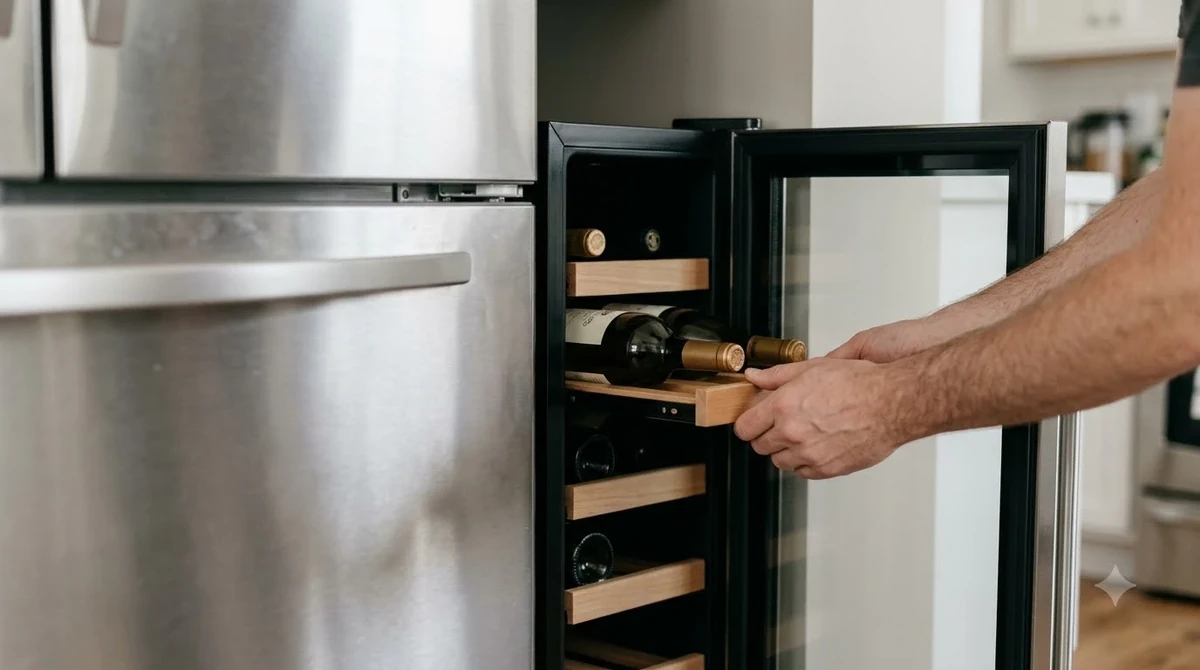
Why it stands out: Without a heavy compressor cycling on and off, these units run with only a soft fan hum and virtually zero mechanical vibration. Editors at Wine Enthusiast note that vibration is one of the primary threats to wine because constant shaking disturbs sediment and disrupts gradual maturation. Their lightweight chassis also makes them easy to move when rearranging a studio apartment or bar setup.
Keep in mind and best for: Thermoelectric cooling depends heavily on surrounding room temperature, typically lowering internal air by 20 to 25 degrees Fahrenheit below ambient air. Reviewers at Wine Folly point out that thermoelectric coolers can fluctuate too much for multi-year cellaring, though they excel for short-term storage. Choose this type if your room stays climate-controlled around 68 to 72 degrees Fahrenheit and silence is your top priority.
Best for Warm Kitchens and Crisp Whites: Compact Compressor Coolers
A 10-inch compressor wine fridge uses refrigerant and a miniature cooling coil to hold steady temperatures even when your kitchen warms up during cooking or summer heatwaves.
Why it stands out: Unlike thermoelectric models that struggle when room temperatures climb past 75 degrees Fahrenheit, a compressor unit maintains consistent interior conditions down to the mid-40s. That extra thermal muscle makes it far easier to keep Sauvignon Blanc, Pinot Grigio, and sparkling wine properly chilled for immediate pouring rather than lukewarm.
Keep in mind and best for: You will hear a low hum when the compressor cycles, and the cabinet weighs noticeably more than a thermoelectric model of the same exterior size. Because 10-inch compressor fridges still require rear and side breathing room, avoid sliding one tightly into an enclosed cabinet cutout. This style suits busy home cooks, warm climates, and white-wine drinkers who want reliable chilling.
Best for Opened Bottles and Casual Sippers: Upright-Storage Slimline Fridges
An upright-storage 10-inch fridge replaces one or two horizontal wire racks with a dedicated vertical shelf so you can stand opened bottles straight up without cork leaks.
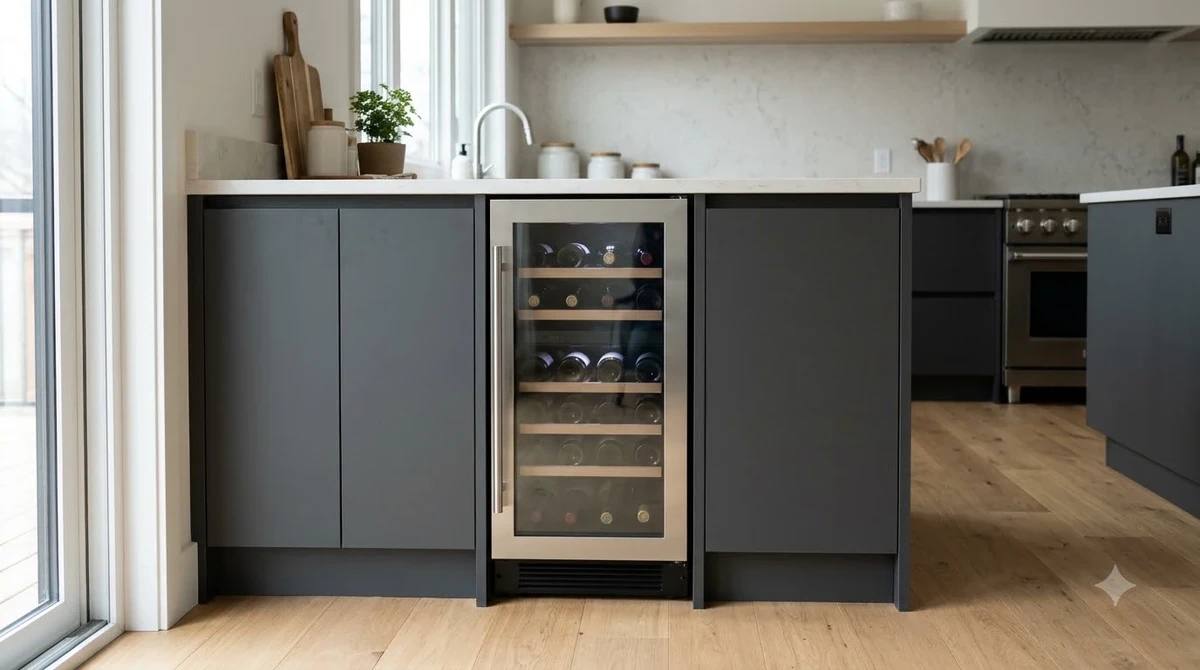
Why it stands out: Standard horizontal wine racks force you to lay bottles flat, which works well for sealed corks but risks messy drips once a bottle has been uncorked and stoppered with a vacuum pump or tasting cork. A vertical recess at the bottom or center of the cabinet lets you store three or four open bottles alongside six to eight horizontal bottles in the same 10-inch width.
Keep in mind and best for: Standing bottles upright sacrifices two to four bottles of total horizontal capacity compared to a standard rack layout. Tall Pinot Noir, Champagne, or Alsace bottles may also need careful positioning around the upright slot so the glass door closes cleanly. Pick this configuration if you enjoy pouring a single glass on weeknights and frequently keep multiple bottles open at once.
Best for Tight Floor Gaps: Tall Narrow-Tower Coolers
A tall narrow-tower 10-inch cooler stretches upward to around 25 to 31 inches high, squeezing a full 12-bottle single-column stack onto a footprint narrower than a sheet of printer paper.
Why it stands out: Instead of spreading sideways across valuable kitchen prep counter, this vertical tower tucks neatly beside a refrigerator, desk, or bar cart where only a sliver of floor or counter space exists. Single-bottle-per-shelf wire cradles let you grab any bottle immediately without unstacking others on top of it.
Keep in mind and best for: A tall, narrow cabinet has a higher center of gravity, so it must sit on a level, solid surface rather than plush carpet. Most narrow wire racks are spaced strictly for standard 750-milliliter Bordeaux bottles, meaning wider Burgundy or sparkling bottles often require removing a shelf. If you are shopping by width to fill a narrow gap, this vertical layout gives you maximum bottle count per square inch.
Best for Under-Cabinet Countertops: Low-Profile 6-to-8-Bottle Coolers
A low-profile 10-inch wine cooler keeps its overall height around 15 to 18.5 inches so it slides cleanly beneath standard upper kitchen cabinets without blocking outlets or switches.
Why it stands out: Many 12-bottle slimline fridges stand over 25 inches tall, which forces you to place them on an open island or freestanding table because they will not clear overhanging wall cabinetry. Dropping the height to a compact two-column or squat four-tier profile lets you tuck wine storage right onto your main kitchen counter.
Keep in mind and best for: Lower height naturally caps storage at 6 to 8 standard bottles, leaving little room for entertaining crowds or building a reserve stash. You still need to leave 2 to 4 inches of clearance behind and above the cabinet so heat can escape safely. Choose this profile when standard kitchen counter clearance is your strictest measurement constraint.
How to Choose
Finding the right 10-inch wine cooler comes down to measuring your ventilation gap, matching the cooling engine to your room temperature, and checking rack spacing against the bottles you actually buy.
- Confirm Freestanding Ventilation Clearance: Nearly all 10-inch wine fridges are engineered strictly for freestanding use and vent heat from the back or sides. Measure your space to allow at least 2 to 4 inches of open air behind and beside the cabinet; if you want a flush undercounter cabinet installation, step up to a front-venting 15 inch wine fridge or an 18 inch wine fridge instead.
- Match Cooling Technology to Room Heat: Choose thermoelectric cooling only if your home stays consistently cool year-round, since ambient temperatures above 75 degrees Fahrenheit prevent thermoelectric plates from reaching proper white-wine serving temperatures. Opt for a compressor model if the cooler will sit near a sunny window, stove, or warm living area.
- Check Bottle Diameter and Shelf Spacing: Advertised capacities assume slim 750-milliliter Bordeaux bottles roughly 3 inches wide. If you regularly drink Pinot Noir, Chardonnay, Rhône blends, or Champagne, look for removable chrome or wood racks so you can pull out a shelf to fit wider shoulders without scraping labels.
- Look for UV-Resistant Glass and Digital Controls: Ultraviolet light degrades wine aromas quickly, so prioritize double- or triple-pane tinted or mirrored glass doors over clear single-pane glass. External touch controls on the door frame also let you adjust temperatures without letting warm room air rush inside.
Tip: Before ordering a 10-inch cooler, check the door-swing clearance on the hinge side. Many slim countertop models require extra side clearance for the door to open past 90 degrees so wire racks can slide out smoothly.
Frequently Asked Questions
Can you build a 10 inch wine fridge into kitchen cabinets?
No, almost all 10-inch wine fridges are designed exclusively for freestanding placement on a countertop, floor, or open bar shelf. Because they vent heat through the rear and side panels rather than a front toe-kick grille, enclosing one inside cabinetry traps heat and causes the cooling system to overheat or fail early.
How many bottles fit inside a 10 inch wine cooler?
Most 10-inch wine coolers hold between 6 and 12 standard 750-milliliter Bordeaux bottles, depending on cabinet height and whether the interior uses single-bottle or two-bottle wide racks. If you store wider Burgundy, Pinot Noir, or Champagne bottles, expect real-world capacity to drop by two to four bottles.
Is a thermoelectric or compressor 10 inch wine fridge better?
Thermoelectric models are better if you want near-silent, vibration-free operation in an air-conditioned room kept around 70 degrees Fahrenheit. Compressor models are better for warmer rooms, kitchens, and crisp white or sparkling wines because they hold steady temperatures regardless of summer heat.
Are dual-zone wine fridges available in a 10 inch width?
True dual-zone cooling is virtually nonexistent in 10-inch wine coolers because dividing a 6-to-12-bottle interior into two insulated chambers leaves too little space for racks and airflow. If you want separate temperature zones for reds and whites at the same time, look at wider 15-inch or 18-inch dual-zone models.
A 10-inch wine fridge solves the toughest storage problem in small kitchens and apartments by turning an unused sliver of counter or floor space into reliable, temperature-controlled wine storage. Focus first on whether your room needs whisper-quiet thermoelectric cooling or stronger compressor power, then verify height and door-swing clearance before you buy.
More in By Width
 Best 6 Inch Wine Cooler Options for Tight Kitchen GapsUpdated Nov 18, 2026
 Best 36 Inch Wine Fridge for Kitchen Runs, Home Bars and Tight CornersUpdated Nov 18, 2026
 Best 12 Inch Wine Fridge Picks for Narrow Spaces and Small CollectionsUpdated Nov 18, 2026
 The Best 20 Inch Wine Fridge for Under-Counter Kitchens and BarsUpdated Nov 18, 2026
 Best 30 Inch Wine Fridge for Kitchens, Bars and Dining RoomsUpdated Nov 18, 2026
 Best 18 Inch Wine Fridge for Kitchens, Bars and Tight SpacesUpdated Nov 18, 2026