

We may earn a commission when you buy through links on this page, at no extra cost to you. Learn more.
The best 30 inch wine fridge for most kitchens is a built-in or under-counter model with dual temperature zones, because the 30 inch width fits standard cabinet openings and keeps whites and reds at different temperatures. Check the depth and ventilation requirements before you buy, and choose a freestanding model only if you have room for airflow on the sides and back. A single-zone unit works for one wine style, while a larger capacity suits a growing collection.
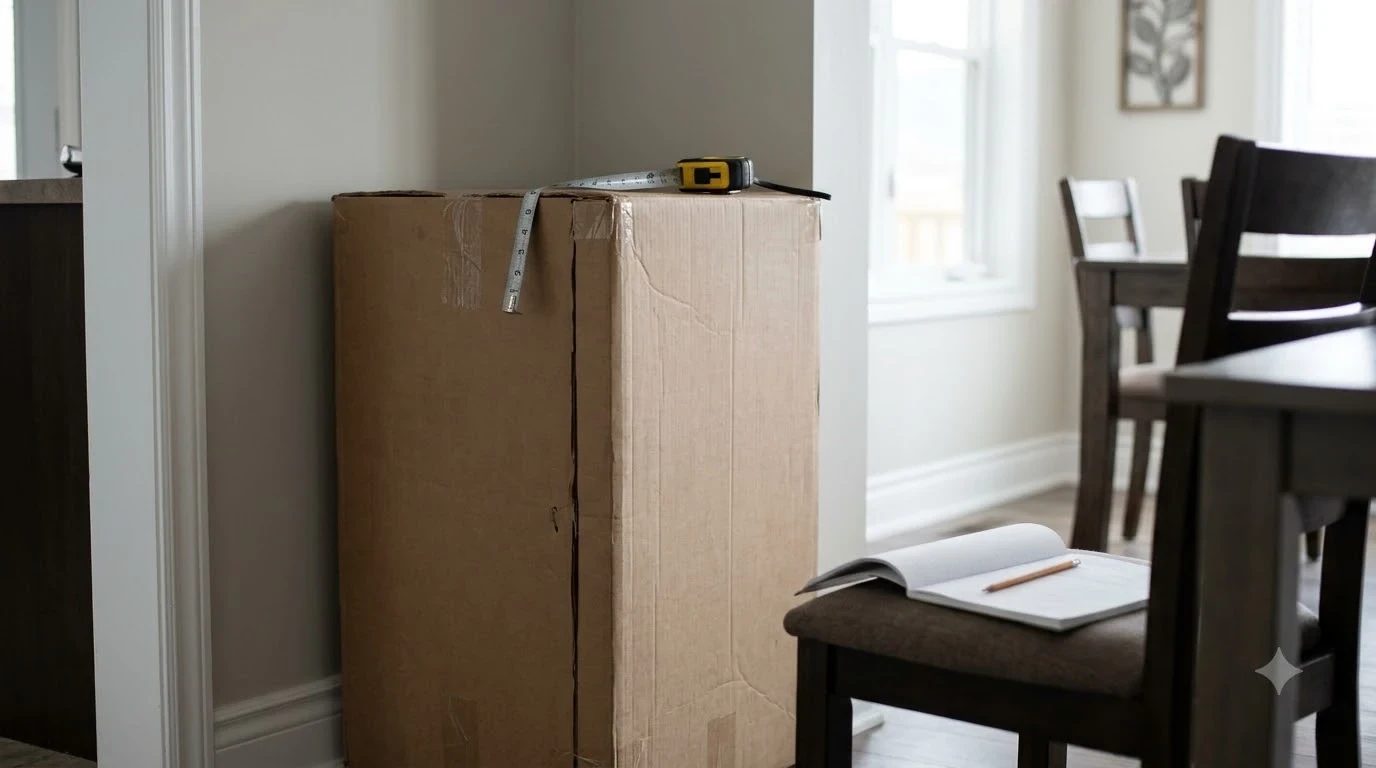
Width is the first thing to measure. A 30 inch wine fridge is designed to sit in a space about that wide, which makes it a common choice for kitchen runs, bar corners, and dining rooms with a dedicated cabinet. The width is only part of the decision, though. Cooling method, zones, door style, and how much airflow the unit needs all shape how well it will serve your bottles. This guide groups the options by setting and habit so you can match a unit to the room it will live in.
Quick Comparison
The main types differ in how they install, how they cool, and how many wine styles they can hold at once. The table below compares the four types you are most likely to see at this width.
| Fridge type | Installation | Zones | Best fit |
|---|---|---|---|
| Built-in | Flush in a cabinet opening | Often dual zone | Kitchens with a planned wine wall |
| Under-counter | Fits beneath a counter | Single or dual | Kitchens and bars with limited space |
| Freestanding | Sits on its own, needs side airflow | Often dual zone | Dining rooms and open layouts |
| Single-zone | Any of the above | One temperature | One wine style, simple use |
Storage conditions matter as much as the cabinet. Wikipedia’s entry on wine cellars notes that wine can be stored between about 7 and 18 °C (45 to 64 °F) if changes are gradual, with about 13 °C (55 °F) described as ideal for both short-term storage and long-term aging. A good wine fridge is built to hold a steady point in that range.
Best for a built-in look in a kitchen wall
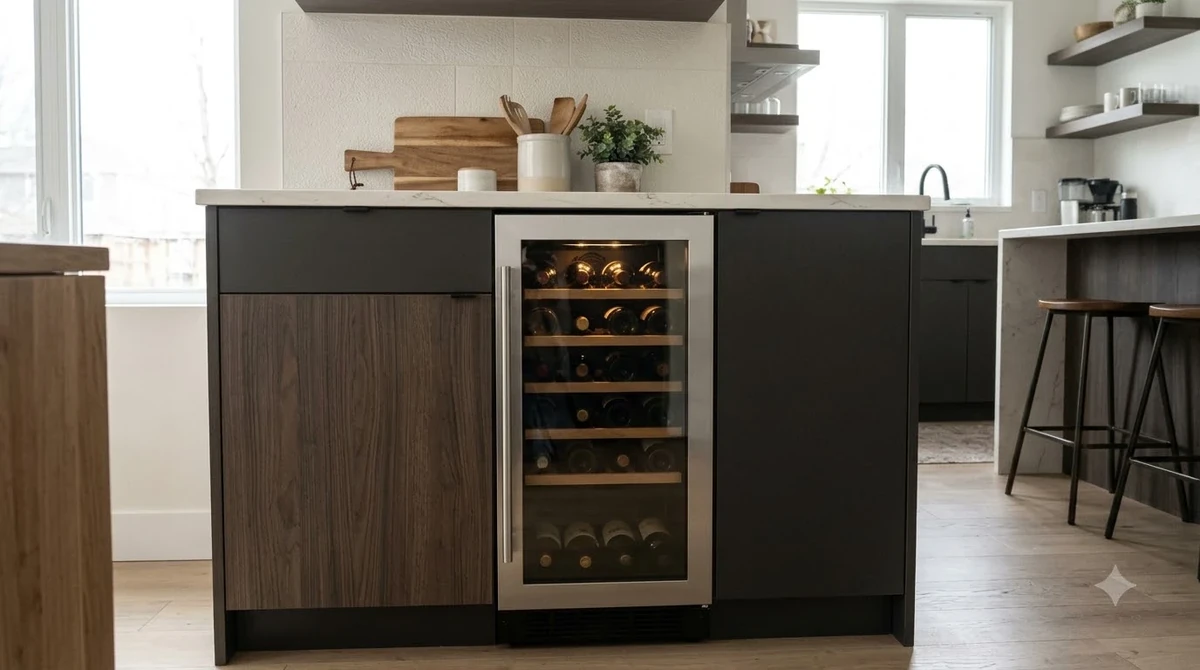
A built-in unit is the choice when the wine fridge should look like part of the cabinetry. It sits flush in a cabinet opening, so the front lines up with the surrounding doors and drawers.
Why it stands out. A built-in 30 inch model keeps the room tidy and frees counter space. Because the cabinet hides most of the unit, it suits open-plan kitchens where a fridge would otherwise dominate the view.
Keep in mind. Built-in units need a cabinet opening sized for the model, and most need a vent path at the front or top. Confirm the installation drawing before you order, since a built-in that cannot breathe will work harder than it should.
Best for. Homeowners planning a wine wall or a kitchen renovation who want the fridge to match the cabinetry.
Best for tight spaces under a counter
Under-counter units fit beneath a standard counter height and are a practical answer when floor space is limited. They are often the easiest way to add cold storage to an existing kitchen or bar.
Why it stands out. An under-counter 30 inch unit places bottles at a comfortable reach height, and it sits in a spot that is easy to overlook. It keeps the wine close to where it is poured, which is useful for a home bar.
Keep in mind. Under-counter units usually hold fewer bottles than a freestanding model of the same width, and they need airflow around the front grille. Check the clearance instructions for the counter and cabinet above.
Best for. Small kitchens, apartments, and bars where a few bottles are kept ready for the week.
Best for a freestanding unit in a dining room
Freestanding units are not tied to a cabinet, so they can be placed in a dining room, a living area, or a corner. They are also easier to move if you rearrange the room later.
Why it stands out. A freestanding model often gives more room for bottles and can be set against a wall in the spot where guests gather. Many have glass doors that show the collection, which doubles as décor.
Keep in mind. A freestanding unit needs space at the sides and back for heat to leave. Placing it flush against a wall or inside a tight niche can cut its cooling performance and raise its running time.
Best for. Dining rooms, open-plan homes, and anyone who wants a display-ready wine fridge without a built-in install.
Best for a dual-zone setup for red and white
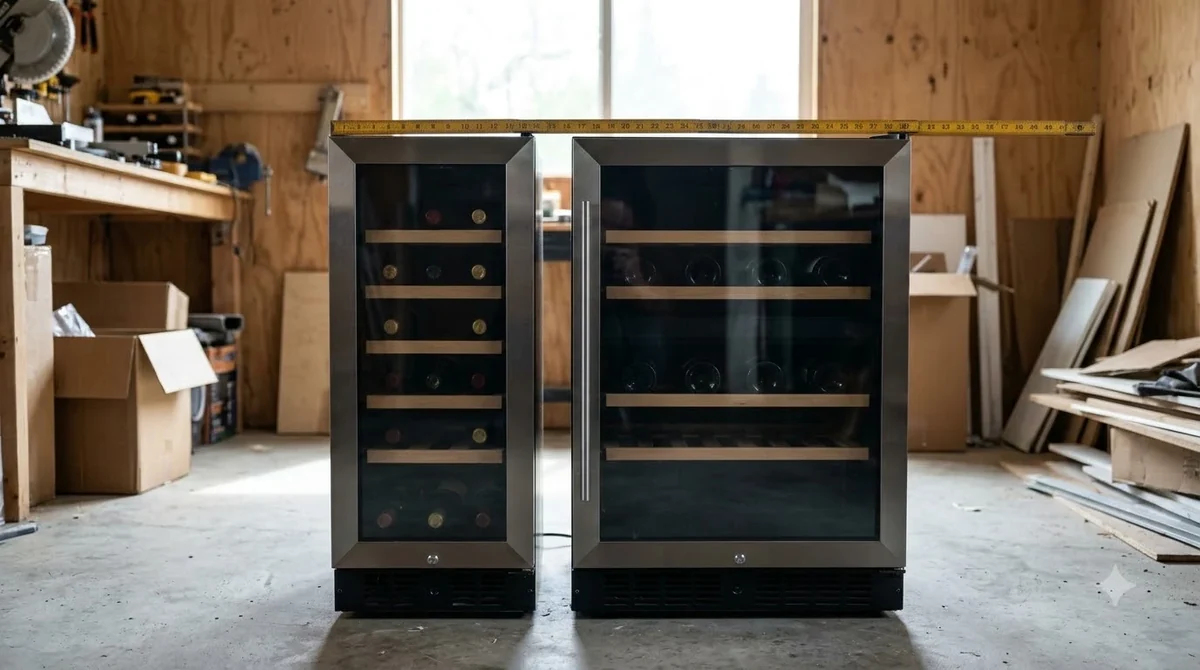
Dual-zone units hold two temperatures in one cabinet, which lets you keep whites cooler and reds a little warmer. This is the most flexible choice for a collection with mixed styles.
Why it stands out. Two zones mean you do not have to choose one temperature for every bottle. Whites and sparkling wines can sit in the cooler section, while reds rest in the warmer part, and the split lets you serve each bottle closer to its ideal range.
Keep in mind. Dual-zone units are usually priced higher than single-zone models, and the two zones are often smaller than one full zone would be. Look at the shelf layout as well as the total bottle count.
Best for. Households that drink both red and white regularly and want to serve each one at the right temperature without moving bottles around.
Best for a larger collection or entertaining space
Once a collection grows, the question shifts from temperature to capacity. A 30 inch unit can hold a surprising number of bottles if the shelves are chosen well, and it works in bar corners or basements where guests gather.
Why it stands out. A higher-capacity 30 inch model gives room for cases and oversized bottles, and it keeps the collection in one place rather than split across kitchen and storage areas. Adjustable shelving helps when bottle shapes vary.
Keep in mind. More bottles mean more heat load each time the door opens. Keep the door closed as much as possible during parties, and do not expect a full unit to cool as fast as a partly stocked one.
Best for. Collectors and hosts who keep a larger stock and want it on display for guests.
How to Choose
Start with the space and the habits, then pick the features. The checklist below covers the decisions that matter most at this width.
- Installation type: built-in, under-counter, or freestanding. Measure the opening or the floor space before you shop.
- Airflow: confirm the vent path the manufacturer requires, since a blocked vent shortens the life of the cooling system.
- Zones: single zone for one style, dual zone for mixed red and white collections.
- Capacity: count the bottles you own now and add room for growth, not just the number you buy each month.
- Door and display: solid doors keep light out, while glass doors show the bottles but need UV protection and steady temperatures.
If you are still comparing widths, the guides to 15 inch wine fridges and 18 inch wine fridges cover the smaller options, and the by width section lists the full range. For storage habits that protect a collection in any fridge, the Wikipedia entry on wine cellars describes how temperature changes and light affect aging.
Frequently Asked Questions
Will a 30 inch wine fridge fit a standard kitchen cabinet?
Many 30 inch built-in and under-counter models are designed for a standard cabinet opening, but the exact fit depends on the model. Check the installation drawing for the width, depth, and vent requirements before you order.
Is a dual-zone wine fridge better than a single-zone one?
It depends on what you drink. A dual-zone unit is useful when you keep both red and white and want each at its own temperature. A single-zone unit is simpler and can be enough for one wine style.
What temperature should a wine fridge hold?
Wine is often stored around 13 °C (55 °F), and Wikipedia’s entry on wine cellars notes that storage between about 7 and 18 °C (45 to 64 °F) is workable if changes are gradual. Serving temperatures are a separate question, since whites and reds are poured at different points in that range.
Can I put a wine fridge in a garage or basement?
Check the manufacturer’s ambient temperature rating before you place it there. A garage with large temperature swings can make a fridge work harder, so a space that stays within the rated range is the safer choice.
A 30 inch wine fridge is a practical size for most kitchens and dining spaces. Measure the opening, decide on zones, and plan the airflow before you shop, and the right unit will be easier to choose. For more on matching a fridge to your home, browse the by width guide.
More in By Width
 Best 10 Inch Wine Fridge Types for Tight Spaces and CountertopsUpdated Nov 18, 2026
 Best 6 Inch Wine Cooler Options for Tight Kitchen GapsUpdated Nov 18, 2026
 Best 36 Inch Wine Fridge for Kitchen Runs, Home Bars and Tight CornersUpdated Nov 18, 2026
 Best 12 Inch Wine Fridge Picks for Narrow Spaces and Small CollectionsUpdated Nov 18, 2026
 The Best 20 Inch Wine Fridge for Under-Counter Kitchens and BarsUpdated Nov 18, 2026
 Best 18 Inch Wine Fridge for Kitchens, Bars and Tight SpacesUpdated Nov 18, 2026