


We may earn a commission when you buy through links on this page, at no extra cost to you. Learn more.
A best 15 inch wine fridge is a narrow, built-in or freestanding cooler that fits a 15 inch wide opening, holds a steady temperature, and suits the number of bottles you actually drink. Most shoppers choose between a single-zone unit for one wine style and a dual-zone unit that keeps red and white at different temperatures. Compact width means fewer bottles than a full-size cabinet, so the right pick depends on how you store, serve, and where the unit will sit.
Narrow spaces are where a 15 inch unit earns its place. Kitchen islands, bar carts, pantry corners, and the gap beside a fridge often measure about that width, and a unit in that size class slides in without taking over the room. This guide walks through the main types, what each one does well, and the features to check before you buy, so you can compare models on the same terms.
Quick Comparison of 15 Inch Wine Fridge Types
Before comparing brands, it helps to sort the market by how the unit is installed and how many temperature zones it offers. Installation style decides whether the front vents and the cabinet depth will work with your cabinetry, while zone count decides whether you can keep red and white wine at the temperatures each one prefers.
| Type | Installation | Temperature zones | Best fit |
|---|---|---|---|
| Built-in under counter | Recessed into cabinetry, front venting | Usually single zone | Kitchens with a tidy, integrated look |
| Freestanding compact | Plug in anywhere, side or rear venting | Single or dual zone | Rentals, bars, and spaces without cabinet cutouts |
| Dual-zone | Built-in or freestanding | Two independent zones | Households that drink both red and white often |
| Single-zone | Built-in or freestanding | One zone | Buyers who keep one style, such as a red-only collection |
Best for a Built-In Kitchen Look
A built-in 15 inch unit is the choice when the goal is a finished, furniture-like result. It sits flush in a base cabinet, and the door panel can often be fitted with a custom front so it blends with the surrounding wood or paint.
Built-in models usually vent from the front, which matters because they need air to move around the compressor. Check the manufacturer’s clearance rules before you order, and leave the cabinet opening exactly to the spec sheet rather than eyeballing it. The payoff is that the unit stays out of sight and does not compete with your other appliances for attention.
Built-in units are a poor fit for a rental or any space you may leave soon. Removing one means repairing the cabinet, so treat them as a permanent decision.

- Capacity
- 26 bottles, 2.8 cu ft
- Width
- 15 inches
- Zones
- Dual, 41-64°F
- Cooling
- Compressor, 360° airflow
Meant for tight kitchens where only a slim gap remains beside the cabinets. At 15 inches wide with front venting, it fits below a standard counter, yet still offers two zones set anywhere from 41 to 64°F. Touch controls, removable beech wood shelves and a double-layer tempered glass door keep the interior organized and shielded from light.
Pros & ConsView
- Only 15 inches wide with front venting
- Two zones with touch control
- Removable beech wood shelves
- Capacity tops out at 26 bottles
- Listed installation type is freestanding
Best for a Freestanding Bar or Counter Spot
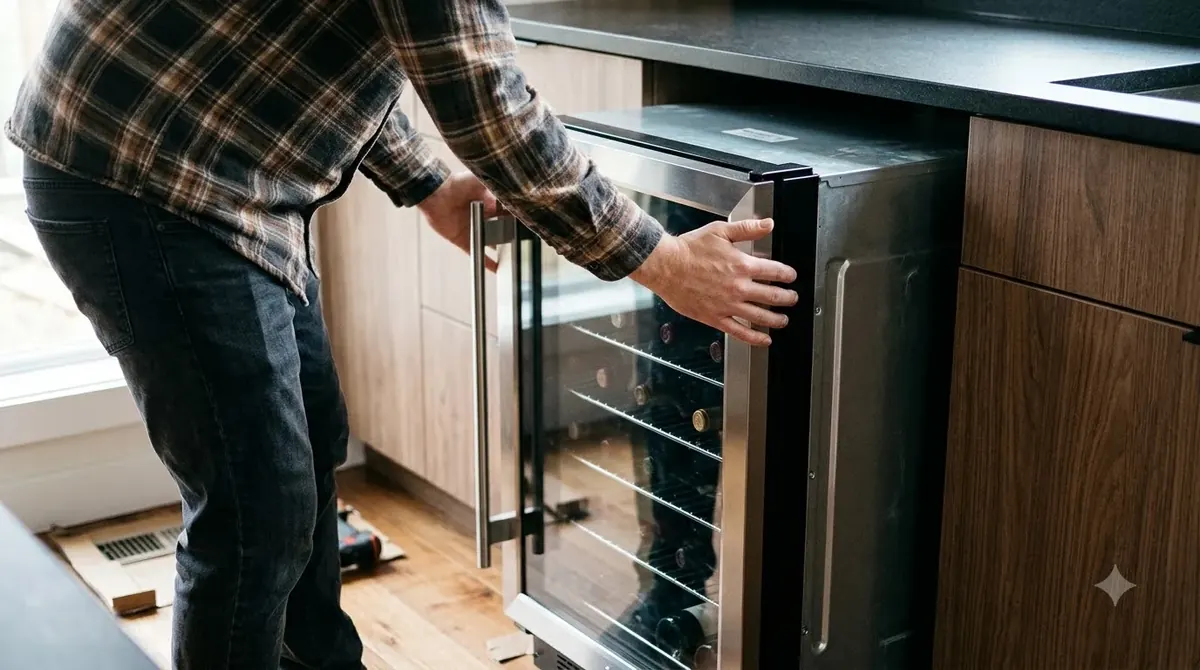
A freestanding compact unit makes sense when you want flexibility. It plugs into a standard outlet, can move with you, and does not require a cabinet cutout. This is the most common choice for home bars, dining rooms, and corners of an open kitchen.
Freestanding models often vent from the side or back, so leave a gap behind the unit as the manual describes. Put it where the room stays cool and away from the oven, the dishwasher, and direct sun, because heat from nearby appliances makes the compressor work harder and can make the temperature drift.
Best for Serving Red and White at Different Temperatures
A dual-zone 15 inch fridge fits households that open both reds and whites in the same week. Two independent zones let you hold one side cooler for whites and sparkling wine and the other warmer for reds, which is closer to how wine is usually served.
Dual-zone units tend to cost more and have a bit less usable shelf space, since the internal dividers take up room. Look at the shelf layout and whether each zone can be set separately. If you mostly drink one style, a single zone will keep things simpler.
For a detailed look at serving temperatures across styles, the Wikipedia overview of wine cellars gives a useful reference point: wine is generally kept in a range of about 7 to 18 degrees Celsius, with about 13 degrees Celsius described as ideal for short-term storage and aging. Small units make it easy to hold a steady point within that range, provided the temperature changes gradually.

- Capacity
- 30 bottles (750 ml)
- Zones
- Dual: 40-55°F and 55-65°F
- Cooling
- Compressor, frost free
- Install
- Freestanding or built-in
Two separate zones make it simple to serve red and white at different temperatures from one cabinet: the upper zone runs 40 to 55°F and the lower 55 to 65°F. Six beech wood shelves hold up to 30 bottles, can be removed for larger ones, and slide without shaking the wine. A safety lock with two keys and touch control are included.
Pros & ConsView
- Two zones: 40-55°F upper, 55-65°F lower
- Safety lock with two keys included
- Removable shelves for larger bottles
- Must stand 24 hours before first use
- Dual zones divide the 30-bottle space
Best for a Single-Style Collection
A single-zone 15 inch fridge suits a buyer who keeps one kind of wine, such as a red collection for aging or a stock of whites and sparklers for entertaining. One zone is simpler to set and easier to keep steady when the door is opened often.
The trade-off is flexibility. If your tastes change, you may end up storing everything at a compromise temperature. Before buying, decide honestly how much of your collection needs its own zone.

- Capacity
- 33 bottles, 3.0 cu ft
- Zones
- Single, 40 to 65°F
- Cooling
- Compressor with fan
- Install
- Built-in, under counter, freestanding
A single temperature zone is all you need when the collection leans toward one style, such as mostly reds. This 3 cubic foot cabinet holds at least 33 standard bottles on six removable sapele wood shelves, and the digital panel adjusts in 1°F steps. Power failure memory restores settings, and the LED glows in amber, blue or white.
Pros & ConsView
- Holds at least 33 standard bottles
- Power failure memory restores settings
- Amber, blue or white LED lighting
- One zone cannot chill whites and reds apart
- Door opens from the right side only
Best for a Small Pantry or Under-Counter Gap
When the opening is tight, the main question is airflow and depth. Units in this class are compact, but they still need room at the back and sides to shed heat. A small pantry can work well if the unit is set on a level surface and the door clears the nearby walls.
Think about how you load it. Standard bottles stand upright in most compact units, and the number that fits depends on the bottle shape and the shelf style. Plan around the bottle sizes you buy most, such as standard 750 ml bottles, rather than relying only on a headline capacity.
Wine that will be stored for a long time needs the most attention to placement. A bottle kept on its side keeps the cork moist, so look for a rack or shelf that lets bottles lie flat, not only upright bins. If the unit is in a pantry with food, keep it away from strong-smelling items, since a sealed cabinet still lets odors move around over time. Clean the interior with a mild solution and dry it before reloading to avoid musty smells.

- Capacity
- 33 bottles (3 cu.ft)
- Temp Range
- 40–65°F, 1°F control
- Cooling
- Compressor, 360° air circulation
- Size
- 14.8 in. W x 22.4 in. D x 34 in. H
Wet bars and compact kitchens often leave little more than 15 inches for a cooler, and this one is built to that width. Six wood shelves hold up to 33 Bordeaux bottles, while a power-failure memory restores the set temperature after an outage. The double-layer glass door blocks over 90% of UV rays, and the front grille keeps children away from vents.
Pros & ConsView
- Six wood shelves reduce vibration and friction
- Power-failure memory restores the set temperature
- Insulating glass layer blocks over 90% of UV
- Capacity tops out at 33 bottles
- Door orientation is listed as right-hinged only
How to Choose the Right 15 Inch Wine Fridge
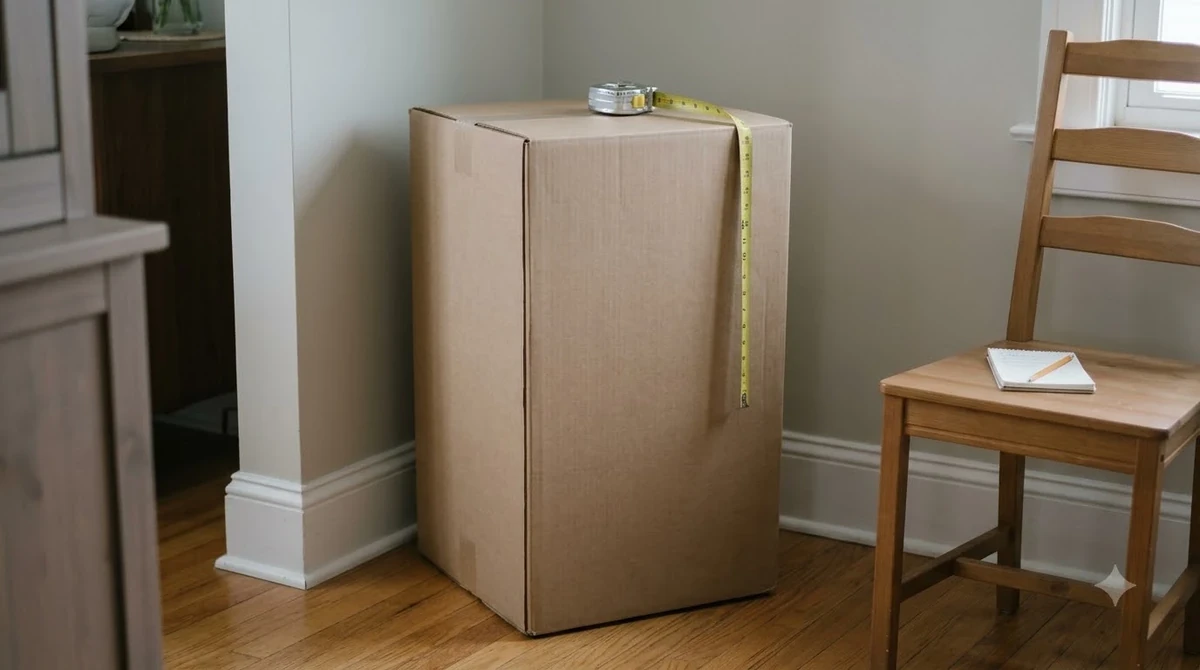
Start with the space, then the wine. Measure the opening width, height, and depth, and check the ventilation requirement for the installation style you want. Next, decide how many temperature zones you need based on what you drink. Finally, consider noise and door style, since a unit in a living area will be heard more than one in a utility room.
- Measure first. Confirm width, height, and depth, and allow for the vent clearance in the manual.
- Match zones to habits. Dual zone for mixed red and white; single zone for one style.
- Plan the layout. Check whether the shelves hold the bottle shapes you buy.
- Look at the door. Glass doors show the collection but let in more light; solid doors protect wine better.
- Consider the room. A quiet, cool spot helps the unit hold temperature and runs more quietly.
Wine storage guidance from published references, including the Wikipedia entry on wine cellars, also points to steady conditions over perfect ones. A unit that holds a stable temperature in a cool room will do more for your wine than a feature list.
Frequently Asked Questions
Is a 15 inch wine fridge the same as a 15 inch wine cooler?
Most sellers use the terms interchangeably. Both describe a compact, temperature-controlled cabinet for storing wine. The more useful distinction is installation style and zone count, so compare those features rather than the name on the box.
Can a 15 inch unit be built in under a counter?
Yes, many models are designed for built-in installation with front venting. Check the manufacturer’s cabinet opening and clearance specs before you order, because the vent requirement decides whether the unit will run correctly once installed.
Do I need a dual-zone unit?
Only if you regularly store red and white wine that you serve at different temperatures. A single-zone unit is simpler and often enough for a collection that focuses on one style.
Where should a compact wine fridge be placed?
Choose a cool, level spot away from the oven, dishwasher, and direct sunlight. Leave room at the back and sides for airflow, as the manual describes, so the compressor does not work harder than it should.
A 15 inch wine fridge rewards careful measuring and an honest look at how you drink. Confirm the opening, pick a zone setup that matches your habits, and check the layout against the bottles you actually buy. For a sense of how many bottles a standard wine volume represents, see how many glasses in a bottle of wine, and for a wider selection of sizes, browse By width.
More in By Width
 Best 10 Inch Wine Fridge Types for Tight Spaces and CountertopsUpdated Nov 18, 2026
 Best 6 Inch Wine Cooler Options for Tight Kitchen GapsUpdated Nov 18, 2026
 Best 36 Inch Wine Fridge for Kitchen Runs, Home Bars and Tight CornersUpdated Nov 18, 2026
 Best 12 Inch Wine Fridge Picks for Narrow Spaces and Small CollectionsUpdated Nov 18, 2026
 The Best 20 Inch Wine Fridge for Under-Counter Kitchens and BarsUpdated Nov 18, 2026
 Best 30 Inch Wine Fridge for Kitchens, Bars and Dining RoomsUpdated Nov 18, 2026