

We may earn a commission when you buy through links on this page, at no extra cost to you. Learn more.
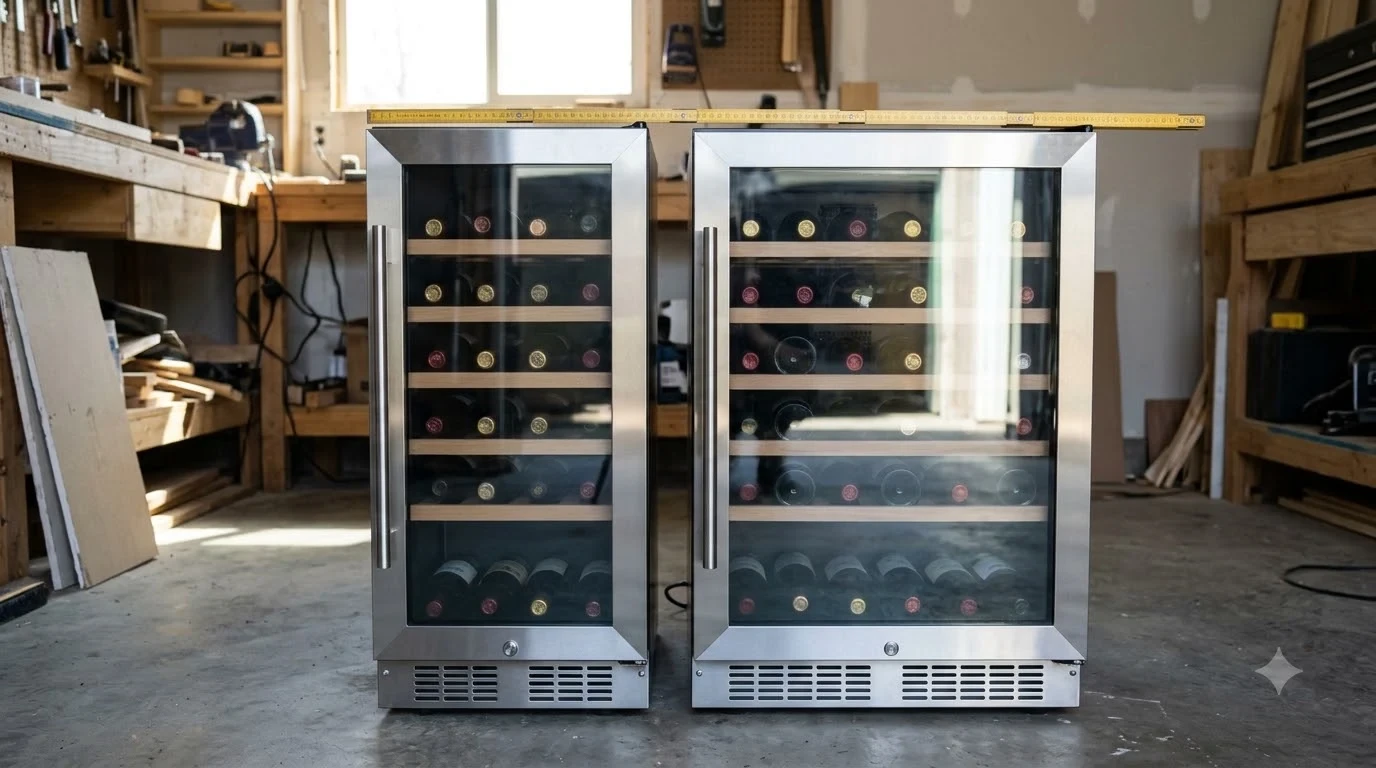
The best 20 inch wine fridge is an under-counter unit with a front-venting design, a dual-zone model if you serve both reds and whites, and a single-zone unit for steady storage. A 20 inch width is a common under-counter size, so the most important step is to measure the opening and check the vent layout before you compare features.
A 20 inch wine fridge is a popular size for kitchens, wet bars, and apartments where a wide appliance does not fit. The width is only one part of the choice. Temperature control, vent placement, and the number of zones matter just as much. This guide walks through the main types of 20 inch wine fridge, what each one suits, and how to measure a space so the unit fits and runs well.
Quick Comparison of 20 Inch Wine Fridge Types
Most 20 inch wine fridges are built for under-counter placement, but they differ in how they are installed and what they store. A built-in model is designed to sit flush with cabinets and needs a planned vent. A freestanding model can go almost anywhere with enough airflow. Single-zone units hold one temperature, while dual-zone units split the interior so reds and whites can be kept at different settings.
| Fridge type | Best use | Temperature zones | Install | Fit |
|---|---|---|---|---|
| Built-in under-counter | Kitchen runs and islands | One or two | Flush with cabinets | Needs the planned vent |
| Freestanding under-counter | Open spaces and bars | One or two | Needs side or back clearance | Flexible placement |
| Dual-zone model | Mixed reds and whites | Two | Either style | Check the shelf layout |
| Single-zone model | Steady storage | One | Either style | Simpler shelves |
Best for Under-Counter Kitchen Installs
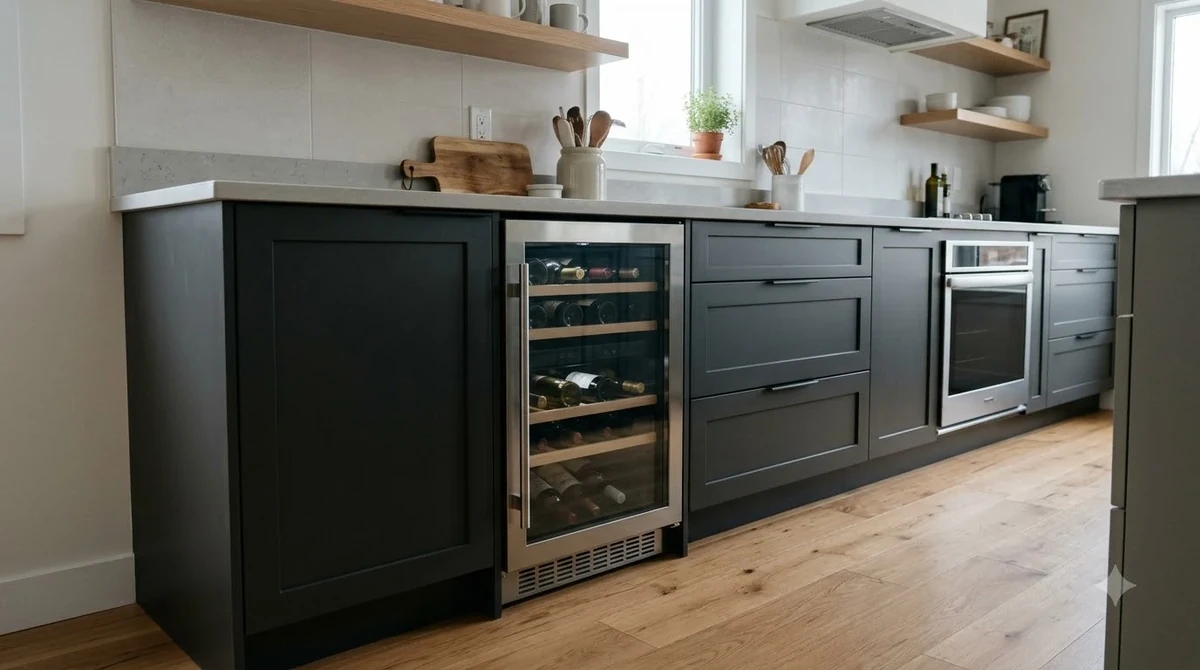
A built-in 20 inch wine fridge fits under a counter run and looks like part of the cabinetry. It is the most common choice for a kitchen remodel, and it keeps a bottle close to the glasses and the cooking area. The main requirement is the vent. Most built-in units pull air through a front grille or a vent in the toe-kick, so a panel or a rug blocking the vent can make the unit run hot and struggle to hold temperature.

Why it stands out: It sits flush with the cabinets, and the front-venting design means it can go into a tight kitchen run.
Keep in mind: The opening must match the unit’s install dimensions, and a built-in model is hard to move once it is fixed in place.
Best for: remodels, kitchen islands, and anyone who wants the fridge to look planned rather than added.
Best for Mixed Red and White Storage
If you drink both colors, a dual-zone 20 inch fridge lets you keep each one at a suitable temperature. Cool storage is useful for whites and sparkling wine, and a warmer zone suits reds. The Wikipedia entry on wine storage describes the constant temperatures that suit cellaring, and it notes that wine refrigerators can feature two chambers for red and white wines, which is the layout a dual-zone unit provides.
Why it stands out: You get two serving settings from a single narrow appliance.
Keep in mind: The two zones split the interior, so a dual-zone model holds fewer bottles per zone than a single-zone unit of the same width.
Best for: households that serve reds and whites weekly and want each one ready at the right temperature.
Best for Home Bars and Entertaining
A 20 inch fridge fits a home bar with a sink, a bar top, or a wet bar cabinet. For a party, it keeps white and sparkling bottles cold without taking a large share of the floor. Keep the bar fridge in a spot where guests will not block the vent, and stock the most used bottles on the front shelves so the door stays closed.
Why it stands out: It keeps the drinks at hand and frees up space in the main refrigerator for food.
Keep in mind: Frequent door openings at a party cause temperature swings, so restock from the main fridge when you can.
Best for: bars, game rooms, and entertaining areas with limited floor space.
Best for Tight Spaces Between Cabinets
A 20 inch unit is often chosen because the gap between two cabinets or beside a pantry is too narrow for a wider model. Measure the width, depth, and height of the opening, and allow the clearance the manufacturer specifies for airflow. Many buyers forget the depth, and a unit that is too deep can stop the door from closing once the shelves are filled.
The Wikipedia entry on wine storage also notes that wine can be kept at constant temperatures between 10 and 15 degrees Celsius, which is useful when you decide where the unit should go. Avoid spots next to an oven, a heater, or a sunny window, since heat from these sources makes it harder for the fridge to hold its setting.
Why it stands out: It fills an awkward gap that a wider fridge cannot.
Keep in mind: Narrow units can hold fewer bottles than a standard model, so plan for a smaller collection.
Best for: galley kitchens, small apartments, and any corner where space is limited.
Best for Everyday Bottles and Short-Term Storage
A 20 inch fridge does not have to be a long-term cellar. For everyday bottles you plan to drink within weeks, it is simple and convenient. Opened wine can also go into the fridge to slow oxidation. VinePair’s guide to storing open wine notes that the cold inside a refrigerator slows how fast oxygen damages wine, and it suggests the wine often stays good the next day, and sometimes longer when transferred into a smaller container.
Why it stands out: It handles everyday bottles and opened wine in one small appliance.
Keep in mind: A standard refrigerator dries corks more than a dedicated wine unit, and the Wikipedia wine storage article cites a warning from wine writers about dehumidifying refrigerators, so keep long-held bottles in a wine-specific unit.
Best for: casual drinkers, households with one or two bottles per week, and opened bottles waiting for dinner.
How to Choose a 20 Inch Wine Fridge
Start with the space. Measure the opening’s width, height, and depth, then compare the unit’s install dimensions. Check whether the vent is at the front or the back, and make sure nothing will block it. Then decide between one zone and two. If you mostly store wine for a short time, a single zone is simpler. If you serve both colors, a dual-zone design is the better choice.
Look at the shelves and the door. Racks that hold bottles on their sides keep corks in contact with the wine, and a solid or tinted door protects against light. Finally, think about the noise. A built-in unit in an open kitchen may run quietly, but a freestanding one near a bedroom can be more noticeable.
| Factor | What to look for |
|---|---|
| Space | Measured width, height, and depth with clearance |
| Vent | Front or planned vent that stays unblocked |
| Zones | Two zones for mixed serving, one for steady storage |
| Shelves | Racks that hold bottles on their sides |
| Door | Solid or tinted glass for light protection |
Frequently Asked Questions
Will a 20 inch wine fridge fit under a standard counter?
Many 20 inch units are designed for under-counter placement, but fit depends on the opening and the clearance the manufacturer requires. Measure the width, height, and depth of the space before you buy, and compare them with the unit’s install dimensions.
Does a 20 inch wine fridge need ventilation?
Yes. Most under-counter units need airflow to release heat, either through a front grille or through clearance at the back and sides. Blocked vents make the unit work harder and can keep it from holding its temperature.
What temperature should a dual-zone wine fridge hold?
Whites and sparkling wines are usually served cooler than reds. The Wikipedia entry on wine storage describes constant temperatures between 10 and 15 degrees Celsius for cellaring, and serving temperatures for reds are typically a few degrees warmer. Set each zone to match the wines you keep in it.
Is a 20 inch fridge better than a standard refrigerator for wine?
For wine held over time, a dedicated wine unit is better because it holds steadier temperatures and does not dry out corks as a standard refrigerator can. For opened bottles and short-term storage, a regular refrigerator is a practical option.
A 20 inch wine fridge is a practical choice when width is the limit. Measure the opening carefully, keep the vent clear, and decide whether you need one zone or two. For other widths, compare the guides to 15 inch wine fridges and 18 inch wine fridges, or browse wine fridges by width. If you are deciding how many bottles to keep on hand, the guide on how many glasses are in a bottle of wine helps with planning.
More in By Width
 Best 10 Inch Wine Fridge Types for Tight Spaces and CountertopsUpdated Nov 18, 2026
 Best 6 Inch Wine Cooler Options for Tight Kitchen GapsUpdated Nov 18, 2026
 Best 36 Inch Wine Fridge for Kitchen Runs, Home Bars and Tight CornersUpdated Nov 18, 2026
 Best 12 Inch Wine Fridge Picks for Narrow Spaces and Small CollectionsUpdated Nov 18, 2026
 Best 30 Inch Wine Fridge for Kitchens, Bars and Dining RoomsUpdated Nov 18, 2026
 Best 18 Inch Wine Fridge for Kitchens, Bars and Tight SpacesUpdated Nov 18, 2026