

We may earn a commission when you buy through links on this page, at no extra cost to you. Learn more.
White wine serving temperature depends on the style, but most whites taste best between about 49 and 55°F (7 to 12°C). Light-bodied whites and sparkling wines are usually served colder, around 38 to 45°F (3 to 7°C), while full-bodied whites do better slightly warmer. Serving a white too cold mutes its aroma and flavor, and serving it too warm can make it taste flat and heavy.
Many people chill white wine until it is ice cold and leave it there, but temperature changes how the wine tastes as much as it changes how it feels in the mouth. This guide explains the ranges by style, why they matter, and how to hit them at home without a thermometer.
Why serving temperature changes the taste
Temperature affects how aromas reach your nose and how the acidity, sweetness, and texture come across. Cold slows the release of aroma compounds, so a very cold white can seem closed and simple. As the wine warms slightly, those aromas open up, and the fruit and floral notes become easier to pick out.
The reverse is also true. When a white wine warms too far, alcohol and body can become more noticeable, and the crispness that makes a dry white refreshing begins to fade. Finding the right range is about balance: you want enough chill to keep the wine fresh and enough warmth to let the flavor show.

Serving ranges by white wine style
Wine Folly groups white wines into a few broad categories, and each one has its own preferred range in its serving temperature guide. The categories are a useful starting point, though exact numbers can shift a few degrees depending on the bottle.
For light-bodied whites and sparkling wines, Wine Folly gives 38 to 45°F (3 to 7°C), which it describes as “ice cold.” For full-bodied whites, the recommended range is 44 to 55°F (7 to 12°C), which it describes as “fridge cold.” Across all white wines, the same source advises serving slightly warmer than fridge temperature, between 49 and 55°F (7 to 12°C).
| White wine style | Recommended range (°F) | Recommended range (°C) |
|---|---|---|
| Light-bodied white | 38 to 45°F | 3 to 7°C |
| Sparkling wine | 38 to 45°F | 3 to 7°C |
| Full-bodied white | 44 to 55°F | 7 to 12°C |
| General white guidance | 49 to 55°F | 7 to 12°C |
Light whites and sparkling wines
Crisp, light whites such as many dry Italian and Eastern European styles are best served near the cold end of the scale. The cold helps keep the acidity sharp and the fruit clean, which suits a wine meant for simple meals or a warm afternoon.
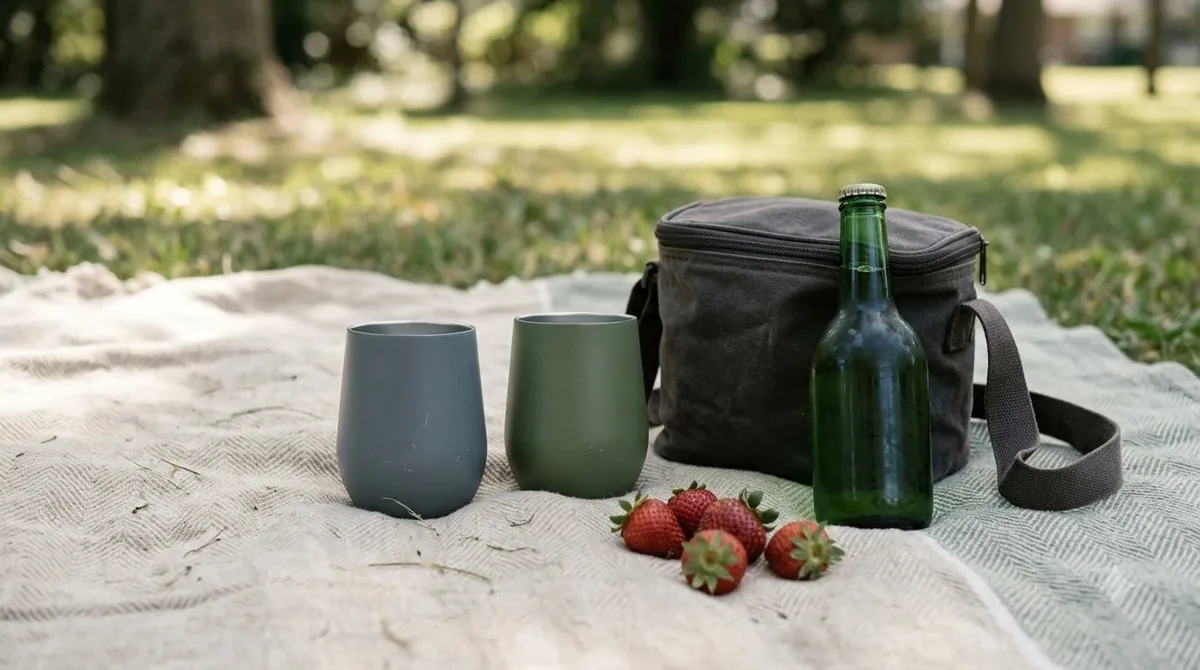
Sparkling wines follow the same logic. Cold keeps the bubbles fine and the finish refreshing. There is one exception worth knowing: Wine Folly notes that higher-quality sparkling wines, such as vintage Champagne, benefit from warming slightly after chilling so their aromas can develop. A bottle that is extremely cold may hide the complexity you paid for.
Full-bodied and oaked whites
Richer whites, especially those aged in oak, need a little more warmth. At the cold end of the scale, the texture can feel tight, and the buttery or toasty notes from barrel aging stay hidden. Serving these whites closer to the 50s Fahrenheit lets the body and creamy texture show.
Full-bodied whites are also more forgiving of a slightly warmer glass. A Chardonnay with rich fruit and oak character, for example, will often taste more complete at the upper end of the fridge range than when it is icy cold straight from the freezer.
Sweet and dessert whites
Sweet whites are harder to pin down. Wine Folly does not give a specific range for sweet white wines, and it notes that dessert wine serving temperature depends on the style. In practice, a sweeter German wine such as auslese wine is usually served cool rather than ice cold, so that the sweetness and fruit are present without the wine tasting syrupy.
A good rule is to start with the cool end of the white range and adjust from there. If the wine tastes flat or overly sweet, let it sit for a few minutes before pouring the next glass.
How to get white wine to the right temperature
The simplest approach is the refrigerator. A bottle that has been stored at room temperature usually needs a stay in the fridge before serving, and the exact time depends on the bottle and the fridge. Check the temperature by feel: a bottle that is pleasantly cold to the touch but not icy is close to the target for most dry whites.
If you are serving a full-bodied white or a vintage sparkling wine, take the bottle out of the fridge a little before serving. This short rest lets the wine warm into its best range. Keep in mind that a glass left on the table will warm quickly in a warm room, so pour smaller amounts and keep the rest of the bottle chilled.
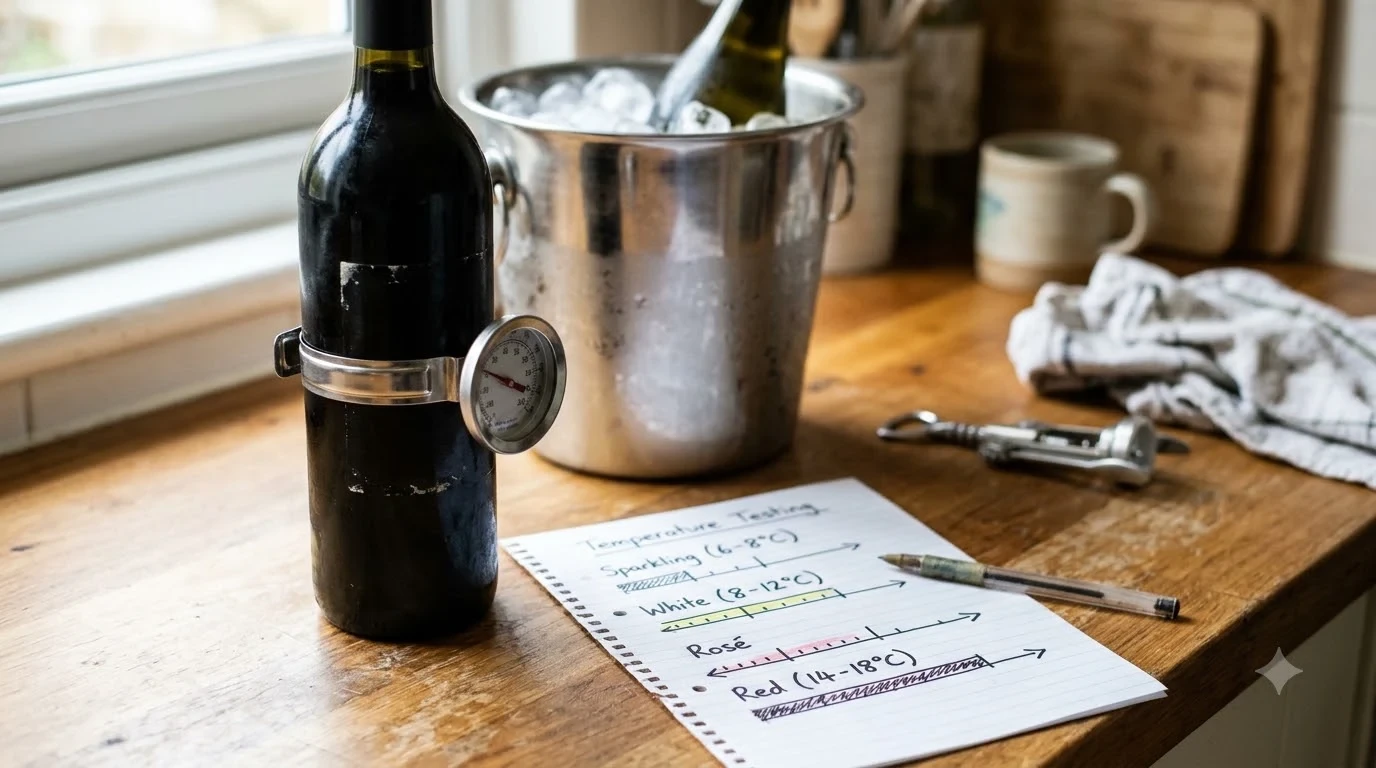
An ice bucket works well for keeping a bottle at a steady temperature during a meal, especially for light whites and sparkling wines. Add water to the ice so the bottle is surrounded evenly, and avoid leaving it in the bucket so long that it becomes too cold to taste well.
Tip: If you are unsure, aim for the lower end of the white range for light wines and the upper end for rich ones. You can always let a glass warm for a few minutes, but you cannot easily reverse an overly cold pour.
Common serving temperature mistakes
The most common mistake is serving every white wine at the same cold temperature. A crisp, light white and a rich, oaked white respond very differently to the cold, and treating them the same leaves one of them tasting less than it should. Matching the temperature to the style is the simplest fix.
The second mistake is leaving a white wine in an ice bucket for too long. The bottle keeps cooling as long as ice surrounds it, and the wine can become too cold to show its fruit. Check the bottle by touch during the meal and add more ice or move it back to the fridge if it has become very cold.
A third mistake is leaving the bottle on the table in a warm room. Even a wine served at the right temperature will warm quickly in a dining room. Pouring smaller glasses and keeping the rest of the bottle chilled solves most of the problem.
Finally, many people skip a short rest for vintage sparkling wines and full-bodied whites. These wines often taste more complete a little warmer than the fridge temperature, so taking them out before serving can make a noticeable difference in the glass.
Frequently Asked Questions
What is the ideal serving temperature for white wine?
For most white wines, aim for about 49 to 55°F (7 to 12°C). Light whites and sparkling wines are usually served colder, around 38 to 45°F (3 to 7°C), and full-bodied whites do well slightly warmer.
Should white wine be served ice cold?
Not always. Light whites and sparkling wines can be served quite cold, but very cold temperatures can hide aroma and flavor. Full-bodied and oaked whites are usually better a little warmer.
Does Champagne need to be served colder than other white wines?
Non-vintage sparkling wines are typically served cold, but Wine Folly notes that higher-quality sparkling wines, including vintage Champagne, benefit from warming slightly after chilling so their aromas can develop.
How long should white wine sit in the fridge before serving?
The time depends on the bottle and how warm it started. A bottle at room temperature usually needs a stay in the refrigerator, and checking it by touch is a practical way to tell when it is close to the target range.
Getting the temperature right is one of the easiest ways to improve a glass of white wine. Start with the style guidelines above, adjust to your taste, and use the Wine by Type section to explore more white wine styles and how each one is best served.
More in Wine Types & Grapes
 Zinfandel Sugar Content: Dry Red vs. White Zinfandel GramsUpdated Nov 21, 2026
 Best Zinfandel Substitute Options for Sipping and CookingUpdated Nov 21, 2026
 Zweigelt Food Pairing: Best Dishes, Cheeses, and Serving TipsUpdated Nov 21, 2026
 Zinfandel Tannins Explained: How Structure Shapes Every BottleUpdated Nov 21, 2026
 Zinfandel Sweetness Level: Dry Red vs. Sweet White Zin ExplainedUpdated Nov 21, 2026
 Xinomavro Food Pairing: Best Dishes, Styles, and Serving TipsUpdated Nov 21, 2026