

We may earn a commission when you buy through links on this page, at no extra cost to you. Learn more.
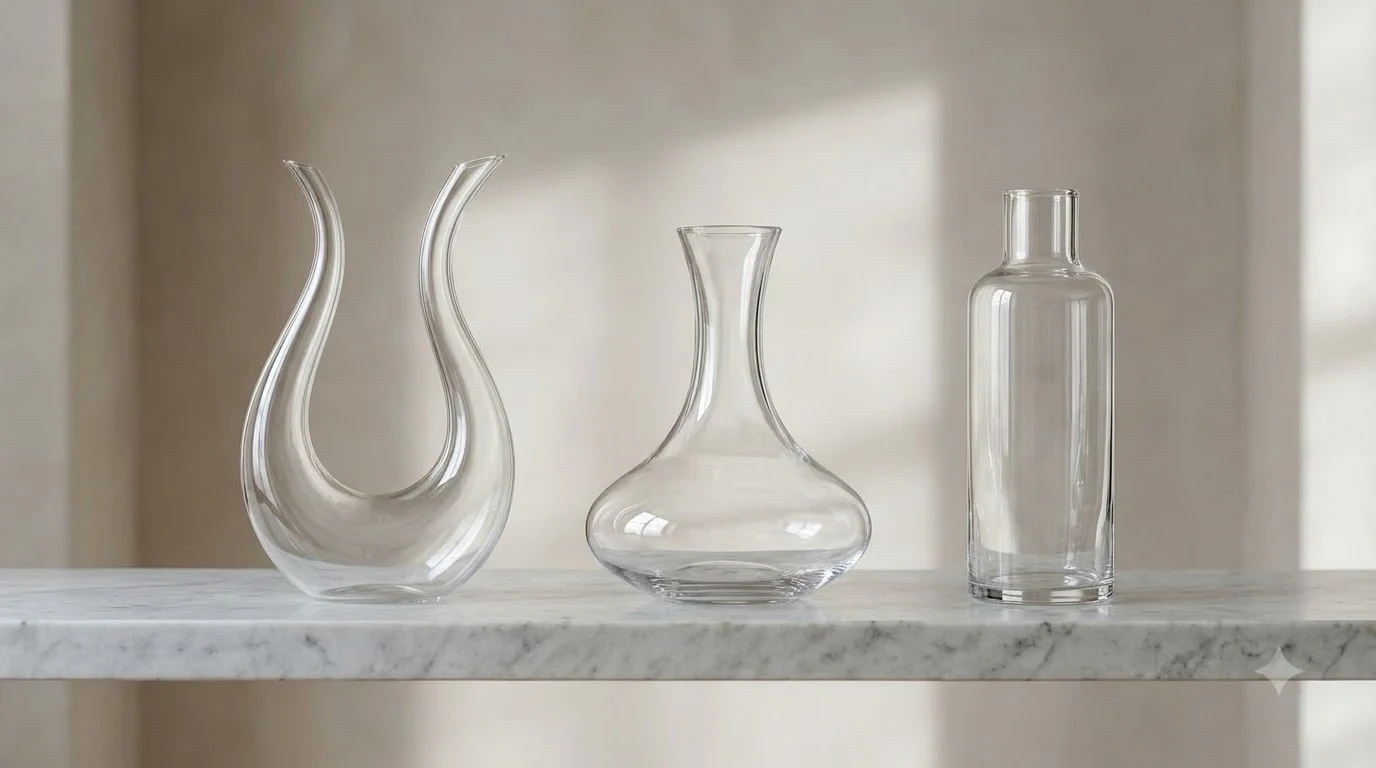
The best decanter drying stand is one that holds the decanter upside down, lets the last drops run out of the neck, and fits the shelf or counter where you keep it. A narrow-neck decanter takes much longer to dry than a glass with an open rim, so the stand’s job is airflow and balance. Wide-mouth decanters need a cradle or a ring, while tall, slim decanters need a peg or a tapered holder that will not tip when the bottle is set down.
A decanter that goes back on the shelf damp can carry a musty smell into the next pour, and water left inside can leave a film that shows in the light. A drying stand keeps the vessel open to air after washing, which is the main reason most home bars and collectors use one. This guide compares the main stand styles, explains what to check before you buy, and shows a simple drying routine that works with any shape.
Quick Comparison of Drying Stand Styles
Drying stands fall into a few groups: angled pegs for long-necked decanters, cradles for wide bodies, ring stands that hold the base, and folding or tray designs for small spaces. The table compares them on the points that matter most after washing.
| Stand style | Best for | Neck and body fit | Footprint | Main drawback |
|---|---|---|---|---|
| Angled peg stand | Narrow-neck decanters | Good, holds the neck at a slant | Small | Can be less steady with very wide bases |
| Cradle stand | Wide-body and Venetian-style decanters | Good, supports the body | Medium | Takes more shelf room |
| Ring or base stand | Decanters with a flat, stable foot | Fair, depends on the neck | Small | Limited for tall, slim shapes |
| Folding or tray stand | Small bars and tight cabinets | Varies by design | Very small when folded | Less stable when loaded |
Why Decanters Need a Proper Drying Routine
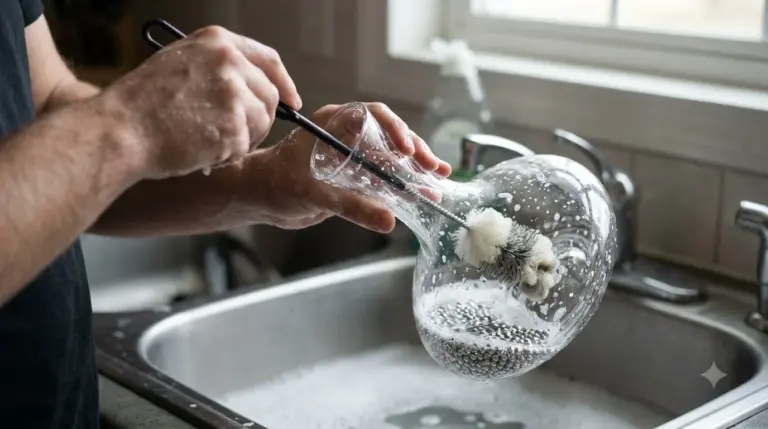
A decanter holds a larger volume than most glasses, and its shape traps water in the lower body and the neck. According to the Wine Folly decanting guide, many restaurants avoid soap because residue can affect aroma and flavor, and the same logic applies at home. Rinsing with plain water and letting the piece drain is a sound default for everyday use.
The same guide suggests rinsing the outside with hot water and the inside with cold water to reduce fogging. Whatever the stand, the decanter should be dried completely before it is stored with a stopper, because a sealed, damp vessel can hold a smell for days. A stand that keeps the opening facing down helps water leave by gravity rather than sitting in the bottom of the bowl.
Best for Narrow-Neck Decanters
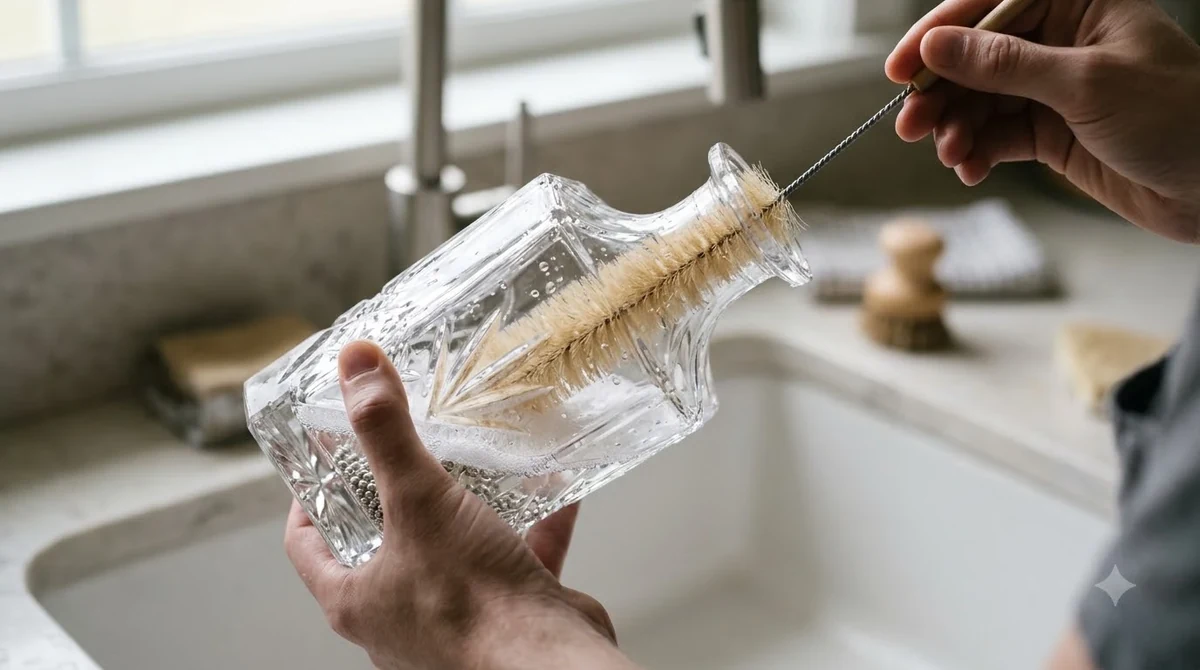
A narrow-neck decanter is the hardest shape to dry, because water sits in the neck and the body curves inward. An angled peg stand holds the decanter at a slant so the neck points down and the liquid drains out. Look for a stand with a rubber or felt base so the decanter does not slide when placed.
According to the decanter article on Wikipedia, a decanter’s volume is usually about one standard wine bottle, so a stand should be checked against the full height of the piece rather than assumed from its capacity.
Why it stands out: It gets the most water out of the neck, which is the slowest part to dry.
Keep in mind: A very slim neck can be hard to fit on a single peg, so check the peg width against the neck before you buy.
Best for: Classic and tall decanters with a long, narrow opening.
Best for Wide-Mouth Decanters
Wide-mouth decanters dry more easily through the opening, but the broad body needs firm support so it does not roll. A cradle stand holds the body in a shallow bed and leaves the mouth open to air. This style is also useful for decanters with a rounded base, since the cradle keeps the piece from wobbling.
Why it stands out: It supports the body evenly, so a large decanter sits firm while it drains.
Keep in mind: Cradles take more shelf space than a peg stand, so measure the depth of the spot before ordering.
Best for: Round or Venetian-style decanters with a broad body.
Best for Tight Cabinets and Small Bars
When a bar cart or cabinet has little room, a folding or tray stand keeps the decanter off the surface without taking over the shelf. Many designs collapse flat, which makes them easy to store between uses. A tray stand also catches drips from the base, so the shelf stays dry.
A small stand suits one or two decanters rather than a full set. If you already own several pieces, a wider cradle or a set of pegs will be easier to manage than a folding design that has to be reset each time.
Why it stands out: It stores flat and fits into a small corner without a permanent footprint.
Keep in mind: Folding stands can feel less stable when a heavy decanter is placed on them, so set the decanter down gently and check the balance before walking away.
Best for: Small apartments, compact bar carts, and anyone with limited cabinet space.
Best for Decanters With a Stopper
Many decanters come with a glass or crystal stopper, and the stopper dries more slowly than the vessel. A stand with a separate rest or a small cup lets the stopper air out next to the decanter instead of being pressed into the neck while still damp. Keeping the stopper separate also prevents the two parts from sealing together when the piece is stored.
Rest the stopper on the stand upside down so the damp end faces the air. This is a small step, but it avoids the trapped moisture that causes odor when a stopper is put back in a dry decanter too early.
Why it stands out: It dries the stopper and the vessel side by side.
Keep in mind: Stoppers are small and can roll, so choose a stand with a shallow rest or a ring that holds them in place.
Best for: Decanters sold with a matching stopper and anyone who stores the piece sealed between uses.
Best for Decanter Sets and Display Shelves
A decanter set often comes with a matching tray or a row of glasses, and a stand that matches the finish keeps the collection tidy. Choose a design in a neutral material, since the stand will sit beside the decanters on a shelf or bar, where it is seen as part of the display.
Stainless steel and powder-coated metal hold up to repeated wet use better than bare wood, and a clear acrylic stand can make the decanter look like it is floating. Whatever the finish, make sure the base is weighted enough that a full decanter stays put.
Why it stands out: It works with a set and looks like part of the display.
Keep in mind: A decorative stand may not match every shape in a mixed collection, so measure each decanter before buying one design for the whole shelf.
Best for: Collectors and hosts with a matching set on display.
How to Choose the Right Drying Stand
Work through these checks in order, starting with the shape you already own:
- Measure the neck. The peg or cradle should hold the neck or body without pinching it.
- Check the base. A flat, weighted foot keeps a full decanter steady while it drains.
- Plan the space. Note the shelf depth and height so the stand clears the decanter’s top and the cabinet door.
- Look for a stopper rest. If your decanter has a stopper, a small rest keeps it off the surface while it dries.
- Choose the material. Stainless steel and coated metal resist rust, and unsealed wood needs care near a sink.
Tip: Rinse the decanter with plain water, shake out the last drops, and set it on the stand the same day. Avoid heavy soap, since residue can carry into the next pour.
Frequently Asked Questions
Do I need a drying stand for a decanter?
It is not strictly required, but a stand lets air reach the inside and the neck, which is where water lingers. Without one, a decanter can sit damp on a towel and develop a faint smell over time.
Can I dry a decanter with a towel instead?
A towel can finish the outside, but a clean towel is not enough for the inside of a narrow neck. Let the piece drain on a stand first, then use a dry, clean cloth or a soft brush on the outside once the water has run off.
Should a decanter be stored with the stopper in?
Store it only after both parts are fully dry. A stopper pressed into a damp decanter can trap moisture, so keep the stopper separate while the vessel airs out. For guidance on how long opened wine keeps, see the guide on how long red wine lasts after opening.
What type of decanter pairs best with a drying stand?
Any shape can use a stand, but narrow-neck decanters get the most benefit because they hold water longest. For wider styles, a cradle or a flat-base ring works better. Browse the best wine decanters guide to compare shapes before choosing a stand.
Choose a stand that matches the shape you own, and drying becomes a short step after each use rather than a chore. For more options, the Aerators & Decanters section lists the other pieces that work alongside a stand, including sets that come with matching glasses.
More in Decanters & Aerators
 Best Whiskey and Wine Decanter: Choosing One Vessel for Both DrinksUpdated Nov 18, 2026
 Best Tower Decanter: How to Pick the Right Shape for Your WineUpdated Nov 18, 2026
 Best Cleaning Brush Decanter Options for Narrow Necks and Deep BowlsUpdated Nov 19, 2026
 Best U Shaped Decanter Picks for Aerating Bold Red WineUpdated Nov 18, 2026
 Best Electric Decanter Styles for Faster, Smoother Wine PoursUpdated Nov 18, 2026
 Best Hand Blown Decanter Styles for Every Bottle and TableUpdated Nov 18, 2026