

We may earn a commission when you buy through links on this page, at no extra cost to you. Learn more.
The typical Beringer Main and Vine price in the United States is approximately $4.49 to $7.49 for a 750 ml bottle of the varieties covered by current retailer listings. Larger 1.5 L bottles generally cost more overall but can offer better value per serving. Comparing the exact wine, bottle size, and retailer is the most reliable way to find an appropriate price for this accessible California wine collection.
Beringer Main & Vine is an everyday wine range featuring familiar varieties such as Cabernet Sauvignon, Merlot, Chardonnay, Pinot Grigio, and White Zinfandel. It appeals to shoppers who want straightforward wines for casual meals, entertaining, and informal occasions without moving into premium wine categories. However, the price is not identical across all varieties or stores. Retailer location, bottle format, inventory, and local pricing policies all influence the final amount. This guide explains typical price ranges, how to compare bottle sizes, and which wine styles may suit different preferences.
Who This Buying Guide Is For
Beringer Main & Vine is a practical option for shoppers seeking familiar California wine varieties at accessible everyday prices. Its selection includes red, white, and blush styles, making it relevant to casual wine drinkers, households buying wine for dinner, and people exploring different grape varieties.
First-time buyers can use the range to discover differences between red, white, and sweeter wine styles without committing to expensive bottles. Someone who regularly drinks Cabernet Sauvignon might prefer its darker fruit character and firmer tannins. A shopper looking for a lighter white wine could consider Pinot Grigio, while Chardonnay offers a different balance of body and acidity. White Zinfandel is another possibility for those who enjoy fruit-forward blush wine.
The collection is also useful for people comparing bottle formats. A standard 750 ml bottle works well for a small dinner or a couple of glasses, while a 1.5 L bottle can be more convenient for a larger gathering. A1 Wine & Spirit lists Main & Vine selections in both formats, including White Zinfandel and Pinot Grigio. This makes bottle size an important part of the buying decision.
This guide is particularly helpful if you want to:
- Estimate the usual US retail cost before visiting a wine store.
- Compare 750 ml and 1.5 L formats using cost per volume.
- Choose between Cabernet Sauvignon, Merlot, Chardonnay, and Pinot Grigio.
- Understand why the same bottle can have different prices at different stores.
- Find a suitable bottle for casual dinners, parties, and everyday drinking.
- Distinguish everyday wine pricing from premium Beringer bottlings.
People interested in the wider producer selection can also explore Wine Brands. For more information about this particular collection, the Beringer Main and Vine overview provides additional context.
Main & Vine should not be confused with Beringer’s more premium collections. Its appeal is accessibility and familiar grape varieties rather than specialized vineyard expressions or long-term cellar potential. Buyers looking for complex, age-worthy wines may prefer to compare other Beringer bottlings before deciding.
Key Factors to Compare When Checking Prices
The most useful price comparison considers four things: the exact variety, bottle size, retailer, and final checkout cost. A low shelf price does not necessarily represent better value if the bottle contains less wine or belongs to a different product category.
Retail listings provide a useful starting point. Total Wine & More displays Main & Vine Cabernet Sauvignon at approximately $4.49 for 750 ml, while Beneva Liquor & Tobacco lists the same variety at approximately $7.49 for 750 ml. A1 Wine & Spirit lists several other Main & Vine varieties, including Chardonnay, Merlot, and White Zinfandel, at approximately $4.99 per 750 ml bottle and Pinot Grigio at approximately $5.99. These are retailer-specific examples, not guaranteed national prices, and prices vary by state and retailer.
The difference between these listings illustrates why shoppers should avoid assuming that one store’s price represents the entire US market. Some retailers have different distribution arrangements, inventory costs, and local operating conditions. Online listings may also reflect location-specific availability or temporary pricing.
| Comparison factor | Observed information | Why it matters |
|---|---|---|
| 750 ml Cabernet Sauvignon | About $4.49 to $7.49 | Useful reference range across two retailer listings |
| 750 ml Chardonnay | About $4.99 | Example of a white wine listing |
| 750 ml Merlot | About $4.99 | Useful red wine comparison |
| 750 ml Pinot Grigio | About $5.99 | Example of a lighter white wine listing |
| 750 ml White Zinfandel | About $4.99 | Example of a blush wine listing |
| 1.5 L bottle | 1,500 ml | Contains twice the wine of a 750 ml bottle |
| 750 ml servings | About 5 glasses of 5 oz | Helps estimate servings for a meal |
| 1.5 L servings | About 10 glasses of 5 oz | Useful for planning larger gatherings |
The listed 750 ml prices are drawn from the displayed product listings at Total Wine & More’s Main & Vine Cabernet Sauvignon page, Beneva Liquor & Tobacco, and A1 Wine & Spirit. They are examples of observed retail pricing rather than fixed recommended prices. Retailers can change their listings, and local availability may affect what shoppers actually pay.
Another important consideration is the difference between a displayed price and the final checkout amount. Shipping, local sales taxes, and other applicable charges can change the total. Some states also have different rules for purchasing and delivering alcoholic beverages. A comparison should therefore account for the full cost rather than relying only on the initial product listing.
Tip: Compare the cost per 750 ml rather than the total shelf price. A 1.5 L bottle contains twice as much wine as a 750 ml bottle, so divide the larger bottle’s price by two to calculate its equivalent cost.
For example, if a hypothetical 1.5 L bottle costs twice as much as a 750 ml bottle, both formats have the same price per volume. If the larger bottle costs less than twice the smaller bottle’s price, it offers a lower cost per milliliter. However, the larger format is only useful if you expect to consume the additional wine while it remains enjoyable.
Step-by-Step: How to Find the Right Bottle
A good buying decision starts with selecting the appropriate wine style and then comparing equivalent bottle formats. Following a consistent process helps shoppers avoid confusing different varieties or treating a temporary retailer listing as a permanent market price.
-
Choose the wine category.
Start by deciding whether you want red, white, blush, or a sweeter wine. Cabernet Sauvignon and Merlot are red choices, Chardonnay and Pinot Grigio are white options, and White Zinfandel is a blush-style selection. This first decision narrows the available choices.
-
Identify the grape variety.
Consider the difference between the main grape styles. Cabernet Sauvignon generally has higher tannin, while Merlot is typically softer. Pinot Grigio usually offers a lighter body and refreshing acidity, whereas Chardonnay can have a fuller texture. Choose according to your preferred flavor and structure.
-
Select the bottle format.
Choose 750 ml for a smaller meal or a 1.5 L bottle for a larger group. A 750 ml bottle provides approximately five standard 5 oz servings, while 1.5 L provides approximately ten. These estimates help with planning but can change depending on how generously each glass is poured.
-
Search for the exact product name.
Use the complete variety name when checking retailer websites. Searching for Main & Vine Cabernet Sauvignon is more precise than searching only for Beringer wine. This helps prevent confusion with other Beringer collections and similarly named products.
-
Compare equivalent bottle sizes.
Compare 750 ml bottles with other 750 ml bottles whenever possible. If one retailer lists only a 1.5 L bottle, calculate its equivalent 750 ml cost by dividing the displayed total by two. This makes the comparison fairer.
-
Check the product description.
Look for details about body, fruit character, acidity, and alcohol content. Retailer descriptions can help identify whether a bottle is full-bodied, medium-bodied, dry, or fruit-forward. For example, Beneva Liquor & Tobacco describes its Cabernet Sauvignon as medium-bodied, with black fruit, vanilla, and oak characteristics.
-
Confirm local availability.
Check whether the selected bottle is actually available at the store serving your location. Retailers can display products that are unavailable for pickup or delivery in certain areas. Confirm the final amount, applicable taxes, and any delivery charges before completing a purchase.
This approach is particularly useful if you are purchasing multiple bottles for an event. A mixture of red, white, and blush wines can accommodate different preferences more effectively than buying several bottles of one variety. It also allows you to estimate the number of servings without unnecessarily overbuying.
Alcohol percentage is another factor worth comparing. Different Main & Vine varieties may have different ABV figures, so do not assume that the Cabernet Sauvignon’s percentage applies to Chardonnay, Pinot Grigio, or White Zinfandel. The Beringer Main and Vine alcohol content guide provides a more focused discussion of this subject.
Types and Styles Explained
Main & Vine includes several recognizable wine styles, but the varieties differ in tannin, acidity, body, and sweetness. Understanding these differences makes it easier to select a bottle that suits your preferences and the food being served.
Cabernet Sauvignon
Cabernet Sauvignon is generally the fuller and more tannic red option in this range. Beneva Liquor & Tobacco describes its Main & Vine Cabernet Sauvignon with jammy black fruit, sweet vanilla, oak, and subtle spice. Its product description characterizes the wine as medium-bodied and smooth.
Cabernet Sauvignon generally has high tannin, producing a drying sensation on the gums. It is a natural partner for richer foods such as grilled beef, burgers, lamb, and roasted meats. Salt and fat can soften the perception of tannin, which explains why this grape often works well with substantial meals.
Serve full-bodied red wines at approximately 60 to 65 F. A standard 750 ml bottle provides about five 5 oz pours, making it a convenient format for a small dinner. If you prefer a softer wine, Merlot may be a more comfortable starting point.
Merlot
Merlot is generally softer than Cabernet Sauvignon, with medium tannin and approachable fruit character. Typical flavor associations include plum, cherry, and other ripe dark fruits. It is worth considering for shoppers who enjoy red wine but prefer less pronounced tannic structure.
Merlot works with roast chicken, pork, meatloaf, and tomato-based pasta. Its softer structure makes it flexible with everyday meals. Serve lighter red wines at approximately 55 to 60 F to preserve freshness and fruit character.
For buyers comparing the two red varieties, the main distinction is structure rather than simply price. Cabernet Sauvignon generally has firmer tannin and a fuller impression, while Merlot is usually rounder and easier to pair with a wider selection of casual dishes.
Chardonnay
Chardonnay is a versatile white grape that can produce a variety of styles. It typically has medium acidity and can show apple, pear, citrus, or richer creamy and oak-associated characteristics. The exact expression depends on winemaking choices, so buyers should avoid assuming every Chardonnay tastes identical.
Chardonnay can pair with roast chicken, creamy pasta, grilled vegetables, and seafood. A richer style can complement dishes featuring butter or cream, while a fresher expression may work better with lighter meals. Serve fuller-bodied whites at approximately 50 to 55 F.
Shoppers who want a familiar white wine without the sharper acidity of Sauvignon Blanc may find Chardonnay a useful starting point. Its flexibility makes it appropriate for both simple weeknight dinners and informal entertaining.
Pinot Grigio
Pinot Grigio is a suitable choice for shoppers who prefer a lighter white wine with refreshing acidity. Common flavor associations include citrus, green apple, pear, and delicate floral notes. Compared with a fuller Chardonnay, Pinot Grigio is often a better match for lighter meals.
Serve Pinot Grigio at approximately 45 to 50 F. Good food matches include salads, grilled shrimp, mild fish, and light pasta dishes. Its acidity can complement ingredients such as lemon and fresh herbs.
When comparing its price with Chardonnay, remember that both are distinct products. Their grape varieties, flavor profiles, and retailer availability differ. A slightly higher listing for one variety does not necessarily mean it is a better-quality purchase.
White Zinfandel
White Zinfandel is a blush-style wine commonly associated with fresh fruit flavors and a softer, sweeter impression than many dry white wines. It can appeal to shoppers who prefer approachable fruit character rather than the tannins of a red wine or the drier profile of many white varieties.
It can pair with mild cheeses, lightly spiced dishes, salads, and fruit-based desserts. Serve at approximately 45 to 50 F for a refreshing experience. For dessert pairings, select food that is no sweeter than the wine, so the wine does not taste unnecessarily sharp or thin.
Moscato and Other Selections
Moscato is another variety worth considering for shoppers who enjoy aromatic wines and noticeable sweetness. Typical flavor associations include peach, citrus, floral notes, and tropical fruit. It is a different experience from Cabernet Sauvignon and Merlot, with a greater emphasis on aromatic fruit rather than tannin.
Serve sweet whites at approximately 43 to 50 F. Moscato can work with fruit desserts, mild cheeses, and lightly spiced foods. It is particularly useful when a group includes guests who prefer sweeter wine styles.
The broader Main & Vine selection can also include products such as Chenin Blanc, Dry Rose, Red Crush, and White Merlot, depending on the retailer and market. The available assortment is not necessarily identical across stores, so shoppers should compare the specific product listings before making a decision.
Common Mistakes When Comparing Main & Vine Prices
The most common buying mistakes involve comparing different bottle sizes, assuming every variety costs the same, and treating a single store’s listing as a national price. Understanding these differences helps shoppers make more meaningful comparisons.
Comparing Different Bottle Sizes
A 750 ml bottle and a 1.5 L bottle contain different quantities of wine. The larger format holds twice as much, so its total price will generally be higher. Comparing the cost per 750 ml equivalent provides a clearer picture of value.
Packaging also affects convenience. A standard 750 ml bottle is appropriate for a smaller occasion, while a 1.5 L bottle can make sense when several guests are sharing wine. Buying more wine than necessary does not automatically provide better value, especially if much of the bottle remains open afterward.
Assuming Every Variety Has the Same Price
Cabernet Sauvignon, Merlot, Chardonnay, Pinot Grigio, and White Zinfandel are separate products. Retailers may price them differently according to their assortment, supply, and local market conditions. A price found for Cabernet Sauvignon should not be presented as the universal price of the whole collection.
Variety also affects suitability. Cabernet Sauvignon generally has higher tannin than Merlot, while Chardonnay and Pinot Grigio differ in body and acidity. A shopper who chooses exclusively by price may end up with a wine that does not match the meal or personal preference.
Ignoring Retailer Location
Retail prices can differ between states because of distribution arrangements, local taxes, retailer policies, and availability. Some online listings also show prices before delivery costs and applicable taxes. This means two apparently similar listings may not produce identical checkout totals.
Location-specific alcohol regulations can also affect whether a retailer offers pickup, shipping, or delivery. Confirm that the product is available through a permitted sales channel in your area before relying on an online listing.
Confusing Temporary Offers With Regular Pricing
A retailer may display a temporary price or a promotional offer that is not available at every store. Other listings may reflect a different inventory position or purchasing arrangement. These conditions do not necessarily indicate the normal retail price across the country.
Use multiple retailer listings to establish a reasonable comparison. A price tracking service or retailer catalog can provide additional context, but the final amount should always be confirmed with the store before purchasing.
Choosing Without Considering Sweetness
Sweetness is an important part of food pairing and personal preference. A shopper who expects a dry Cabernet Sauvignon may not enjoy a sweeter Moscato in the same way. Similarly, someone who prefers fruit-forward blush wines may find a more tannic red less appealing.
Match the sweetness of the wine to the food. For dessert pairings, the wine should generally be at least as sweet as the dessert. For spicy meals, remember that alcohol and tannin can amplify the perception of chili heat, so a softer, lower-tannin wine may be more comfortable.
Overlooking the Difference Between Brand Collections
Beringer produces wines across different collections and price categories. Main & Vine should not be confused with higher-priced Beringer bottlings simply because the producer name appears on both labels. The exact collection, variety, and bottle size should be part of every comparison.
This is particularly important when searching online. A general search for Beringer Cabernet Sauvignon may produce several different products. Use the complete Main & Vine product name to avoid comparing unrelated bottles.
Care and Storage Tips for Better Value
Proper storage and serving can help preserve a wine’s character after purchase. Even an everyday bottle benefits from protection against heat, sunlight, and excessive oxygen exposure after opening.
Store Unopened Bottles Correctly
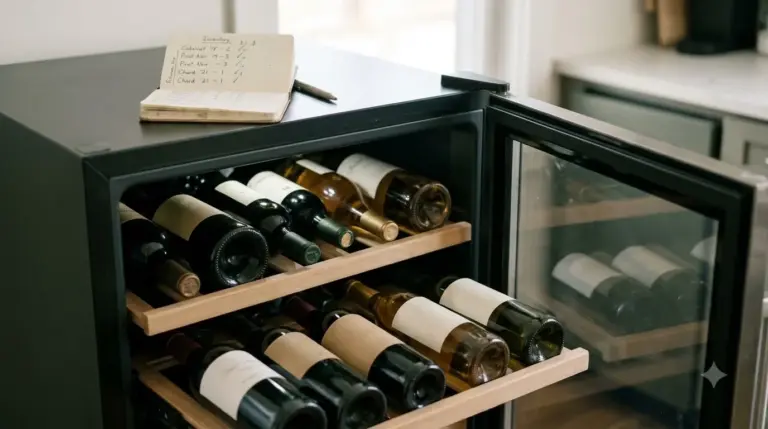
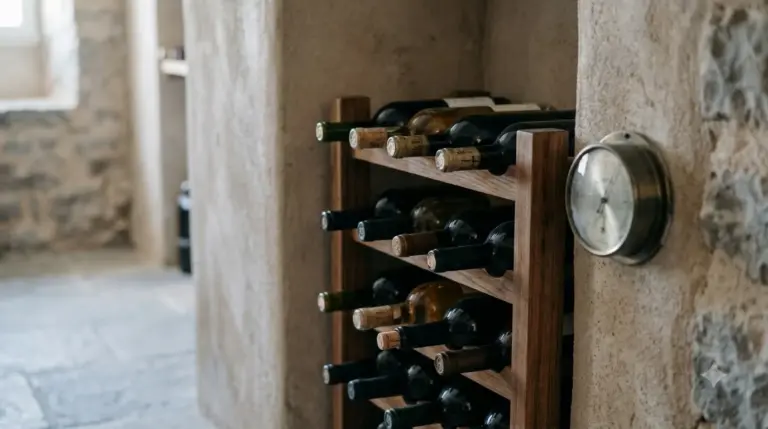
Keep wine away from direct sunlight, strong temperature fluctuations, and heat sources. A relatively cool storage area near 55 F is a useful target for maintaining consistent conditions. Avoid storing bottles beside ovens, radiators, or sunny windows.
For bottles with natural cork closures that will be stored for longer periods, placing them on their sides helps keep the cork in contact with the wine. Bottles intended for near-term consumption can be kept in a cool, stable cupboard. Everyday wines such as Main & Vine generally make more sense as bottles to enjoy while young rather than as long-term cellar purchases.
Use the Appropriate Serving Temperature
Serving temperature affects how fruit, acidity, alcohol, and tannin are perceived. A full-bodied red served too warm can seem heavy, while a white wine served excessively cold may lose some of its aromatic character.
- Cabernet Sauvignon and fuller red wines: approximately 60 to 65 F.
- Merlot and lighter reds: approximately 55 to 60 F.
- Chardonnay and fuller whites: approximately 50 to 55 F.
- Pinot Grigio: approximately 45 to 50 F.
- White Zinfandel: approximately 45 to 50 F.
- Moscato and other sweet whites: approximately 43 to 50 F.
Refrigeration can help bring a bottle to the appropriate temperature. If a red becomes too cold, allow it to warm slightly before pouring. If a white becomes too warm, return it to the refrigerator briefly rather than serving it at room temperature.
Preserve Opened Wine
After opening a bottle, reseal it and refrigerate it. Most opened still wines remain enjoyable for approximately three to five days when properly stored. The exact period depends on the wine, oxygen exposure, temperature, and individual preferences.
Use a suitable stopper to reduce contact with air. Pouring smaller glasses can also limit the amount of wine exposed during service. If the wine develops noticeably stale aromas or loses its fresh fruit character, its best drinking period may have passed.
Plan Servings Before Opening a Bottle
A 750 ml bottle provides approximately five 5 oz servings. A 1.5 L bottle provides approximately ten servings at the same pour size. These estimates help shoppers choose a format that suits the number of guests and the length of the occasion.
For a meal involving four people, one 750 ml bottle provides a little more than one standard glass per person. For a longer gathering, a larger format may be more convenient. Planning servings ahead of time helps avoid opening unnecessary bottles and leaving excess wine exposed to air.
Remember that bottle format and price should be considered together. A larger bottle may have a lower equivalent cost, but a smaller bottle can be more practical when the wine will not be consumed quickly. Convenience is part of value, especially for casual wine purchases.
Frequently Asked Questions
Is Beringer Main & Vine considered an everyday wine?
Yes. The collection is positioned around accessible, familiar wine styles rather than specialized collectible bottlings. Its Cabernet Sauvignon, Merlot, Chardonnay, and Pinot Grigio selections make it suitable for casual meals and informal occasions.
Is Beringer Main & Vine Cabernet Sauvignon dry or sweet?
The Cabernet Sauvignon is generally presented as a dry red wine, despite descriptions that mention sweet vanilla and ripe fruit. Those flavor descriptions do not necessarily mean the wine contains substantial residual sugar. Its fruit-forward character can make it seem softer than a particularly austere Cabernet Sauvignon.
Can Beringer Main & Vine bottles be used for cooking?
Yes. Dry Cabernet Sauvignon and Merlot can be used in beef stews, tomato-based sauces, and braised dishes. Chardonnay can work in cream sauces and pan sauces for chicken, while Pinot Grigio can be used in lighter seafood preparations. Choose a wine whose flavor profile suits the recipe rather than selecting a bottle based only on its grape name.
Does Main & Vine offer smaller individual servings?
Retail assortments can include formats beyond the conventional 750 ml bottle. A1 Wine & Spirit lists a Main & Vine product in a package containing four 187 ml bottles. Each 187 ml bottle is approximately one quarter of a standard 750 ml bottle, making the format useful for smaller individual portions.
How should shoppers compare Main & Vine wine vintages?
Check whether the retailer identifies a vintage or describes the wine as non-vintage. Everyday wine listings may not consistently display vintage information, and different stores can carry different inventory. For a fair price comparison, match the variety and bottle size first, then compare vintage information whenever it is available.
Beringer Main & Vine is a practical collection for shoppers who want familiar California wine varieties at accessible everyday prices. Comparing the same variety and bottle size across retailers is the clearest way to assess value, while understanding the grape styles helps ensure the bottle suits the occasion. Start with your preferred wine, confirm local availability, and calculate the cost per 750 ml before making your purchase.
More in Wine Brands
 Is Alamos Wine Good? How to Choose the Right BottleUpdated Nov 21, 2026
 Hampton Water Wine Price: Understand Bottle Costs and ValueUpdated Nov 21, 2026
 Hess Select Wine Price: Compare Bottles and Find Your Best ValueUpdated Nov 21, 2026
 Grahams Port Price: Compare Bottles and Choose the Right PortUpdated Nov 21, 2026
 Grahams Port Review: Find the Right Style for Your TasteUpdated Nov 21, 2026
 Goldeneye Wine Review: Explore Its Pinot Noir Styles and QualityUpdated Nov 21, 2026