

We may earn a commission when you buy through links on this page, at no extra cost to you. Learn more.
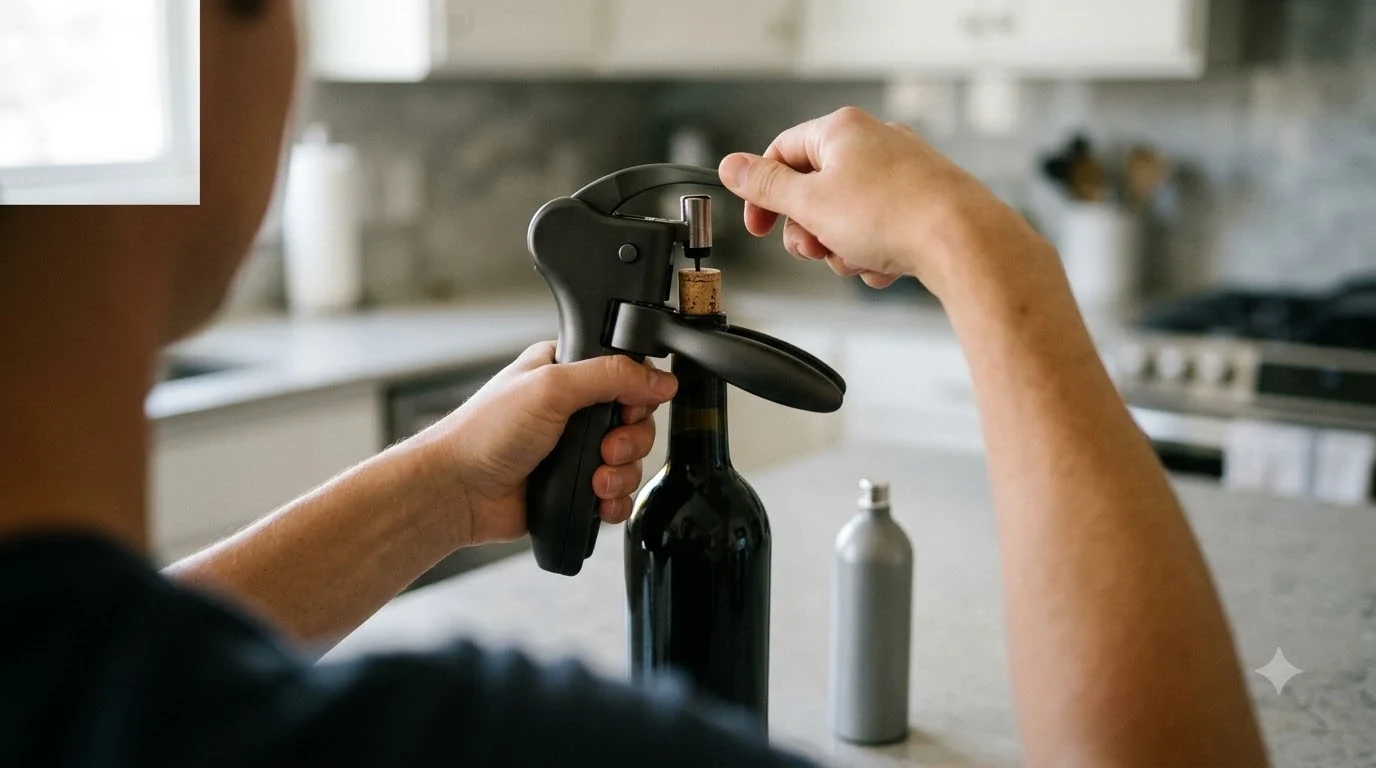
The Waring wine preserver is a rechargeable vacuum-sealing accessory designed to remove air from opened wine bottles and help slow oxidation between servings. The Waring Pro WP55 is a standalone cordless preserver, while the WC400 Professional Wine Center combines a preserver with an electric corkscrew. Both offer convenient bottle sealing, but buyers should consider battery condition, replacement-part availability, and the importance of storing sealed bottles upright before purchasing an older unit.
The Waring name appears on several wine accessories, so identifying the exact model is important before making a buying decision. The WP55 is particularly relevant to shoppers seeking a dedicated cordless vacuum preserver, whereas the WC400 is an integrated countertop system with additional opening accessories. Their basic purpose is similar: remove some air from an opened bottle, close it with a fitted stopper, and make it easier to enjoy the remaining wine later. Understanding the operating process, included components, and limitations helps determine whether either Waring appliance fits a home wine routine.
Specs and Key Features of the Waring Wine Preserver
The Waring wine preserver range centers on rechargeable operation, fitted stoppers, and a vacuum mechanism rather than complicated gas cartridges or disposable preservation supplies. The WP55 and WC400 share a similar preservation concept, although their overall packages differ considerably.
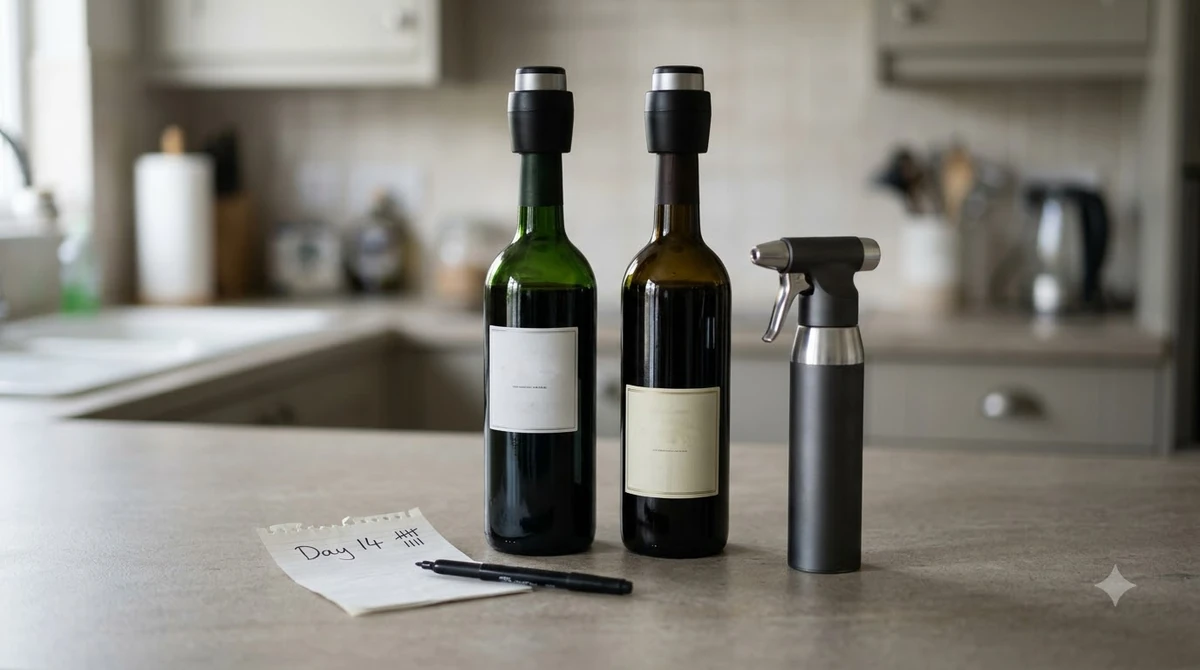
The WP55 is the more straightforward option for someone who already owns a dependable corkscrew and wants a separate appliance for resealing bottles. Its documented package includes a NiMH battery pack, charging base, and two stoppers with movable date indicators. The brushed stainless steel and black finish gives the appliance a traditional countertop appearance. The product manual also identifies a limited five-year motor warranty, although buyers considering a secondhand unit should establish whether any warranty coverage remains transferable and valid.
The WC400 takes a different approach by combining an electric wine opener and preserver in one charging station. Its accessories include a removable foil cutter and two bottle stoppers. This arrangement reduces the need to keep separate opening and preservation equipment around the serving area. However, it also means that a buyer is purchasing a larger collection of electrical components rather than a single-purpose preserver.
| Specification | WP55 | WC400 |
|---|---|---|
| Product type | Cordless wine preserver | Wine opener and preserver center |
| Power | Rechargeable NiMH battery | Rechargeable appliance system |
| Charging base | Included | Included |
| Wine stoppers | 2 | 2 |
| Date indicators | Included | Included |
| Additional accessory | None specified | Removable foil cutter |
| Vacuum cycle | Automatic vacuum sealing | Approximately 20 seconds |
| First-use charging | Follow supplied instructions | At least 12 hours |
| Recharge time | Not specified in the product summary | Approximately 8–10 hours |
| Storage position | Follow stopper instructions | Bottle upright after sealing |
These specifications come from the WP55 product documentation and the WC400 instruction booklet. The approximately 20-second operating cycle applies specifically to the WC400 instructions and should not automatically be treated as a guaranteed cycle time for every Waring preserver. Similarly, the WC400 charging figures should not be transferred to the WP55 without checking its own documentation.
The distinction matters because older Waring products can appear in secondhand listings with incomplete accessories. A photograph showing a charging base does not establish that both stoppers, the power adapter, and all necessary components are present. Ask for photographs of the actual package and confirm that the appliance powers on before committing to a purchase.
For shoppers assembling a complete serving setup, a wine opener and preserver set offers a useful starting point for comparing separate opening and sealing functions. The Waring WC400 is attractive primarily because it combines those tasks in one organized station. The Waring WC400 instruction manual is particularly useful for checking the original charging, sealing, and storage instructions before buying a used appliance.
What Owners Like About the Waring Wine Preserver
The main attractions are cordless convenience, a straightforward operating process, and a countertop charging base that keeps the accessories together. Owner feedback for the related WC400 system also highlights the convenience of combining bottle opening and resealing in one appliance.
One recurring advantage is the reduced effort involved in preserving an unfinished bottle. Instead of manually inserting a traditional cork or operating a hand pump, the user positions the supplied stopper and activates the electric preserver. The motor performs the air-removal process, allowing the appliance to handle the repetitive part of sealing. This is particularly appealing after dinner or during a gathering when several people are serving wine.
Owner comments collected on Lowe’s product listing describe the WC400 as convenient to operate and attractive on a countertop. Some comments specifically praise the charging base for keeping the components organized. Others mention satisfactory performance when opening difficult corks. Although these observations concern the combined WC400 rather than every WP55 unit, they provide useful context about the general Waring wine accessory design.
A convenient arrangement for regular wine drinkers
Having two stoppers is another practical advantage. One can remain in use while the second is available for another opened bottle. The date indicators also provide a simple way to record when a bottle was sealed. This is helpful when several wines are open simultaneously, particularly during a dinner party where guests may switch between a Sauvignon Blanc, Chardonnay, and Pinot Noir.
The date ring does not measure wine quality or determine whether a bottle is still enjoyable. It simply records a date, making it easier to remember which bottle was opened first. That small feature can be useful for households that regularly have several unfinished bottles in the refrigerator.
Less equipment scattered around the counter
The WC400 charging station is especially appealing for people who prefer a coordinated bar setup. Its opener, preserver, foil cutter, and stoppers have designated storage positions. Rather than keeping a manual corkscrew in one drawer and a separate vacuum pump in another, the user can keep the main accessories together.
This arrangement can also complement a dedicated bar cart. A compact serving area benefits from accessories that have a predictable storage location, especially when the cart also holds glassware, cocktail equipment, and wine bottles. The Waring station is an appliance rather than a decorative accessory, so its available footprint and proximity to an electrical outlet deserve consideration.
There is an important distinction between convenience and preservation performance, however. An electric vacuum system can make resealing easier, but it does not eliminate every preservation challenge. The wine still contains oxygen, and its aromas and flavors continue changing after opening. The device should therefore be considered a practical way to slow deterioration, not a method of keeping every wine unchanged indefinitely.
Common Complaints and Important Limitations
The most important concerns involve the age of the equipment, the condition of rechargeable components, and the limited information available about long-term preservation results. The WC400 also has a specific storage requirement that may inconvenience people accustomed to keeping bottles horizontally in a wine refrigerator.
One practical issue is product availability. Lowe’s identifies the WC400 as no longer sold through its website, which means shoppers may encounter discontinued inventory, used appliances, or incomplete sets rather than consistently stocked new products. The WP55 is also an older product line, so replacement components and support should be investigated before purchase rather than assumed to be readily available.
Battery and charging concerns
Rechargeable batteries gradually lose their ability to hold a charge. This is relevant when buying a used WP55 or WC400 because a unit that appears cosmetically clean may have spent years sitting unused. A weak battery can reduce operating convenience or prevent the motor from completing its intended cycle.
Some WC400 owner feedback on Lowe’s describes an appliance that did not work despite being charged according to instructions. Another owner raises a concern about replacing the corkscrew mechanism or battery. These are individual experiences rather than proof that every unit has a reliability problem, but they illustrate why operational checks matter for older electrical accessories.
Replacement parts deserve attention
A vacuum preserver depends on the stopper fitting securely into the bottle opening. A missing, damaged, or incorrectly sized stopper can make the main appliance unusable even when its motor works correctly. Buyers should therefore check that both original stoppers are included and inspect their sealing surfaces for damage or deterioration.
The charging base and adapter deserve the same attention. The WC400 instructions specifically recommend using the supplied charging equipment. An appliance with a missing adapter or damaged charging contacts may be more difficult to restore than a simple manual vacuum pump.
Vacuum preservation has limits
Removing air from the headspace helps reduce oxygen exposure, but it does not reverse oxidation that has already occurred. Nor does vacuum sealing make an opened bottle equivalent to a freshly opened one. Delicate wines can lose some of their aromatic character even when a stopper remains secure.
For ordinary still wines, refrigeration remains a useful preservation measure. A bottle of white wine or rosé should generally be refrigerated after opening, and even red wine benefits from cooler storage once the serving is finished. A vacuum device is most useful as one part of this routine rather than a substitute for temperature control.
Tip: Treat the Waring preserver as a short-term preservation aid. Seal the bottle promptly, record the date, and refrigerate the wine when appropriate. For the WC400, always store the sealed bottle upright to avoid leakage around the stopper.
Who Should Buy the Waring Wine Preserver and Who Should Skip It
The Waring wine preserver is most appropriate for households that regularly leave unfinished still wine and appreciate the convenience of rechargeable appliances. It is less suitable for shoppers who require a readily available replacement system, long-term preservation, or a device that works without electrical charging.
A household that opens a bottle of Cabernet Sauvignon on Friday and finishes the remaining wine over the weekend may appreciate the ability to seal the bottle after each serving. The same applies to someone who pours a glass of Chardonnay with dinner but prefers not to finish the bottle in one sitting. Two included stoppers make the arrangement more practical when multiple bottles are open.
The device also makes sense for people who already organize their wine equipment around a charging station. The WC400 is especially relevant to anyone who wants an electric opener and preserver together. A dedicated station can simplify serving routines, and the foil cutter reduces the need for another separate tool.
Buyers who are likely to appreciate it
- Regular home wine drinkers who frequently have unfinished bottles.
- People who prefer automatic vacuum sealing to manually operating a hand pump.
- Households that appreciate two reusable stoppers with date indicators.
- Owners of an existing Waring system who need a compatible replacement appliance or accessory.
- People with a dedicated countertop or bar area for charging and storing wine equipment.
Buyers who should consider another approach
- People who rarely leave wine unfinished and do not need an electric preservation appliance.
- Buyers who require a new product with readily available manufacturer support.
- Wine collectors seeking a system designed to pour wine over extended periods without removing the cork.
- People who need to store sealed bottles horizontally, particularly when using the WC400.
- Commercial operators who require equipment intended for continuous professional service.
The last point is important because the WC400 instruction booklet identifies the appliance as intended for domestic use rather than commercial or industrial applications. A restaurant serving dozens of bottles during a busy service should not assume that a household charging station is designed for that workload.
Wine enthusiasts who regularly open premium bottles for comparison may also want to consider a preservation approach designed for a different purpose. For example, a system that allows wine to be poured without removing the cork serves a different role from the Waring vacuum preserver. The choice depends on whether the priority is simple resealing or access to a bottle over a much longer period.
Seasonal wine enthusiasts may also use a wine advent calendar to explore different bottles and styles. If that routine leads to several partially consumed bottles, having a reliable preservation method becomes more useful.
How It Compares to Alternative Wine Preservation Options
The Waring wine preserver competes primarily with manual vacuum pumps and other bottle-sealing methods. Its advantage is powered operation, while its disadvantages include charging requirements, dependence on electrical components, and potential difficulties obtaining replacement parts for older models.
A manual vacuum pump offers a simpler alternative. The user inserts a compatible stopper and operates a hand pump until the desired vacuum is reached. There is no rechargeable motor or charging base to maintain. This approach is attractive for occasional wine drinkers who want a straightforward accessory that takes up little storage space.
However, a manual pump requires repeated physical effort and does not offer the same automatic operation. Someone who regularly seals several bottles may prefer the convenience of an electric appliance. The Waring’s rechargeable design is therefore a meaningful advantage for users who value simplicity during everyday serving.
Vacuum stoppers versus inert gas systems
Inert gas preservation products use a different method. Instead of removing air mechanically, they introduce a protective gas into the bottle before resealing it. These systems are particularly interesting to wine drinkers who want to limit additional oxygen exposure without relying on a powered vacuum motor.
Neither method guarantees that wine will remain unchanged. Vacuum systems reduce the amount of air in the bottle, while gas-based systems aim to limit contact between wine and oxygen. Results depend on the wine, the amount remaining, storage temperature, and the effectiveness of the seal.
For everyday drinking, the most important consideration is convenience. A rechargeable Waring system may be preferable when it is already available and functioning properly. A manual pump may be a more sensible purchase when replacement components and long-term appliance maintenance are concerns.
Preservation expectations by wine type
The Waring is intended for resealing opened bottles, but wine styles respond differently to exposure. A young Cabernet Sauvignon, for example, has a different tannin structure from a delicate Pinot Noir. Neither should be expected to retain its original character indefinitely after opening.
As a general household guideline, still wines commonly remain enjoyable for approximately three to five days after opening when refrigerated and properly resealed, although the actual period varies with the wine and storage conditions. Sparkling wine is more challenging because a vacuum preserver is not a substitute for a proper sparkling-wine stopper that retains carbonation.
Fortified wines such as Port can remain enjoyable for several weeks after opening, depending on style and storage. That longer potential life means a specialized electric vacuum device may be less important for someone who primarily drinks fortified wines in small portions.
For broader comparisons of equipment from different manufacturers, the site’s Accessory Brands coverage can help put Waring’s older electrical products into context. The key is to compare the actual preservation method, replacement-part situation, and intended use rather than choosing solely by appearance.
Frequently Asked Questions
Does the Waring wine preserver work with screw-cap bottles?
The WP55 and WC400 instructions describe a fitted stopper inserted into the bottle opening. Screw-cap bottles have different neck and closure arrangements, so compatibility should not be assumed. A standard screw cap may be the simpler option if the original closure fits securely and remains undamaged.
Can the Waring wine preserver be used with sparkling wine?
A standard vacuum preserver is not the preferred tool for preserving sparkling wine because carbonation requires a closure designed to retain pressure. Champagne and sparkling wine can lose their bubbles even when oxidation is limited. A pressure-rated sparkling-wine stopper is a more appropriate accessory for Prosecco, Cava, and Champagne.
Does the date indicator measure how much air remains inside the bottle?
No. The Waring date indicator is a movable ring that records when the bottle was sealed. It does not contain a sensor for oxygen concentration, vacuum pressure, or wine freshness. Its purpose is to help users keep track of opening and resealing dates.
Can replacement batteries be installed by the owner?
The WP55 documentation identifies a NiMH battery pack, but that information does not establish an owner-replacement procedure. The WC400 instructions also state that the appliance and base have no user-serviceable parts. Before buying a used unit with a weak battery, ask an authorized service provider whether repair is available for that exact model.
How can buyers identify an original Waring WP55 or WC400?
Look for the model identification on the appliance, packaging, or original instruction booklet. The WP55 is identified as a cordless wine preserver, while the WC400 is identified as the Professional Wine Center. Comparing the model marking and included components against the corresponding manual helps distinguish the standalone preserver from the combined opener-and-preserver system.
The Waring wine preserver remains an appealing concept for home wine drinkers who want electric vacuum sealing and organized countertop storage. The WP55 is the simpler standalone choice, while the WC400 provides a more complete opening and preservation station. Because these are older products, the smartest purchase depends on verified operating condition, complete accessories, charging performance, and realistic expectations about how long opened wine can remain enjoyable.
More in Wine Accessories
 Vintorio Wine Opener: Two-Step Cork RemovalUpdated Nov 21, 2026
 Zwilling Wine Aerator Review: Aerate, Pour, and Seal With One ToolUpdated Nov 21, 2026
 Zazzol Wine Opener Review: Features, Comfort, and Buying AdviceUpdated Nov 21, 2026
 Secura Wine Opener Not Working: Fix Charging and Stuck-Cork ProblemsUpdated Nov 21, 2026
 Waring Wine Opener Instructions for Correct, Reliable Cork RemovalUpdated Nov 21, 2026
 Zazzol Wine Aerator: Open Up Red Wine FasterUpdated Nov 21, 2026