

We may earn a commission when you buy through links on this page, at no extra cost to you. Learn more.
The Newair wine and beverage center is a practical choice for homeowners who want separate storage for wine bottles and chilled drinks in one under-counter appliance. The NWB080SS00 combines two independently controlled temperature zones, a stated capacity of 20 wine bottles and 60 cans, and a French-door design. Its flexible installation and dedicated compartments make it appealing for home bars, although installation clearances, shelf capacity, operating noise, and warranty coverage deserve attention before buying.
A dedicated beverage refrigerator can make a noticeable difference in a kitchen or entertainment area, particularly when the main refrigerator is already crowded with groceries. Newair’s dual-zone design addresses that problem by giving wine and everyday drinks their own compartments. The NWB080SS00 is a particularly useful model to examine because it combines wine racks, beverage shelves, separate temperature settings, and a cabinet-friendly footprint. Its features make a convincing case for convenience, but its practical value depends on the amount of wine stored, the types of beverages served, and the available installation space.
Specs and Key Features
The Newair NWB080SS00 combines wine storage and beverage refrigeration in a 24-inch French-door cabinet. Its principal strengths are two temperature zones, dedicated wooden wine racks, flexible beverage shelving, and installation options for built-in or freestanding use.
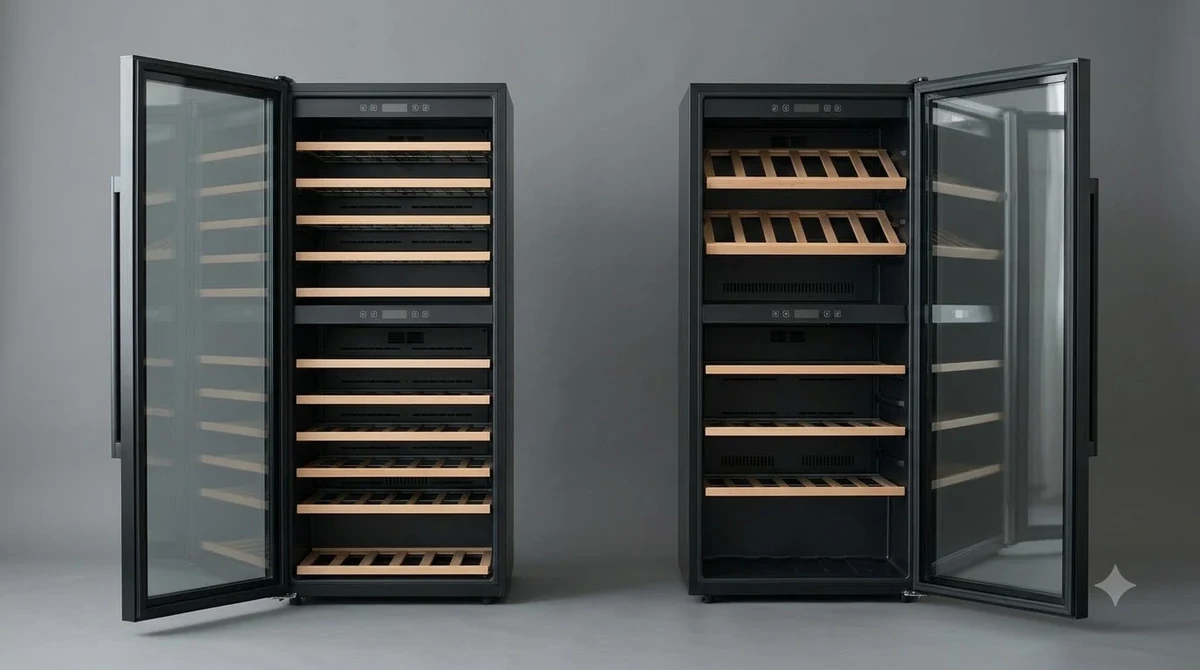
The manufacturer’s documentation lists 4.1 cubic feet of internal capacity, with space for 20 bottles and 60 cans. This arrangement makes the appliance more versatile than a wine-only refrigerator for households that regularly serve beer, sparkling water, soda, and wine. Instead of reserving an entire refrigerator for one type of drink, owners can divide the available space according to their entertaining habits.
| Specification | Newair NWB080SS00 |
|---|---|
| Appliance type | Dual-zone wine and beverage refrigerator |
| Installation | Built-in or freestanding |
| Wine capacity | 20 bottles |
| Beverage capacity | 60 cans |
| Internal capacity | 4.1 cubic feet |
| Dimensions | 23.50″W x 34.30″H x 24.10″D with handles |
| Product weight | 115 pounds |
| Beverage temperature range | 36–72°F according to the owner manual |
| Wine temperature range | 40–72°F according to the owner manual |
| Cooling system | Compressor |
| Power consumption | 100 watts according to the owner manual |
| Electrical requirements | 110–120 volts, 60 Hz |
| Refrigerant | R600a |
| Wine shelving | Six full wooden racks and one smaller wooden rack |
| Beverage shelving | Four beverage racks and one split rack |
| Door security | Lock and key |
The temperature ranges deserve particular attention. The owner manual specifies 36–72°F for the beverage compartment and 40–72°F for the wine compartment. Newair’s online product description lists slightly different lower limits of 37°F and 41°F, respectively. This small discrepancy is a reason to consult the documentation supplied with the exact unit rather than assume that every published specification is identical.
Newair also includes a compressor cooling system, digital temperature readouts, and push-button controls. Compressor refrigeration is a sensible choice for a refrigerator that needs to maintain cold beverage temperatures while operating in a normal indoor kitchen. Wine storage benefits from a separate compartment because the ideal temperature for serving a cold beer is quite different from the temperature appropriate for storing a bottle of Cabernet Sauvignon.
The exterior uses a stainless steel finish, while the wine compartment has wooden shelving. Newair describes the glass as low-emissivity glass filled with argon gas. The combination provides a more furniture-like appearance than a basic beverage refrigerator with exposed wire shelving.
One practical detail is the SplitShelf configuration. Its adjustable arrangement makes room for different beverage heights instead of requiring every can or bottle to fit the same shelf spacing. This is useful for households that alternate between standard soda cans, beer bottles, and taller drink containers.
What Owners Like
Owner feedback highlights the convenience of having wine and canned drinks in one appliance, the appearance of the French-door design, and the ability to maintain separate temperatures. These advantages are particularly relevant for households that entertain regularly or want to free up space in the main kitchen refrigerator.
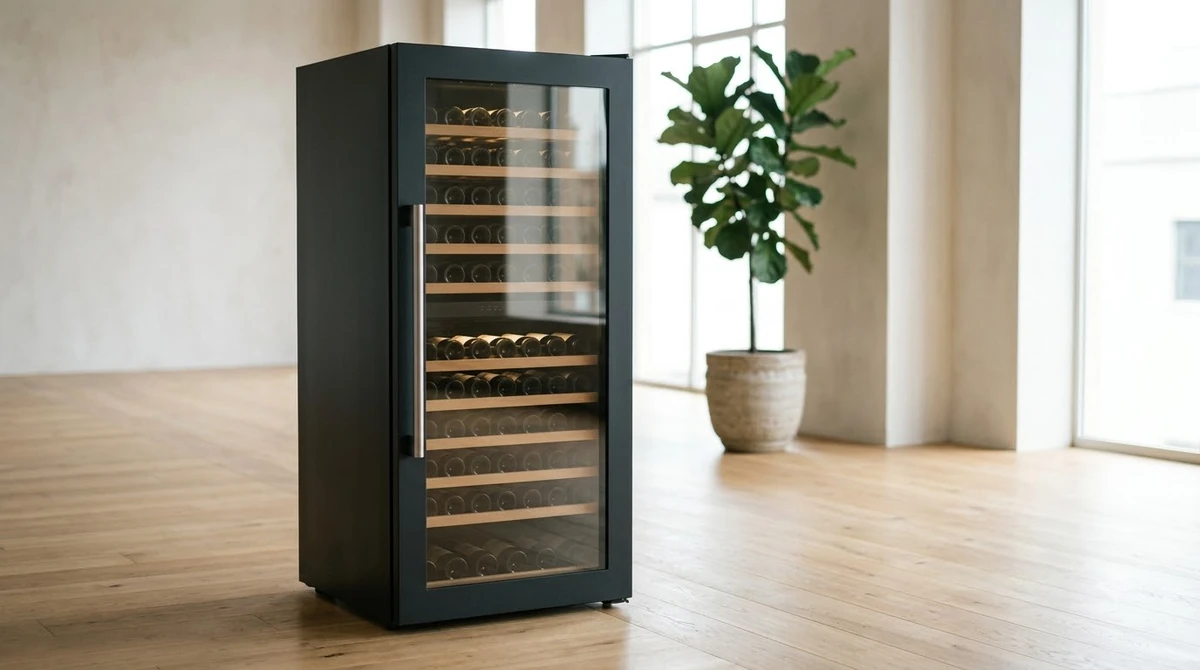
One of the clearest benefits is the division between the two compartments. A household can keep wine in one zone while storing beer, sparkling water, or soft drinks in the other. This removes the need to compromise by setting a single refrigerator temperature that is suitable for one beverage but less appropriate for another.
Best Buy customer feedback includes favorable comments about this arrangement. One purchaser describes the convenience of keeping beer and wine at different temperatures, while another owner appreciates the refrigerator’s under-counter appearance in a renovated kitchen. Other positive comments mention the combination of storage space and the blue interior lighting.
Capacity is another commonly mentioned advantage. A dedicated space for 60 cans and 20 bottles provides useful separation from groceries and everyday food storage. The capacity is appropriate for a home bar that serves a mixture of wines and canned refreshments without requiring a full-size secondary refrigerator.
The wooden wine racks are also an attractive feature. They give the wine compartment a more traditional cellar appearance and provide a dedicated place for standard wine bottles. For a kitchen or dining area where the appliance remains visible, this detail can make the refrigerator look more considered than a basic metal-shelf beverage cooler.
The lock and key add another useful feature for households with children or shared entertainment spaces. The security function is not a substitute for responsible storage, but it offers an additional way to restrict access to the refrigerator.
Another advantage is the French-door layout. Separate doors make it possible to access one compartment without opening the other. That arrangement can reduce unnecessary exposure of the opposite compartment to warmer room air, especially when someone is retrieving several cans while leaving the wine compartment closed.
The appliance also has a door-open alarm. According to the owner manual, the alarm sounds if either door remains open for more than three minutes. This is a practical addition for a refrigerator used frequently during parties or family gatherings, when doors may otherwise be left open accidentally.
There is a useful distinction between feedback categories and individual experiences. Best Buy identifies temperature control, capacity, and noise level among recurring customer discussion topics. Those categories suggest what shoppers should investigate, but they do not establish that every unit performs identically or that every household will have the same experience.
Overall, the positive feedback supports the idea that the NWB080SS00 is best understood as a convenience appliance. It combines storage functions that would otherwise require separate equipment, while maintaining a presentation suitable for a home kitchen or beverage station.
Common Complaints
The main potential drawbacks are operating noise, limited flexibility for unusually large bottles, installation requirements, and the possibility of service complications. These considerations do not make the Newair a poor choice, but they are important for a purchase that may involve cabinetry modifications and a permanent installation.
Noise is one of the more relevant concerns. Some Best Buy owners describe the refrigerator as a little noisy or louder than expected. These comments are individual experiences rather than controlled noise measurements, but they are useful reminders that compressor appliances produce operating sounds.
Newair lists an operating noise figure of 42 decibels for the NWB080SS00. Actual perceived noise depends on the room, surrounding cabinets, floor level, and distance from seating areas. A refrigerator installed in an enclosed kitchen cabinet may sound different from the same appliance placed beside a quiet dining table.
For this reason, installation location matters. A home bar in a separate entertainment room is generally a more forgiving location than an open-plan living area where people expect very little background noise. Proper leveling and adequate ventilation are also important because an improperly positioned appliance can produce additional vibration or sound.
Shelf flexibility is another consideration. Although the SplitShelf arrangement accommodates different drink heights, the stated capacity assumes particular bottle and can dimensions. Large sparkling wine bottles, unusually shaped beer bottles, and oversized beverage containers can reduce the number of items that fit comfortably.
Wine bottle capacity figures also require a little interpretation. A standard 750 ml Bordeaux-style bottle is easier to accommodate than a wide Champagne bottle or a heavily shaped bottle. Collectors who primarily purchase sparkling wine, large-format bottles, or Burgundy bottles should inspect the actual shelf spacing before relying on the advertised capacity.
Installation can be more demanding than the product’s exterior dimensions suggest. The unit weighs approximately 115 pounds, so moving it into position is not a simple one-person task. Its depth with handles is 24.10 inches, which can also create a challenge when matching an existing cabinet opening.
Customer feedback also illustrates why retailer return procedures and manufacturer service policies should be understood before purchase. Some individual Best Buy reviews describe difficulties resolving defective-unit problems. Such accounts do not establish a general failure rate, but they show why it is sensible to retain purchase documentation and inspect the refrigerator promptly after delivery.
There is also a warranty distinction worth understanding. The NWB080SS00 owner manual specifies one year of limited coverage for qualifying defects in materials and workmanship. Newair’s broader website currently advertises a two-year warranty in its general promotional messaging, but that does not automatically replace the specific coverage described in the manual for this model. Confirm the written warranty applicable to the exact model and purchase before relying on longer coverage.
Finally, the refrigerator is intended for indoor home use. The manual cautions against installation in garages, damp locations, and areas exposed to direct sunlight or excessive heat. Buyers looking for an outdoor kitchen refrigerator should consider a product specifically designed for outdoor conditions instead.
Who Should Buy and Who Should Skip
The Newair NWB080SS00 makes the most sense for households that regularly serve wine and other chilled drinks and have a suitable 24-inch installation space. It is less compelling for serious wine collectors, buyers who need outdoor refrigeration, or people who only want a simple place to chill cans.
Who should consider buying it
Home bar owners are among the strongest candidates. The ability to store wine and 60 cans in separate compartments makes the appliance useful for a range of gatherings. A host can keep white wine ready for dinner, beer available for guests, and sparkling water separate from the main refrigerator.
Kitchen renovation projects are another good fit. The 24-inch format and built-in installation design can suit a dedicated beverage station. Its stainless steel appearance and French doors also provide a more finished presentation than a small countertop beverage refrigerator.
Mixed-drink households can benefit from the separate temperature settings. For example, one compartment can be maintained around 55°F for wine storage while the other is set substantially colder for beer and soda. The exact temperature selection should reflect the intended use rather than simply choosing the coldest available setting.
Occasional wine drinkers may also appreciate the arrangement. Someone who keeps a modest selection of Sauvignon Blanc, Chardonnay, Pinot Noir, and Cabernet Sauvignon alongside everyday canned drinks does not necessarily need a large dedicated wine cellar. A dual-purpose appliance can provide sufficient storage for a regular household collection.
Who should skip it
Serious wine collectors should think carefully before choosing this design as their principal cellar. The 20-bottle capacity is modest, and the refrigerator is primarily intended to combine wine storage with beverage cooling. Someone building a collection of valuable wines for extended aging may prefer a dedicated wine refrigerator with more bottle capacity and a storage-focused configuration.
Buyers who primarily store wine may be paying for beverage storage they do not need. A single-zone wine cooler can offer more bottle capacity in a similar amount of floor space. The decision depends on whether the second compartment will receive regular use.
People with unusually quiet living spaces should also be cautious. Although the product has a modern design, it uses compressor refrigeration, and some owners report audible operating noise. An installation near a bedroom, quiet reading area, or frequently used dining table may be less suitable.
Outdoor kitchen owners should look elsewhere. The NWB080SS00 manual identifies indoor home use as its intended application. An outdoor-rated refrigerator is a more appropriate choice for patios, uncovered entertaining spaces, and outdoor cabinetry.
Buyers with narrow cabinet openings should measure before ordering. A 23.50-inch width, 34.30-inch height, and 24.10-inch depth with handles do not guarantee compatibility with every existing cabinet arrangement. Door movement, handle projection, ventilation, and the surrounding installation should all be considered.
Tip: Measure the complete opening and the route from the delivery entrance to the final installation position. The refrigerator weighs 115 pounds, and the manual specifies ventilation clearances that should be included in the planning rather than treated as optional spare space.
How It Compares to Alternatives
The Newair NWB080SS00 occupies a middle ground between a dedicated wine refrigerator and a conventional beverage cooler. Its appeal comes from combining two storage functions rather than maximizing the capacity of either one individually.
A dedicated wine refrigerator is the more appropriate choice for someone who primarily stores bottles. Wine coolers are available in single-zone and dual-zone configurations, and larger units can accommodate substantially more bottles than a compact combination refrigerator. Wine Enthusiast explains that a single-zone unit can be suitable for storing different wine styles at one consistent temperature, while dual-zone designs are useful when separate storage and serving temperatures are required. Its wine storage temperature guide provides additional context for choosing a suitable setting.
The advantage of a single-zone wine refrigerator is straightforward. Every shelf is available for wine, so the appliance does not sacrifice space for cans or other drinks. It can also be easier to maintain a consistent cellar temperature across the collection.
For longer-term storage, Wine Enthusiast recommends approximately 53–57°F. That range is compatible with the wine compartment’s available settings, although the actual suitability of a refrigerator for aging valuable bottles depends on temperature stability, vibration, light exposure, and other storage conditions.
A conventional beverage refrigerator offers a different set of advantages. It is generally a better fit for households that mostly drink beer, soda, sparkling water, and other canned refreshments. Instead of dividing the available space between bottles and cans, the entire cabinet can be configured for drinks that need colder serving temperatures.
The Newair combination model has an advantage over a single-purpose beverage refrigerator because it preserves a dedicated wine section. It also avoids the need to place wine bottles alongside drinks stored at substantially colder temperatures.
Newair’s own product range includes several configurations that demonstrate the differences. Its 15-inch dual-zone NWB057BSD0 is designed for a narrower installation, with a stated capacity of 13 wine bottles and 48 cans. The 24-inch AWB-360DB is another dual-zone option, with manufacturer-listed capacity for 18 bottles and 58 cans. These products illustrate how cabinet width, storage arrangement, and compartment design affect the purchasing decision.
The broader Newair range also includes the 24-inch FlipShelf NWB180SS00, which offers a different approach by using adjustable shelves to accommodate either wine bottles or canned beverages. Its manufacturer-listed capacity is up to 54 wine bottles or 162 cans, rather than the separate simultaneous wine-and-can storage arrangement of the NWB080SS00.
That distinction matters. A refrigerator that advertises a large can capacity or bottle capacity may not be designed to hold both maximum quantities at the same time. Shoppers should distinguish between interchangeable capacity figures and actual divided storage capacity.
The compressor design is another comparison point. Wine Enthusiast explains that compressor coolers can reach colder temperatures in warmer environments than thermoelectric alternatives. Thermoelectric models may appeal to buyers who prioritize quieter operation, but their cooling performance is more sensitive to ambient conditions.
For households that need both wine storage and very cold beverages, the Newair combination design offers a practical balance. For someone whose primary concern is preserving a large wine collection, a dedicated cellar remains the more focused purchase. For someone who mainly wants cold cans, a beverage-only refrigerator is likely to provide a more useful allocation of storage space.
Installation, Temperature Settings, and Long-Term Care
Correct installation is important for both cooling performance and the appliance’s working life. The Newair manual provides specific instructions for allowing the refrigerant to settle, positioning the cabinet, maintaining ventilation, and loading the shelves.
Begin by keeping the refrigerator upright during transportation. After unpacking, Newair recommends leaving the unit standing for 24 hours before connecting it to electricity. This allows the refrigerant to settle following movement. Once connected, allow the refrigerator to run for at least 30 minutes before loading drinks, without changing the settings during that initial period.
Installation location should be considered carefully. The manual recommends an indoor environment above 60°F and below 90°F. Direct sunlight, high heat, excessive humidity, and locations with poor ventilation can interfere with performance.
Built-in installation requires particular attention to airflow. Newair specifies a minimum 2-inch clearance behind the refrigerator and a minimum quarter-inch space at the top and each side for the built-in arrangement described in the manual. The front ventilation grille must remain unobstructed. Freestanding installation requires additional clearance, including 3/4 inch at the sides, 4 inches at the top, and 2 inches at the rear.
Once the refrigerator is running, set the wine compartment according to how the bottles will be used. A setting around 55°F is a sensible starting point for general wine storage. Wine Enthusiast recommends 53–57°F for longer-term storage and 50–59°F for shorter-term storage.
The beverage compartment can be set colder. Beer and soft drinks generally benefit from colder serving temperatures than wine storage does. A setting around 37–40°F is a practical starting point for many canned refreshments, provided it remains within the refrigerator’s specified operating range.
It is important to distinguish wine storage temperatures from wine serving temperatures. A refrigerator set to approximately 55°F can store a mixed collection, but it will not necessarily bring every bottle to its ideal drinking temperature. For example, sparkling wine is generally served at 40–50°F, while light-bodied reds are better served around 55–60°F and fuller-bodied reds around 60–65°F.
A bottle of Sauvignon Blanc may need additional chilling before dinner, while a Cabernet Sauvignon stored around 55°F may need a short period outside the refrigerator before serving. The same applies to Chardonnay, Pinot Noir, and other wines that benefit from serving temperatures different from their preferred storage temperature. For a simple entertaining option, the Aperol spritz recipe is a useful example of a chilled drink that can be prepared alongside wine service.
For routine cleaning, disconnect the power before removing shelves or cleaning the interior. Newair recommends warm water and a neutral detergent for the cabinet’s interior and exterior. Dry the surfaces thoroughly before reconnecting the refrigerator, and avoid abrasive cleaners that could damage the finish.
Wine shelves also require careful handling. The manufacturer advises pulling out only one shelf at a time. Bottles should be distributed evenly rather than concentrated in one location, and they should not touch the rear of the cabinet. These small details help prevent damage and maintain adequate airflow.
Overfilling should also be avoided. Although removing shelves can create more room for larger containers, the manual recommends no more than three rows of stacked bottles per shelf. Buyers should not assume that the maximum advertised capacity is appropriate for every bottle shape.
Another important consideration is the environment around the refrigerator. Wine benefits from consistent temperatures and protection from direct sunlight. Vibration and frequent temperature changes are undesirable for bottles intended for longer storage. The appliance should therefore be positioned away from direct heat sources and locations with significant temperature fluctuations.
The door-open alarm provides an additional reminder during everyday use. If a door remains open for more than three minutes, the alarm sounds. Checking that the doors are fully closed after retrieving drinks helps prevent unnecessary warm-air exposure and temperature fluctuations.
Finally, keep the original receipt and model information. Newair recommends registering the appliance and retaining purchase documentation for service inquiries. The NWB080SS00 manual specifies one year of limited warranty coverage for qualifying manufacturing defects, with exclusions and transportation responsibilities that buyers should understand before installation. If the refrigerator will be part of a larger entertaining area, pairing its drinks selection with a chicken Marsala recipe can help plan the food and wine service around the available storage.
Frequently Asked Questions
Does the Newair NWB080SS00 have an automatic defrost function?
The NWB080SS00 owner manual provides instructions for manually removing accumulated frost rather than establishing an automatic defrost feature for this model. If frost develops, disconnect the appliance and allow the ice to thaw before cleaning and restarting it. Avoid using sharp metal tools that could damage internal surfaces or refrigeration components.
Can the Newair wine and beverage center store Champagne bottles?
Champagne and other sparkling wine bottles can be wider than standard Bordeaux-style bottles. The actual fit depends on the bottle’s shape and the available shelf spacing. Owners who regularly store Champagne, Prosecco, or large-format sparkling bottles should verify the interior measurements before purchasing rather than relying exclusively on the stated bottle capacity.
Does the Newair refrigerator have an alarm if a door is left open?
Yes. The NWB080SS00 manual describes a door-open alarm that activates after a door remains open for more than three minutes. This is particularly useful during gatherings when several people may be accessing the refrigerator. The alarm is a reminder to close the door, not a substitute for checking that the seal is properly positioned.
Can the refrigerator be placed next to a dishwasher or oven?
Newair advises keeping the appliance away from heat sources and direct sunlight. A dishwasher or oven can increase the surrounding temperature, potentially making refrigeration more demanding. Allow sufficient separation and ventilation, and avoid positioning the unit where hot appliance exhaust regularly reaches its cabinet.
Does the Newair wine and beverage center require special electrical wiring?
The NWB080SS00 manual specifies a standard 110–120V electrical supply, a 60Hz frequency, and a listed current of 0.9 amps. The manufacturer also identifies a 100-watt power consumption figure. Installation should follow applicable local electrical requirements, and the supply should be suitable for the appliance rather than relying on an unsuitable extension arrangement.
The Newair wine and beverage center is a useful option for homeowners who want dedicated wine storage alongside a supply of chilled drinks without installing two separate appliances. The NWB080SS00 offers a practical combination of dual-zone controls, flexible shelving, and under-counter installation, although its modest wine capacity, compressor noise, and installation requirements deserve consideration. For a mixed-use home bar, it is a compelling design; for a serious wine collection or an outdoor entertaining area, a more specialized refrigerator is likely to be the better investment.
More in Model Reviews
 Magic Chef 44 Bottle Wine Cooler Review for Flexible StorageUpdated Nov 21, 2026
 Whynter 164 Bottle Wine Cooler Review: Capacity, Features, and FitUpdated Nov 21, 2026
 Insignia NS WC16BK6 Review: Compact 16-Bottle Wine StorageUpdated Nov 21, 2026
 Wine Enthusiast Electric Blue Omega Review: Opening, Pouring, and Preserving Made EasierUpdated Nov 21, 2026
 Koolatron 20 Bottle Wine Cooler Review: Features, Fit, and PerformanceUpdated Nov 21, 2026
 NewAir AWC 330E Review for Home Wine StorageUpdated Nov 21, 2026