

We may earn a commission when you buy through links on this page, at no extra cost to you. Learn more.
The ideal wine storage temperature is about 55°F (13°C), held steady. Wine Folly’s storage guide gives a 55 to 59°F (12 to 15°C) range, and Wikipedia’s cellar article names 13°C (55°F) as ideal for both short-term storage and long-term aging. The range that matters most is consistency: a bottle can handle a cool cellar, but repeated swings in temperature do more harm than a few degrees of difference.
Wine storage temperature is one of the most misunderstood parts of keeping a collection. Many people assume the cooler the better, while others keep bottles on a kitchen shelf where the temperature rises and falls every day. This guide explains the range that suits most bottles, why stability matters more than a precise number, how humidity fits in, and what to do when you do not have a cellar.
The ideal storage range for most wine
For most bottles, the target is a cool, steady space around 55°F (13°C). Wine Folly’s storage guide sets a range of 55 to 59°F (12 to 15°C), which is a practical window for a home cellar. Wine Folly’s pinot noir guide also suggests serving that style slightly cooler than room temperature, at 55 to 60°F (12 to 15°C), which shows how close storage and serving temperatures can be for lighter reds.
Wikipedia’s wine cellar article adds a wider frame. It says wine can be stored between 7 and 18°C (45 to 64°F) as long as the variations are gradual, and it names 13°C (55°F) as the ideal for both short-term storage and long-term aging. Wines age normally between about 10 and 14°C (50 to 57°F). Those ranges are broad on purpose, because a bottle stored at the low or high end of a stable range will age more predictably than one moved between extremes.
Why temperature swings matter more than the exact number
Wine is sensitive to change. Temperature swings cause the liquid and the air in the bottle to expand and contract, and that movement can push air past the cork. The cellar article notes that swings of 14 degrees or more can make wine breathe through the cork, which speeds aging. A steady 60°F (16°C) is usually better for a bottle than a space that climbs to 80°F (27°C) during the day and drops at night.
Heat is the bigger threat. Wine Folly points out that a storage area should not exceed about 80°F (26.6°C), and that wine kept at that level can keep for roughly a year before it starts to decline. A study cited in the same guide found that wines stored at room temperature lost antioxidants and color about four times faster than wines kept in a cellar. That is a strong reason to keep bottles away from windows, appliances, and the top of a refrigerator.
Storage temperature for red and white wine
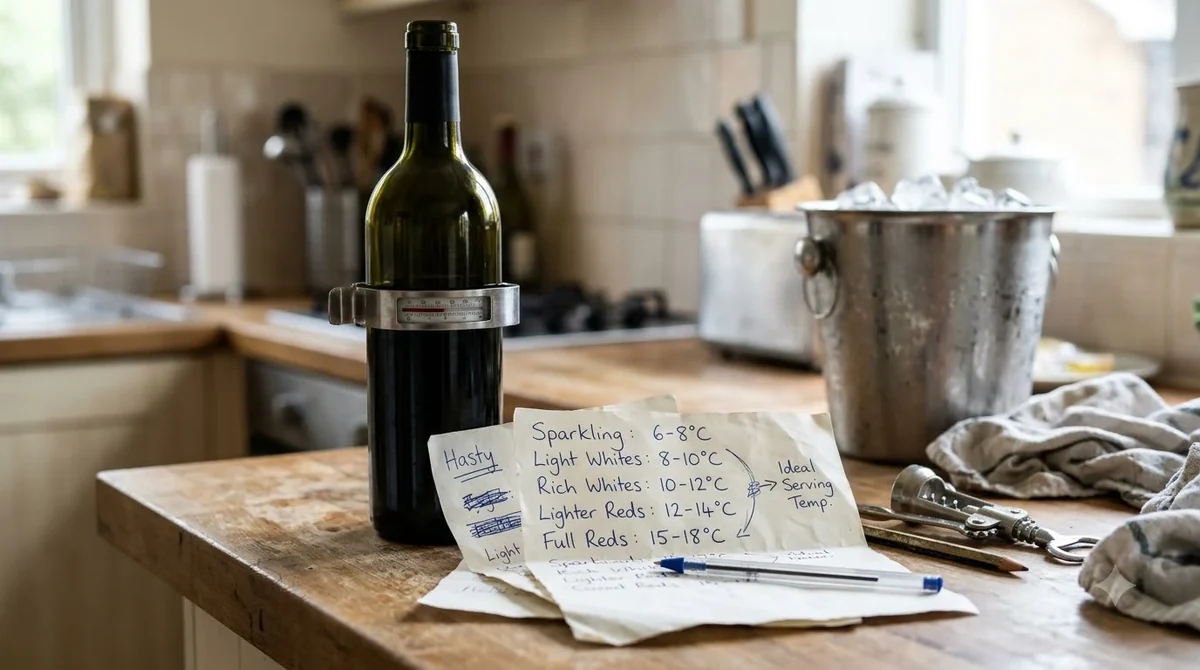
Red and white wines are usually stored at the same cellar temperature, because the aim is to slow aging rather than to serve the bottle. Serving temperature is different. Lighter reds like pinot noir taste better when they are served slightly cool, while full-bodied reds such as cabernet sauvignon are typically served a little warmer. Whites, including chardonnay, are served cooler than reds, which is why a bottle may come out of the cellar and spend time in the refrigerator before dinner.
The practical rule is simple. Store every bottle in the same stable space, then adjust the temperature at serving time. Taking a bottle from a cellar to the refrigerator for an hour or two is a normal step and does not harm the wine.
| Condition | Good range | Problem sign |
|---|---|---|
| Storage temperature | 55 to 59°F (12 to 15°C) | Above 80°F (26.6°C) for long periods |
| Temperature swings | Gradual changes only | Swings of 14 degrees or more |
| Humidity | About 55 to 75% | Very dry air that can shrink corks |
| Light and vibration | Dark, still space | Sunlight through windows, near motors |
Tip: Keep bottles lying on their sides, which keeps corks moist. Store screw-cap bottles any way you like, since the closure does not depend on moisture.
Humidity and the cork
Humidity is debated among collectors, but the common guidance is a relative humidity of roughly 55 to 75%. Wine Folly lists that range for storage. The cellar article covers the other side of the argument, noting that some experts believe the humidity inside a sealed bottle stays high regardless of the surrounding air. Low humidity matters mostly for natural corks, which can dry out and shrink over time. In very dry climates, a small humidifier or a tray of water can help, while most homes need no special equipment.
Storing wine without a cellar
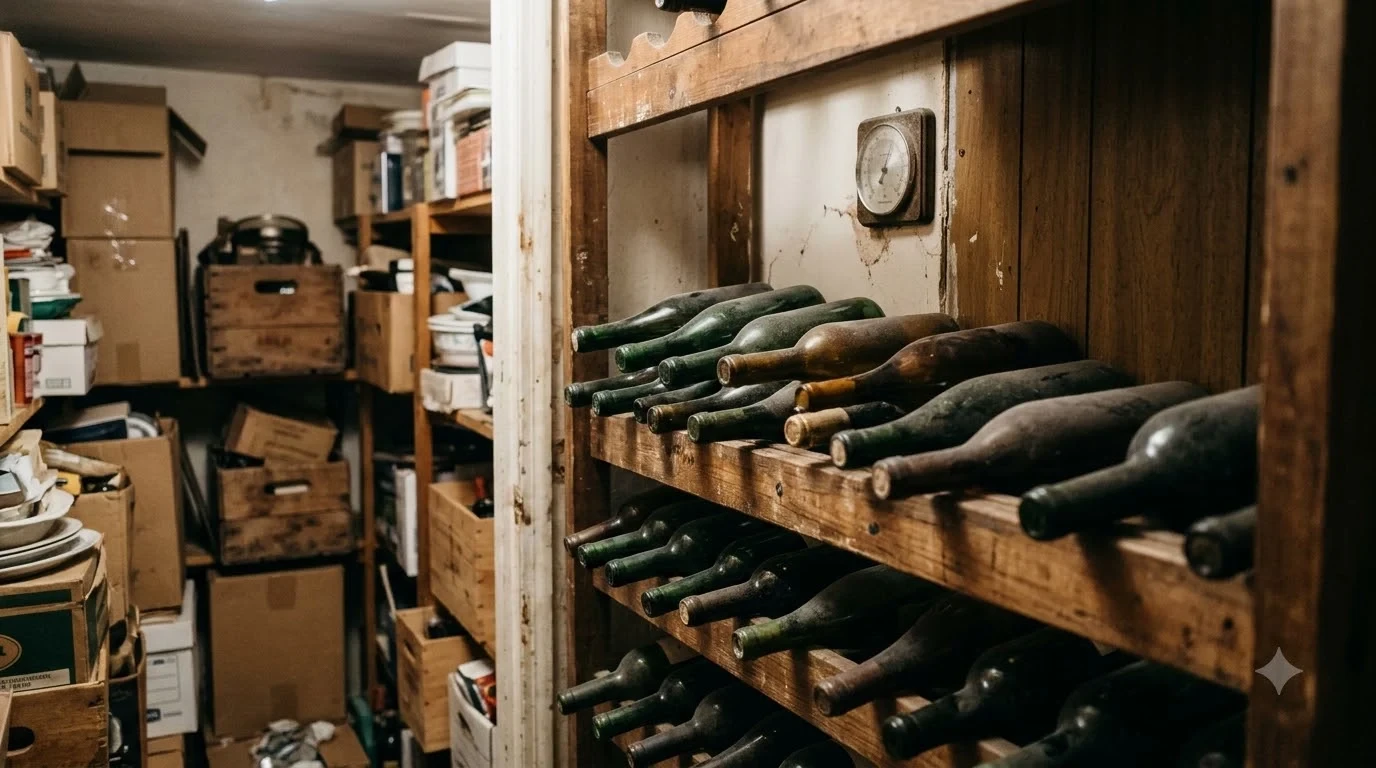
Most people do not have a cellar, and the good news is that a cool, dark room with a stable temperature works well for a typical collection. Look for a spot on an interior wall, away from the kitchen and laundry, where the temperature stays steady across the seasons. A closet, a basement corner or a dedicated cabinet can all work if they stay within the cool range.
Placement inside a room matters as much as the room itself. A bottle stored on a shelf above a radiator, next to a heating vent or against a sunny window will see larger swings than one placed low against an inside wall. Even a small change can make a difference over time. Check the spot at different times of day, using a simple thermometer, and move bottles if the reading climbs above the cool range. A good rule is to store wine where you would be comfortable sitting in a jacket, since that temperature tends to suit the bottles as well.
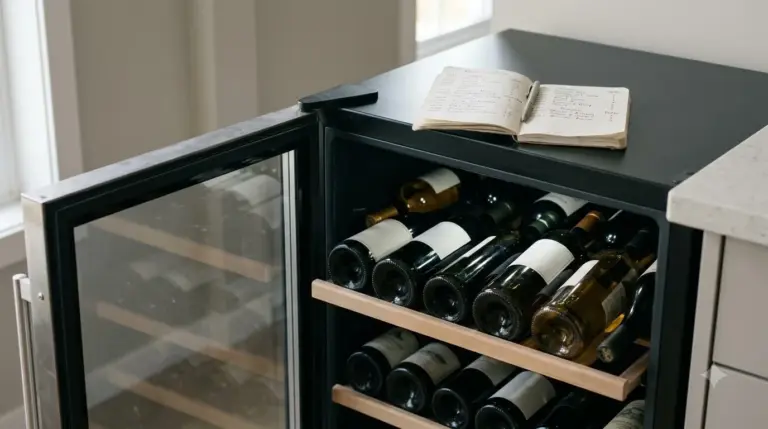
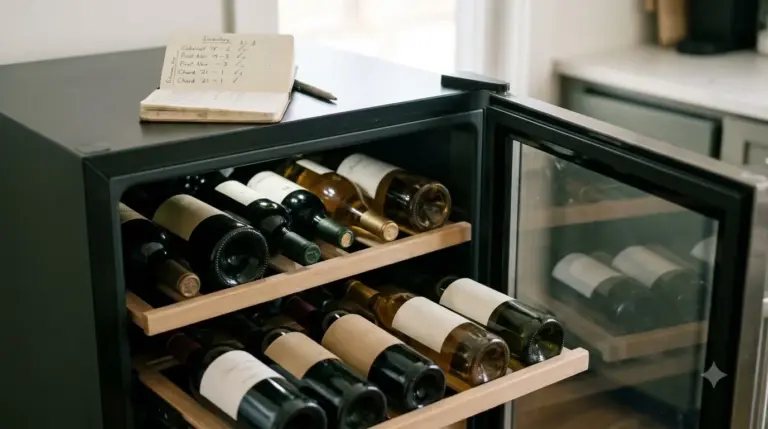
Wine refrigerators are a common alternative. They provide steady temperatures, but cheaper thermoelectric units can fluctuate more than compressor models, so check the specification before you rely on one for long-term aging. A unit that holds a set temperature with small variation is better than one that cools quickly but drifts with the room. For bottles you plan to drink within a few months, a closet with stable conditions is often enough.
Frequently Asked Questions
What is the best temperature to store wine at home?
Most bottles do well at about 55°F (13°C) and stay within a range of roughly 55 to 59°F (12 to 15°C). The most important factor is that the temperature stays stable, since sudden swings do more harm than a slightly warmer or cooler room.
Is it bad to store wine at room temperature?
Room temperature is acceptable for wine you plan to drink soon, but it is not ideal for long-term storage. Warm conditions speed aging and can damage flavor and color. A cool, steady space is the better choice for bottles you plan to keep for years.
Does wine need to be stored on its side?
Storing bottles on their side keeps the cork in contact with the wine, which helps prevent it from drying out. Screw-cap bottles do not depend on the cork and can be stored upright without trouble.
How much humidity does wine need?
A relative humidity of roughly 55 to 75% is the range most often cited for storage. Most homes are within that range, so humidity is usually a concern only in very dry climates where natural corks may shrink.
A steady space around 55°F, out of direct sun and away from heat, covers most of what a home collection needs. If you are planning how long bottles can stay in that space, see the guide on how long wine lasts unopened, or check whether a bottle can handle the freezer in can you freeze wine. The Wine Storage and Serving Temperatures section pulls these basics together in one place.
More in Storage & Fridge Care
 How Long Can You Store Wine in a Wine Fridge? Protect Bottle QualityUpdated Nov 20, 2026
 Can You Store Beer in a Wine Fridge? Keep Both Drinks FreshUpdated Nov 20, 2026
 Is It Worth Repairing a Wine Fridge? Spot the Cheap Fixes Before You ReplaceUpdated Nov 20, 2026
 Wine Fridge Condensation: Identify Causes and Fix Moisture ProblemsUpdated Nov 20, 2026
 Wine Fridge Too Cold: Protect Your Wine and Fix the TemperatureUpdated Nov 20, 2026
 How to Reset Wine Fridge: Restore Cooling and SettingsUpdated Nov 20, 2026