

We may earn a commission when you buy through links on this page, at no extra cost to you. Learn more.
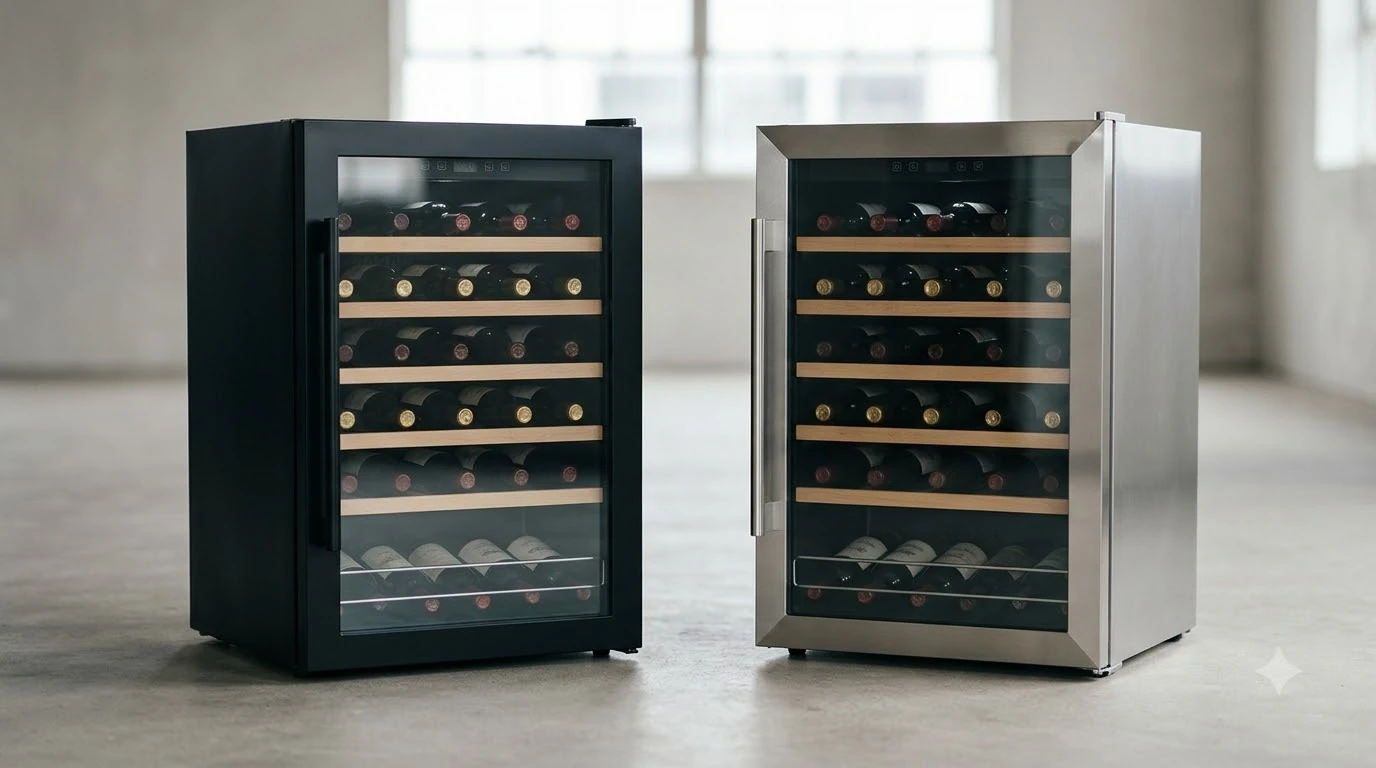
The kitchenaid 24 inch wine fridge is a premium built-in wine cellar designed for homeowners who want dual-zone temperature control, an integrated kitchen appearance, and storage for up to 46 standard Bordeaux-size bottles. The KUWR314KBS is a particularly relevant model, with six full-extension metal-front racks, motion-activated lighting, and a UV-protected glass door. Its attractive design and separate temperature zones are appealing, but rack clearance and the advertised bottle capacity deserve careful consideration before purchasing.
A 24-inch wine refrigerator can be a useful addition to a kitchen, dining room, or home bar, especially when regular refrigerator storage is not suitable for a growing wine collection. KitchenAid positions its undercounter wine cellars as built-in appliances that coordinate with other kitchen equipment rather than as standalone storage cabinets.
This review focuses primarily on the KUWR314KBS, while also discussing the related KUWR314KSS and older KUWR304ESS. These model numbers matter because KitchenAid has offered several 24-inch wine cellar designs with different finishes and rack configurations. Understanding the differences helps prevent confusion when comparing retailer listings, replacement appliances, and installation documents.
Specs and Key Features of the KitchenAid 24-Inch Wine Cellar
The KUWR314KBS combines a 46-bottle advertised capacity with two temperature-controlled compartments and a built-in design. Its strongest selling points are the adjustable temperature settings, full-extension racks, and understated appearance within standard kitchen cabinetry.

KitchenAid specifies five upper racks that accommodate eight Bordeaux-size bottles apiece and a lower rack designed for six Champagne-style bottles. This arrangement explains the advertised 46-bottle capacity. However, the manufacturer also acknowledges that the practical capacity can decrease when a collection includes bottles with unusual heights or widths.
The dual-zone configuration provides separate temperature ranges rather than forcing every bottle to share one setting. The upper compartment adjusts from 42 to 54 degrees Fahrenheit, while the lower compartment adjusts from 42 to 64 degrees Fahrenheit. This gives owners more flexibility when storing different wine styles.
The glass door has UV protection, helping reduce exposure to light that can affect stored wine. KitchenAid also includes a temperature-monitoring system that triggers an alert if the interior rises above 70 degrees Fahrenheit for more than four hours. A door alarm provides another safeguard by alerting owners when the door remains open for five minutes or longer.
Other convenience features include backlit touch controls, automatic defrost, Sabbath Mode, and motion-activated LED lighting. The lighting gradually dims after use, making it easier to inspect the collection without leaving the interior illuminated unnecessarily.
| Specification | KitchenAid KUWR314KBS |
|---|---|
| Appliance category | Undercounter wine cellar |
| Nominal width | 24 inches |
| Actual listed width | 23.875 inches |
| Listed depth | 26.4375 inches |
| Advertised capacity | 46 standard bottles |
| Number of racks | 6 |
| Temperature zones | 2 |
| Upper-zone range | 42–54°F |
| Lower-zone range | 42–64°F |
| Door | UV-protected thermal glass |
| Rack construction | Full-extension metal-front racks |
| Interior lighting | Motion-activated LED |
| Additional features | Temperature monitoring, door alarm, automatic defrost |
These specifications come from KitchenAid’s product information rather than estimates based on photographs or retailer descriptions. The manufacturer provides additional information on its KUWR314KBS wine cellar product page, including the rack arrangement and temperature settings.
One important distinction is that the 24-inch measurement describes the appliance category, not its complete installation requirements. A cabinet opening, door swing, electrical connection, and front ventilation arrangement must all be considered before ordering.
What Owners Like About the Design and Everyday Operation
The most appealing aspects of the KitchenAid wine cellar are its integrated appearance, separate cooling compartments, and convenient access to stored bottles. These features make it particularly attractive for kitchens where appliance appearance matters as much as storage capacity.
The fully flush installation design is one of its main advantages. Hidden hinges allow the door to align with surrounding cabinetry when closed, while the manufacturer specifies an opening angle of 115 degrees. This helps create a coordinated appearance alongside other built-in appliances.
The black stainless steel KUWR314KBS also features KitchenAid’s PrintShield finish, which is intended to resist fingerprints and smudges. For households with frequently used kitchen spaces, this can reduce the amount of visible surface maintenance required compared with finishes that readily show handling marks.
The full-extension SatinGlide racks are another attractive feature. Rather than reaching into the cabinet to retrieve bottles at the back, owners can pull the racks outward to inspect their contents. This is particularly useful when bottles are arranged by grape variety, producer, drinking occasion, or vintage.
The two temperature zones also provide a practical advantage. A household that regularly serves Sauvignon Blanc, Chardonnay, Pinot Noir, and Cabernet Sauvignon can organize its collection according to preferred storage and serving temperatures.
For example, the upper compartment can be set to 48 degrees Fahrenheit for chilled whites, while the lower compartment can be set to 58 degrees Fahrenheit for lighter reds awaiting service. These are serving-oriented examples rather than universal long-term storage requirements, but they illustrate the flexibility of separate compartments.
The motion-activated lighting is useful for evening entertaining. A quick glance at the collection can identify a bottle without requiring the door to remain open while someone searches through several racks.
Owners also benefit from the glass door’s UV protection. Wine should generally be stored away from direct sunlight and excessive heat, so reducing incoming ultraviolet exposure is a sensible feature for a refrigerator installed in a visible kitchen or entertaining area.
KitchenAid’s temperature-monitoring system adds another layer of convenience. An alert for temperatures exceeding 70 degrees Fahrenheit for more than four hours can help owners recognize a potential cooling problem before assuming that the cellar is operating normally.
These advantages make the appliance particularly suitable for households that appreciate organized storage and want their wine refrigerator to look like part of the kitchen rather than a separate utility appliance.
Common Complaints About Bottle Capacity and Rack Clearance
The main concern with the KitchenAid 24-inch wine cellar is not its advertised capacity but how that capacity translates to real collections. Owners have reported difficulties fitting wider bottles, including some Chardonnay, Pinot Noir, Champagne, and sparkling-wine formats.
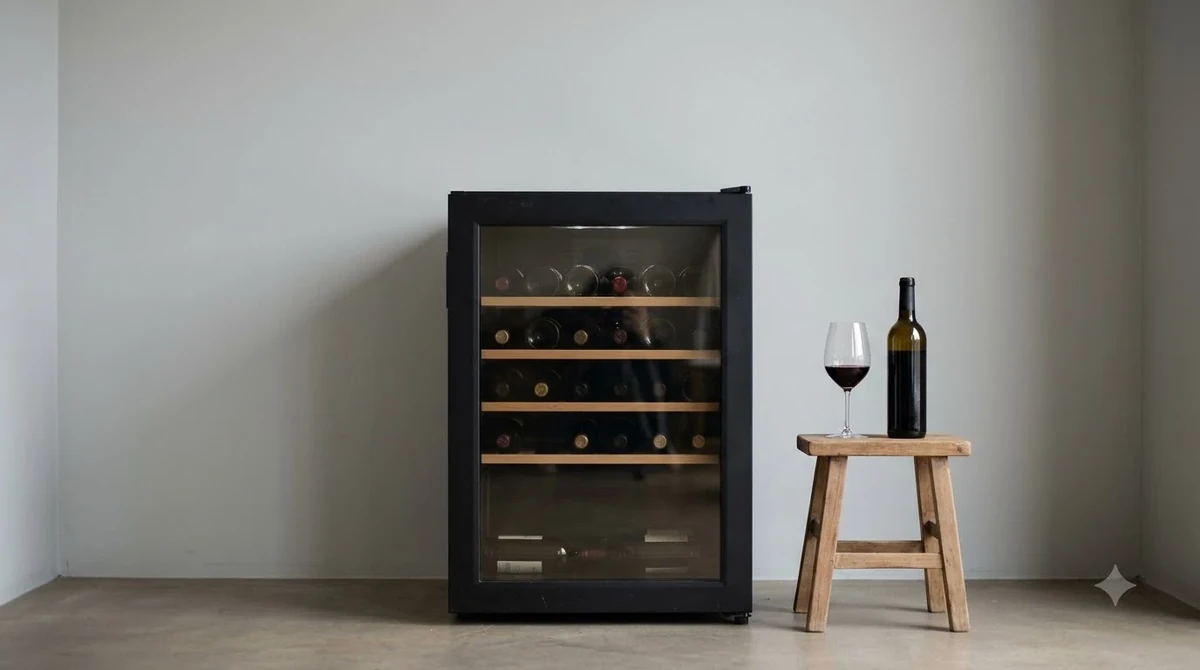
The advertised 46-bottle figure is based on specific bottle shapes and loading arrangements. A standard Bordeaux bottle has a relatively narrow body, allowing multiple bottles to sit together efficiently. Burgundy-style bottles, many Chardonnay bottles, and sparkling-wine bottles can have wider bodies that require additional space.
This difference can affect more than the total number of bottles stored. A bottle that fits into a rack but protrudes into the space above it can interfere with the movement of an adjacent rack. Repeatedly pushing a loaded rack against bottles that do not have enough clearance can make everyday access frustrating.
KitchenAid’s own product description acknowledges that the total capacity may be lower when taller or wider bottles are included. That qualification is important because a collection of 46 Bordeaux bottles is not necessarily representative of a mixed collection containing sparkling wines and larger Burgundy formats.
Owner feedback on the manufacturer’s product page also raises concerns about rack depth and the practical ability to load all eight advertised bottles on certain shelves. One reviewer describes purchasing several units and finding that the expected bottle capacity was difficult to achieve. Another reports that Chardonnay bottles require more clearance than the standard arrangement provides.
Earlier KitchenAid 24-inch cellar models have received similar criticism. A Home Depot owner review of the KUWL304EBS describes difficulties accommodating Champagne, Chardonnay, Pinot Noir, and Chateauneuf-du-Pape bottles. The reviewer also reports concerns about sliding loaded racks and protecting bottle labels from contact with neighboring bottles.
These experiences do not establish that every unit has the same problem or that every bottle size will be difficult to store. They do show why the advertised maximum capacity should not be the only deciding factor.
Why bottle shape matters
Wine bottles are not manufactured to one universal profile. Bordeaux bottles generally have straight sides and relatively narrow shoulders, while Burgundy bottles have more rounded shoulders and wider bodies. Sparkling-wine bottles also tend to be heavier and wider because they are designed to contain pressurized wine.
That variation becomes particularly important when the cellar has closely spaced shelves. A collection dominated by Cabernet Sauvignon, Merlot, and Bordeaux-style blends may fit more comfortably than one containing Champagne, traditional-method sparkling wine, and substantial numbers of Pinot Noir bottles.
Another consideration is bottle height. Some producers use longer bottles, particularly for certain Rieslings and other white wines. A bottle can have an acceptable width but still interfere with the shelf above it.
How to reduce storage frustrations
Before purchasing, measure several bottles from the actual collection rather than relying on the dimensions of one standard 750 ml Bordeaux bottle. Include the widest Champagne bottle, tallest Riesling bottle, and largest Burgundy bottle that will regularly occupy the cellar.
Ask the retailer or appliance specialist whether those bottles can be accommodated on the intended racks without removing shelves or leaving adjacent positions empty. If the answer is uncertain, request clarification before installation.
Tip: Treat 46 bottles as a maximum configuration, not a guaranteed everyday capacity. If your collection contains many Champagne, Pinot Noir, or oversized Chardonnay bottles, prioritize rack clearance over the headline bottle count.
For a wine collection with frequent sparkling-wine purchases, this consideration can determine whether the appliance remains convenient after the first few months of use.
Who Should Buy the KitchenAid Wine Cellar and Who Should Skip It?
The KitchenAid 24-inch wine cellar makes the most sense for homeowners who prioritize integrated cabinetry, dual-zone cooling, and organized storage for predominantly standard-size wine bottles. It is less convincing for buyers who need maximum flexibility with unusual bottle shapes or want the highest possible practical capacity.
Who should consider buying it?
Homeowners planning a built-in kitchen or bar: The flush installation design and hidden hinges make the appliance a natural fit for coordinated cabinetry. Its nominal 24-inch format can work alongside other standard-width undercounter appliances when the opening is designed correctly.
Households that drink both red and white wine: Two independently controlled zones provide more flexibility than a single-temperature wine refrigerator. The upper compartment’s 42–54-degree range and lower compartment’s 42–64-degree range allow different styles to be kept at separate temperatures.
Collectors with predominantly Bordeaux-size bottles: The advertised 46-bottle capacity is based on a recognizable bottle format. Buyers whose collections contain mostly Cabernet Sauvignon, Merlot, and Bordeaux-style wines are more likely to benefit from the intended rack arrangement.
Home entertainers: Motion-activated lighting, full-extension racks, and touch controls make it convenient to retrieve bottles while preparing dinner or serving guests. The integrated appearance can also complement a dedicated entertaining area.
Owners who value coordinated finishes: The KUWR314KBS black stainless steel finish can suit darker kitchen designs, while the related KUWR314KSS offers a stainless steel appearance for different cabinetry and appliance combinations.
Who should skip it?
Collectors with many oversized bottles: If a large portion of the collection consists of Champagne, sparkling wine, wide Burgundy bottles, or specialty formats, the advertised capacity may be misleading for everyday planning.
Buyers who want maximum storage flexibility: The fixed rack arrangement is not ideal for someone who frequently changes bottle sizes or wants to reorganize the interior around different collection types.
People looking for a simple freestanding appliance: This KitchenAid model is intended for undercounter installation. Someone who wants to move a refrigerator between rooms or place it temporarily in a dining area should compare freestanding wine coolers instead.
Budget-conscious buyers: KitchenAid’s integrated appliance design and premium features may be unnecessary for someone whose primary requirement is simply keeping a small number of bottles at a consistent temperature.
Buyers who need immediate availability: Retailer listings for the KUWR314KBS have shown inconsistent availability, including listings marked unavailable or no longer sold. Confirm the exact model’s order status, replacement availability, and service arrangements before planning a kitchen renovation around it.
The decision should therefore reflect the collection, kitchen layout, and intended use rather than the KitchenAid name alone. A wine refrigerator that looks excellent but cannot comfortably accommodate the bottles purchased most often will become inconvenient regardless of its other features.
How It Compares to Other KitchenAid Wine Cellars
KitchenAid has offered several 24-inch wine cellar models, including the KUWR314KSS, KUWR304ESS, and KUWL314KBS. They share an undercounter wine-storage concept, but buyers should compare their exact rack arrangements, finishes, dimensions, and installation documentation before treating them as interchangeable.
The KUWR314KSS is the stainless steel counterpart to the black stainless KUWR314KBS. Both models are associated with the 46-bottle dual-zone configuration and six metal-front racks. The main distinction is the exterior finish, making the choice largely dependent on the other appliances and cabinetry in the room.
The older KUWR304ESS is another 24-inch KitchenAid wine cellar with a stainless steel finish, UV-protected thermal glass door, 46-bottle advertised capacity, two temperature-controlled zones, touch controls, and automatic interior LED lighting. It is a related option for shoppers comparing older KitchenAid listings, although its specifications and installation requirements should be checked against its own documentation.
The KUWL304ESS is also listed in KitchenAid’s owner center as a 24-inch wine cellar with a glass door and metal-front racks. It belongs to an earlier generation, so a buyer considering a used or remaining-stock appliance should verify the model-specific condition, documentation, and parts availability.
One important distinction is that the KUWR314KBS and KUWL314KBS are different model numbers. Retailer listings and search results can display these identifiers close together, creating confusion when buyers compare product photographs or replacement listings. Always confirm the complete model number on the appliance specification sheet.
For someone considering another KitchenAid model, the newer or older product name alone does not establish better storage performance. A different rack material, finish, or control layout does not automatically solve the underlying bottle-clearance question.
It is also sensible to compare KitchenAid with other built-in wine cellar manufacturers if bottle flexibility is the deciding factor. Look for published rack dimensions, the permitted bottle diameter on each shelf, and photographs showing the appliance loaded with different bottle styles.
For additional appliance comparisons and product-specific evaluations, the wine appliance review collection provides a useful starting point for comparing storage designs and features.
Ultimately, the best alternative is the one that accommodates the collection without forcing the owner to remove shelves or sacrifice substantial capacity. Buyers should request the installation guide and full rack specifications for every model under consideration.
Installation, Temperature Settings, and Long-Term Use
Correct installation is essential for a built-in wine cellar because cabinet dimensions, electrical access, and ventilation affect how conveniently the appliance can operate. The KitchenAid 24-inch format requires more planning than simply finding an empty space beneath a countertop.
For the KUWR314KBS, KitchenAid lists an appliance width of 23.875 inches and a depth of 26.4375 inches. These measurements should be considered alongside the actual cabinet opening, door clearance, handle projection, and available electrical connection.
KitchenAid’s installation documentation for earlier KUWR304E and KUWL304E models specifies a minimum opening width of 24 inches, a minimum depth of 24 inches, and an opening height between 34 3/8 and 35 inches. Those dimensions are useful planning references for that model family, but they should not replace the exact installation instructions supplied for the appliance being purchased.
The electrical requirements in the older KitchenAid dimension guide specify a grounded 115-volt, 60-Hz supply with a 15- or 20-amp fused circuit. The manufacturer recommends a dedicated circuit and prohibits using an extension cord. An electrician or qualified installer should confirm that the connection is suitable for the specific model.
Ventilation is another important consideration. KitchenAid advises against blocking the base grille and recommends avoiding installation near an oven, radiator, or other heat source. The older installation documentation also advises against placing the appliance in a location that falls below 55 degrees Fahrenheit.
Before finalizing cabinetry, check whether the door can open without striking an adjacent cabinet, island, or wall. The KUWR314KBS has a specified 115-degree door opening, which should be considered when planning the surrounding layout.
Choosing temperatures for different wines
The dual-zone arrangement is particularly useful for serving wines at appropriate temperatures. The following settings are practical starting points, although individual preferences and wine styles can justify adjustments.
- Sparkling wine: Aim for approximately 40–50 degrees Fahrenheit when preparing bottles for service.
- Light white wines: Sauvignon Blanc and Pinot Grigio are generally enjoyable around 45–50 degrees Fahrenheit.
- Full-bodied whites: Chardonnay can be served around 50–55 degrees Fahrenheit.
- Light reds: Pinot Noir generally benefits from serving temperatures around 55–60 degrees Fahrenheit.
- Full-bodied reds: Cabernet Sauvignon and Syrah are generally served around 60–65 degrees Fahrenheit.
The upper compartment’s maximum setting of 54 degrees Fahrenheit is suitable for many whites and sparkling wines, while the lower compartment’s maximum of 64 degrees Fahrenheit offers additional flexibility for red wines. Neither zone should be mistaken for a dedicated room-temperature storage area.
For long-term storage, a consistent temperature near 55 degrees Fahrenheit is a commonly used target. Owners who plan to age valuable bottles should also pay attention to vibration, light exposure, humidity, and temperature stability rather than focusing exclusively on serving convenience.
Food and wine pairing can also influence which bottles should be readily accessible. A chilled Sauvignon Blanc can complement acidic seafood dishes, while a softer Merlot can work well with chicken dishes and richer sauces. For a dinner featuring chicken Marsala, a medium-bodied red is a useful option to have available.
Routine cleaning and maintenance
Keep the glass door clean with a suitable nonabrasive cleaner and avoid harsh products that could damage exterior finishes. Wipe spills promptly, especially around rack surfaces and the cabinet floor, to prevent sticky residue from accumulating.
Inspect the door seal periodically to ensure it closes properly. A door that does not seal correctly can allow warm air to enter, making it harder for the cooling system to maintain stable temperatures.
Keep the ventilation area unobstructed and avoid placing decorative items directly against the grille. If an alarm indicates an unusual temperature condition, check whether the door was left open, whether the surrounding area is excessively warm, and whether the appliance has adequate ventilation.
When moving or servicing the cellar, follow the model-specific instructions and disconnect power when required. The owner’s manual also provides guidance for cleaning, stocking racks, vacation care, and troubleshooting.
Wine bottles should generally be stored on their sides when using traditional cork closures. Once opened, sparkling wine usually lasts around one to three days in the refrigerator, while still wines generally remain enjoyable for approximately three to five days with appropriate resealing and refrigeration.
Owners who regularly entertain can also keep suitable mixers and ingredients nearby for cocktails. A chilled bottle of Prosecco, for example, can be useful when preparing an Aperol Spritz, although the wine cellar itself is designed primarily for wine storage rather than general beverage refrigeration.
Frequently Asked Questions
These answers address additional purchasing and ownership details that are easy to overlook when comparing KitchenAid wine cellar listings.
Does the KitchenAid KUWR314KBS have a reversible door?
No. Lowe’s specification listing identifies the KUWR314KBS as having a non-reversible door. Its listed configuration also specifies a left-hand door swing, so the surrounding kitchen layout should be planned around that orientation.
Can the KitchenAid wine cellar connect to Wi-Fi or a smart home system?
The KUWR314KBS is not listed as a Wi-Fi-connected or smart-home-compatible appliance in Lowe’s specifications. Its primary controls are located on the appliance itself, so owners should not expect app-based temperature adjustments or voice-assistant integration.
Does the KitchenAid wine fridge have Sabbath Mode?
Yes. KitchenAid lists Sabbath Mode as a feature of the KUWR314KBS, and the mode is identified as Star-K certified. When activated, it disables automatic lighting and alarm tones to accommodate the intended operating requirements.
How much does the KitchenAid wine cellar weigh?
Lowe’s lists the KUWR314KBS at approximately 125 pounds. This is an important consideration when arranging delivery, moving the appliance into a renovation space, and planning its final installation.
Does the KitchenAid wine cellar have a lock?
Lowe’s specifications list the KUWR314KBS as not having a lockable door. Households that require restricted access should account for this limitation when choosing where to install the appliance.
The KitchenAid 24-inch wine cellar is an attractive built-in option with useful dual-zone controls, UV-protected glass, and convenient full-extension racks. Its main weakness is the difference between advertised capacity and the practical space available for wider bottles. Buyers with predominantly standard Bordeaux-size collections may find it a suitable addition, while mixed-format collectors should investigate rack clearance carefully before committing to installation.
More in Model Reviews
 Magic Chef 44 Bottle Wine Cooler Review for Flexible StorageUpdated Nov 21, 2026
 Whynter 164 Bottle Wine Cooler Review: Capacity, Features, and FitUpdated Nov 21, 2026
 Insignia NS WC16BK6 Review: Compact 16-Bottle Wine StorageUpdated Nov 21, 2026
 Wine Enthusiast Electric Blue Omega Review: Opening, Pouring, and Preserving Made EasierUpdated Nov 21, 2026
 Koolatron 20 Bottle Wine Cooler Review: Features, Fit, and PerformanceUpdated Nov 21, 2026
 NewAir AWC 330E Review for Home Wine StorageUpdated Nov 21, 2026