


We may earn a commission when you buy through links on this page, at no extra cost to you. Learn more.
The riunite wine price typically ranges from about $5 to $10 for a standard 750 ml bottle of Riunite Lambrusco in the United States. Larger bottles cost more overall but can offer better value per ounce, while specialty varieties such as Moscato, Rosé and Peach Moscato may have different shelf prices. The final amount depends on the wine style, bottle size, retailer and state.
Riunite is a familiar name for shoppers looking for approachable Italian wine, particularly lightly sparkling red Lambrusco. Its range also includes white, rosé, Moscato and ready-to-serve sangria styles. Understanding the available formats and differences between the wines makes it easier to compare prices accurately rather than choosing a bottle based on its shelf tag alone.
Who This Price Guide Is For
Riunite is worth considering for shoppers who want an accessible Italian wine for casual meals, gatherings and relaxed evenings. Its familiar Lambrusco style is particularly relevant to people who enjoy fruity red wines with a little sparkle rather than heavily tannic, full-bodied reds.

This guide is useful for several types of buyers. First, someone purchasing a single 750 ml bottle can use the typical retail range to decide whether a listing is competitive. Second, someone organizing a party can compare the 1.5 L and 3 L formats to determine how many bottles are needed. Third, shoppers exploring different wine styles can compare Lambrusco with Riunite Moscato, Bianco, Rosato and flavored selections.
Riunite also suits people who are unfamiliar with Italian sparkling reds. Lambrusco comes from Emilia-Romagna, and its appeal is different from that of Champagne or a conventional still red wine. Riunite’s official history traces the cooperative’s beginnings to nine wine producers who joined forces in the 1950s. The company describes its wines as light, refreshing and fruity, making the range easy to understand as an everyday-oriented collection.
However, the lowest displayed price is not automatically the right purchase. A small single-serving bottle may have a higher cost per ounce than a larger bottle, and a sweeter wine may be more appropriate for one occasion than another. The most useful comparison considers the bottle size, wine style, alcohol content and intended serving occasion together.
For a closer look at the main red selection, the Riunite Lambrusco overview provides additional context about the brand’s best-known wine. Shoppers interested in the broader collection can also explore Riunite wine varieties.
Key Factors to Compare Before Buying
The most important price factors are bottle volume, wine style and retailer. Comparing the same 750 ml format across stores provides a more meaningful benchmark than comparing a standard bottle with a 1.5 L or 3 L package.
For a standard bottle, Total Wine displays Riunite Lambrusco at $4.99, while Smart & Final displays a 750 ml bottle at $6.99; these retailer examples support a typical comparison range of approximately $5 to $10 for 750 ml, with prices varying by state and retailer. Riunite’s own online collection lists its classic Lambrusco from $9.99, providing another reference point for the brand’s direct retail offering. Riunite’s official wine collection also helps establish which styles are part of the range.
| Comparison factor | Typical option or figure | Why it matters |
|---|---|---|
| Small bottle | 187 ml | Useful for individual servings and portion control. |
| Standard bottle | 750 ml | The most useful format for comparing everyday retail listings. |
| Large bottle | 1.5 L | Contains twice the volume of a standard bottle. |
| Party format | 3 L | Contains four standard 750 ml bottles’ worth of wine. |
| Standard retail comparison | About $5-$10 per 750 ml | Illustrative US range based on Total Wine, Smart & Final and Riunite listings. |
| Alcohol content | 8% ABV for official Lambrusco Emilia IGT | Useful when comparing different Riunite varieties. |
| Serving size | 5 oz | Provides a consistent basis for estimating servings. |
The figures in the table are useful starting points, not guaranteed nationwide prices. Total Wine and Smart & Final display different prices for the same 750 ml format, while Riunite’s official collection presents its own online starting price. Retail availability, local taxes, shipping arrangements and store policies can all affect the final checkout amount. Prices vary by state and retailer.
Bottle volume is another important consideration. A 750 ml bottle contains approximately five standard 5 oz pours. A 1.5 L bottle contains approximately ten, and a 3 L bottle contains approximately twenty. These figures assume standard pours rather than unusually generous servings.
Wine style should also influence the comparison. Classic Lambrusco is a lightly sparkling red, while Lambrusco Rosé provides a different color and presentation. Moscato is generally a sweeter aromatic wine, and Bianco and Rosato provide alternatives for people who prefer lighter-colored wines.
Tip: Compare the cost per 750 ml equivalent rather than the shelf price alone. A 1.5 L bottle contains twice as much wine as a 750 ml bottle, so its total price should be assessed against twice the standard-bottle volume.
Step-by-Step: How to Find the Right Riunite Bottle
A straightforward buying process prevents confusion between Riunite’s different sizes and wine styles. Start with the occasion, narrow the selection by taste, and then compare equivalent bottle volumes across retailers.
-
Decide how much wine is needed.
For a small dinner with two people, a 750 ml bottle provides approximately five 5 oz servings. For a gathering of eight people, a 1.5 L bottle provides approximately ten standard servings, although the number of bottles needed depends on how many glasses each guest plans to have.
-
Choose the preferred wine color and style.
Start with classic Lambrusco if a fruity, semi-sparkling red is the preference. Consider Lambrusco Rosé for a pink alternative, Moscato for a sweeter aromatic option, or Bianco for a white-wine selection.
-
Compare equivalent bottle sizes.
Look at 750 ml bottles first when comparing different stores. If the preferred wine is available in 1.5 L or 3 L packaging, calculate its equivalent 750 ml cost to see whether the larger format makes financial sense.
-
Check the alcohol content.
The official Riunite Lambrusco Emilia IGT page lists 8% ABV. Alcohol levels can differ among other wines in the collection, so compare the specific product rather than assuming every Riunite variety has identical strength.
-
Match the wine with the meal.
Fruity Lambrusco can accompany pizza, tomato-based pasta, cured meats and savory snacks. Moscato may work better with fruit-based desserts, while a white or rosé selection can suit lighter appetizers and seafood dishes.
-
Compare retailer listings.
Use at least two retailers where possible. Total Wine, Smart & Final and the official Riunite shop provide useful reference listings, but availability and final prices depend on location.
-
Choose the package that fits the occasion.
A 187 ml format can be practical for an individual serving, while a 750 ml bottle suits a smaller meal. Larger formats make more sense when several people are sharing the same wine.
Following these steps also helps prevent a common buying problem: selecting a bottle because its total shelf price looks attractive without considering its volume. A larger bottle can cost more upfront but still provide a lower cost per glass.
Riunite Wine Types and Styles Explained
Riunite’s collection includes several styles, so the best selection depends on sweetness preference, color and the type of occasion. Classic Lambrusco is the recognizable starting point, but the brand’s official collection also lists Moscato, Bianco, Rosato, sangria and flavored wines.
Classic Riunite Lambrusco
Classic Lambrusco is the central choice for shoppers interested in the brand’s familiar Italian red. Riunite describes its Lambrusco Emilia IGT as semi-sparkling, ruby red, soft and harmonious. Total Wine also highlights its fruity aroma and suggests strawberry, lemon and basil as pairing references.
This style is a useful match for informal meals, especially pizza, tomato sauce, salami, grilled sausages and other savory foods. Its light effervescence gives it a different character from a still Cabernet Sauvignon or Merlot. Shoppers who prefer fruit-forward wines may find it more approachable than a highly tannic red.
Riunite Lambrusco Rosé
Riunite Lambrusco Rosé Emilia IGT is listed in the producer’s classic collection. Its pink presentation offers an alternative to the traditional red version, making it an option for summer meals, casual celebrations and appetizer spreads.
Rosé can be especially useful when a group wants something lighter in appearance while retaining a connection to Lambrusco’s lightly sparkling character. Pair it with cured meats, mild cheeses, bruschetta and grilled vegetables. Its actual sweetness and flavor profile should be considered separately from the red selection.
Riunite Moscato and Peach Moscato
Moscato offers a different direction for buyers who prefer aromatic fruit character and noticeable sweetness. Riunite lists both its classic Moscato and Peach Moscato in its official collection. These selections can appeal to people who prefer sweeter wines over the fruit-forward red style.
Moscato is a natural candidate for fruit desserts, pastries and mild cheeses. Peach Moscato can also work as a casual party option when a flavored wine is preferred. The distinction is important because Moscato should not automatically be compared with Lambrusco as though both wines have identical sweetness, carbonation or food-pairing characteristics.
Riunite Bianco and Rosato
Riunite Bianco and Rosato are also included in the producer’s classic collection. They give shoppers alternatives beyond the recognizable red Lambrusco and provide additional options for meals that call for white or pink wines.
Bianco is worth considering with lighter appetizers, poultry and seafood. Rosato can be considered for salads, grilled vegetables and lighter pasta dishes. The precise taste and sweetness can vary by product, so these styles should be treated as separate selections rather than assumed substitutes for classic Lambrusco.
Riunite Sangria and White Sangria
The official collection also includes red Sangria and White Sangria. These are convenient choices for people who want a ready-to-serve fruit-oriented wine drink rather than a traditional bottle of Lambrusco.
Sangria is particularly relevant to informal gatherings, outdoor meals and occasions where the drink is served alongside fruit, snacks and lighter party food. Its flavor profile is different from that of a classic Italian red, so compare it according to the intended occasion rather than judging every selection by the same criteria.
For additional details about the brand’s red selections, see the Riunite red wine overview. The broader Wine Brands resource can also help shoppers compare Riunite with other producers.
Common Mistakes When Comparing Riunite Prices
The biggest mistakes involve comparing different bottle sizes, confusing wine styles and overlooking the differences between store listings. A low shelf price can be misleading if the package contains substantially less wine or is a different variety.
Comparing 750 ml and 1.5 L Bottles Directly
A 1.5 L bottle contains twice as much wine as a 750 ml bottle. Therefore, comparing their total shelf prices without adjusting for volume gives an inaccurate impression of value. The same principle applies to the 3 L format, which contains four standard bottles’ worth of wine.
For example, imagine a shopper comparing a standard bottle with a larger format. The larger bottle may cost more overall but provide more servings for a party. The correct comparison is the amount paid for an equivalent volume, not simply which bottle has the smaller price tag.
Assuming Every Riunite Wine Is Lambrusco
Although Lambrusco is the brand’s recognizable selection, the official collection contains other wines and flavored products. Moscato, Peach Moscato, Bianco, Rosato and Sangria are distinct choices. Their flavor, sweetness and serving occasions differ.
A shopper looking for a lightly sparkling red should not automatically purchase Moscato simply because both products carry the Riunite name. Similarly, someone seeking a sweet aromatic wine may find classic Lambrusco less suitable than a Moscato selection.
Ignoring Retailer Differences
Retail prices can differ between national retailers, regional liquor stores and direct brand listings. Total Wine and Smart & Final, for example, display different prices for the same 750 ml Lambrusco format. This is why a single online listing should not be treated as a universal price.
Location can also affect availability. Some stores may stock only the standard bottle, while others carry multiple formats. State alcohol regulations, shipping restrictions and local distribution arrangements can further influence where a particular variety is available.
Choosing Without Considering the Occasion
A wine that works for a casual pizza dinner may not be the ideal choice for a formal meal or a dessert course. Lambrusco’s fruity, semi-sparkling character makes it useful for relaxed food pairings, but a Moscato or another sweeter selection may be more appropriate with a sweet dessert.
Remember the basic pairing principle: the wine should generally be at least as sweet as the dessert. High-acidity wines are useful with acidic dishes, while salt and fat can soften the impression of tannin in red wine. These distinctions matter more than small differences between comparable shelf prices.
Serving and Storage Tips for Better Value
Proper serving and storage help preserve Riunite’s intended character after purchase. Because classic Lambrusco is semi-sparkling, serving temperature and bottle handling are especially relevant.
Serve Lambrusco Chilled
Serve sparkling wine between 40 and 50 degrees Fahrenheit. This temperature range is appropriate for a lightly sparkling Lambrusco and helps retain a refreshing impression. Avoid serving it warm, which can make the wine seem less crisp and its alcohol more noticeable.
A refrigerator is a practical way to chill a bottle before dinner. If the bottle is already cold, it can be served directly. For a casual gathering, keep the bottle chilled between pours rather than leaving it on a warm table for an extended period.
Use Appropriate Glassware and Portions
A standard 5 oz pour is a useful reference for planning servings. A 750 ml bottle contains approximately five such glasses, while a 1.5 L bottle provides approximately ten. These numbers make it easier to estimate how much wine to purchase for a gathering.
For Lambrusco, a regular wine glass is perfectly suitable. There is no need to purchase specialized glassware simply to enjoy an affordable bottle. A clean glass with enough room to appreciate the wine’s aroma and light bubbles is sufficient.
Store Unopened Bottles Carefully
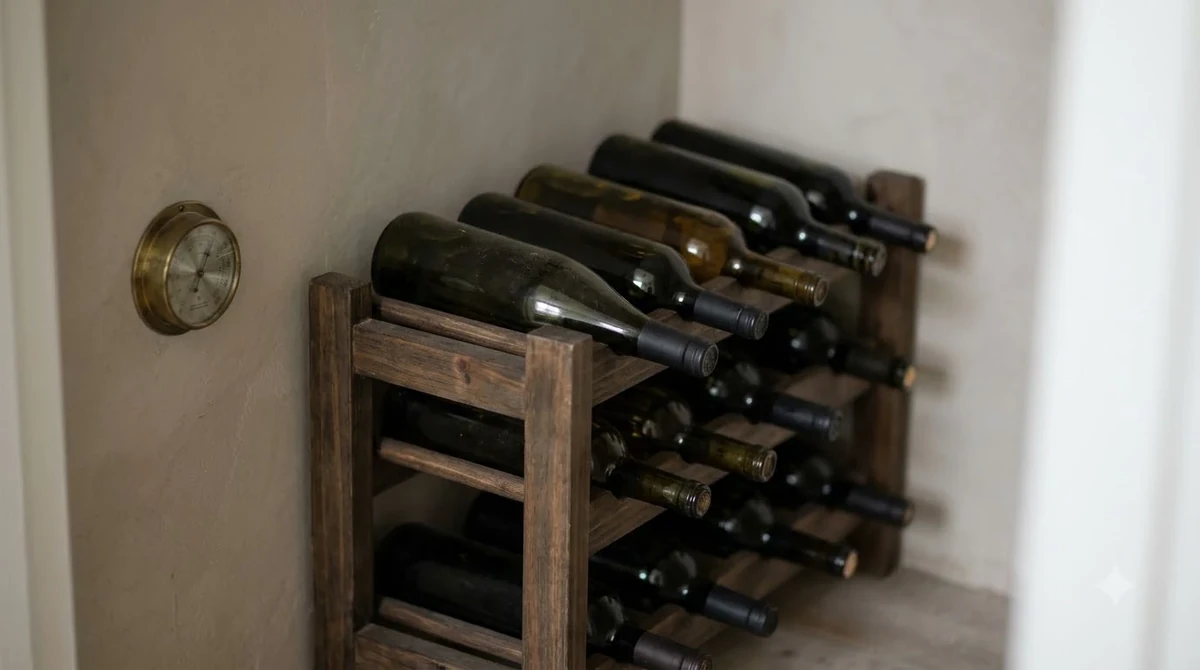
Keep unopened wine in a cool, dark location away from direct sunlight and temperature fluctuations. A storage temperature near 55 degrees Fahrenheit is a useful general reference. Bottles with traditional cork closures are generally best stored on their sides when kept for longer periods.
Riunite Lambrusco is generally purchased as an approachable wine for relatively near-term consumption rather than long-term cellaring. There is little reason to hold an everyday bottle for years when its intended appeal is its fresh, fruity character.
Refrigerate Opened Bottles
Once opened, reseal the bottle and refrigerate it. A sparkling wine generally retains its best character for approximately one to three days after opening, depending on the closure and storage conditions. A sparkling-wine stopper can help preserve carbonation between servings.
For buyers who prefer to enjoy a glass occasionally rather than finish a bottle at one meal, the smaller 187 ml format may be more practical. A standard 750 ml bottle can offer better volume flexibility for two or more people, but the smaller package can reduce the amount left over.
Good storage habits also help prevent unnecessary waste. Purchasing a 3 L bottle may make sense for a larger gathering, but it is less practical if only one or two people intend to drink a single glass. Matching package size to expected consumption is one of the simplest ways to make an everyday wine purchase more economical.
Frequently Asked Questions
Is Riunite wine made from Lambrusco grapes?
Riunite’s traditional Lambrusco comes from the Lambrusco family of grapes associated with Emilia-Romagna. The regional family includes varieties such as Sorbara, Marani and Grasparossa. The exact grape composition can differ between individual wines, so the name Lambrusco alone does not establish a single grape blend.
Does Riunite wine need to be decanted?
No. Classic Riunite Lambrusco is a semi-sparkling wine intended to be enjoyed fresh rather than treated like a young, tannic full-bodied red. Decanting would also reduce the practical advantage of its carbonation. Open the bottle shortly before serving and pour it chilled.
Can Riunite Lambrusco be used to make a wine cocktail?
Yes. Its fruity character and light bubbles make it suitable for simple wine-based party drinks. Riunite also provides a Lambrusco Spritz cocktail reference through its official website. For a simple presentation, use chilled Lambrusco with fresh fruit as a garnish.
Is Riunite Lambrusco classified as DOC or IGT wine?
The producer’s named classic product is Riunite Lambrusco Emilia IGT. IGT is an Italian geographical wine designation, distinct from the DOC classification. This designation provides useful information about the wine’s geographical identity and production category.
How many calories are in a glass of Riunite Lambrusco?
The calorie content depends on the specific product, serving size and residual sugar. A 5 oz pour is a useful standard serving reference, but an accurate nutritional figure should come from the current product’s nutritional information rather than an estimate based only on the brand name.
Riunite offers several approachable Italian wine styles, with classic Lambrusco remaining the main reference point for comparing bottle sizes and retail prices. For a standard 750 ml bottle, use approximately $5 to $10 as a practical US shopping benchmark, then compare the exact variety, volume and retailer before purchasing. Choosing the right format and style for the occasion is more useful than focusing on the lowest shelf price alone.
More in Wine Brands
 Bollinger Wine Price: Compare Bottles and Choose the Right ChampagneUpdated Nov 21, 2026
 Bolla Wine Review: How to Choose the Right Italian BottleUpdated Nov 21, 2026
 Black Tower Wine Price: Compare Bottles and Find the Right StyleUpdated Nov 21, 2026
 Black Tower Wine Review: Compare Styles and Choose the Right BottleUpdated Nov 21, 2026
 Beringer Main and Vine Review: Styles, Sweetness, and Buying GuideUpdated Nov 21, 2026
 Bertani Wine Price: Compare Bottles and Find the Right ValueUpdated Nov 21, 2026