


We may earn a commission when you buy through links on this page, at no extra cost to you. Learn more.
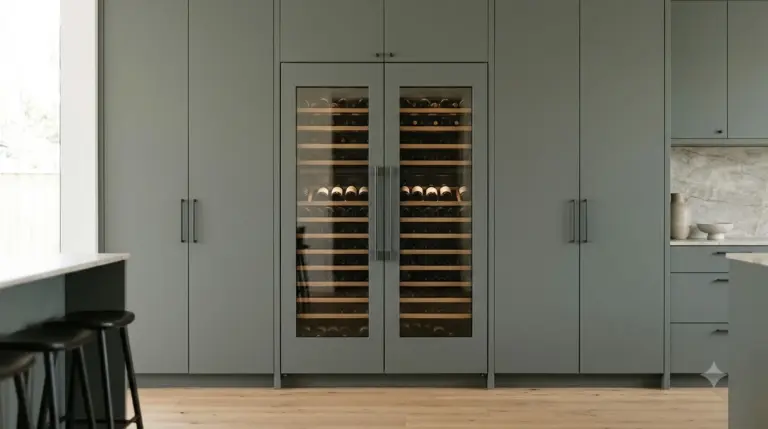
A wine fridge in pantry works best when the pantry has adequate ventilation, a suitable ambient temperature, enough installation clearance, and an accessible grounded electrical outlet. For a built-in installation, choose a refrigerator specifically designed for cabinetry, with front ventilation and manufacturer-approved clearances. A freestanding wine cooler can also work in a sufficiently open pantry, but it should never be squeezed into a closed cabinet or confined space that prevents heat from escaping.
A pantry can be a convenient location for wine storage because it keeps bottles away from the main kitchen work area and makes it easy to organize a household collection. However, a pantry is not automatically a suitable place for a cooling appliance. Shelving, stored groceries, doors, limited airflow, and nearby ovens can all affect installation. The right purchase starts with measuring the available space and understanding how the refrigerator releases heat, rather than choosing a bottle capacity based on appearance alone.
Who This Pantry Wine Fridge Setup Is For
A pantry wine refrigerator is a practical choice for homeowners who want a dedicated bottle-storage area without giving up valuable kitchen counter space. It can also work for households that entertain regularly, collect different wine styles, or prefer to keep bottles organized separately from everyday groceries.
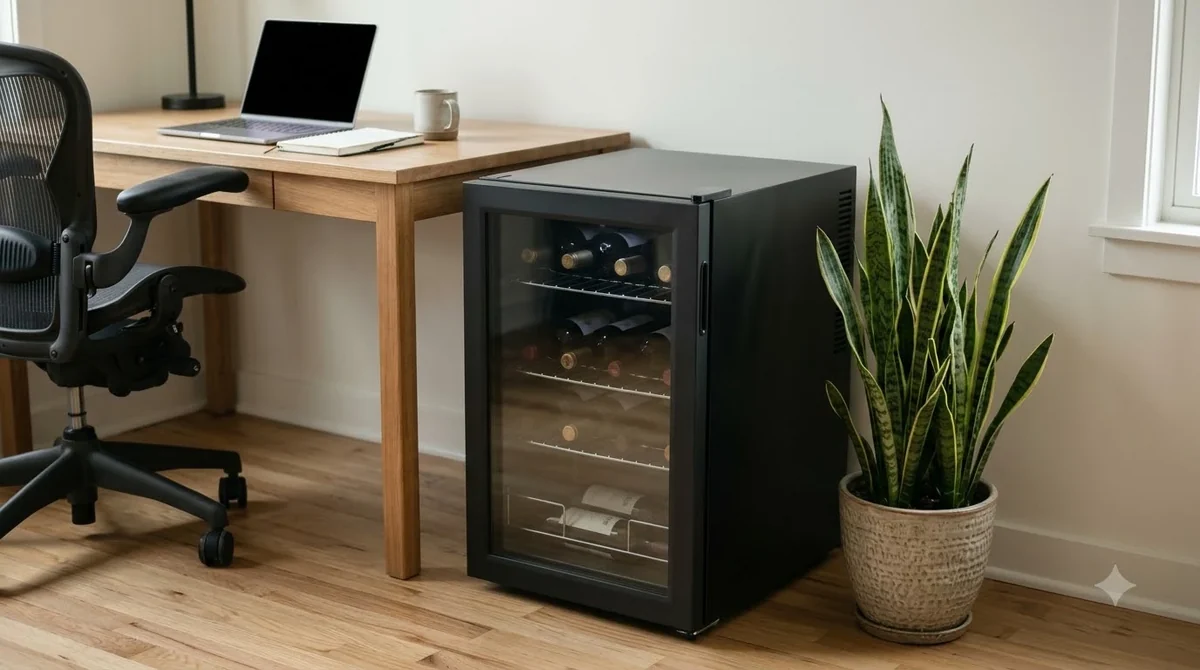
The most suitable arrangement depends on the pantry’s layout. A spacious walk-in pantry with an open doorway and room for air circulation offers more placement flexibility than a narrow reach-in cupboard with a conventional hinged door. A built-in refrigerator beneath a pantry counter can create an organized appearance, while a freestanding cabinet can work in an open section of a larger storage room.
Consider the collection before choosing capacity. Someone who regularly keeps 12 to 18 bottles for weekend meals may not need the same appliance as a household storing 40 or 50 bottles for entertaining and longer-term organization. Capacity figures also need careful interpretation: manufacturers commonly calculate advertised capacity using standard Bordeaux-style bottles. Wider Champagne bottles, Burgundy bottles, and unusual bottle shapes can reduce the practical number that fits on the shelves.
A pantry wine refrigerator is particularly useful when its contents have a clear purpose. For example, one section can hold sparkling wine and white wine for upcoming dinners, while another stores reds intended for future occasions. A dual-zone design can make that arrangement easier, although it is not essential for someone who primarily wants consistent storage rather than separate serving temperatures.
There are situations where a pantry is the wrong location. If it stays hot, has persistent moisture, or cannot provide the ventilation required by the refrigerator, another room may be a better choice. Compare the installation considerations with a basement wine fridge if the home has a more stable, open storage area.
Key Factors to Compare Before Buying
The most important comparison points are installation type, ventilation, physical dimensions, ambient operating temperature, and electrical access. These five considerations determine whether a refrigerator can function reliably in the available pantry space.
Start with the ventilation design. A built-in wine refrigerator is generally the appropriate choice for an appliance installed within surrounding cabinetry, provided its ventilation grille and specified clearances remain unobstructed. Many built-in models release heat through a front grille. A freestanding refrigerator may release heat through the back or sides and needs open space around those surfaces.
Do not assume that a refrigerator can be built into a pantry simply because its dimensions fit the opening. Avallon’s installation manual, for example, describes both freestanding and built-in installation for its covered refrigerator, but still requires ventilation clearance and access for servicing. Its instructions specify 1 to 2 inches of rear clearance, 1/4 inch at the top, and 1/4 inch at the sides for the illustrated installation. Those dimensions are specific to that appliance, not universal measurements for every pantry refrigerator.
Capacity is the next consideration. A compact 12-bottle refrigerator may suit a narrow pantry, while a larger appliance may require a dedicated floor-level cabinet section. Check the internal shelf spacing as well as the external dimensions. A nominal 24-bottle capacity may be less useful if several shelves cannot accommodate the bottle shapes in the collection.
| Comparison factor | What to look for | Why it matters |
|---|---|---|
| Capacity | 12–18, 24–30, or 40–50 bottles | Matches the refrigerator to the collection |
| Installation | Built-in rated or freestanding | Determines how the appliance can be positioned |
| Rear clearance | Avallon specifies 1–2 inches for its covered model | Allows required airflow and service access |
| Top clearance | Avallon specifies 1/4 inch for its illustrated installation | Preserves the manufacturer’s installation spacing |
| Side clearance | Avallon specifies 1/4 inch for its illustrated installation | Prevents installation outside approved dimensions |
| Ambient temperature | Within the appliance’s rated operating range | Supports consistent cooling performance |
| Electrical supply | Grounded, accessible outlet | Supports safe and practical installation |
| Temperature zones | One or two independent zones | Supports different storage or serving preferences |
Temperature controls deserve attention because storage requirements differ from serving preferences. A refrigerator with a single zone is generally sufficient for a collection stored at one consistent temperature. Dual-zone equipment is more useful when sparkling wine, white wine, and red wine need different ready-to-serve settings.
Noise is another practical consideration. A compressor refrigerator in a pantry near a dining room or living space may be noticeable, particularly if the pantry has hard flooring and enclosed walls. Review the manufacturer’s noise specifications where available, and consider the location of the compressor and cooling fans. A quiet appliance is preferable in a frequently occupied area.
Tip: Measure the pantry opening, the full appliance depth, the door swing, and the required ventilation space separately. A refrigerator that fits the cabinet opening on paper may still be impossible to install correctly once the rear clearance, power cord, and door movement are included.
Step-by-Step: How to Plan a Pantry Installation
A successful installation begins with measuring the room and confirming the refrigerator’s installation requirements before purchasing it. Follow these steps to avoid ordering an appliance that cannot fit or operate properly in the intended location.
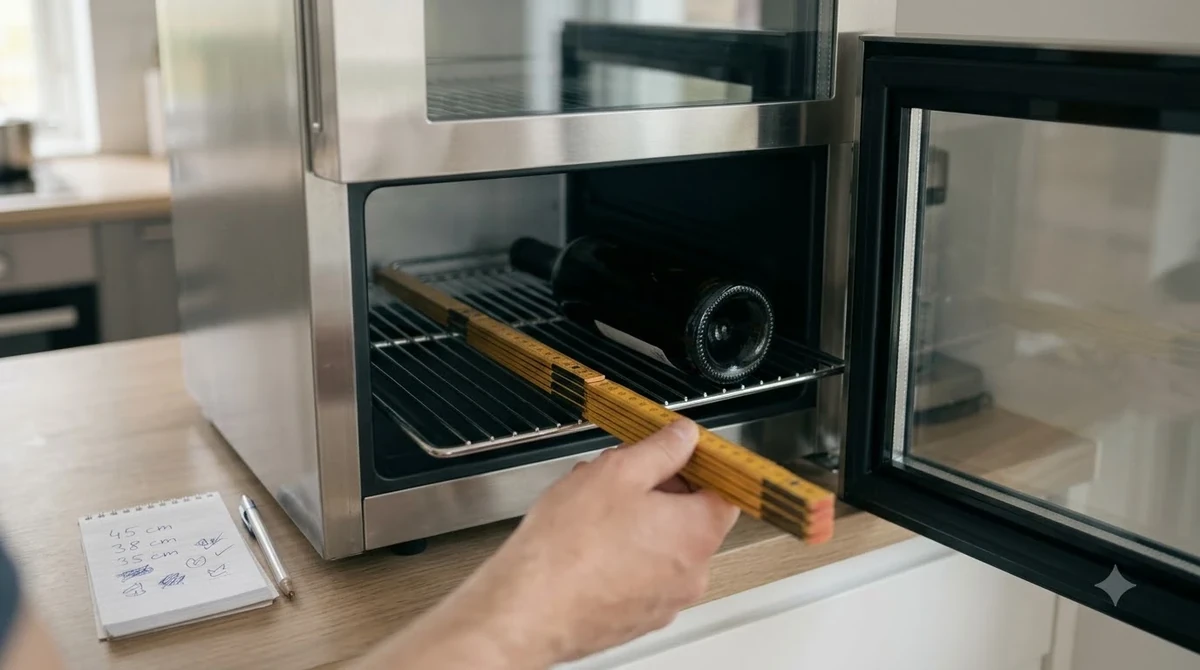
-
Measure the available opening.
Measure the width, height, and depth of the intended space at several points. Pantry walls and existing cabinets are not always perfectly square. Record the smallest usable measurements, and include room for the door handle, hinge, and fully opened door.
-
Identify the ventilation arrangement.
Determine whether the refrigerator is built-in rated or freestanding. Look for front ventilation if the appliance will sit inside a cabinet enclosure. A rear-vented freestanding refrigerator needs its prescribed open space and should not be treated as a built-in model.
-
Check the pantry’s ambient temperature.
Consider seasonal changes, nearby kitchen appliances, and whether the pantry is exposed to warm air from an adjacent room. Avallon specifies an operating ambient range above 50°F and below 90°F for the refrigerator covered by its manual. Other appliances have different limits, so compare the exact specifications before installation.
-
Plan the electrical connection.
Identify an accessible, properly grounded outlet that meets the refrigerator’s electrical requirements. The cord should not be pinched behind cabinetry, and the appliance should not depend on an extension cord or an unsuitable power strip. Have an electrician assess the installation if the pantry does not have an appropriate outlet.
-
Check the floor and cabinet support.
A fully loaded wine refrigerator can be considerably heavier than an empty one. Confirm that the floor or platform can support its weight, and check that the surface is level. Do not assume that an ordinary lightweight pantry shelf can carry the appliance.
-
Confirm the door swing.
Open the pantry door and the wine refrigerator door through their full ranges of movement. Check for collisions with drawers, handles, nearby shelving, and the room entrance. A reversible hinge can help, but only if the manufacturer supports that configuration.
-
Position and level the refrigerator.
Follow the installation manual, including the specified clearances. Adjust the leveling feet using a suitable level. The door should close correctly, and the ventilation openings should remain unobstructed after the appliance is pushed into its final position.
-
Complete the initial startup.
Follow the manufacturer’s transportation and startup instructions. Avallon and Vintec both recommend allowing at least 24 hours after transportation before starting their respective covered refrigerators. Other models may specify a different waiting period, so use the instructions supplied with the purchased appliance.
For additional planning ideas, the By room organization guide can help compare available placement areas before committing to a particular refrigerator size.
One final check is useful before loading bottles: run the refrigerator, confirm that the interior reaches its intended setting, and make sure the surrounding ventilation area remains clear. If the appliance struggles to maintain temperature or runs continuously, investigate the installation rather than assuming that a lower thermostat setting will solve the problem.
Types of Wine Refrigerators for Pantry Spaces
Pantry installations generally fall into three categories: built-in refrigerators, freestanding cabinets, and compact wine coolers. Each has different requirements for space, ventilation, bottle capacity, and accessibility.
Built-in wine refrigerators
A built-in wine refrigerator is designed to fit into an opening surrounded by cabinetry or installed beneath a counter. Front ventilation is an important feature because the appliance needs a suitable route for releasing warm air without relying on open space behind the cabinet.
This style is particularly attractive in a pantry with a dedicated lower cabinet section. A built-in refrigerator can sit beneath a countertop, beside pull-out storage drawers, or within a custom pantry arrangement. The result is a more integrated appearance and less exposed appliance space.
However, built-in does not mean that every gap can be eliminated. Manufacturers still specify installation dimensions, grille openings, electrical access, and servicing requirements. Avallon’s manual, for example, warns against placing the covered refrigerator behind a closed cabinet door. Its installation instructions also emphasize maintaining ventilation and leaving room to pull the appliance forward for servicing.
Freestanding wine refrigerators
A freestanding wine refrigerator is suitable for an open pantry area when there is enough space around its ventilation surfaces. It can be easier to position because it does not necessarily require a custom cabinet opening. It may also be moved more easily if the household reorganizes its storage area.
The main disadvantage is the amount of surrounding space required. A refrigerator that vents from the rear or sides cannot be pushed tightly against pantry walls simply to create a neat appearance. Its installation requirements may make it unsuitable for a narrow reach-in pantry.
Vintec’s user manual provides a useful warning: models without front ventilation are strictly for freestanding installation. It also cautions against placing its wine cabinets in damp or poorly ventilated spaces, including unsuitable pantry locations. Read the Vintec wine cellar installation and operating manual for its specific ventilation, positioning, and startup instructions. This is a reminder that a manufacturer’s installation requirements can prohibit a particular room arrangement even when the appliance physically fits.
Compact wine coolers
A compact wine cooler is designed for smaller collections and limited floor space. Depending on its installation rating, it may fit on a suitable dedicated platform or within a small cabinet opening. Its smaller capacity can make it appropriate for households that mainly keep bottles for immediate entertaining.
Compact does not automatically mean suitable for enclosed installation. The same ventilation and ambient-temperature considerations apply, and a small refrigerator can still generate heat that needs somewhere to go. Check the model’s installation classification before choosing a compact appliance for a tight pantry.
Single-zone and dual-zone models
A single-zone refrigerator maintains one temperature throughout its interior. It is a straightforward choice for a collection that is primarily being stored rather than kept at several different serving temperatures.
A dual-zone refrigerator provides separate temperature settings for different sections. For example, a household might prefer one zone for white wines and sparkling wines and another for red wines. This can be useful in a pantry where the refrigerator also serves as a convenient wine station before dinner.
Remember that serving temperature and longer-term storage temperature are different considerations. A serving-ready arrangement should not be confused with a requirement to store every wine at its ideal drinking temperature. A consistent storage setting may be more practical for a mixed collection.
Common Pantry Installation Mistakes
The most common mistakes involve restricted airflow, excessive heat, unsuitable electrical connections, and incorrect measurements. Avoiding these problems is more important than choosing a refrigerator with additional shelves or decorative lighting.
Putting a freestanding refrigerator inside a closed cabinet
This is one of the most serious placement errors. A freestanding appliance that releases heat through its rear or sides needs the surrounding open space specified by its manufacturer. Enclosing it can trap warm air and make the cooling system work harder.
Do not solve the problem by leaving the pantry door slightly open while operating the refrigerator. If the installation location cannot provide the required airflow, select a different location or a model explicitly approved for the intended built-in arrangement.
Installing beside an oven or heat-producing appliance
Pantries connected to kitchens sometimes share walls with ovens, dishwashers, or other equipment. Heat from these appliances can raise the surrounding temperature and affect cooling performance. Avallon specifically advises keeping its covered wine refrigerator away from heat sources such as ovens, grills, and direct sunlight.
Allow enough separation to satisfy both appliances’ installation requirements. A pantry cabinet that shares a wall with an oven may need additional planning or a different refrigerator location.
Ignoring humidity and moisture
A pantry that stores dry groceries may be suitable, but a pantry with persistent dampness is a different matter. Excessive moisture can affect the appliance exterior, door seals, electrical components, and surrounding cabinetry.
Vintec specifically cautions against placing its wine cabinets in excessively damp spaces, including laundry rooms, bathrooms, and pantries. This is particularly relevant to pantry areas with poor ventilation, plumbing leaks, or condensation problems.
Choosing capacity without considering bottle shape
Advertised bottle capacity is generally based on a standard Bordeaux bottle. Champagne bottles, Burgundy bottles, and wider specialty bottles may occupy more shelf space. A refrigerator advertised for 30 bottles may not accommodate 30 bottles from a collection with varied shapes.
Look for removable or adjustable shelves, and consider whether the refrigerator can store wider bottles without sacrificing access to the remaining collection. Vintec’s storage guidance explains that bottles should be arranged with sufficient space for internal air circulation and that shelves should not be overloaded.
Forgetting electrical and service access
A refrigerator should have an appropriate grounded outlet and enough room for its power cord. Do not pinch the cord between the cabinet and appliance or rely on an extension cord to overcome a poorly planned outlet position.
Service access matters too. An appliance that is permanently trapped behind fixed shelving or a non-removable decorative panel can be difficult to maintain. Plan the cabinet opening so that the refrigerator can be removed or pulled forward according to the manufacturer’s instructions.
Care and Storage Tips for a Pantry Wine Refrigerator
Good maintenance helps keep the refrigerator operating consistently and protects the wine collection from unnecessary temperature fluctuations. Keep the ventilation area clear, check the door seal, and organize the bottles so that everyday access does not require prolonged door openings.
Keep the surrounding area clear
Do not use the top or sides of the refrigerator as extra pantry shelving unless the manufacturer explicitly permits it. Boxes, jars, grocery bags, and cleaning supplies can obstruct airflow or prevent service access. Vintec specifically warns against obstructing the internal fans and recommends leaving gaps between bottles and cabinet walls.
Clean the ventilation grille periodically, using the method recommended by the manufacturer. Dust accumulation can interfere with airflow, particularly in a pantry where dry food packaging and household debris are common.
Maintain a consistent storage setting
Wine intended for longer-term storage generally benefits from a stable environment rather than repeated temperature adjustments. A setting around 55°F is a widely used reference for general wine storage, although the appliance’s available range and the collection’s requirements should guide the actual setting.
For wines being prepared for service, the following temperatures are useful references:
- Sparkling wine: 40–50°F.
- Light whites and rosé: 45–50°F.
- Full-bodied whites: 50–55°F.
- Light-bodied reds: 55–60°F.
- Full-bodied reds: 60–65°F.
- Sweet whites: 43–50°F.
A dual-zone refrigerator can make it easier to keep different styles ready for serving. A single-zone refrigerator remains a sensible option when consistent storage is the priority.
Organize bottles for access
Arrange bottles according to how frequently they are used. Keep everyday wines where they can be reached without moving the rest of the collection. Place bottles intended for longer storage in less frequently accessed positions, provided the shelving design supports that arrangement.
Horizontal storage is a practical arrangement for traditional cork-sealed bottles. Avoid overloading shelves, especially when the collection includes heavy bottles or unusually large formats. Follow the appliance’s shelf weight limits and loading instructions.
Protect the refrigerator during cleaning and maintenance
Before cleaning, follow the manufacturer’s electrical and maintenance instructions. Inspect the door gasket for dirt or damage, and make sure the door closes fully. A poor seal can allow warm air into the cabinet and increase the frequency of compressor operation.
Also pay attention to changes in operating noise. A refrigerator that begins vibrating against adjacent cabinetry may need to be leveled or repositioned. Avallon’s troubleshooting guidance identifies an uneven installation and contact with nearby furniture or appliances as possible causes of unusual noise.
If the pantry becomes noticeably warmer during summer, check the room conditions and the refrigerator’s rated operating range. A wine refrigerator is not a substitute for controlling the surrounding room environment.
Frequently Asked Questions
Can a wine fridge be installed in a pantry without a window?
Yes, a window is not a universal requirement for indoor wine refrigerator installation. The important factors are adequate ventilation, suitable ambient conditions, and an appropriate electrical supply. A windowless pantry can work if its air does not become excessively warm or stagnant around the appliance.
Should a pantry wine refrigerator have a glass or solid door?
A glass door makes it easier to see the collection without opening the refrigerator. A solid door conceals the bottles and can suit a traditional pantry cabinet design. Glass models may also have interior lighting, so consider whether the light can be switched off when the appliance is not being accessed.
Can a wine refrigerator be installed above floor level?
Some compact appliances can be installed on a suitable raised platform if the manufacturer permits that arrangement. The platform must support the refrigerator’s fully loaded weight and allow the specified ventilation and service access. A raised installation should also make bottle loading and door operation safe and convenient.
Does a pantry wine refrigerator need to be completely dark?
No, the pantry itself does not need to be completely dark. However, prolonged exposure to direct sunlight and strong light can be undesirable for wine storage. Keep the refrigerator away from direct sun and use its internal lighting primarily when accessing the collection.
How many wine bottles should be kept in a refrigerator during initial setup?
Follow the specific manufacturer’s startup and loading instructions. Vintec recommends distributing bottles throughout its covered cabinet when the full collection is not available. Even distribution helps avoid concentrating the load in one section of the shelving system.
A wine refrigerator can be an excellent addition to a pantry when the space supports the appliance’s ventilation, temperature, and electrical requirements. For most enclosed cabinetry arrangements, a properly specified built-in model is the more practical starting point, while a freestanding refrigerator suits a larger, open pantry. Measure carefully, follow the manufacturer’s installation instructions, and choose capacity according to the actual bottle collection rather than the advertised maximum alone.
More in By Room & User
 Wine Fridge in Bedroom: Choose Quiet Storage That Fits Your SpaceUpdated Nov 20, 2026
 Wine Fridge in Living Room: Choose the Right Size, Style, and SetupUpdated Nov 20, 2026
 Wine Fridge In Dining Room: Choose the Right Size and StyleUpdated Nov 20, 2026
 Wine Fridge In Kitchen: Choose the Right Fit and PlacementUpdated Nov 20, 2026
 Wine Fridge In Garage: Choose a Cooler That Handles Temperature SwingsUpdated Nov 20, 2026
 Wine Fridge In Cabinet: How to Choose the Right Built-In FitUpdated Nov 20, 2026