

We may earn a commission when you buy through links on this page, at no extra cost to you. Learn more.
Coravin alternatives include vacuum wine pumps, inert-gas preservation sprays, and reusable wine stoppers that help slow oxidation after opening a bottle. The Vacu Vin Original Wine Saver is a practical choice for everyday bottles, while Private Preserve offers a gas-based approach without requiring a specialized dispensing device. Neither method duplicates Coravin Timeless, which allows wine to be poured through an intact natural cork.
Coravin systems appeal to wine drinkers who want to enjoy expensive bottles one glass at a time, but not everyone needs a needle-based preservation device. Someone who finishes a bottle over two or three evenings may get sufficient protection from a simple vacuum pump or inert-gas spray. The important distinction is how each system handles oxygen, how long it can realistically preserve wine, and whether it fits the bottles and drinking habits in a particular household.
Specs and Key Features of the Main Alternatives
The strongest alternatives address different preservation needs rather than copying every feature of Coravin. Vacu Vin reduces the air inside an opened bottle, while Private Preserve introduces protective gas before the original closure is replaced.
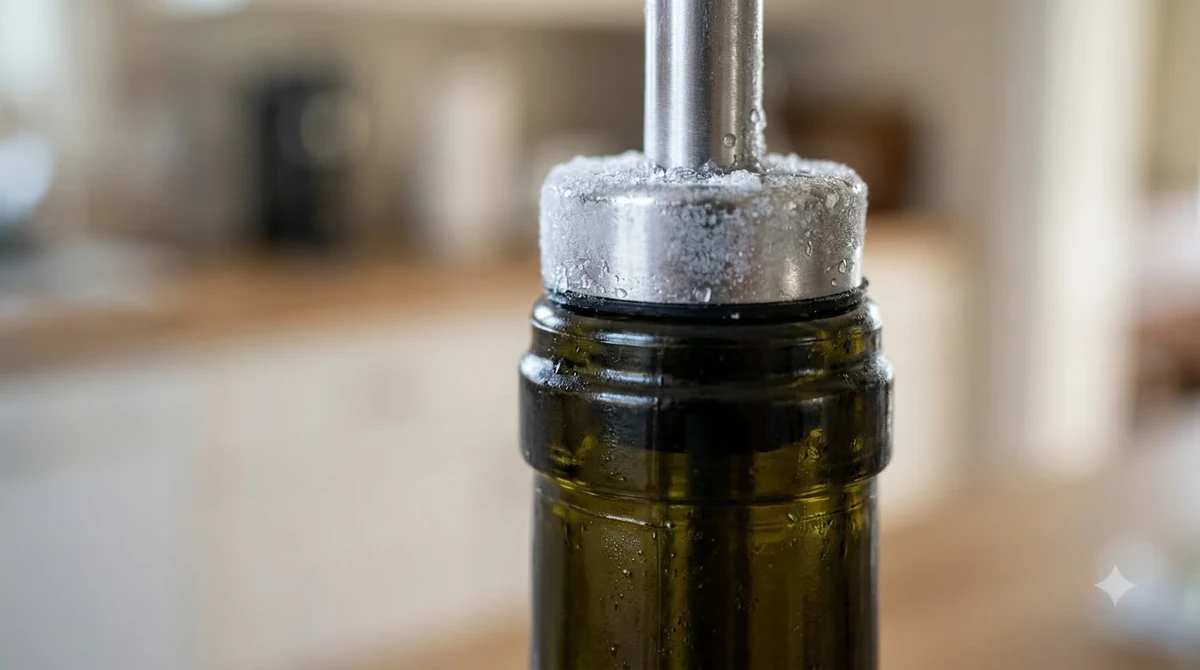
Understanding these differences makes the comparison easier. Coravin Timeless keeps the original cork in place, whereas most competing methods require the bottle to be opened and subsequently resealed. For ordinary drinking occasions, that distinction may not justify the added complexity of a specialized system.
Three preservation approaches deserve particular attention: vacuum pumping, inert-gas spraying, and conventional bottle sealing. Each has a different balance of convenience, equipment requirements, and practical storage time.
| Preservation option | How it works | Typical use | Important limitation |
|---|---|---|---|
| Vacu Vin Original Wine Saver | Manual vacuum pump and stopper | Short-term still-wine storage | Requires opening the bottle |
| Private Preserve | Neutral-gas mixture sprayed into the bottle | Reducing oxygen exposure after pouring | Requires a separate stopper |
| Reusable wine stopper | Creates a physical seal at the bottle neck | Immediate resealing and refrigeration | Does not remove existing headspace oxygen |
| Coravin Pivot | Argon injection through a specialized stopper | Repeated pouring over several weeks | Requires compatible equipment and capsules |
| Coravin Timeless | Needle passes through the original cork | Pouring without uncorking | Requires suitable cork compatibility |
| Coravin Sparkling | Dedicated stopper and CO2 charger | Preserving sparkling wine carbonation | Requires specialized sparkling equipment |
The distinction between removing air and replacing it matters. A vacuum pump attempts to reduce the oxygen-containing headspace, while a gas spray introduces an inert-gas mixture above the wine. Neither method prevents every possible change in aroma or flavor, but both can make sense for bottles intended to be finished relatively soon.
For a more detailed comparison of preservation equipment, the wine preservation system category provides useful context for evaluating different technologies. The best choice depends on how frequently wine is opened, how much remains in the bottle, and how long the remaining wine needs to last.
What Owners Like About Less Expensive Preservation Methods
The biggest advantage of simpler wine preservation equipment is convenience. A manual pump or gas spray requires fewer components than a needle-based dispensing system, making it easier to incorporate into an ordinary dinner routine.
Vacu Vin is particularly straightforward. Its Original Wine Saver uses a reusable stopper and a manual pump. The stopper fits into the bottle neck, and pumping continues until the characteristic click indicates that the intended vacuum level has been reached. The bottle can then be stored upright.
According to Vacu Vin, the Original Wine Saver can retain wine quality and taste for up to 10 days, citing independent research by Meron B.V. That figure should be understood as a manufacturer-supported claim rather than a guarantee for every wine and storage condition.
The system also has practical maintenance advantages. Its stoppers are dishwasher-safe, reusable, and designed to work with the pump repeatedly. There is no need to purchase a fresh stopper for every bottle, and the manual mechanism does not require a gas capsule for each serving.
Private Preserve appeals to a different type of user. Instead of extracting air mechanically, it sprays a mixture of neutral gases into the bottle. The mixture includes carbon dioxide, nitrogen, and argon, creating a protective gas layer above the remaining wine before the bottle is recorked.
This approach is useful for people who do not want another mechanical device on the counter. A gas spray can also accommodate different bottle shapes and closure types because the original closure is replaced after application.
Another practical advantage is that both methods can be used with ordinary still wines. A bottle of Cabernet Sauvignon, Merlot, Chardonnay, or Sauvignon Blanc does not need a special opening mechanism to benefit from a basic preservation routine.
The wider benefit is flexibility. A household that opens one bottle on Friday and finishes it on Sunday may not need the ability to pour from the same bottle over several weeks. A reusable pump or gas spray can be a more sensible purchase for that drinking pattern.
There is also less of a learning curve. Users do not need to understand needle placement, capsule consumption, or specialized dispensing accessories. The basic process is simply to seal the bottle promptly and store the remaining wine appropriately.
Common Complaints and Realistic Preservation Limits
The main limitation of simpler preservation equipment is that it does not reproduce the conditions of an unopened bottle. Oxygen exposure has already occurred when the original closure is removed, and neither a vacuum pump nor a gas spray can reverse changes that have already started.

The independent preservation comparison published by the Société des alcools du Québec (SAQ) provides useful perspective. Its experiment compared Vacu Vin, AntiOx Pulltex, Private Preserve, and Coravin using red and white wines, with evaluations approximately 30 hours, four days, and nine days after opening.
The findings were more nuanced than a simple ranking. All four systems performed reasonably well over the first two or three days, but their results became more distinct with longer storage. Vacu Vin performed well in the short term, although the wines deteriorated over the longer observation period.
Private Preserve helped retain some wine body, but the aromas became less expressive. This distinction matters because wine quality involves more than whether a liquid still tastes acceptable. A bottle may retain its general structure while losing the fresh fruit, floral, or spice characteristics that made it enjoyable originally.
Coravin performed better over the extended observation period. At nine days, the wines preserved with its needle-based method maintained their initial character more successfully than those preserved using the other tested systems.
These findings should not be interpreted as proof that every wine stored with Coravin remains unchanged indefinitely. The experiment involved particular wines, storage arrangements, and observation intervals. It does, however, demonstrate why a needle-based method can be valuable for bottles that need to remain available over longer periods.
For additional context, the SAQ wine preservation comparison explains how vacuum pumps, gas sprays, and needle-based preservation performed across different tasting intervals.
Vacuum pumps also have a practical storage restriction. Vacu Vin specifically recommends keeping bottles upright after applying its stopper. Horizontal storage can allow wine to enter the stopper mechanism, potentially compromising the seal and causing problems with the pump.
Gas sprays have their own disadvantages. Application requires attention to the manufacturer’s directions, and users must remember to spray before replacing the cork or another suitable stopper. Inconsistent application and delayed resealing can reduce the usefulness of the method.
Another complaint concerns sparkling wine. Ordinary vacuum pumps are not designed to preserve carbonation, and removing air can encourage dissolved carbon dioxide to escape. Champagne, Prosecco, and Cava need a pressure-compatible closure rather than an ordinary still-wine vacuum stopper.
Finally, expectations matter. A wine that smells strongly of vinegar, has lost its fruit character, or shows obvious oxidation will not become fresh again simply because a preservation device is applied. These products are intended to slow deterioration, not restore an already compromised bottle.
Who Should Buy a Coravin Alternative and Who Should Skip It
A simpler preservation device makes the most sense for people who regularly finish opened bottles within a few days. Wine drinkers who open a bottle with dinner, refrigerate the remaining wine, and return to it during the weekend usually have different requirements from collectors who want to sample a bottle over several months.
Buy a vacuum pump if you drink everyday wines
A vacuum pump is a sensible choice for households that regularly open still wine but rarely leave substantial quantities untouched for extended periods. Vacu Vin provides a simple resealing process, reusable stoppers, and a click indicator that signals when the desired vacuum level has been reached.
It is particularly appropriate for everyday bottles of Pinot Grigio, Sauvignon Blanc, Merlot, and uncomplicated Cabernet Sauvignon. These wines are often consumed within a short period after opening, making a basic preservation routine more practical than a specialized dispensing device.
The pump is also appealing for people who want a reusable product with straightforward maintenance. There are no gas capsules to replace, and the dishwasher-safe stoppers can be used repeatedly.
Buy an inert-gas spray if you prefer a simple application
Private Preserve is worth considering for wine drinkers who want to introduce protective gas without investing in a dedicated mechanical pump. It can be particularly convenient for people who open different bottle shapes or want to avoid storing a separate pump between uses.
The gas mixture is sprayed through the bottle opening before the original closure is replaced. This makes it a flexible alternative for still wine, although users should follow the manufacturer’s application instructions rather than assume that one spray pattern works equally well for every bottle size.
It is also useful for occasional entertaining. Someone serving two different red wines during a dinner party can reseal the remaining bottles afterward without needing separate dispensing equipment for each one.
Skip basic alternatives if you collect fine wine
Collectors who regularly pour small quantities from valuable bottles may find that simpler alternatives do not offer enough protection. A mature Burgundy, aged Bordeaux, or special vintage Cabernet Sauvignon can be particularly disappointing if its delicate aromas fade before the remaining wine is finished.
In that situation, a needle-based preservation system has a meaningful functional advantage. Coravin Timeless allows wine to be dispensed while leaving the original natural cork in place. That means the bottle does not experience the same opening and resealing process as a conventional vacuum-pump bottle.
People who want to taste several bottles over different evenings may also benefit from the ability to pour individual glasses without committing to finishing each bottle within a few days.
Skip still-wine equipment for sparkling wine
Anyone who mainly drinks Champagne, Prosecco, or Cava should select equipment specifically designed for sparkling wine. A pressure-compatible sparkling stopper is more appropriate than an ordinary vacuum pump or still-wine gas-preservation accessory.
For occasional sparkling wine drinkers, a dedicated Champagne stopper may be sufficient for a short storage interval. More specialized systems use CO2 to help maintain the pressure and carbonation of opened sparkling wine.
The key is to match the equipment to the type of bottle rather than assuming that every wine preservation accessory performs the same job.
How It Compares to Coravin and Other Preservation Options
The most important comparison is between the length of time a bottle needs to remain available and the preservation technology used. A vacuum pump is designed for an opened bottle, an inert-gas spray protects the remaining wine after opening, and a needle-based system allows wine to be poured without removing the original cork.
Coravin itself offers several different approaches, so it is important not to treat every Coravin product as identical. Timeless, Pivot, and Sparkling have different operating methods and serve different wine-drinking situations.
Vacu Vin versus Coravin Timeless
Vacu Vin is the simpler everyday option. The bottle must be opened, and the remaining wine is sealed with a reusable stopper after the vacuum pump has been applied. The original cork is no longer part of the preservation process.
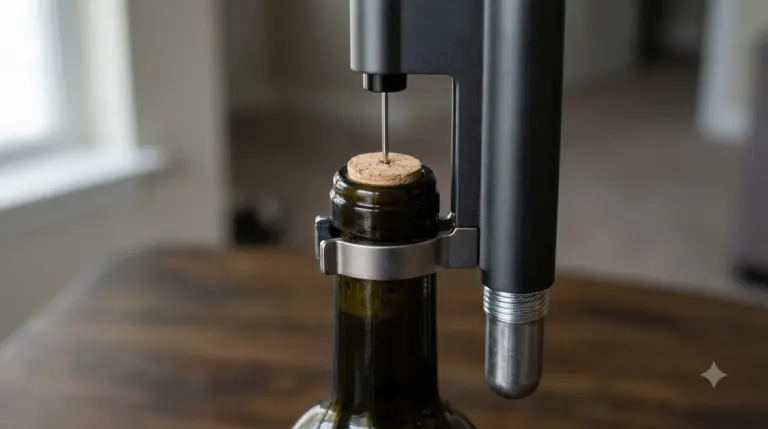
Coravin Timeless works differently. A precision-engineered needle passes through the natural cork, allowing wine to be poured while argon gas replaces the volume removed. Once the needle is withdrawn, the cork naturally reseals.
This difference is especially important for expensive or mature wines. A collector can pour a small glass from a bottle without committing the remaining wine to the same oxidation exposure associated with conventional opening.
For someone who finishes an ordinary bottle over two evenings, the extra functionality may not be necessary. For someone who wants to revisit a valuable bottle over an extended period, it may be worth considering.
Private Preserve versus Coravin Pivot
Both approaches involve gas rather than mechanically extracting air, but their operating methods differ. Private Preserve sprays a neutral-gas mixture into an already-opened bottle, after which the bottle is resealed using its existing closure.
Coravin Pivot uses a dedicated stopper that replaces the original closure. When the dispensing device is attached, argon gas enters the bottle as wine is poured. Coravin states that Pivot can keep opened still wine fresh for up to four weeks under its recommended storage conditions.
Pivot is more convenient for repeated glass-by-glass serving over an extended period, while Private Preserve offers a simpler resealing routine. Neither approach requires the natural cork to remain intact.
Coravin Timeless versus Coravin Pivot
These two systems are sometimes confused because both use argon, but they solve different problems. Timeless preserves the unopened-bottle arrangement by passing a needle through the cork. Pivot requires the bottle to be opened and a dedicated stopper inserted.
Coravin states that one argon capsule provides up to 15 five-ounce glasses with Timeless or up to 20 five-ounce glasses with Pivot. This difference is relevant for frequent users who want to estimate how many servings they can obtain from replacement capsules.
Pivot is generally the more straightforward choice for people who open bottles but want a longer serving window. Timeless is the more specialized choice for people who want to access wine while leaving the original cork in place.
Still-wine preservation versus sparkling-wine preservation
Sparkling wine requires a different approach because carbon dioxide is responsible for its bubbles and characteristic pressure. A conventional vacuum pump does not maintain that carbonation and should not be treated as a substitute for a sparkling-wine closure.
Coravin Sparkling uses a dedicated stopper and CO2 charger. The manufacturer states that the system can preserve sparkling wine for at least four weeks when used according to its instructions.
For occasional Champagne or Prosecco drinkers, a standard pressure-resistant stopper may be adequate for a shorter period. Frequent sparkling-wine drinkers may prefer a dedicated pressurization system.
For readers comparing the wider selection of equipment, the Coravin preservation equipment category is a useful place to distinguish needle-based systems from opened-bottle preservation accessories.
Care and Storage Tips for Better Wine Preservation
Even a good preservation device works better when combined with sensible storage practices. Temperature, headspace, closure condition, and the amount of time between pouring and resealing all influence how well an opened bottle retains its original character.
The first rule is to reseal wine promptly after pouring. Leaving a bottle open while preparing food, clearing the table, or entertaining guests gives oxygen more opportunity to interact with the remaining wine. Applying a stopper immediately helps reduce unnecessary exposure.
Keep still wine refrigerated
Refrigeration is one of the simplest ways to slow the deterioration of opened wine. This applies to red wine as well as white wine. A bottle of Cabernet Sauvignon does not need to remain at room temperature simply because it is a red wine.
Cold storage slows the chemical processes associated with wine deterioration. Before serving, allow a red wine to warm toward its appropriate drinking temperature. Light reds are generally served around 55 to 60 degrees Fahrenheit, while fuller-bodied reds are generally served around 60 to 65 degrees Fahrenheit.
White wines benefit from refrigeration as well. Light whites and rosé are typically served around 45 to 50 degrees Fahrenheit, while fuller-bodied whites such as oaked Chardonnay are generally served around 50 to 55 degrees Fahrenheit.
The WSET guide to preserving wine after opening also recommends refrigerating opened red and white bottles because lower temperatures slow oxidation-related chemical processes.
Follow the correct bottle position
Storage position depends on the preservation equipment. Vacu Vin specifically recommends upright storage after applying its vacuum stopper. This helps prevent wine from entering the stopper and interfering with the vacuum mechanism.
Coravin’s instructions differ. Its Timeless and Pivot systems include horizontal storage guidance under suitable temperature-controlled conditions. Users should therefore follow the storage instructions associated with their particular device rather than assume that every stopper requires the same bottle position.
Pay attention to the remaining wine volume
A bottle with only one glass remaining has substantially more empty space than a bottle that is three-quarters full. That headspace affects how much oxygen-containing air remains inside the bottle.
For people who frequently leave a small quantity of wine, transferring the remaining wine into a smaller, clean, appropriately sized bottle can reduce the amount of air above the liquid. The replacement bottle should have a secure closure and be stored in the refrigerator.
This approach does require an additional container, and transferring wine introduces another opportunity for air exposure. It is therefore best performed promptly and carefully rather than after a bottle has been sitting open for several hours.
Clean reusable equipment regularly
Reusable stoppers should be kept clean and dry between uses. Vacu Vin identifies its stoppers as dishwasher-safe, but its pump itself should not be submerged or placed in a dishwasher.
Inspect rubber and silicone sealing surfaces periodically. A damaged stopper, accumulated residue, or an incorrectly seated closure can undermine the seal and reduce preservation performance.
Tip: For most everyday still wines, refrigerate the bottle immediately after resealing it. A vacuum pump or gas spray can provide additional protection, but cold storage and prompt closure remain important parts of the routine. Keep vacuum-pump bottles upright when following Vacu Vin’s instructions.
Finally, remember that preservation devices do not eliminate the normal life cycle of an opened wine. As a general guideline, still wines often remain enjoyable for approximately three to five days in the refrigerator, although delicate older bottles may change sooner. Sparkling wines generally lose their freshness more quickly without a pressure-compatible stopper.
Frequently Asked Questions
Does argon gas change the flavor of wine?
Argon is an inert noble gas that does not readily react with wine components. Its use in wine preservation is intended to limit oxygen exposure rather than introduce a new flavor. The effect of a preservation system still depends on how the bottle is handled and stored.
Can a wine preservation system work with a half-bottle?
Many conventional vacuum pumps and gas sprays can be used with smaller wine bottles if their stopper or application equipment fits the opening. A half-bottle contains approximately 375 ml, compared with 750 ml in a standard wine bottle. Always verify physical compatibility before using specialized dispensing equipment.
Does a screw-cap wine bottle need a special vacuum stopper?
Once a screw cap has been removed, a suitable reusable stopper or compatible preservation accessory can seal the opening. Coravin Pivot also accommodates screw-cap bottles after the original cap is removed. Coravin Timeless requires its dedicated screw-cap accessory rather than simply using the standard natural-cork needle method.
Can wine preservation equipment be used with fortified wine?
Many conventional stoppers and suitable vacuum accessories can be used with opened fortified wines such as Port and Sherry. However, these wines have different compositions and storage characteristics from ordinary table wines. Their recommended storage periods depend on the particular style, including whether the wine is a delicate Fino Sherry or an aged Tawny Port.
Can a wine preservation system prevent cork taint?
No. Cork taint is associated with compounds such as 2,4,6-trichloroanisole (TCA), which can create musty or cardboard-like aromas. A preservation pump or inert-gas spray does not remove TCA or correct a wine that was already affected before opening.
For most everyday wine drinkers, Vacu Vin and Private Preserve offer practical alternatives to a specialized Coravin system. Choose a vacuum pump for straightforward short-term storage, an inert-gas spray for a simple gas-based approach, or a needle-based system when preserving valuable bottles over much longer periods matters more than simplicity. Matching the equipment to actual drinking habits is the best way to avoid unnecessary complexity while keeping opened wine enjoyable for longer.
More in Preservation & Coravin
 Coravin Model Eleven Review: Preserve Wine Without Opening BottlesUpdated Nov 20, 2026
 Is Coravin Worth It? A Practical Guide to Its Real ValueUpdated Nov 20, 2026
 Coravin Timeless Six: Pour a Glass Without Opening the BottleUpdated Nov 20, 2026
 Coravin Pivot Plus Review: Keep Open Wine Fresh for WeeksUpdated Nov 20, 2026
 Coravin Screw Caps Review: Specs, Lifespan, and Real-World PreservationUpdated Nov 20, 2026
 Coravin Aerator Review: Get More Aroma From Every PourUpdated Nov 20, 2026