


We may earn a commission when you buy through links on this page, at no extra cost to you. Learn more.
coravin sparkling is a strong choice for preserving an opened bottle of Champagne, Prosecco, or Cava when you want to pour a glass now and return to the rest later. It replaces the pressure lost when the cork comes out by sealing the bottle with a dedicated stopper and adding CO₂. Coravin says the system keeps flavor and bubbles for at least four weeks, but it is a specialized purchase with proprietary capsules, a learning curve, and a bottle that needs refrigerator space.
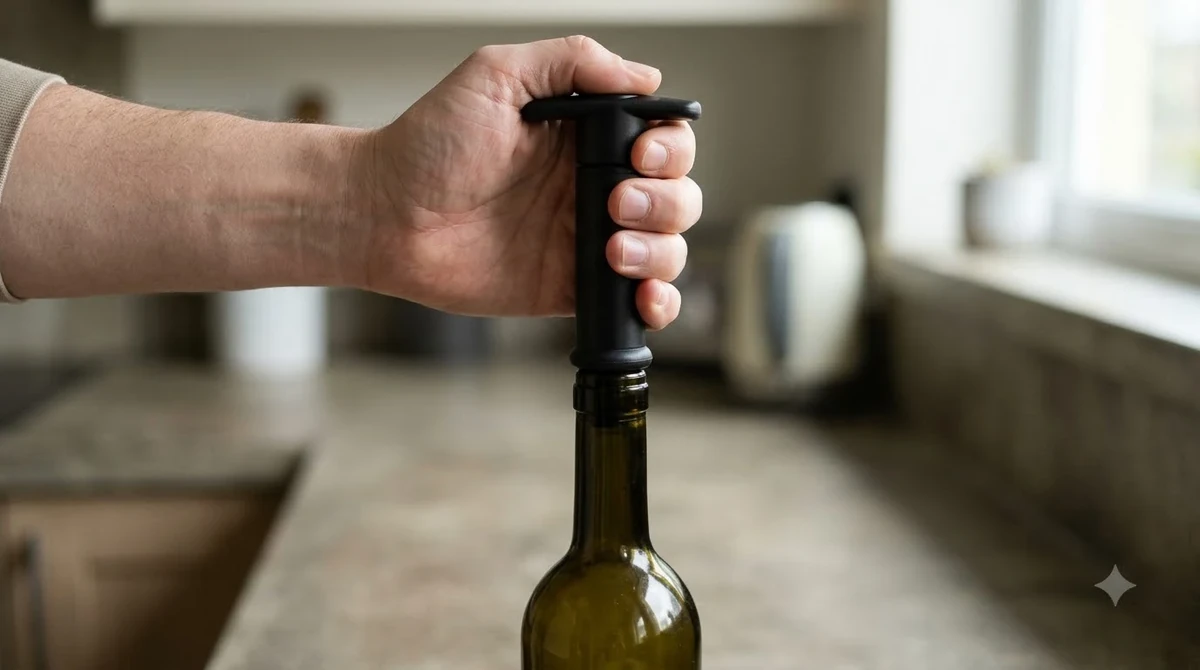
Unlike Coravin’s needle-based systems for still wine, Sparkling does not leave the cork in place. You open the bottle normally, pour what you want, clamp on the Sparkling Stopper, and use the handheld charger to restore pressure. That distinction matters: this is a preservation tool for people who regularly leave sparkling wine unfinished, not a way to sample a sealed bottle without opening it.
Specs and Key Features
Coravin Sparkling is built around two reusable parts: a locking bottle stopper and a handheld CO₂ charger. Its headline claim is at least four weeks of preservation, and the company says each 20-gram capsule can service up to seven standard 750 ml bottles.
| Specification | Coravin Sparkling details |
|---|---|
| What comes in the current US kit | 1 Sparkling Charger, 1 Sparkling Stopper, 2 Pure Sparkling CO₂ capsules, and 1 bottle sleeve, according to Coravin |
| Gas type | CO₂, the gas used to create sparkling wine’s bubbles |
| Capsule size | 20 g / 0.71 oz per capsule, according to the user guide |
| Capsule yield | Up to 7 standard 750 ml bottles per capsule, according to Coravin |
| Preservation claim | At least 4 weeks after opening, according to the manufacturer |
| Wine compatibility | Sparkling wines including Champagne, Prosecco, Cava, and other sparkling styles |
| Storage after charging | Refrigerate the sealed bottle on its side for best results, according to Coravin’s user guide |
| Safety restriction | For sparkling wine only; never use it on still-wine bottles |
The system restores pressure rather than simply putting a lid over the opening. After you remove the cork and pour, the stopper clamps to the bottle neck. The charger then sends CO₂ through a valve in the stopper until the pressure indicator returns to green. In practical terms, it is designed to replenish the headspace with the same gas that gives the wine its sparkle, rather than trying to preserve the remaining bubbles with a passive seal alone.
The current US package includes one stopper, one charger, two capsules, and a bottle sleeve. That is enough to start using the system, but it is not a capsule-free solution: replacements are part of the ownership cost. Coravin’s stated ceiling of seven standard 750 ml bottles per capsule is a useful planning figure, not a promise that every capsule will deliver the same number regardless of how much wine is left or how often the bottle is opened.
Compatibility is intentionally narrow. Coravin identifies Champagne, Prosecco, Cava, and other sparkling wines as suitable, and the company specifically warns against still wine because those bottles are not designed for this pressure system and may break. For a broader look at different approaches, compare this dedicated unit with a general wine preservation system; the technologies are not interchangeable.
What Owners Like
The main advantage is tangible: a bottle can keep its fizz and fresh character across more than one occasion instead of becoming flat after the first pour. Independent coverage found the system noticeably stronger than a basic clamp-style stopper after several days, with longer tests also reporting retained effervescence.

In a side-by-side Prosecco comparison, Bon Appétit’s test of Coravin Sparkling found that the wine still had lively bubbles and bright fruit character on day five. The inexpensive stopper used for comparison had lost much of its sparkle by then, leaving the drink without much texture in a spritz. That is a useful real-world distinction for anyone who likes a glass of sparkling wine on Friday and wants to use the rest for brunch or cocktails later in the week.
WIRED’s review described a longer two-week comparison using two bottles: one left untouched after about a third was poured, and another revisited across three separate drinking sessions. The reviewer reported that both wines remained bright and effervescent at the end of the test. That is encouraging evidence that the system can handle more than an overnight pause, although it does not independently prove the full four-week manufacturer claim under every storage condition.
Another practical benefit is that the sealed bottle can be stored horizontally. Ordinary sparkling stoppers vary in how securely they seal, and some need the bottle to remain upright to avoid leaks. Coravin’s pressure-sealed stopper is designed to stay in place on its side, which can make a crowded refrigerator easier to organize. It is especially useful for people who make sparkling cocktails in small quantities: an ounce or two of Prosecco for an Aperol spritz need not mean sacrificing the rest of the bottle.
Common Complaints
Coravin Sparkling performs a more involved job than a basic stopper, and that brings some friction. Reviews point to the stopper’s firm locking action, the space required for the charger and sealed bottle, and the recurring need to buy compatible CO₂ capsules.
First, fitting and removing the stopper takes more force than pressing a simple cap into place. Coravin’s own guide says the locking handle may require significant pressure before it sits flush, and WIRED also described a learning curve. This is not necessarily a flaw in the seal; the stopper has to hold pressure securely. Still, anyone who wants a quick, one-handed closure may find it less convenient than a conventional wine stopper.
Second, the hardware and bottle take up room. The stopper adds height to the neck, and the charger is another object that needs a home in a kitchen drawer or bar cabinet. Bon Appétit noted that the added height can affect refrigerator-shelf clearance, while WIRED called out the space occupied by a sealed bottle. The ability to store the bottle horizontally helps, but it does not make the system compact.
Third, capsule use continues after the starter pair is gone. Coravin specifies its own 20 g Pure Sparkling capsules and warns that other gas sources are not approved. The claimed yield of up to seven 750 ml bottles per capsule helps explain the running cost, but the purchase makes less sense for a household that opens sparkling wine only a few times a year. The system also requires basic care: the charger nozzle and the top of the stopper should be clean before each charge, and the indicator needs to be read correctly. Safety deserves more attention than it would with a standard bottle cap. The bottle is intentionally pressurized, so it should be handled carefully, especially when condensation makes the glass slippery. Coravin supplies a sleeve to reduce the risk of injury if a bottle breaks, and the manual cautions against opening the charger’s access door while its indicator is green because gas can release rapidly and the capsule may be very cold.
Tip: Before charging, check that the charger nozzle and stopper top are clean, then press the charger straight down until the gas stops or the indicator turns green. Keep the charged bottle in its sleeve or a similar protective cover and refrigerate it on its side; a pressurized glass bottle can break if dropped or struck.
Who Should Buy and Who Should Skip
Coravin Sparkling makes the most sense for people who often open good sparkling wine but rarely finish a whole bottle in one sitting. It is particularly relevant for small households, frequent hosts, wine students, and anyone who likes to serve Champagne or Prosecco across several meals without accepting a rapid loss of bubbles.
Consider it if you regularly keep a bottle of Champagne for a few glasses over a week, use Prosecco in cocktails, or want to compare sparkling wines over separate evenings. A preservation window measured in weeks can make a difference when the remaining wine is something you would rather savor than pour away. Independent reports from day five and two weeks support the basic proposition: when the bottle is sealed and chilled correctly, the difference from a passive stopper can remain noticeable after the first day. The setup may also appeal to hosts who want to save the rest of a bottle for another meal, or wine educators who pour several small samples across separate sessions.
Skip it if you usually finish a 750 ml bottle with dinner, rarely drink sparkling wine, or are content with a basic stopper for a short overnight pause. It is also a poor match if you want to preserve still Chardonnay, Cabernet Sauvignon, or other non-sparkling wines; the pressure system is not intended for those bottles. For an occasional glass of fizz, a small-format bottle may be simpler than adding a charger, stopper, sleeve, and proprietary capsules to your bar setup.
Think about your fridge and habits before buying. The system works best when the remaining bottle can be refrigerated on its side, and it asks you to store the charger plus its accessories between uses. If you have limited shelf clearance or no convenient place for the equipment, the preservation benefit may not compensate for the extra storage routine. The right buyer is not simply someone who likes Champagne; it is someone who repeatedly has a meaningful amount left in the bottle.
How It Compares to Alternatives
The practical alternative is a reusable sparkling-wine stopper, not another Coravin needle system. A conventional stopper can be cheaper and quicker to use, but it only closes the opening; Coravin Sparkling adds CO₂ to restore pressure, which is why its advantage becomes more apparent over several days.
A standard clamp-style champagne stopper remains a sensible choice when the bottle will be finished that evening or the next day. It is small, easy to store, and does not require capsules. Bon Appétit’s comparison showed the limitation: the stopper-sealed Prosecco lost much of its sparkle by day five, while the Coravin bottle remained lively. That result does not mean every inexpensive stopper performs identically, but it illustrates the difference between sealing a bottle and actively restoring its pressure.
Coravin’s Timeless system is not a substitute. Timeless uses a needle through a cork and argon to protect still wine without removing the cork; Sparkling requires the cork to come out and uses CO₂ after pouring. The manufacturer lists Timeless and Pivot for still-wine preservation and Sparkling for bottles of fizz. If most of your collection is still wine, choose a system designed for that use rather than trying to adapt the Sparkling charger.
There is also the option of buying smaller bottles. Mini bottles avoid the question of preserving leftovers and can be convenient for a single cocktail or one glass, although they may not offer the same selection as full-size bottles. For a household that opens bubbly only now and then, that simplicity can outweigh the convenience of saving an opened bottle. For regular drinkers who leave half a bottle behind several times a month, the dedicated system is more compelling. In short, Coravin Sparkling sits between a simple reusable stopper and a full wine-preservation setup: more involved than a cap, but specialized for the pressure and carbonation of sparkling wine. Its central advantage is that it gives you a better chance of enjoying the remaining wine later, so decide based on how often you leave bottles unfinished and whether you are comfortable replenishing capsules.
Frequently Asked Questions
These answers cover practical details that are easy to miss when comparing preservation devices. Read the user guide before the first use, particularly the instructions for capsule installation and releasing pressure from the stopper.
Can Coravin Sparkling be used with magnum bottles?
Yes. Coravin’s bottle-compatibility guidance says the Sparkling stopper can fit any sparkling bottle, including magnum formats. A larger bottle will still be heavier and may require more refrigerator space, so handle it carefully after charging.
Which way should the CO₂ capsule face when installed?
Coravin’s user guide instructs users to insert the capsule with its black cap facing up. The capsule bay should close with an audible click, and the access door then punctures the capsule when it is closed fully.
How do you remove the Sparkling Stopper safely?
Keep one hand securely on top of the stopper, then tilt it or pull the locking handle halfway to release pressure. After the pressure has been released, move the handle to its unlocked position and lift the stopper from the bottle.
What do the red and green pressure-indicator colors mean?
When the charger is not in use, green means the capsule still contains CO₂ and is ready, while red means the gas is empty. During charging, the indicator changes from red to green when the bottle reaches the intended pressure.
Can the CO₂ capsules be heated or reused?
No. The capsules contain gas under pressure and the manual warns that they may explode if heated; empty capsules can also be very cold. Do not reuse any part of a capsule or substitute a different gas source.
Coravin Sparkling is a capable specialist tool rather than an essential accessory for every sparkling-wine drinker. For households that repeatedly save Champagne, Prosecco, or Cava for another day, its active CO₂ seal offers a meaningful improvement over a basic stopper; occasional drinkers may be happier with a simpler closure or smaller bottles.
More in Preservation & Coravin
 Coravin Model Eleven Review: Preserve Wine Without Opening BottlesUpdated Nov 20, 2026
 Is Coravin Worth It? A Practical Guide to Its Real ValueUpdated Nov 20, 2026
 Coravin Timeless Six: Pour a Glass Without Opening the BottleUpdated Nov 20, 2026
 Coravin Pivot Plus Review: Keep Open Wine Fresh for WeeksUpdated Nov 20, 2026
 Coravin Screw Caps Review: Specs, Lifespan, and Real-World PreservationUpdated Nov 20, 2026
 Coravin Alternatives That Keep Open Wine Fresh LongerUpdated Nov 20, 2026