

We may earn a commission when you buy through links on this page, at no extra cost to you. Learn more.
The best champagne stopper for most home drinkers is a hinged clamp-style sealer with a food-grade silicone gasket, which locks mechanically under the glass lip of the bottle to hold internal carbonation pressure for three to five days. If you finish a bottle the next morning, a classic dual-wing lever stopper is fast and compact, while CO2-charging preservation systems keep prestige cuvées bright for up to four weeks. Manual air-pump stoppers and stopper-pourer combos fill specific roles for multi-day fridge storage and mess-free party service.
An unopened bottle of traditional-method sparkling wine sits under six to eight bars of internal pressure, which is roughly three times the pressure inside an automobile tire. The moment you ease out the mushroom-shaped cork, dissolved carbon dioxide begins escaping into the headspace and oxygen starts muting delicate citrus and brioche notes. Unlike still wine stoppers that rely on simple friction or vacuum suction, sparkling closures must grip the annular ring on the bottle neck so internal gas pressure cannot launch the cap across your kitchen.
Quick Comparison
Each champagne stopper design trades off maximum fizz longevity, fridge clearance, and ease of use depending on how quickly you finish an open bottle.
| Stopper Type | Locking Mechanism | Typical Fizz Retention | Bottle Compatibility | Fridge Storage Orientation |
|---|---|---|---|---|
| Hinged Clamp Sealer | Spring-loaded or cam-action side latch under bottle lip | 3 to 5 days | Standard 750ml, prosecco, cava, and slim-neck bottles | Upright or horizontal (check latch rigidity) |
| Dual-Wing Lever Stopper | Two hinged arms that fold down to grip the neck ring | 1 to 3 days | Standard 750ml sparkling necks | Upright only |
| CO2-Charging Preservation System | Locking universal stopper paired with external CO2 cartridge | Up to 4 weeks | Standard 750ml and most magnums | Horizontal or upright |
| Manual Pressure-Pump Stopper | Clamping ears plus built-in top air pump | 2 to 4 days | Standard 750ml sparkling necks | Upright only |
| Stopper and Pourer Combo | Internal expansion plug or collar lock with flip-top spout | 1 to 2 days | Standard 750ml sparkling necks | Upright only |
Best for Everyday Multi-Day Freshness: Hinged Clamp Sealers
Hinged clamp sealers use a single low-profile cap with an internal silicone plug and a sturdy side latch that snaps securely beneath the glass lip of a sparkling wine neck. Reviewers at Decanter found that rigid clamp-style stoppers maintained noticeably better mousse and citrus freshness at the five-day and seven-day marks than traditional winged closures.
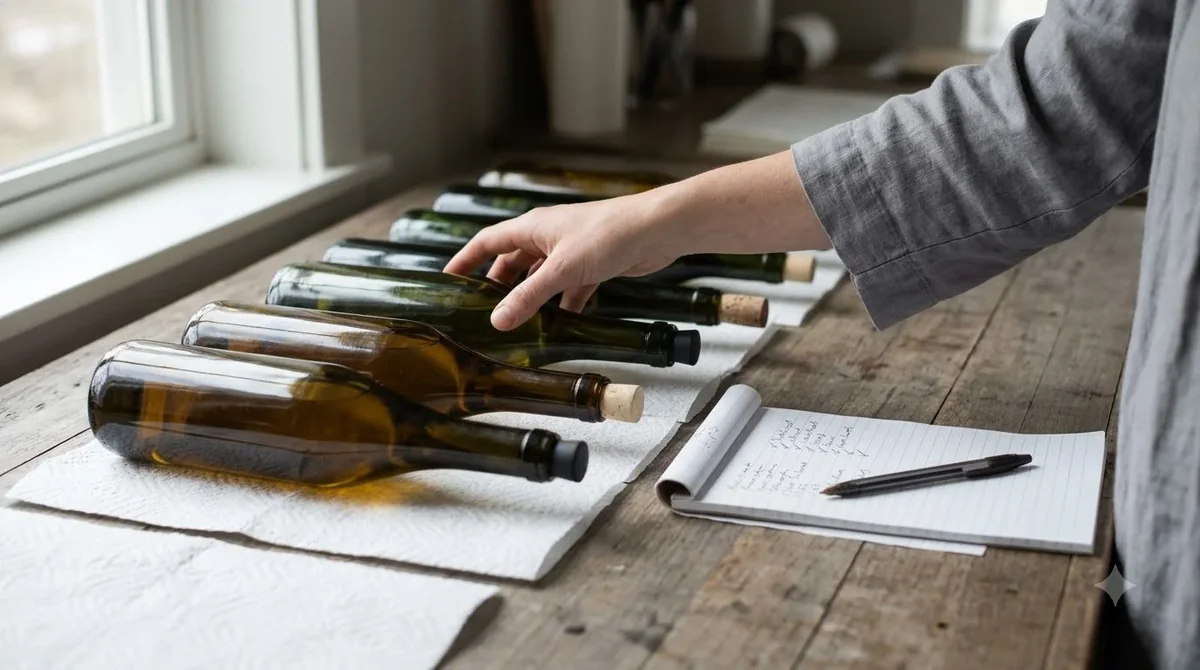
Why it stands out: Because the latch anchors directly under the bottle’s crown finish independently of the silicone gasket, rising gas pressure inside the bottle actually presses the internal seal tighter against the glass rim. Most modern clamp designs add less than an inch and a half of height to the bottle, allowing opened Champagne, cava, and prosecco bottles to stand upright on standard refrigerator door shelves without hitting upper racks. Stainless-steel shells also resist corrosion from acidic wine splashes and rinse clean in seconds.
Keep in mind: A poorly engineered clamp can pop off suddenly if you release the latch in a single motion while the bottle is still warm or agitated. Look for models with a two-stage release or a rigid metal locking arm rather than thin stamped wire, and verify that the inner plug is thick enough to seal slightly narrower prosecco and slim-neck bottles. Best for: Casual weekly drinkers who pour a glass on Friday night and want crisp bubbles waiting on Sunday or Monday.

- Type
- Flip-top clamp stopper
- Material
- BPA-free plastic, silicone, steel
- Size
- 2 x 1.75 x 2.5 in
- Care
- Wipe with a damp cloth
This Italian-made flip-top stopper is a simple fix for sparkling wine you plan to finish over several days. A silicone gasket creates an airtight seal to hold carbonation and prevent leaks, while the stainless steel hinge keeps the clamp firm. It is compact, fits most standard champagne, prosecco, and sparkling bottles, and cleans with a quick wipe.
Pros & ConsView
- Silicone gasket seals in carbonation
- Compact size fits standard sparkling bottles
- Made in Italy with stainless steel parts
- Cleaning is wipe-only with a damp cloth
- Made for sparkling bottles, not still wine
Best for Quick Next-Day Use: Dual-Wing Lever Stoppers
Dual-wing lever stoppers feature a dome-shaped top with a rubber or silicone plug flanked by two metal arms that fold downward to hug the collar of the bottle. As editors at Wine Enthusiast highlight in their preservation buying advice, creating an airtight barrier that stops oxygen ingress is the core job of any effective bottle re-sealer.
Why it stands out: Winged crown sealers are intuitive for guests and hosts alike because the visual cue is unmistakable: when both arms are folded flush against the neck, the bottle is locked. Their classic chrome or brushed-steel silhouette looks polished on a brunch table or bar cart, and the symmetrical wings give you solid leverage even when your hands are damp from an ice bucket. They slip on and off in one fluid motion without needing extra pumps, cartridges, or twisting force.
Keep in mind: Because winged stoppers rely on lever friction rather than a mechanical under-lip latch, their grip can loosen over several days, allowing CO2 to bleed out and faint oxidation to set in after 48 to 72 hours. Always store bottles fitted with a winged stopper upright, since lateral pressure on the arms can break the seal inside a crowded fridge. Best for: Weekend brunch hosts saving leftover cava or prosecco for next-day mimosas.

- Material
- Stainless steel
- Hold Time
- Up to 3 days, champagne
- Operation
- One-hand
- Size
- 3.88 x 2 in
This stopper is a short-term tool rather than a true inert gas system. Its stainless steel body gives a leak-proof, airtight seal that keeps champagne bubbly for up to 3 days, and one-hand operation makes resealing quick. It works for a cellar bottle opened for a weeknight pour, but it is not intended for long-term preservation.
Pros & ConsView
- Leak-proof, airtight stainless steel seal
- Champagne stays bubbly up to 3 days
- Easy one-hand operation
- Not an inert gas system
- Three-day window limits cellar use
Best for Collectors and Prestige Bottles: CO2-Charging Preservation Systems
CO2-charging preservation systems combine a heavy-duty locking stopper with a handheld charger that injects pure carbon dioxide gas into the bottle’s headspace after every pour. By replacing lost atmospheric pressure with food-grade CO2 rather than ambient air, these systems prevent dissolved bubbles from escaping the liquid while blocking oxygen exposure.
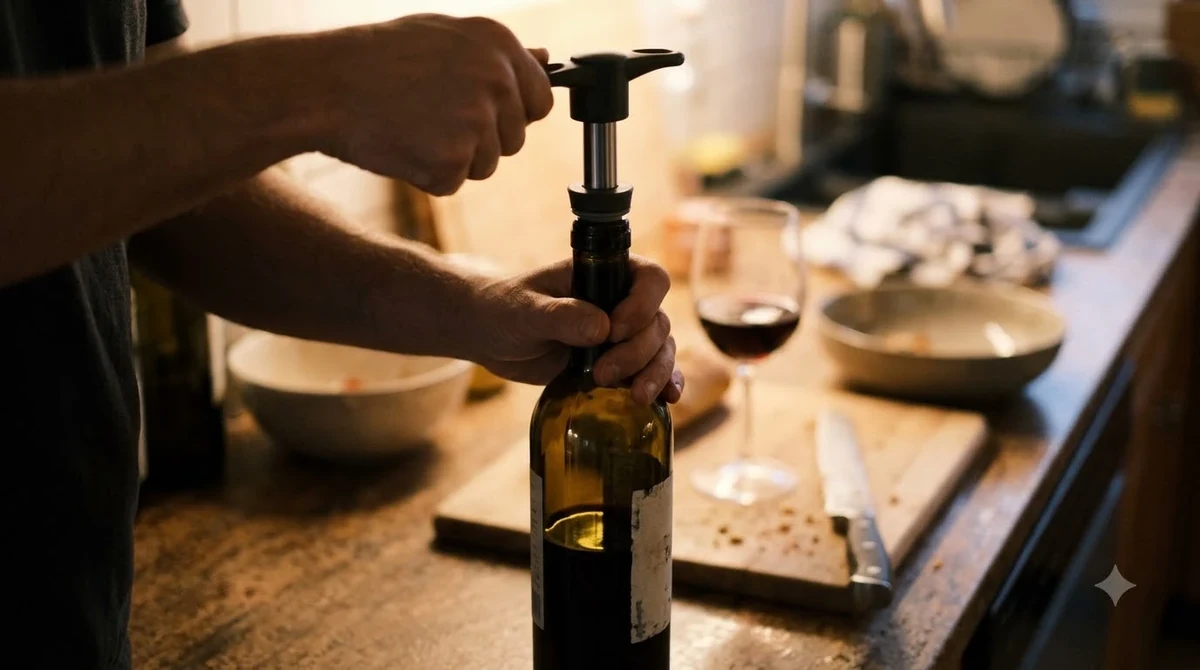
Why it stands out: Standard passive stoppers only trap whatever gas remains in the bottle, which means a half-empty bottle loses fizz faster as CO2 expands into the larger empty space. Pressurizing the headspace restores equilibrium inside the glass, keeping vintage Champagne, grower cuvées, and English sparkling wine vibrant for two to four weeks. Many universal system stoppers also feature a controlled pressure-release valve so you never experience a loud pop or flying cap when opening the bottle a second time.
Keep in mind: These systems require ongoing replacement CO2 capsules, take up counter or drawer space for the charger unit, and involve a two-step sealing and charging routine after every glass. Furthermore, silicone gaskets can still permit trace oxygen transfer over multi-week periods, so specialized polymer seals outperform basic rubber pads. Best for: Wine collectors and solo sippers who want to enjoy a single glass of high-end Champagne over several weeks without wasting a drop.
Best for Half-Empty Bottles: Manual Pressure-Pump Stoppers
Manual pressure-pump stoppers pair a locking neck collar with an integrated piston button on top of the cap that lets you pump extra air into the bottle after clamping it shut. Unlike vacuum pumps built for still wine—which actively suck out dissolved CO2 and flatten sparkling wine immediately—positive-pressure pumps increase headspace pressure to slow down bubble loss.
Why it stands out: When a bottle is down to its final two glasses, passive stoppers struggle because the remaining wine must give up a large share of its carbonation just to pressurize the empty headspace. Giving the top plunger ten to fifteen firm presses rebuilds internal resistance quickly without requiring disposable gas canisters or batteries. Most models include dual locking ears that snap firmly over the bottle lip to contain the added pressure safely.
Keep in mind: Because a manual pump pushes room air—roughly twenty-one percent oxygen—into the bottle rather than pure carbon dioxide, it prioritizes bubble retention over long-term aroma preservation. The wine will stay noticeably fizzy for two to four days, though delicate floral notes will soften faster than they would under inert CO2 gas. Best for: Drinkers who frequently save the bottom third of a bottle for two or three days and want active pressure without buying cartridges.
Best for Dinner Parties and Patio Service: Stopper and Pourer Combos
Stopper and pourer combos insert directly into the bottle neck with concentric silicone fins or a cam-lock collar and feature a built-in drip-free spout with a hinged flip cap. Instead of removing and re-clamping a stopper between every round of refills, you simply flip open the top lid to pour and snap it shut when the glasses are full.
Why it stands out: Constant uncorking and re-sealing during a lively dinner party exposes sparkling wine to repeated surges of warm air and causes annoying foam-overs down the side of the bottle. A contoured pouring lip channels the stream cleanly into narrow champagne flutes or tulip glasses while preserving effervescence between courses. Once dessert wraps up, the closed cap lets you transfer the bottle straight into the refrigerator without hunting for a separate closure.
Keep in mind: Friction-fit pourer spouts do not lock mechanically beneath the glass lip, meaning high internal pressure in a freshly opened, warming bottle can push the entire insert upward. Keep the bottle chilled in an ice bucket during service and use a dedicated locking clamp if you plan to store leftovers beyond 24 to 48 hours. Best for: Hosts pouring multiple rounds at dinner parties, outdoor gatherings, and holiday toasts.

- Type
- Stopper and pourer
- Material
- Stainless steel
- Fit
- Fits all size wine bottles
- Lever
- Soft, non-slip
Hosting at the table or on the patio, this two-in-one piece seals the bottle for short-term storage and opens for drip-free pouring. The steel body allows an even, consistent flow, and the soft non-slip lever is comfortable to press. It fits all sizes of wine bottles, so one tool does the job for the whole evening service.
Pros & ConsView
- Seals and pours with a single tool
- Drip-free, even wine flow
- Soft non-slip lever is comfortable to use
- Seals for short-term storage only
- Taller 4-inch body than a basic stopper
How to Choose
Selecting the right closure starts with matching the mechanical design to your drinking habits and bottle shapes. To understand how long wine lasts after opening across different styles, consider four practical factors before adding a stopper to your bar drawer:
- Locking mechanism over friction: Always choose a stopper with physical arms, latches, or locking collars that hook underneath the thickened glass ring at the top of the bottle neck. Push-in corks and rubber cones meant for still wine will shoot off under sparkling wine pressure.
- Gasket material and seal geometry: Food-grade silicone and dense thermoplastic elastomers resist odor absorption and mold cleanly around tiny imperfections in the glass rim. Flat, wide internal gaskets distribute clamping force evenly so CO2 cannot hiss out through microscopic gaps.
- Neck diameter versatility: Standard Champagne bottles share a uniform 29-millimeter crown finish, but many prosecco, pet-nat, and half-bottle formats feature slimmer or slightly sloped necks. Adjustable hinged clamps and expandable polymer plugs adapt far better across varied bottle shapes than rigid fixed-width metal caps.
- Total installed height: Measure the vertical clearance between your refrigerator shelves or door bins before buying tall lever-style or pump-top stoppers. Low-profile clamp sealers let you stand bottles upright in cold storage, which minimizes the liquid surface area exposed to headspace oxygen.
Tip: Never put a metal spoon handle into the neck of an open Champagne bottle—physics tests have repeatedly confirmed that cold metal does nothing to trap carbon dioxide, whereas cold refrigerator temperatures keep gas dissolved in the liquid far longer.
Frequently Asked Questions
Can you use a vacuum wine stopper on Champagne?
No, vacuum pumps designed for still wine should never be used on sparkling wine. Pumping air out of the bottle lowers internal pressure and actively pulls dissolved carbon dioxide out of the wine, turning your Champagne flat within hours.
How long does Champagne stay fizzy with a good stopper?
Stored upright in a cold refrigerator, an opened bottle sealed with a quality hinged clamp stopper retains lively bubbles for three to five days. If you use a CO2-charging preservation system that replaces headspace air with pure carbon dioxide, sparkling wine can stay crisp and aromatic for two to four weeks.
Do Champagne stoppers fit prosecco, cava, and crémant bottles?
Most hinged clamp and dual-wing stoppers fit standard 750ml Champagne, cava, crémant, and prosecco bottles because they share similar crown-cap glass lips. However, some prosecco bottles and 375ml half-bottles have slightly narrower neck openings, so flexible silicone plugs seal more reliably than rigid metal caps.
Should you store an open bottle of Champagne upright or on its side?
You should almost always store an opened bottle upright in the refrigerator. Standing the bottle vertically keeps the liquid surface area small to slow gas escape and prevents wine from pooling against the stopper’s locking arms, unless you are using a rigid system specifically rated for horizontal storage.
Keeping leftover bubbly crisp comes down to matching a secure under-lip lock with cold refrigerator storage right after you pour. Explore our full Preservation & Stoppers hub to compare tools for both sparkling and still bottles so every glass tastes as lively as the first pour.
More in Preservation & Coravin
 Coravin Model Eleven Review: Preserve Wine Without Opening BottlesUpdated Nov 20, 2026
 Is Coravin Worth It? A Practical Guide to Its Real ValueUpdated Nov 20, 2026
 Coravin Timeless Six: Pour a Glass Without Opening the BottleUpdated Nov 20, 2026
 Coravin Pivot Plus Review: Keep Open Wine Fresh for WeeksUpdated Nov 20, 2026
 Coravin Screw Caps Review: Specs, Lifespan, and Real-World PreservationUpdated Nov 20, 2026
 Coravin Alternatives That Keep Open Wine Fresh LongerUpdated Nov 21, 2026