

We may earn a commission when you buy through links on this page, at no extra cost to you. Learn more.
The coravin aerator is a wine accessory that exposes wine to oxygen as it pours, helping develop aromas and soften the impression of tannins without requiring a separate decanter. Coravin offers different versions for its Timeless and Pivot preservation systems, so compatibility is essential before buying. It is particularly useful for young, structured red wines, although it does not replace traditional decanting when a bottle contains sediment or needs more gradual exposure to air.
The Coravin Aerator occupies an interesting position between wine preservation equipment and traditional serving accessories. Instead of simply pouring wine into a glass, it distributes the liquid into a fine shower, increasing contact with air during the pour. That makes it appealing to people who enjoy opening structured wines by the glass and want to improve their immediate drinking experience without waiting for a separate decanting process. However, its usefulness depends on the wine, the preservation system, and the expectations of the person using it.
Specs and Key Features
The main attraction of the Coravin Aerator is its ability to aerate wine during dispensing rather than requiring a separate preparation step. Coravin describes the resulting effect as comparable to 60 to 90 minutes of decanting, although this should be understood as the manufacturer’s performance comparison rather than a guarantee that every wine will develop identically.
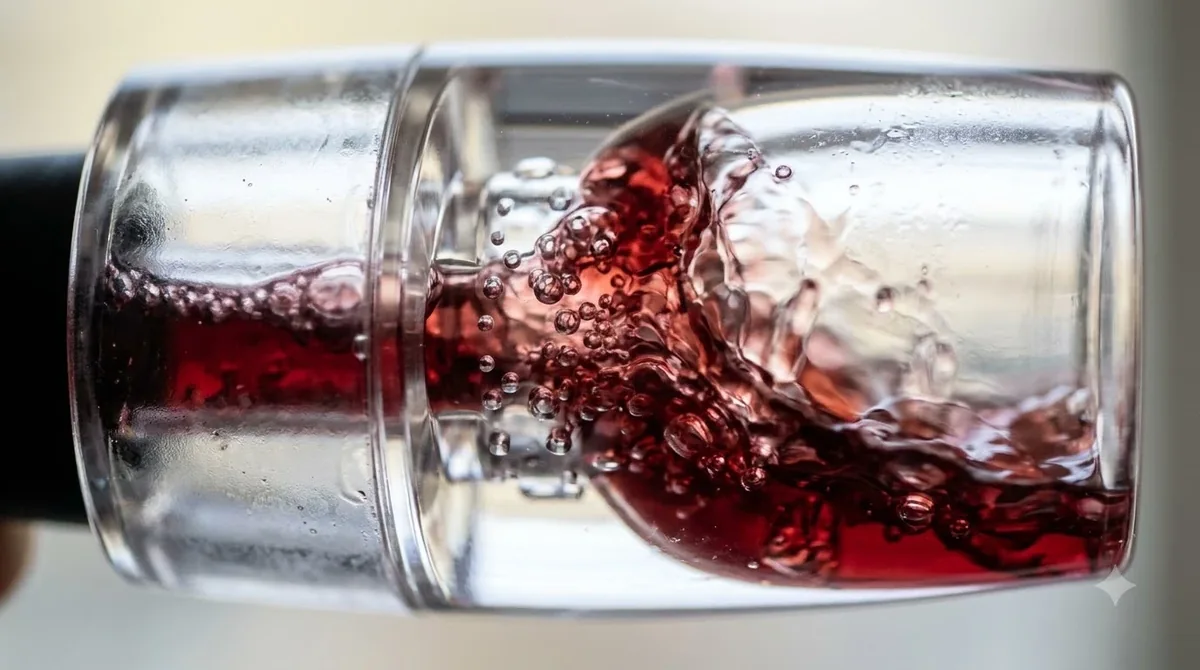
There are two designs to consider. The smaller, cone-shaped Timeless Aerator fits the Timeless family, while the larger, angled Pivot Aerator is made for the Pivot system. These are not interchangeable accessories. The difference matters because the two preservation systems use different dispensing arrangements, and an incorrectly matched attachment will not provide the intended operation.
| Specification | Coravin Aerator Details |
|---|---|
| Product category | Wine aeration accessory |
| Timeless design | Smaller, cone-shaped attachment |
| Pivot design | Larger, angled attachment |
| Timeless compatibility | Timeless wine preservation systems |
| Pivot compatibility | Pivot wine preservation system |
| Claimed aeration equivalent | 60–90 minutes of decanting |
| Cleaning components | 3 removable parts |
| Recommended cleaning | Rinse and dry after each use |
| Additional maintenance | Warm-water soaking when necessary |
| Primary function | Distributes wine into a shower during pouring |
The construction is intended to direct the wine through a small outlet and screen, dispersing the stream into droplets. Rather than relying entirely on the surface of wine sitting in a glass, the accessory increases the liquid’s exposure to air while it travels from the bottle to the glass. This is the principle behind conventional pour-through aerators as well, although the Coravin version is integrated with a preservation system.
One important distinction is that the aerator does not perform the preservation function by itself. The Timeless and Pivot systems handle wine preservation using their respective dispensing and sealing arrangements. The aerator adds an aeration effect to the serving process. Anyone comparing a wine preservation system should therefore evaluate the main system first and consider the aerator as an additional accessory.
There is also a compatibility qualification for owners of older equipment. Coravin notes that early versions of the Timeless Aerator may not work with the Model Eleven. Owners should establish which aerator generation and system configuration they have before assuming that every Timeless-branded accessory will fit.
For exact compatibility instructions, attachment guidance, and cleaning steps, consult Coravin’s official Aerator support guide. It explains the differences between the two versions and provides operating recommendations for each system.
What Owners Like
The strongest appeal of the Coravin Aerator is convenience: it combines dispensing and aeration into one serving process. For someone who wants a glass of young Cabernet Sauvignon or Syrah without preparing a decanter, this arrangement can make a difference to the serving routine.
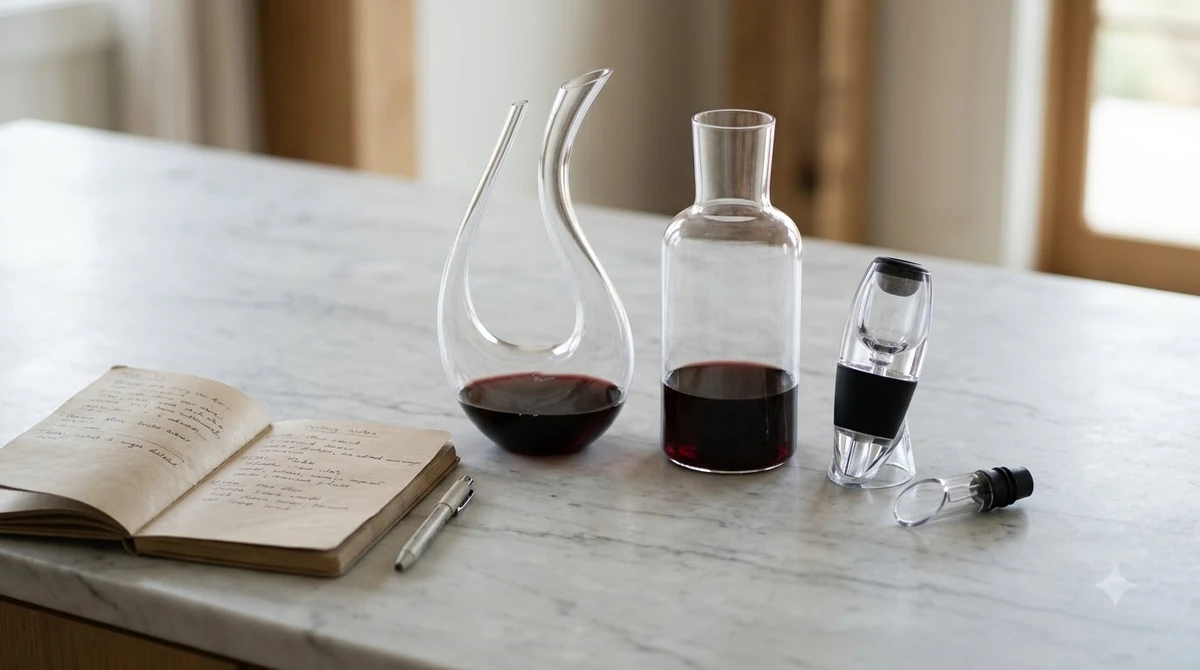
Young, structured reds are particularly relevant. Cabernet Sauvignon typically has high tannin, while Syrah can have medium-plus to high tannin. These wines can sometimes seem tightly wound immediately after opening. Increased oxygen contact may help their aromas become more expressive and make their structure seem less aggressive. A Coravin Aerator gives the drinker an immediate aeration option without pouring an entire bottle into a separate vessel.
Another attraction is that the accessory works within the existing Coravin setup. A Timeless owner can attach the appropriate aerator to the dispensing spout rather than purchasing a completely different serving appliance. The same general convenience applies to Pivot owners who choose the dedicated Pivot Aerator.
For people who regularly compare wines, the accessory also offers a practical way to serve individual portions. Imagine opening a bottle of young Barolo, pouring a glass, and then comparing it with another wine at the same meal. A traditional decanter can be useful, but it requires transferring wine, finding suitable space, and deciding how much time to allow. An integrated aerator simplifies that initial serving step.
There is also a practical advantage for people who enjoy tasting wines at different stages of development. An individual pour can be assessed immediately, then compared with another serving after the wine has had additional time in the glass. The aerator does not eliminate the natural evolution of wine after pouring, but it gives the drinker another way to introduce oxygen at the beginning of the process.
Less waiting before the first glass
Coravin’s stated 60-to-90-minute decanting equivalence is one of the most appealing product claims. It describes the intended benefit for wines that need air before showing their aromatic character. Rather than waiting for a young red to develop in a decanter, the user can aerate during dispensing.
That comparison should not be interpreted as a universal substitute for every decanting schedule. Wine responds differently depending on grape variety, age, winemaking, bottle condition, and the amount of oxygen it has already encountered. A young, powerful Cabernet Sauvignon and a delicate older Pinot Noir do not necessarily benefit from the same degree of aeration.
Useful with individual servings
Individual serving convenience is especially attractive for people who use Coravin to explore expensive or distinctive wines without committing to a full bottle. The aerator allows the serving process to remain relatively simple while adding an optional oxygen-exposure step.
It can also be useful at small tasting gatherings. Several people can receive individual pours without waiting for a decanter to finish its preparation period. For example, a host serving a young Syrah alongside a Merlot can use aeration selectively rather than automatically exposing both wines to the same treatment.
Still, an aerated pour is not necessarily a better pour in every situation. Some wines are already expressive when opened, and others have delicate aromas that can diminish with excessive oxygen exposure. The useful feature is having another serving option, not having to use it for every bottle.
Common Complaints
The most significant limitation is compatibility. The Coravin name covers multiple preservation products, but the Timeless and Pivot Aerators have different designs and intended connections. A buyer who selects the wrong attachment can end up with an accessory that does not suit the system already on the counter.
The second consideration is that aeration is not always desirable. A fine, mature Pinot Noir, an older Burgundy, or a delicate aged Rioja may need gentle handling rather than an aggressive increase in oxygen exposure. Wine Enthusiast explains that oxygen can help release certain aromatic compounds, but exposure can also cause desirable aromas to fade and wine to lose its freshness over time.
Another limitation concerns sediment. An aerator is not a sediment filter or a substitute for careful decanting. If an older bottle of red wine contains deposits, the accessory does not separate those solids from the liquid. Traditional decanting remains the more appropriate approach when clarity and sediment removal are important.
Compatibility is not universal
Coravin’s two aerator designs are easy to distinguish once their intended systems are understood. The Timeless attachment is smaller and cone-shaped. The Pivot attachment is larger and angled. Their different shapes reflect the different dispensing arrangements rather than simply offering two cosmetic variations.
The Model Eleven qualification deserves particular attention. Coravin states that early versions of its Timeless Aerator may not work with this model. Someone purchasing an older accessory or inheriting equipment from another owner should not assume compatibility based only on the Timeless name.
There is also a practical difference in the way the two versions are operated. Timeless users need to adjust their trigger technique to obtain a steady stream, whereas Pivot users should work with short, light button presses to create the intended shower. Using the same pouring technique with both systems can produce inconsistent results.
Cleaning takes more than a quick rinse
Although routine rinsing is straightforward, the internal screen requires occasional attention. Small cork particles or wine sediment can collect in the openings and interfere with the flow. This means the accessory requires more maintenance than a simple glass or ordinary pourer.
The Pivot version also has a small operational quirk. Because of its angled head, some wine can remain inside after pouring. Coravin recommends leaving the bottle upright for a few seconds to allow the remaining liquid to drain before removing the attachment. This is a minor inconvenience, but it is useful to know before serving guests.
Finally, an aerator cannot make an unsuitable wine suddenly taste exceptional. Wine Enthusiast emphasizes that aeration can reveal aromas and nuances already present in a wine, rather than transforming a basic wine into a substantially more complex one.
Who Should Buy and Who Should Skip
The Coravin Aerator makes the most sense for existing Coravin owners who regularly pour wines that benefit from oxygen exposure. It is a specialized accessory, so its value is closely connected to how frequently the preservation system is used and which styles of wine are normally served.
For someone who regularly drinks young Cabernet Sauvignon, Nebbiolo, Syrah, or other structured reds, the convenience can be appealing. These wines may show tighter tannins or less expressive aromas immediately after opening. Having an aeration attachment ready can reduce the time and equipment involved in preparing a serving.
It can also suit people who enjoy comparative tastings. A wine enthusiast exploring different regions, vintages, or grape varieties may appreciate being able to aerate individual glasses as needed. This is particularly relevant when the tasting involves several bottles and there is no reason to expose every wine to the same amount of air.
Good candidates for the accessory
- Regular Timeless owners: People who already use a compatible Timeless system and want an additional serving feature.
- Pivot owners: People who use Pivot and want the dedicated Pivot Aerator rather than an incompatible Timeless attachment.
- Young red wine enthusiasts: Drinkers who frequently serve structured Cabernet Sauvignon, Syrah, or Nebbiolo.
- Small tasting groups: Hosts who want to serve individual glasses without preparing a separate decanter for every wine.
- Wine explorers: People who enjoy comparing the aromatic development of different wines during a tasting.
Who should skip it
A casual wine drinker who mostly opens light, uncomplicated wines may find the accessory unnecessary. Many everyday wines are enjoyable without aeration, and adding another specialized attachment does not automatically improve the experience.
People who primarily drink older, delicate wines should also think carefully before purchasing. Older Pinot Noir, mature Burgundy, and fragile aged reds can require a gentler approach. A controlled pour into a suitable glass may be preferable to a concentrated aeration process.
Traditional decanter users may also prefer their existing equipment. A decanter can expose a larger volume of wine to air and, with careful pouring, separate sediment from the liquid. Those are important functions that the Coravin Aerator does not reproduce.
Tip: Match the aerator to your preservation system before buying. If you own Timeless, look for the cone-shaped Timeless version; if you own Pivot, choose the larger angled Pivot Aerator. For older or delicate wine, start with a normal pour and assess the aromas before deciding whether additional aeration is necessary.
It is also sensible to consider how often you use your preservation equipment. Someone who opens several different bottles over a week may appreciate an accessory that simplifies individual pours. Someone who opens one bottle for a group and finishes it at dinner may find a traditional decanter more practical.
How It Compares to Alternatives
The Coravin Aerator is best understood as an integrated serving accessory rather than a direct replacement for every wine aeration tool. Traditional decanters, handheld pour-through aerators, and simple glass swirling all expose wine to oxygen, but they do so in different ways and offer different levels of control.
The right comparison depends on the wine and the purpose of aeration. If the goal is to make a young, tannic red more expressive during an individual pour, an aerator can be convenient. If the goal is to separate sediment from an older bottle or give an entire bottle time to develop, a decanter offers capabilities that a small dispensing attachment cannot match.
Wine Enthusiast’s comparison of wine aerators and decanters makes the distinction clear: aerators generally suit young, bold, tannic reds, while decanters are especially useful for older bottles that require careful sediment separation. That distinction is central to deciding whether the Coravin accessory is appropriate for a particular wine routine.
Coravin Aerator versus a traditional decanter
A decanter provides a separate vessel in which wine can rest. Its shape can expose a substantial surface area to air, allowing the wine to change over time. It can also help separate sediment when an older bottle is transferred carefully.
The Coravin Aerator instead disperses wine as it leaves the preservation system. Its principal advantage is convenience: there is no need to transfer an entire bottle or prepare a separate vessel before pouring a glass. Its principal limitation is that it does not provide the same controlled resting period or sediment separation.
For a young Cabernet Sauvignon that needs some oxygen before dinner, either method may be useful. For an aged Barolo with substantial sediment, a carefully managed decanting process is the more suitable option.
Coravin Aerator versus a handheld pour-through aerator
A handheld pour-through aerator performs a broadly similar task by dispersing wine and increasing its exposure to air. Many conventional versions sit directly in the bottle neck or above the serving glass. They are useful for people who want aeration without a separate decanter.
The distinction is system integration. The Coravin attachment is designed around the corresponding preservation system, while a conventional pour-through accessory generally operates independently of Coravin equipment. Someone who already owns a Coravin system may prefer the integrated arrangement. Someone without that equipment may have little reason to choose a specialized attachment.
Coravin Aerator versus swirling in the glass
Swirling is the simplest alternative. Moving wine around the bowl of a suitable glass increases its contact with air and helps release aromas. It requires no additional equipment and gives the drinker control over how much agitation to apply.
For everyday drinking, swirling may be all that is necessary. A glass of Pinot Noir or Merlot can become more expressive after a few gentle rotations. The Coravin Aerator is more attractive when the user specifically wants to combine dispensing and aeration, particularly when serving several individual glasses.
For a broader comparison of equipment, a Coravin preservation accessory should be evaluated in relation to the main system, rather than treated as a universal wine-serving tool. The best choice is the one that addresses an actual serving requirement.
Frequently Asked Questions
Can the Coravin Aerator be used with sparkling wine?
The standard Timeless and Pivot Aerators are designed for still-wine preservation systems, not for maintaining sparkling wine carbonation. Coravin’s Sparkling system uses a dedicated stopper and carbon dioxide charging arrangement. Sparkling wine requires a different approach because its dissolved carbon dioxide produces the bubbles that define the style.
Can an aerator remove a cork taint smell?
No. Aeration is not a reliable way to correct cork taint. The musty, damp-cardboard character associated with cork taint comes from contamination rather than simply insufficient oxygen exposure. Dispersing the wine through an aerator will not restore a bottle affected by this problem.
Does aeration change the alcohol content of wine?
Normal pouring through an aerator is not intended to reduce the alcohol content of wine. Its purpose is to increase oxygen contact and alter the wine’s aromatic presentation. A wine’s stated alcohol by volume remains the relevant measure of its alcoholic strength.
Can a wine be aerated more than once?
A wine can encounter oxygen during multiple pours, but repeated aeration is not automatically beneficial. The result depends on the wine’s structure and condition, and excessive exposure can cause desirable aromas to fade. Assess the wine after the first pour before deciding whether further aeration is appropriate.
Does the Coravin Aerator work with wine bottles that have screw caps?
The aerator’s compatibility depends on the preservation system, not simply the bottle closure. Coravin Timeless systems can accommodate screw-cap bottles when used with the appropriate Timeless Screw Cap accessory, while Pivot uses its replacement stopper. The aerator itself does not provide the closure adaptation needed to access a screw-cap bottle.
The Coravin Aerator is a useful specialist accessory for wine drinkers who already own a compatible preservation system and frequently serve structured wines by the glass. Its biggest advantage is combining aeration with dispensing, while its main limitations are system-specific compatibility, regular cleaning, and its inability to replace traditional sediment removal. Choose the correct Timeless or Pivot version, use it selectively, and consider a traditional decanter for wines that need more controlled preparation. If you are building a complete wine-serving setup, comparing the available wine stopper options is another practical step toward protecting bottles between occasions.
More in Preservation & Coravin
 Coravin Model Eleven Review: Preserve Wine Without Opening BottlesUpdated Nov 20, 2026
 Is Coravin Worth It? A Practical Guide to Its Real ValueUpdated Nov 20, 2026
 Coravin Timeless Six: Pour a Glass Without Opening the BottleUpdated Nov 20, 2026
 Coravin Pivot Plus Review: Keep Open Wine Fresh for WeeksUpdated Nov 20, 2026
 Coravin Screw Caps Review: Specs, Lifespan, and Real-World PreservationUpdated Nov 20, 2026
 Coravin Alternatives That Keep Open Wine Fresh LongerUpdated Nov 20, 2026