

We may earn a commission when you buy through links on this page, at no extra cost to you. Learn more.
The typical korbel wine price for a standard 750 ml bottle of Korbel sparkling wine is about $10 to $16 at US retailers, depending on the style, location, and store. Korbel Brut and Extra Dry are usually among the most accessible choices, while Rosé and specialty bottlings can occupy slightly different price ranges. Comparing bottle sizes, sweetness levels, and retail availability helps you choose the right sparkling wine without paying for a format or style you do not need.
Korbel is a familiar name in American sparkling wine, particularly for shoppers looking for an affordable bottle for celebrations, brunches, parties, and casual dinners. Its California sparkling wine portfolio includes recognizable options such as Brut, Extra Dry, Brut Rosé, and Sweet Rosé. However, the label and bottle size matter when comparing shelf prices. A smaller bottle may cost less upfront, while a 1.5-liter bottle can provide more wine for a group. This guide explains what shoppers can expect to pay, which Korbel styles suit different occasions, and how to make a sensible purchase.
Who This Is For
Korbel is worth considering if you want an approachable California sparkling wine without moving into the higher-priced traditional Champagne category. Its standard 750 ml bottles, smaller individual formats, and larger party bottles make it practical for different occasions and serving requirements.
The first group of shoppers is anyone planning a celebration that needs a recognizable sparkling wine. Korbel Brut is a useful starting point because its medium-dry profile works with a variety of savory foods. The producer describes aromas of citrus and cinnamon alongside flavors of orange, lime, vanilla, and strawberry. Its 12% alcohol content also makes it comparable to many other sparkling wine options in terms of strength.
Another group includes shoppers who prefer a little sweetness. Korbel Extra Dry has an off-dry character that can appeal to people who find very dry sparkling wines too sharp. Those who enjoy sweeter fruit-forward wines may prefer Korbel Sweet Rosé, which features raspberry and vanilla characteristics. These differences matter more than small variations in shelf price because sweetness affects how enjoyable the bottle will be for the people drinking it.
Korbel also suits hosts who need flexibility in serving sizes. A 187 ml bottle is convenient for an individual serving, a four-pack can help with smaller gatherings, and a 1.5-liter bottle offers more wine for a larger event. The standard 750 ml format remains the simplest option for most households because it provides approximately five 5-ounce servings.
Shoppers who specifically want French Champagne should understand the distinction before buying. Korbel is a California sparkling wine, not Champagne from the Champagne region of France. Its California identity does not prevent it from being an enjoyable celebration wine, but geographical origin and production method are important distinctions when comparing bottles.
Key Factors to Compare
The most useful comparison involves four factors: bottle size, sparkling wine style, sweetness, and retail availability. A 750 ml Korbel Brut and a 750 ml Korbel Sweet Rosé may look similar in size, but they offer different drinking experiences and may carry different shelf prices.
For a starting price comparison, Target and Total Wine listings provide examples of the different formats and styles available. The following ranges are practical US shopping estimates based on retailer listings and published retail schedules, not guaranteed prices or fixed manufacturer prices. Prices vary by state and retailer, and local alcohol taxes and availability can affect the final amount.
| Korbel format or style | Typical US retail range | Best use |
|---|---|---|
| Brut, 750 ml | About $10–$16 | General celebrations and dinners |
| Extra Dry, 750 ml | About $10–$16 | Drinkers preferring off-dry sparkling wine |
| Brut Rosé, 750 ml | About $11–$17 | Parties and fruit-friendly food pairings |
| Sweet Rosé, 750 ml | About $12–$17 | Desserts and sweeter wine preferences |
| Brut, 187 ml single bottle | About $4–$7 | Individual servings |
| Brut, four-pack of 187 ml bottles | About $13–$18 | Small gatherings and individual portions |
| Brut, 1.5 liters | About $22–$32 | Large gatherings and group celebrations |
| Extra Dry, 1.5 liters | About $25–$33 | Sharing with guests who prefer sweeter sparkling wine |
These indicative ranges are informed by Korbel product listings at Target and Total Wine, alongside the Utah Department of Alcoholic Beverage Services’ published retail schedule. For example, the retailers list standard 750 ml Brut and Extra Dry bottles, while the Utah schedule includes 750 ml and 1.5-liter formats. These are comparison points rather than a promise that every store carries every size. State-controlled alcohol markets can have different pricing structures from ordinary grocery and liquor retailers.
Size is especially important when comparing value. A 1.5-liter magnum contains twice as much wine as a 750 ml bottle, while four 187 ml bottles contain 748 ml in total. The four-pack is therefore almost equivalent in volume to a standard bottle, but its individual containers can make serving more convenient.
It is also helpful to compare the style rather than assuming every bottle bearing the Korbel name has the same sweetness. Brut is generally drier than Extra Dry, which is off-dry. Sweet Rosé is distinctly sweeter. The distinction can have a bigger impact on satisfaction than a modest difference in retail cost.
Step-by-Step: How to Compare Korbel Wine Prices
A good purchase starts with the occasion and the number of servings required. Once those are clear, compare like-for-like bottle sizes and styles rather than choosing the lowest shelf price automatically.
-
Decide how many people will drink the wine.
A 750 ml bottle supplies approximately five 5-ounce glasses. For a group of 10 people, two standard bottles provide approximately 10 servings, while a 1.5-liter magnum supplies about 10 servings on its own. -
Choose the appropriate sweetness level.
Select Brut for a balanced, relatively dry profile, Extra Dry for a softer off-dry style, and Sweet Rosé for a fruitier, sweeter experience. This step helps prevent purchasing a bottle that does not suit the preferences of the guests. -
Compare equivalent formats.
Compare a 750 ml Brut with another 750 ml Brut rather than comparing it directly with a 187 ml miniature or a 1.5-liter magnum. Bottle size changes the upfront cost and the amount of wine received. -
Check multiple retail channels.
Look at grocery stores, dedicated wine shops, and larger alcohol retailers. Total Wine and Target both list several Korbel products, making them useful starting points for comparing availability and packaging. -
Calculate the cost per serving.
Divide the bottle price by the number of 5-ounce servings. For example, a hypothetical $15 bottle divided into five servings works out to $3 per glass before any additional serving costs. -
Check the final purchase conditions.
Look at local availability, applicable taxes, bottle deposits where relevant, and whether the retailer offers the format you want. A listed online product is not necessarily available in every store. -
Choose the bottle that fits the occasion.
For a dinner for four, a standard bottle may be sufficient. For a larger party, two standard bottles or one magnum can simplify planning.
Retailer comparisons are most meaningful when they involve the same product, bottle size, and market. A retailer displaying a lower price in one state does not necessarily offer the same price in another. This is why a reasonable budget range is more useful than relying on a single advertised figure.
Tip: Compare the cost per 750 ml equivalent when evaluating Korbel formats. A four-pack of 187 ml bottles contains almost the same total volume as one 750 ml bottle, while a 1.5-liter magnum contains exactly twice the volume. This simple calculation makes it easier to judge whether a larger format offers useful value.
Types of Korbel Sparkling Wine Explained
Korbel’s sparkling wine selection covers several sweetness and flavor preferences, so identifying the style is one of the easiest ways to narrow down a purchase. Brut, Extra Dry, Brut Rosé, and Sweet Rosé are useful starting points for comparing the portfolio.
Korbel Brut
Korbel Brut is the natural starting point for shoppers who want a versatile sparkling wine with a relatively dry finish. Its blend includes Chardonnay, Chenin Blanc, French Colombard, and Pinot Noir. The producer describes its aromas as citrus and cinnamon, with orange, lime, vanilla, and strawberry on the palate.
Its savory food compatibility makes it particularly useful at meals. Korbel recommends pairing Brut with caviar, fried foods, salty snacks, and shellfish. It can also work as an aperitif or as the sparkling component in a mimosa. Its 750 ml, 187 ml, and 1.5-liter formats provide flexibility for different occasions.
Shoppers comparing the korbel brut selection should focus on whether they need the standard bottle or a larger format. Brut is a practical choice for hosts who want one sparkling wine that can accompany both appetizers and a casual meal.
Korbel Extra Dry
Korbel Extra Dry is designed for drinkers who prefer a softer, slightly sweeter sparkling wine. Its blend uses four grape varieties: Chenin Blanc, Chardonnay, French Colombard, and Pinot Noir. According to the producer, the wine has citrus, vanilla, and spice characteristics with a fresh, off-dry finish.
The name can be confusing because Extra Dry is actually sweeter than Brut in sparkling wine terminology. It is not an especially sweet dessert wine, but it provides more noticeable sweetness than a typical Brut bottling. The style can work well with creamy cheeses, dried fruit, pâté, and spicy Asian dishes.
People comparing korbel extra dry should consider whether their guests generally prefer a slightly sweeter finish. Its availability in 750 ml and 1.5-liter formats also makes it useful for gatherings where a softer sparkling style is preferred.
Korbel Brut Rosé
Brut Rosé is an option for shoppers who want a pink sparkling wine without choosing the sweeter Sweet Rosé style. Its appearance makes it attractive for celebrations, brunches, and occasions where a pink wine presentation is desirable. It can also provide a useful alternative to standard white sparkling wine at a mixed gathering.
When comparing this bottle with Brut, the main consideration should be the style rather than color alone. Rosé does not automatically mean sweet. A Brut Rosé can still have a relatively dry character, so shoppers should distinguish it from a sweeter sparkling rosé before selecting it for dessert service.
Korbel Sweet Rosé
Sweet Rosé is the more dessert-oriented choice in this group. Its blend includes Pinot Noir, Zinfandel, Sangiovese, Gamay, and Chenin Blanc. The producer describes raspberry and vanilla characteristics and recommends pairing it with dark chocolate, especially desserts featuring strawberries, raspberries, or cherries.
Its 11% ABV and sweeter dosage distinguish it from Korbel Brut and Extra Dry. This makes it a more appropriate choice for guests who enjoy pronounced fruitiness rather than a traditional dry sparkling wine. A chilled bottle can also work as a dessert accompaniment or as the basis for a fruit-focused celebration drink.
For shoppers exploring the wider Korbel wine selection, comparing these four styles provides a useful picture of the brand’s range without assuming that every sparkling wine has the same flavor profile.
Common Mistakes When Comparing Korbel Prices
The most common purchasing mistakes involve confusing bottle sizes, misunderstanding sweetness terminology, and treating a temporary retailer listing as a universal price. Avoiding these errors makes it easier to select the right wine and assess its value accurately.
Comparing different bottle sizes as if they were equivalent: A 187 ml bottle naturally costs less than a 750 ml bottle because it contains less wine. Likewise, a 1.5-liter magnum should not be judged by its higher upfront cost alone. Calculate the cost per milliliter or per serving to make a fair comparison.
Assuming Extra Dry means drier than Brut: This is one of the most common sparkling wine terminology mistakes. The sweetness scale runs from Brut Nature and Extra Brut through Brut, Extra Dry, Dry, Demi-Sec, and Doux. Extra Dry is therefore sweeter than Brut, not less sweet.
Assuming all Rosé is sweet: Korbel Brut Rosé and Korbel Sweet Rosé are different styles. One is a Brut-category sparkling wine, while the other is designed around a sweeter fruit-forward profile. Color alone is not a reliable indication of residual sugar.
Expecting identical prices everywhere: Alcohol pricing differs between states and retailers. Some markets have state-controlled distribution, while others allow more direct competition among stores. Retailer inventory, local taxes, bottle size, and promotional periods can all affect what a shopper sees.
Ignoring the production method: Korbel Extra Dry is made using traditional bottle fermentation, rather than the tank method commonly associated with Prosecco. This is an important distinction for shoppers comparing sparkling wines by production technique, even if both bottles are intended for casual celebrations.
Buying too much wine for the occasion: A magnum is useful for a party but can be inconvenient when only two people plan to drink. A 187 ml format may be more practical for individual servings, while a standard 750 ml bottle is generally the easiest all-purpose choice.
Another mistake is selecting a wine based entirely on the lowest shelf price without considering food pairing. A sweeter wine can be enjoyable on its own but may not be the best match for a savory appetizer spread. Likewise, a relatively dry Brut may be more versatile at a dinner table than a noticeably sweet rosé.
Care and Storage Tips for Korbel Sparkling Wine
Proper storage and serving make a difference to sparkling wine, particularly because bubbles and freshness are central to its appeal. Keep Korbel bottles away from heat and sunlight, chill them before opening, and use an appropriate sparkling wine closure if you plan to save the remaining wine.
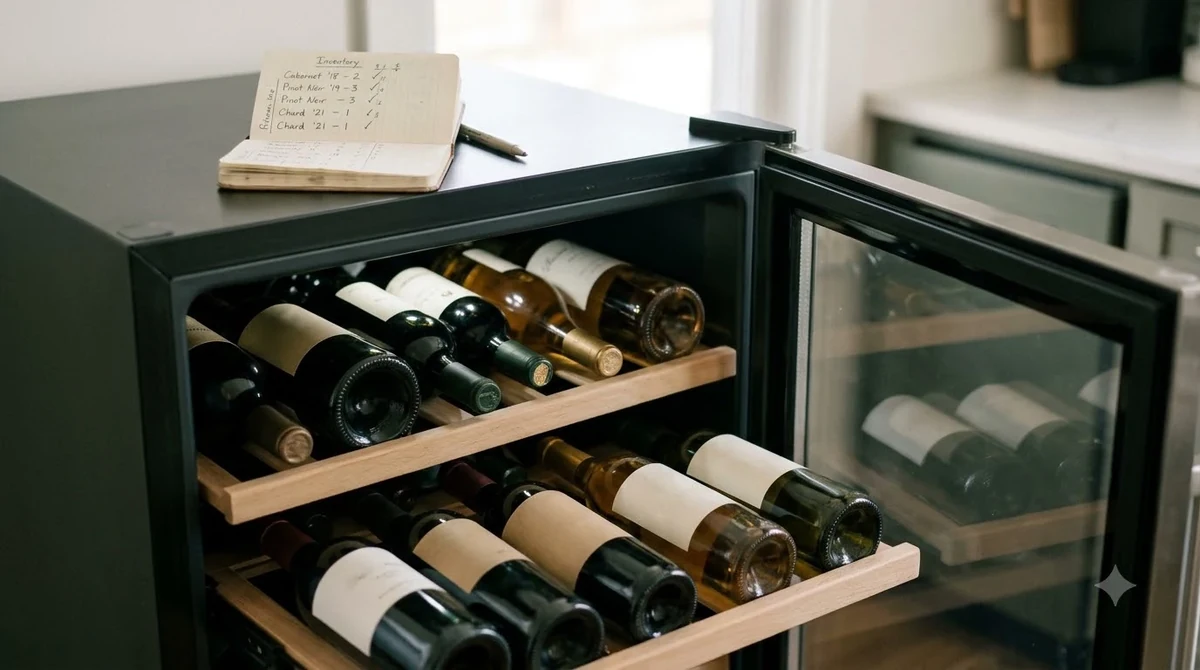
For storage, a cool, dark place with a reasonably consistent temperature is preferable to a warm kitchen shelf or a sunny countertop. A wine refrigerator set around 55°F is a useful option for longer-term storage. Bottles can be stored on their sides, away from strong vibrations and sudden temperature changes.
Before serving, chill sparkling wine to approximately 40–50°F. Wine Enthusiast identifies 41–45°F as a useful serving range for sparkling wines because cooler temperatures help preserve effervescence and freshness. Refrigerating the bottle for up to two hours before serving is a practical starting point.
For a faster chilling method, place the bottle in an ice bucket containing a mixture of ice and water. Water helps transfer cold more efficiently than ice alone. Avoid leaving a bottle in the freezer unattended, as the liquid can freeze, expand, and create pressure problems.
Opening a sparkling wine bottle requires care because the contents are under pressure. Remove the foil and loosen the wire cage while maintaining control of the cork. Keep a hand over the cork and gently rotate the bottle rather than pulling the cork forcefully. Point the bottle away from people, glassware, and other fragile objects.
Serve approximately 5 ounces per glass. A standard 750 ml bottle therefore provides about five servings, making it easy to estimate the quantity required for a gathering. Flutes emphasize the visual appeal of bubbles, while a stemmed white wine glass provides more room for aromas to develop.
After opening, reseal the bottle with a sparkling wine stopper and refrigerate it. Opened sparkling wine generally keeps its best quality for around one to three days, although the amount of remaining carbonation depends on the seal and storage conditions. A dedicated sparkling wine stopper is more useful than an ordinary flat wine stopper because it is designed to secure the bottle under pressure.
For more detailed information about serving temperature and glassware, see Wine Enthusiast’s guide to serving wine. Its practical serving recommendations are useful when preparing Korbel for a dinner or celebration.
For additional background on wine styles and producers, the Wine Brands resource can help shoppers compare Korbel with other sparkling wine producers and understand differences in origin, grape varieties, and production methods.
Frequently Asked Questions
Is Korbel considered real Champagne?
Korbel is California sparkling wine rather than Champagne from France’s Champagne region. The word Champagne is protected as a geographical designation in many markets, although the Korbel brand has a longstanding California Champagne product identity in the United States. Its traditional bottle-fermentation method is similar to the method used for Champagne, but the geographical origin is different.
What grapes are used in Korbel sparkling wine?
The blend depends on the particular bottling. Korbel Extra Dry uses Chenin Blanc, Chardonnay, French Colombard, and Pinot Noir, while Sweet Rosé adds varieties including Zinfandel, Sangiovese, and Gamay. These different combinations contribute to the variation in color, fruit character, and sweetness across the portfolio.
How much alcohol is in Korbel sparkling wine?
The alcohol content depends on the specific style. Korbel Extra Dry is listed at 12% ABV, while Korbel Sweet Rosé is listed at 11% ABV. These figures refer to the named bottlings rather than every wine produced under the Korbel brand.
Can Korbel sparkling wine be used in cocktails?
Yes. Korbel Brut is a suitable option for a mimosa bar. Its citrus and fruit characteristics make it suitable for combining with orange juice, while its carbonation adds freshness. Extra Dry can also work in fruit-oriented sparkling cocktails when a slightly sweeter base is preferred.
Does Korbel make non-alcoholic sparkling wine?
Korbel’s conventional Brut, Extra Dry, and Rosé selections discussed here are alcoholic sparkling wines. The brand also lists a low-alcohol sparkling product, which is a separate category from conventional bottlings. Shoppers specifically seeking a zero-alcohol beverage should look for a product explicitly labeled alcohol-free and verify its stated alcohol content.
Korbel offers a straightforward range of California sparkling wines for different budgets, serving sizes, and sweetness preferences. For most shoppers, a standard Brut or Extra Dry bottle is a sensible starting point, while Rosé and larger formats provide alternatives for particular occasions. Compare equivalent bottle sizes at local retailers, choose the sweetness level your guests enjoy, and serve the wine well chilled to get the most from your purchase.
More in Wine Brands
 Underwood Wine Price: Compare Bottles, Cans, and Pack SizesUpdated Nov 21, 2026
 Zenato Wine Price: Compare Styles and Choose the Right BottleUpdated Nov 21, 2026
 Zuccardi Wine Price: Compare Bottles and Find the Right RangeUpdated Nov 21, 2026
 Yellow Tail Moscato Review: Taste, Sweetness and Serving TipsUpdated Nov 21, 2026
 Wolf Blass Yellow Label Review: Choose Your Best StyleUpdated Nov 21, 2026
 Wolffer Estate Rose Review: Choose the Right Bottle for Your TableUpdated Nov 21, 2026