

We may earn a commission when you buy through links on this page, at no extra cost to you. Learn more.
Grillo color is a deep straw yellow, bright and highly transparent, and it signals a dry, fresh white rather than a golden or fortified wine. Sicilian producers and tasting panels describe the shade in nearly identical terms, which makes it a dependable starting point. The hue matches the grape’s profile of bone-dry sweetness, medium-high acidity, and a light-to-medium body. Once you know how to read it, the color tells you a fair amount about the glass before you take a sip.
Shoppers standing in front of a wall of Italian whites often wonder what Grillo should look like and whether the color actually means anything. It does, although it never tells the whole story. Color narrows the field. It hints at how the wine was made, how old it may be, and how it will taste once poured. This guide covers the typical look of Grillo, how to judge it in the glass, what the hue says about winemaking, and how to serve and pair the wine once it is home.
What Color Is Grillo Wine?
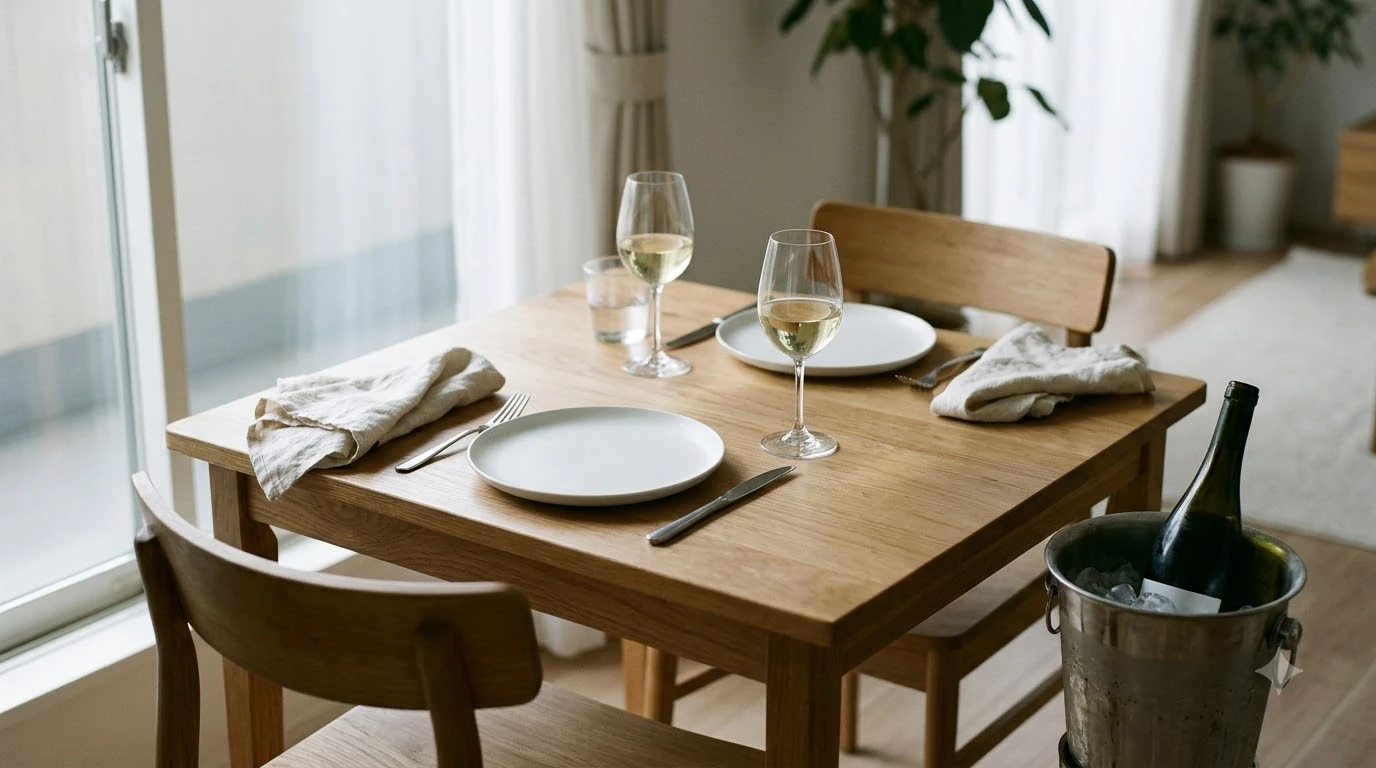
Most Grillo is a deep straw yellow, with the brightness and clarity you expect from a young white. The Sicilia DOC consortium, which protects the island-wide appellation, uses that description when it introduces the variety and pairs it with herbaceous, floral, and citrus aromas. The wine is not amber, and it does not look like a fortified wine. It sits in the straw range that most dry whites occupy.
In practice, that means a clear, transparent wine with a yellow core that reads more straw than honey. Bottles usually carry the grape name on the label under the broad Sicilia DOC, so the variety is easy to spot even though the appellation covers the whole island. The shade is consistent enough across producers that a buyer can use it as a rough guide on a crowded shelf. Still and sparkling wines use different color cues, so if you are comparing bubbles, the cava color guide explains how sparkling whites look in the glass.
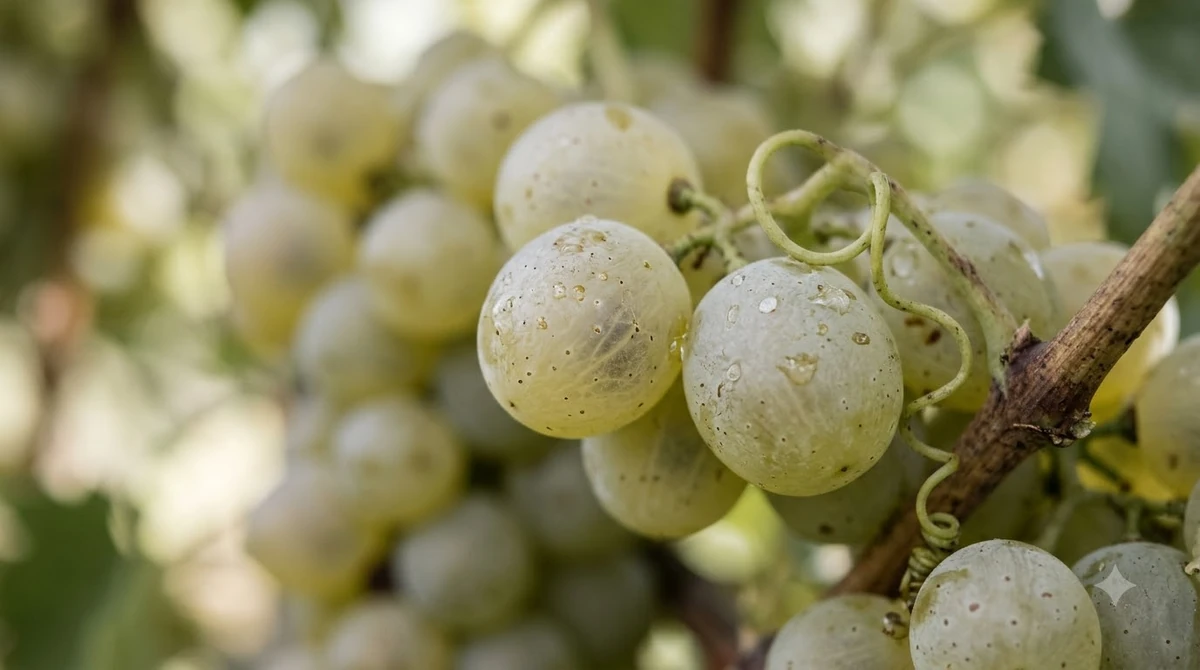
The grape itself is worth a glance. According to the Sicilia DOC grape guide, Grillo berries have a thick skin with a faint waxy bloom, colored green-yellow and blushing orange-pink where the sun hits them. Skin color describes the fruit rather than the finished bottle, because most white wines are pressed off their skins before fermentation. Treat it as background rather than proof, but it is a reminder that the wine’s character starts in the vineyard.
Reading Grillo Color Step by Step
Judging color takes only a clean white glass, a white background, and decent daylight.
Tilt the glass over a sheet of white paper and look at the base of the wine, where the liquid is thickest. Then bring the glass upright and check the thinner layer near the rim. The DiWineTaste tasting panel used this exact method on a Grillo poured beside a Ligurian Vermentino, and it found the Sicilian wine to be an intense, bright straw yellow with high transparency. The Vermentino looked greenish yellow by comparison, and the Grillo was generally the deeper of the two.
Rate what you see on a simple three-step scale: pale straw, straw, or deep straw. Most Grillo lands at straw or deep straw. If a young bottle drifts toward honey or amber, treat that as a signal to ask questions. A deeper, golden cast can point to age, heat exposure, or oxidation, and it changes what you should expect on the palate. Clarity matters as well. A bright, transparent glass is the usual result for a young Grillo, while a dull or hazy pour deserves a second look.
Comparison works best when the variables are fixed. Put two Grillos side by side, pour them into the same kind of glass at the same temperature, and look at both on the same white sheet. A difference that survives those conditions is real, while a difference caused by a warm lamp or a different glass is not.
Tip: Judge color under daylight or neutral white light. Warm indoor lamps push white wine toward gold and make straw look deeper than it really is.
What Grillo Color Says About Winemaking
Many Grillos are raised in stainless steel or concrete, which tends to keep the color close to straw and the flavors clean.
The VinePair roundup of six Grillos from Sicily found that most were aged in stainless steel or concrete tanks. The same reviewer tasted one example aged for several months in acacia barrels, and the wood dominated the wine. His conclusion was that for Grillo, less barrel aging is better, which is a useful snapshot of how the variety is handled today.
Lees aging is another common step. Feudo Montoni’s Timpa, for example, spends six months on the lees in cement tanks, and VinePair describes the result as a rich mouthfeel with a slightly creamy layer and a touch of honey. That texture is a reminder that a wine can feel fuller without looking darker. Color and texture are separate clues, and it pays to read both.
Color, then, is a decent indicator of how a Grillo was raised. A bottle that stays straw and bright has probably seen steel or concrete rather than wood. A wine that looks distinctly golden may have spent time in oak, been stored warm, or simply grown older. None of those is automatically a fault, but each changes what you should expect in the glass. Checking the color before you buy gives you a head start on the style.
The Flavor Profile Behind the Color
Grillo is bone-dry with medium-high acidity and a medium-light body, which makes it lean and fresh rather than heavy or creamy.
Wine Folly’s profile lists Grillo as bone-dry, with no tannins, a medium-light body, and medium-high acidity. The wines typically run from 11.5 to 13.5% alcohol by volume, and the primary flavors are grapefruit, citrus blossom, thyme, minerals, and a saline note. There is little in that profile to suggest the heavy, golden style of a richer white, which is why the straw color reads as clean and fresh.
VinePair describes the aromas as white flowers, herbs, and citrus, especially grapefruit and orange, with stone fruit on the palate. The reviewer also notes that the finish often carries a touch of bitterness, which he finds more interesting than off-putting. DiWineTaste adds apple, pear, apricot, and pineapple, along with a light almond note. If you want to see how Grillo sits next to other white styles, the Wine by Type index is a practical place to compare.
The DiWineTaste comparison also shows how Grillo differs from its neighbors on the table. The Vermentino leaned toward apple, pear, plum, and almond, with hawthorn and broom among its floral notes. The Grillo carried more roundness and a fuller structure, with citrus, apricot, and pineapple coming through on the finish. Those differences explain why the same straw color can taste quite different from one white to the next.
| Attribute | Typical Grillo |
|---|---|
| Color | Deep straw yellow, bright and transparent |
| Sweetness | Bone-dry |
| Body | Medium-light |
| Acidity | Medium-high |
| Tannin | None |
| Alcohol | 11.5% to 13.5% ABV |
| Serving temperature | 45°F to 55°F (7°C to 12°C) |
| Cellaring | 3 to 5 years |
Tip: Pour about 5 ounces per glass, so a 750 ml bottle gives roughly five servings. Recork any leftovers and refrigerate them, where still white wine usually keeps for three to five days.
Serving Temperature and Glassware
Serve Grillo between 45°F and 55°F, or 7°C to 12°C, and start a medium-light bottle near the cooler end of that range.
The DiWineTaste panel poured its Grillo at 10°C, which is 50°F, so the color and aromas were judged at a temperature many home drinkers already use. VinePair’s reviewer offers a practical warning: do not drink Grillo too cold, because the full aromatic and flavor profile needs some warmth to open. In other words, the fridge should be a holding place rather than the final stop.
The wider white wine guidance points the same way. Light whites and rosé sit around 45 to 50°F, while full whites run from 50 to 55°F. Grillo is not a heavy white, so it lives near the lighter end of that range. Pull the bottle out a few minutes before pouring, let the glass warm a degree or two, and keep the rest of the bottle chilled between pours so the later glasses taste as good as the first.
Glassware matters less than temperature, but it still helps. A standard white wine glass with a slightly narrowed bowl concentrates the citrus and herbal notes without making the wine feel thin. Wine Folly lists the glass type as white and suggests that Grillo does not need decanting, so it can go straight from the bottle to the glass.
Food Pairings That Match Grillo’s Acidity
Grillo’s medium-high acidity and herbal notes suit seafood, vegetables, and pasta, especially dishes built on lemon, herbs, or good olive oil.
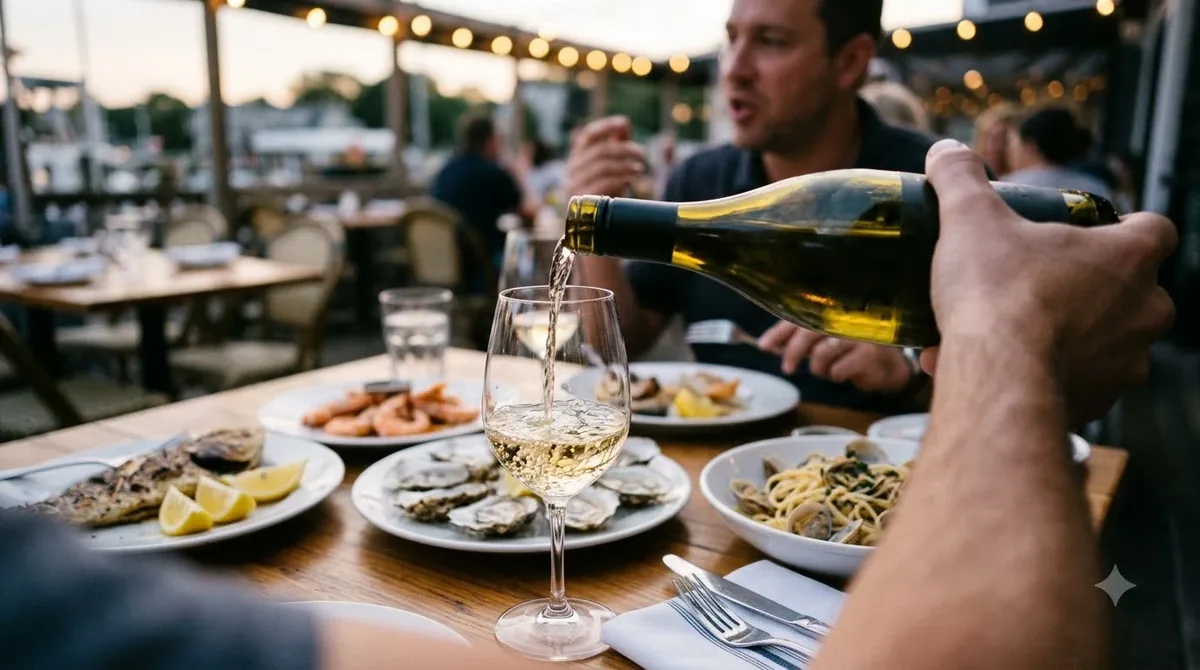
Wine Folly describes Grillo as a more savory alternative to Pinot Grigio and recommends it with all seafood, vegetable dishes, and pasta. That makes it a natural next step for anyone who already shops the pinot grigio color range and wants something with a savory, herbal edge. VinePair takes a similar line, calling Grillo a strong choice for fish and lighter fare in the warmer months.
Some pairings that work well are spaghetti with clams, garlic, and parsley; grilled sardines with lemon and oregano; a shaved raw fennel and orange salad; or roast chicken finished with lemon and thyme. Lemon-based dishes need a wine with at least matching acidity, and Grillo has that. A rich pasta with egg and cheese needs a wine that can cut through the fat, and Grillo’s medium-high acidity does that without overwhelming the dish. The herbs in these dishes echo the thyme and rosemary notes in the wine, which gives the meal a unified finish. Salty bites such as capers and olives also suit the wine, because the acidity keeps the palate fresh between mouthfuls. For a crowd, the same wine works well as an aperitif beside olives, marinated vegetables, and fresh cheese.
Avoid sweet desserts. A wine should be at least as sweet as the dessert it accompanies, and Grillo is bone-dry, so a sweet course will make the wine taste thin and sour. Save the Grillo for the main course rather than dessert, and let its acidity do the work on salty, savory, and herbal plates.
Frequently Asked Questions
Does a darker Grillo mean it is sweeter?
Usually not. Decanter notes that Grillo is traditionally the basis for the fortified wines of Marsala, while the still version is made as a dry white with good acidity. A deeper color is a poor guide to sweetness, so check the label’s style and the producer’s description instead.
Where in Sicily is Grillo grown most?
The Sicilia DOC consortium says the variety is mainly grown in the Trapani area, with plantings also in the provinces of Palermo and Agrigento. VinePair reports that Grillo is grown across the whole island, with a concentration on the western side, which fits that picture.
How common is Grillo among Sicilian white grapes?
Jancis Robinson describes Grillo as Sicily’s second most planted white grape, and she notes that it is grown as bush vines. VinePair identifies Catarratto as the most planted white variety on the island, so the two sources agree on the ranking. VinePair also counts Grillo among the three most important indigenous white varieties on the island.
Where does the Grillo grape’s origin come from?
DiWineTaste reports the traditional account that Baron Antonio Mendola created the grape in 1874 by crossing Catarratto with Moscato d’Alessandria, also called Zibibbo. The same report notes that recent research would seem to deny that origin, although it remains the most accepted story.
Which Grillos did VinePair recommend?
The six picks included Feudo Montoni’s Timpa, Tenuta Rapitalà’s Viviri, and Valle dell’Acate’s Zagra. The list also includes Vino di Anna’s Palmento, which is a blend with only 20 percent Grillo, along with Brugnano’s Lunario and Tenuta Regaleali’s Cavallo delle Fate.
Grillo color will not settle every buying decision, but it is a quick and reliable first check. Look for a clear wine in the straw-to-deep-straw range, serve it cool rather than icy, and pair it with seafood, herbs, and lemon. Those three habits will get more out of this Sicilian white than any single tasting note.
More in Wine Types & Grapes
 What Does Ruby Port Taste Like? Flavor Notes, Styles, and Serving TipsUpdated Nov 21, 2026
 What Does Ribolla Gialla Taste Like? Crisp White and Amber Styles ExplainedUpdated Nov 21, 2026
 What Does Semillon Taste Like? Flavor Profile, Styles & PairingsUpdated Nov 21, 2026
 What Does Scuppernong Taste Like? Flavor, Styles, and Pairing GuideUpdated Nov 21, 2026
 What Does Saperavi Taste Like? Flavors, Styles, and Pairing GuideUpdated Nov 21, 2026
 What Does Natural Wine Taste Like? Flavors, Styles, and Serving TipsUpdated Nov 21, 2026