

We may earn a commission when you buy through links on this page, at no extra cost to you. Learn more.
How to pronounce xinomavro: say “ksee-no-MAH-vro,” with the emphasis on the third syllable and a clear “ks” sound at the beginning. Xinomavro is a Greek red grape variety, and its name can look intimidating to English speakers because the opening X represents a different sound from the one many people expect. Break the word into four syllables, practice the opening sound, and the pronunciation becomes much easier. You do not need a Greek accent to say it confidently when ordering wine.
Greek wine offers an impressive range of indigenous grape varieties, but unfamiliar names can make choosing a bottle or asking for a recommendation feel like a language exercise. Xinomavro is one of the most interesting names to learn because it belongs to a distinctive red grape associated with northern Greece. Understanding its pronunciation also provides a useful introduction to the grape, its homeland, and the wines made from it.
How to Say Xinomavro One Syllable at a Time
The easiest English approximation is “ksee-no-MAH-vro.” Divide the name into four spoken parts, pronounce the opening carefully, and give the strongest emphasis to MAH. This approach follows the pronunciation guidance published by Greek wine educators and specialist wine publications.
Here is a practical breakdown of the word:
- Ksee: Start with a K sound immediately followed by an S sound. The result resembles the beginning of the English word “ski,” although the two sounds should be kept distinct in your mind as you practice.
- No: Pronounce this as a straightforward English “noh,” without adding another syllable.
- Mah: Give this syllable the strongest emphasis. Keep the vowel open, similar to the sound in “father.”
- Vro: Finish with a V sound followed by a short, clear “roh.” Avoid turning the final syllable into an English “row” with an exaggerated diphthong.
When you put the four parts together, the result is Ksee-no-MAH-vro. Say the complete word slowly once, then repeat it at a normal conversational speed. The goal is a connected word rather than four separate sounds with pauses between them.
A useful practice technique is to begin with the difficult opening alone. Repeat “ksee” several times, then attach “no,” followed by “mah-vro.” Once the beginning feels natural, the remaining syllables are relatively straightforward for most English speakers. Practice the word in a complete sentence, such as, “Could I have a glass of Xinomavro?” This makes the pronunciation more useful than repeating the name in isolation.
Why the X in Xinomavro Sounds Like KS
The first letter is the main reason English speakers mispronounce Xinomavro. In this Greek grape name, X represents the Greek letter Xi, written Ξ, which produces a “ks” sound rather than the familiar English pronunciation of X as a Z sound.
In English, the letter X has several common pronunciations depending on its position in a word. It can sound like the beginning of “zoo,” as in xylophone, or like the combined K and S sounds in “extra.” The second pronunciation is the useful comparison for Xinomavro. Think of the opening as the sound at the start of “ks” in the word “bookshelf,” rather than the sound at the beginning of “xylophone.”
The Greek spelling, Ξινόμαυρο, makes the reason clearer. Its first character is Xi, one of the letters of the Greek alphabet. Greek speakers do not approach this character as an English X with its multiple possible sounds. It has its own established pronunciation, which explains why simply reading the Latin spelling according to ordinary English rules can lead to an incorrect result.
Wine educator Elizabeth Hecker discusses this issue in her article How to Speak Greek. Her account of learning Greek wine pronunciations emphasizes that the initial sound of Xinomavro is “ksee,” rather than the sound many English readers initially expect. This is a useful reminder that grape names borrowed from another language often retain pronunciation rules that do not match English spelling conventions.
Common pronunciation mistakes
There are several versions of the name that are best avoided if you want to get close to the Greek pronunciation:
- Zee-no-MAH-vro: This gives the first letter a Z sound and misses the Greek Xi pronunciation.
- Shee-no-MAH-vro: The initial sound should not be a SH sound.
- Ex-ee-no-MAH-vro: The English letter name X should not be spoken as a separate syllable.
- Ksee-no-ma-VRO: Placing the strongest emphasis on the final syllable does not follow the commonly published pronunciation guides.
These mistakes are understandable because the written name is unfamiliar. However, concentrating on the KS beginning and the emphasis on MAH will get you much closer to the intended pronunciation. Even if your accent differs from a native Greek speaker’s, a clear KSEE-no-MAH-vro is a practical and recognizable way to order the wine.
Where the Name Xinomavro Comes From
Xinomavro combines two Greek words: xino, meaning sour, and mavro, meaning black. The name therefore translates approximately as “sour black,” a reference to the grape’s character and traditional identity rather than a literal description of every wine made from it.
The Greek spelling is Ξινόμαυρο, and the name is sometimes encountered alongside older regional synonyms. A photographic vineyard guide published by the Region of Central Macedonia identifies names including Xinomayro of Naoussa, Black of Naoussa, Popolka, Pipolka and Miaousa. These historical and regional names are useful background when reading about Greek viticulture, although Xinomavro is the internationally recognized spelling most commonly encountered on wine labels.
The meaning also provides a useful way to remember the name. Xino refers to sourness, while mavro refers to black. Once you recognize the two parts, the name becomes easier to remember and provides a small clue to the grape’s naturally fresh, structured wine style.
It is important not to interpret the translation too literally. Xinomavro is not necessarily an extremely sour or dark-looking wine. Acidity describes the wine’s freshness, while color depends on growing conditions, grape maturity, winemaking and aging. Many examples have a ruby or garnet appearance rather than the dense, almost opaque color associated with certain other red grapes.
The grape is a native Greek variety, not an imported international grape that happens to be popular in Greece. It is especially associated with Macedonia in the country’s north and has a strong identity in regional wine production. Learning the name therefore means learning a little about one of Greece’s most important indigenous red varieties.
Naoussa and the Northern Greek Origins
Naoussa is one of the most important places to understand when learning about Xinomavro. Located in the Macedonia region of northern Greece, the area is closely associated with the grape, and its Protected Designation of Origin establishes a geographical identity for wines produced under the appellation’s requirements.
According to the Naoussa tourism authority, the Naoussa PDO zone was established in 1971 and covers approximately 600 hectares. Its vineyards occupy the southeastern slopes of Mount Vermio, with elevations ranging from 80 to 600 meters. These differences in altitude, combined with varied clay and limestone soils, help create different growing conditions within the wider appellation.
The PDO zone includes Naoussa itself and surrounding communities such as Trilofos, Fytia, Stenimachos, Kopanos, Lefkadia, Marina, Polla Nera, Giannakochori and Rodochori. This is important because a wine identified with Naoussa is associated with a defined geographical area rather than simply with a general style of Greek red wine.
The local climate is influenced by Mount Vermio and the surrounding landscape. The Naoussa tourism authority describes cool Mediterranean conditions, cold winters and hot summers, with mountain slopes and natural springs contributing to the area’s character. Elevation and local conditions can influence grape development, freshness and the eventual structure of the wine.
Another important northern Greek growing area is Amynteo, also written as Amyndeon. Grape magazine identifies both Naoussa and Amynteo as important locations for Xinomavro cultivation. The wines associated with these areas are not necessarily identical: local climate, vineyard elevation, winemaking decisions and harvest conditions can all influence the finished style.
For readers exploring Greek wine, the distinction between grape and appellation is important. Xinomavro is the grape variety, while Naoussa is a recognized wine-producing region. This is similar to the distinction between Pinot Noir and Burgundy, or Cabernet Sauvignon and Bordeaux. Understanding the difference makes it easier to interpret wine lists and labels.
What Xinomavro Wine Tastes Like
Xinomavro is known for high acidity, firm tannins and a medium-bodied structure in many traditional dry red examples. Its aromatic profile can include red currant, forest fruits, tomato, violets, smoke and savory olive-like notes, making it an interesting alternative to more familiar international red varieties.
Grape magazine’s overview of indigenous Greek grapes describes Xinomavro from Naoussa as a dry red style with high acidity, dry tannins and medium body. The same publication identifies red currant, tomato sauce and smoke among its main characteristics. Other descriptions include violet, tapenade and forest-fruit aromas, illustrating how the grape can combine fruit with savory complexity.
The grape is frequently compared with Nebbiolo because both can produce wines with pronounced acidity, substantial tannin and the ability to develop complexity with age. The comparison is useful for understanding structure, although the grapes have their own distinct personalities. Xinomavro often displays tomato, olive, dried herbs and smoky characteristics that give it a recognizable Greek identity.
Typical characteristics at a glance
| Characteristic | Typical Xinomavro profile |
|---|---|
| Primary color | Ruby to garnet |
| Body | Medium |
| Acidity | High |
| Tannins | High and structured |
| Fruit aromas | Red currant and forest fruits |
| Savory aromas | Tomato, smoke and tapenade |
| Floral aromas | Violets |
| Indicative aging potential | 3–20 years, depending on the wine |
The aging range in the table is an indicative range published by Grape magazine, not a guarantee that every bottle will improve over two decades. Vineyard conditions, producer decisions, vintage quality and storage all influence how a particular wine develops. Some bottles are intended to be enjoyed relatively young, while more structured examples may benefit from additional bottle aging.
With time, the fruit character can become less prominent and more complex savory and earthy notes can emerge. Tomato, dried herbs, leather-like aromas and forest-floor characteristics may become more noticeable in mature examples. The exact evolution depends on the wine’s structure and production, so it is best not to assume that every Xinomavro will age in precisely the same way.
For someone familiar with Pinot Noir, Nebbiolo or Sangiovese, Xinomavro offers a useful point of comparison. It has the acidity that makes these grapes attractive at the dinner table, but its firm tannins and savory character give it a personality of its own. This combination is part of the reason the variety has gained attention among people exploring wines beyond the most familiar international grapes.
Different Wine Styles Made From Xinomavro
Although Xinomavro is best known internationally for dry red wines, the grape is not limited to one style. It can be used for rosé and sparkling wines as well, and the examples associated with different northern Greek regions demonstrate how winemaking choices can influence its expression.
Naoussa is particularly associated with dry red wines. These often emphasize acidity, tannin, red-fruit aromas and savory complexity. Some producers use oak aging to develop additional structure and aromatic depth, while other approaches seek a fresher expression of the grape’s fruit and regional character.
Amynteo offers a different range of expressions. Grape magazine identifies dry reds from this cooler area, which can be lighter in style, alongside traditional-method white and rosé sparkling wines. The sparkling examples demonstrate that Xinomavro has more versatility than its reputation as a structured red grape might initially suggest.
Rosé Xinomavro can provide a different introduction to the variety for drinkers who find heavily structured reds too demanding. Its fruit and acidity can make it refreshing, while the grape’s natural character can still provide more savory detail than some straightforward fruit-driven rosés.
Understanding the difference between styles
When selecting a bottle, pay attention to the wine’s category rather than assuming that every Xinomavro tastes like a traditional Naoussa red. A dry red, a rosé and a sparkling wine can have very different textures, serving requirements and food-pairing possibilities even though they share the same grape variety.
For example, a traditional-method sparkling wine from Amynteo should be approached differently from a structured red intended for bottle aging. The sparkling version is likely to emphasize freshness and bubbles, while the red can emphasize tannin, savory aromas and development over time.
For further exploration, the Wine by Type section provides a useful starting point for understanding how wine categories differ. It is also helpful to distinguish between grape names, appellation names and production methods when comparing bottles from different parts of Greece.
How to Order Xinomavro and Serve It With Food
The simplest way to order Xinomavro is to say “ksee-no-MAH-vro” and then specify whether you want a glass or a bottle. If you are unsure about the style, ask whether the wine is a dry red from Naoussa, a lighter red from Amynteo, or a rosé or sparkling expression.
A useful ordering sentence is: “I’d like to try a glass of Xinomavro, preferably a red from Naoussa.” This communicates both the grape and the style you are interested in. If the wine list includes several Greek varieties, you can also ask the server to compare Xinomavro with Agiorgitiko or another local red grape.
For a dry red Xinomavro, serving temperature matters. A range of 60–65 F is suitable for fuller-bodied reds, although lighter examples may be better around 55–60 F. Serving a structured red too warm can make its alcohol more noticeable, while excessive chilling can make its tannins feel firmer and its aromas less expressive.
Food is another reason to explore the grape. Its high acidity can complement rich dishes, while its tannins work particularly well with proteins and fatty foods. Grilled lamb, grilled steak and mushroom risotto are among the pairings identified in Grape magazine’s overview of Greek indigenous varieties.
Practical food-pairing ideas
- Grilled lamb: The protein and fat help soften the wine’s tannins, while its acidity balances the richness of the meat.
- Grilled steak: The savory flavors of beef complement the structured character of Xinomavro, particularly with grilled or roasted preparations.
- Mushroom risotto: Earthy mushroom flavors connect naturally with the grape’s savory aromas, while the wine’s acidity helps balance the richness of the dish.
- Roasted vegetables: Vegetables with browned edges, herbs and olive oil can complement the grape’s savory profile.
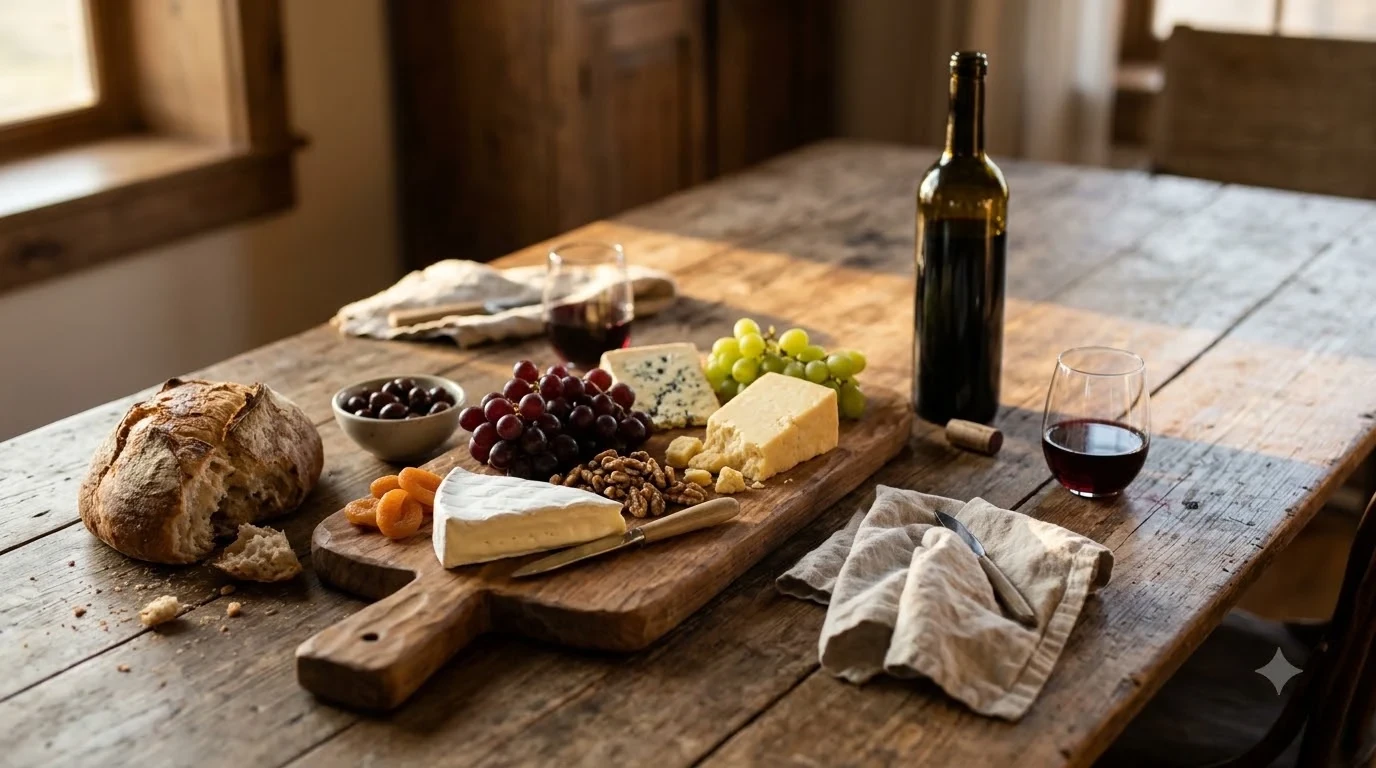
- Aged cheese: Salt and fat can soften the perception of tannin and provide a satisfying contrast to the wine’s acidity.
Very spicy dishes require more care because alcohol and tannin can amplify chili heat. Similarly, strongly acidic tomato dishes are best paired with wines that have comparable or higher acidity. A tomato-based pasta with a well-balanced sauce can work particularly well, but the wine should not taste flat beside the food.
Sweet desserts are generally not the best match for a dry, tannic Xinomavro. A dessert that is sweeter than the wine can make the wine seem more acidic, bitter and austere. If dessert is part of the meal, consider changing to a sweeter wine rather than expecting a structured dry red to complement a sugary dish.
Tip: If you are ordering Xinomavro for the first time, try it alongside grilled lamb or mushroom risotto. These dishes complement its acidity and tannins while allowing the grape’s red-fruit and savory aromas to remain noticeable. Ask for the wine to be served at approximately 60–65 F if it is a fuller-bodied red.
For anyone building a vocabulary of wine names, learning Xinomavro is a useful step alongside other pronunciation challenges. You can also practice how to pronounce chardonnay and how to pronounce claret. These names come from different wine traditions, but the same approach applies: break unfamiliar words into manageable sounds and practice them in a natural ordering sentence.
Frequently Asked Questions
Is Xinomavro the same grape as Mavro?
No. Xinomavro is a distinct Greek grape variety, and the word mavro is simply one component of its name. The similar wording does not mean that every grape or wine containing the word Mavro belongs to the Xinomavro family. Wine labels should be interpreted according to the named variety and appellation rather than individual parts of a Greek word.
Can Xinomavro be spelled Xinomayro?
Xinomayro appears as a historical or regional spelling variation in Greek viticultural material. The spelling most commonly used for international wine labels and wine writing is Xinomavro. If you are searching for information or wine recommendations, using the standard Xinomavro spelling will generally produce the most relevant results.
Is Xinomavro suitable for vegetarian food?
Yes. Xinomavro can work with vegetarian dishes, particularly preparations featuring mushrooms, lentils, roasted eggplant or savory herbs. A mushroom-based dish with some richness is especially useful because it complements the grape’s earthy and savory aromas. The wine’s tannins also benefit from dishes with sufficient texture and richness.
Is Xinomavro related to the Greek grape Agiorgitiko?
No. They are separate indigenous Greek grape varieties with different identities and typical wine styles. Agiorgitiko is strongly associated with Nemea in the Peloponnese, while Xinomavro is particularly associated with northern Greek regions such as Naoussa and Amynteo. Learning both names provides a useful introduction to two important parts of Greece’s wine heritage.
Does Xinomavro have an official international pronunciation symbol?
There is no single universally adopted English pronunciation spelling used by every wine publication. Phonetic approximations such as “Ksee-no-MAH-vro” are practical teaching tools rather than formal international phonetic standards. For a more precise understanding, the original Greek spelling Ξινόμαυρο and the pronunciation of Greek Xi provide the most useful starting points.
Remember the four parts, KSEE-no-MAH-vro, and pay particular attention to the KS sound at the beginning and the emphasis on MAH. Once you can say Xinomavro confidently, you will find it easier to ask about one of northern Greece’s distinctive indigenous grapes and explore the different wines made from it.
More in Wine Types & Grapes
 What Does Mourvèdre Taste Like? Flavor Profile, Regions, and PairingsUpdated Nov 20, 2026
 What Does Marsanne Taste Like? Flavors, Styles, and Food PairingsUpdated Nov 20, 2026
 What Does Malvasia Taste Like? Styles, Flavors, and Food PairingsUpdated Nov 20, 2026
 What Does Grenache Blanc Taste Like? Flavor Profile, Styles, and PairingsUpdated Nov 20, 2026
 What Does Garnacha Taste Like? Key Flavors, Styles, and Pairing TipsUpdated Nov 20, 2026
 What Does Fruit Wine Taste Like? A Complete Flavor and Style BreakdownUpdated Nov 20, 2026