

We may earn a commission when you buy through links on this page, at no extra cost to you. Learn more.
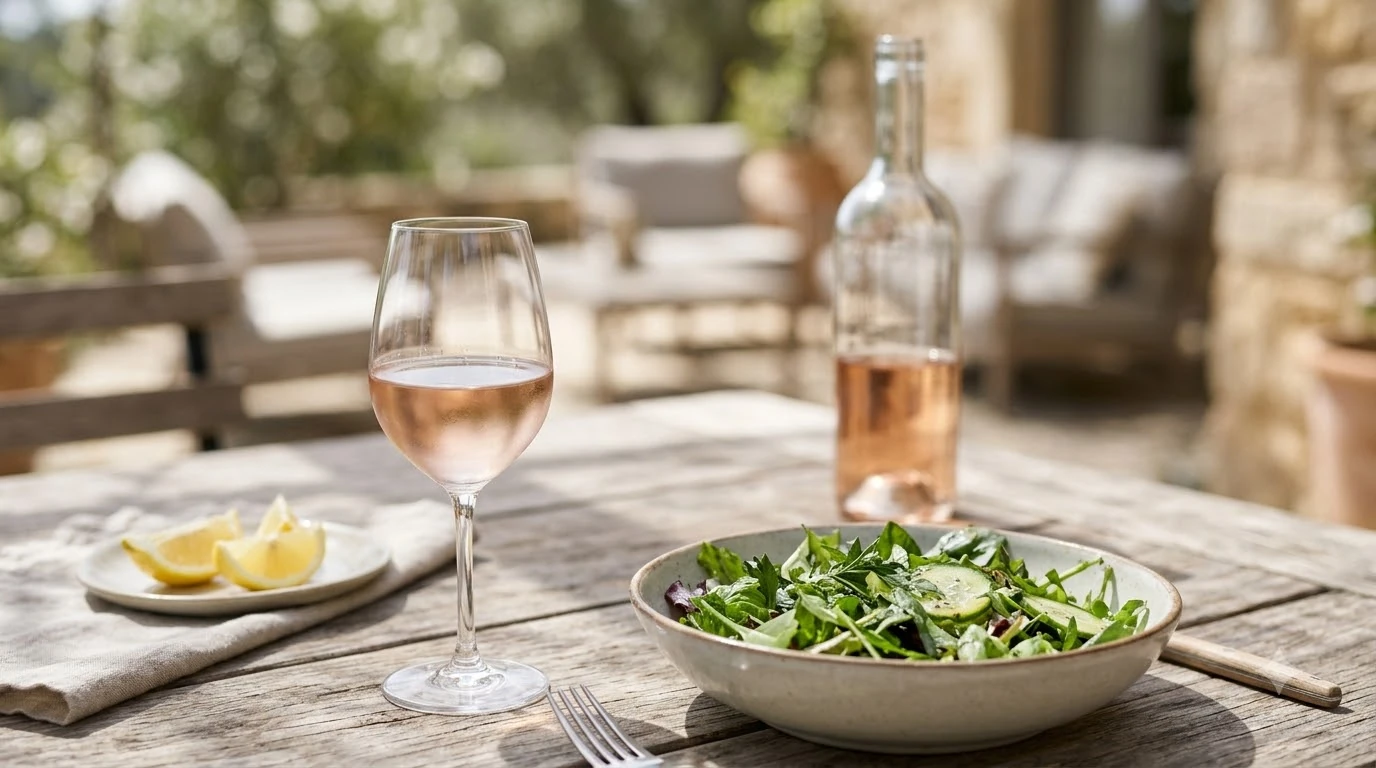
What wine goes with salad? Crisp, high-acidity wines such as Sauvignon Blanc, Albariño, Grüner Veltliner, and dry rosé are excellent choices for most salads, especially those with vinaigrette. The best bottle depends on the dressing, vegetables, cheese, protein, and other ingredients in the bowl. Creamy salads can work with fuller whites or sparkling wine, while hearty salads with grilled meat may even suit a light red.
Salad might seem like a straightforward food to pair with wine, but its ingredients can create several different challenges. Vinegar and lemon bring sharp acidity, leafy vegetables can contribute bitterness, cheese adds salt and richness, and fruit or honey introduces sweetness. The key is to identify the strongest flavors before choosing a bottle. Once you understand how those ingredients affect wine, pairing a glass with lunch or dinner becomes much easier.
Why Salad Dressing Matters More Than Lettuce
The dressing is usually the most important part of a salad wine pairing because its acidity, sweetness, and richness influence how the wine tastes. A crisp white may taste refreshing beside lemon vinaigrette but seem less lively alongside a sweet honey-mustard dressing.

Vinegar is a particularly challenging ingredient. Its sharp acidity can make a wine with moderate acidity seem flat, dull, or unexpectedly soft. A wine that tastes balanced by itself may lose its freshness when served with a strongly acidic dressing. This is why Sauvignon Blanc, Riesling, Grüner Veltliner, and other naturally high-acidity wines are dependable choices.
The basic principle is to match the acidity of the wine to the acidity of the food. According to the sommeliers interviewed by Serious Eats, wine acidity should meet or exceed the acidity in the salad dressing. The combination can help the wine retain its freshness instead of seeming overwhelmed by vinegar or citrus. The Serious Eats guide to wine and salad pairings also discusses how herbal, mineral, and peppery wine characteristics complement green vegetables.
Oil and cream create a different challenge. Olive oil, mayonnaise, yogurt, and avocado add richness that can make a very light wine seem thin. A wine with a little more body can provide a better match, particularly if the salad also contains cheese, egg, chicken, or seafood.
Sweetness also deserves attention. Honey, fruit, dried cranberries, and candied nuts can make a completely dry wine taste sharper by comparison. A slightly off-dry Riesling or fruit-forward rosé may create a more balanced experience.
Consider these common dressing styles before selecting a bottle:
- Vinaigrette: Choose Sauvignon Blanc, Albariño, Grüner Veltliner, or dry rosé.
- Lemon dressing: Look for Vermentino, Assyrtiko, or dry Riesling.
- Creamy dressing: Try unoaked Chardonnay, Chenin Blanc, or sparkling wine.
- Balsamic dressing: Choose fruity wines with refreshing acidity and restrained tannin.
- Honey mustard: Consider an aromatic Riesling or fruit-forward rosé.
There is also a practical alternative when a dressing is particularly sharp: reduce the vinegar. Replacing some vinegar with wine, verjus, or a milder citrus juice can make the salad more compatible with a wider selection of bottles. This adjustment is especially useful when the menu already includes a wine that you want to serve throughout the meal.
Best White Wines for Green Salads and Vinaigrette
High-acidity white wines are generally the safest choices for green salads, especially those featuring spinach, arugula, romaine, cucumber, fresh herbs, and vinaigrette. Sauvignon Blanc, Albariño, and Grüner Veltliner offer freshness without overwhelming delicate vegetables.
Sauvignon Blanc is one of the most versatile options. Its citrus, grassy, and sometimes bell-pepper-like characteristics complement leafy greens and fresh vegetables. Loire Valley examples, including Sancerre and Pouilly-Fumé, are particularly suitable when the salad contains herbs, cucumber, goat cheese, or green vegetables. New Zealand Sauvignon Blanc can also work well when a more pronounced citrus and tropical-fruit profile is desirable.
Grüner Veltliner is another excellent choice. Austrian examples often combine refreshing acidity with citrus, white pepper, and savory vegetable-like notes. These characteristics make the grape particularly appealing with salads containing asparagus, peas, celery, radishes, or bitter greens. It also has enough flavor intensity to accompany salads with chicken, eggs, or stronger cheeses.
Albariño offers a slightly different approach. This Spanish white grape from Galicia is associated with fresh acidity and citrus, stone-fruit, and sometimes saline characteristics. It works particularly well with cucumber, green herbs, shrimp, and seafood salads. Its refreshing profile also makes it a natural partner for dishes containing olives and lemon.
Other useful choices include Vermentino, Picpoul de Pinet, Muscadet, and dry Riesling. These wines offer different combinations of acidity, fruit, and mineral character while remaining relatively light on the palate.
Choosing between popular white wines
The following comparison provides a practical starting point for common salad ingredients.
| Wine | Typical characteristics | Best salad match | Serving temperature |
|---|---|---|---|
| Sauvignon Blanc | High acidity, herbal, citrus | Green salad, goat cheese, vinaigrette | 45–50°F |
| Albariño | High acidity, citrus, saline | Shrimp, cucumber, seafood | 45–50°F |
| Grüner Veltliner | High acidity, pepper, fresh herbs | Arugula, asparagus, vegetable salads | 45–50°F |
| Dry Riesling | High acidity, citrus, orchard fruit | Fruit salads, bitter greens, spicy salads | 45–50°F |
| Vermentino | Fresh acidity, citrus, herbal notes | Fennel, olives, Mediterranean vegetables | 45–50°F |
| Chardonnay | Medium acidity, fuller texture | Creamy vegetable and chicken salads | 50–55°F for full-bodied styles |
These temperatures are useful serving targets rather than strict requirements. A particularly crisp white benefits from being chilled, while a fuller Chardonnay can show more of its aroma when served slightly warmer.
Tip: If you are serving a salad with a sharp lemon or vinegar dressing, choose the wine before preparing the dressing. Start with a high-acidity white and adjust the amount of vinegar until the two taste balanced together.
Wine Pairings for Creamy, Cheesy, and Rich Salads
Creamy salads benefit from wines with enough body to match their texture and enough acidity to keep the pairing fresh. Unoaked Chardonnay, Chenin Blanc, Brut sparkling wine, and some dry rosés are useful options for salads containing mayonnaise, Parmesan, avocado, eggs, or creamy cheese.
Caesar salad is a good example of why a salad’s individual components matter. Romaine lettuce is relatively delicate, but Caesar dressing adds egg, oil, lemon, garlic, anchovies, and Parmesan. Garlic croutons introduce toasted flavors, while Parmesan contributes salt and savory intensity.
A crisp sparkling wine is an especially good option because its acidity and bubbles refresh the palate between bites. Brut Champagne, Cava, and other traditional-method sparkling wines can work well. A crisp, unoaked Chardonnay is another practical choice when the dressing is creamy but not excessively acidic.
For a more detailed match, consider what wine goes with caesar salad. The best selection depends on whether the dish emphasizes lemon, garlic, anchovies, Parmesan, or additional ingredients such as grilled chicken.
Salads with goat cheese or feta need a slightly different approach. These cheeses contribute salt, acidity, and creamy texture. Sauvignon Blanc is a natural companion to goat cheese because its fresh acidity complements the cheese’s tangy flavor. Dry rosé can also work particularly well with feta, olives, tomatoes, and cucumber.
For blue cheese, a fruitier wine can be helpful because the cheese has a more intense and salty flavor. An aromatic Riesling with some residual sweetness can provide contrast without making the pairing seem heavy. A medium-bodied white with sufficient acidity is another possibility.
Avocado-based salads often work best with wines that have fresh acidity but avoid excessive oak. Vermentino, Sauvignon Blanc, and unoaked Chardonnay can complement avocado’s creamy texture while retaining enough freshness for citrus-based dressings.
One useful distinction is that richness does not always require a heavy wine. A salad with creamy dressing may taste better with a lively, medium-bodied white than with a powerful, heavily oaked bottle. The objective is to balance the food rather than overpower its ingredients.
Matching Wine With Mediterranean and Vegetable Salads
Mediterranean salads offer several reliable pairing opportunities because ingredients such as tomatoes, olives, cucumbers, peppers, feta, and fresh herbs have recognizable flavors that work naturally with aromatic white wines and dry rosé. Assyrtiko, Sauvignon Blanc, Vermentino, and Provençal rosé are particularly useful choices.
Greek salad is a classic example. Tomatoes contribute acidity and sweetness, cucumber adds freshness, red onion brings pungency, olives contribute salt, and feta provides richness. A dry rosé can accommodate the different ingredients without dominating the dish. Sauvignon Blanc is another option, particularly when the salad includes a generous amount of herbs and citrus.
Assyrtiko from Greece is especially interesting with tomato-based salads. Its lively acidity and citrus character complement tomatoes and Mediterranean herbs. Its freshness also helps it stand alongside salty olives and feta. Decanter’s salad and wine pairing recommendations also identify Assyrtiko and Sauvignon Blanc as useful choices for tomato-focused salads.
For more specific recommendations, see what wine goes with greek salad.
Caprese salad is a simpler combination of tomatoes, mozzarella, basil, olive oil, and sometimes balsamic vinegar. Pinot Grigio, Vermentino, and dry rosé are sensible starting points. Their freshness complements the tomato and basil without overpowering the mild mozzarella.
When balsamic vinegar is included, consider how sweet and concentrated it is. A modest drizzle is easier to pair than a thick, syrupy reduction. A fruit-forward wine can accommodate the sweeter flavor, while a very sharp balsamic preparation calls for a particularly fresh wine.
Fennel salad also deserves attention. Fennel has a distinctive anise-like aroma that pairs well with aromatic white wines. Verdejo from Rueda in Spain is a useful choice because its citrus and herbal characteristics complement the vegetable’s natural flavor.
Other vegetables require a little more care:
- Asparagus: Sauvignon Blanc, Grüner Veltliner, or Vermentino can complement its green flavors.
- Artichokes: Choose fresh, dry whites with citrus and mineral characteristics rather than heavily oaked wines.
- Roasted carrots: Dry Riesling or Chenin Blanc can complement their natural sweetness.
- Beets: Pinot Noir or aromatic whites can work, depending on whether the preparation is earthy, sweet, or acidic.
- Radicchio: A slightly off-dry Riesling can soften the effect of its bitterness.
- Roasted peppers: Vermentino or Sauvignon Blanc can complement their sweet, savory flavors.
The important consideration is the balance of the entire dish. A vegetable salad with roasted ingredients, olive oil, and herbs will usually be easier to pair than the same vegetables covered in a sharp vinegar dressing.
When Red Wine Works With Salad
Red wine can accompany salad successfully when the dish contains substantial ingredients such as grilled steak, chicken, roasted vegetables, lentils, walnuts, or aged cheese. Light-bodied reds with fresh acidity and restrained tannins are generally more suitable than powerful Cabernet Sauvignon or heavily tannic Syrah.
Pinot Noir is a useful starting point. Its relatively low-to-medium tannin and high acidity make it more adaptable than many full-bodied reds. A lightly chilled Pinot Noir can complement salads containing grilled chicken, mushrooms, roasted beets, or earthy vegetables.
Beaujolais is another strong option. Made primarily from Gamay, these wines are often fruit-forward and refreshing, with relatively modest tannins. Their cherry and berry flavors can complement grilled chicken, steak, and roasted vegetables without overwhelming the greens.
Barbera is particularly interesting for hearty salads. Its naturally high acidity can stand alongside balsamic dressing, while its fruit character complements ingredients such as walnuts, cranberries, and cheese. Serious Eats highlights Barbera d’Alba as a possible pairing for a substantial kale salad containing balsamic and Pecorino.
Young Chianti can also work with a salad built around grilled meat, tomatoes, or roasted vegetables. Its acidity and savory character provide a better match for substantial ingredients than a delicate leafy salad with lemon dressing.
Red wines that need more caution
Cabernet Sauvignon typically has high tannin, making it a difficult match for delicate greens and acidic vinaigrette. Vinegar can accentuate the wine’s rougher characteristics and make the pairing less pleasant. It becomes more practical when the salad includes a substantial portion of grilled steak, although the dressing still needs consideration.
Syrah generally has medium-plus to high tannin and can overpower a simple vegetable salad. It is better suited to hearty preparations featuring grilled meat, roasted peppers, and other strongly flavored ingredients.
Merlot offers medium tannin and a softer texture than Cabernet Sauvignon, but it still needs a salad substantial enough to support a red wine. Pinot Noir and Gamay remain more versatile choices for lighter salads.
There is also an important exception involving seafood. Tuna, salmon, and shrimp salads can work with many fresh whites and rosés, but oily fish can clash with tannic reds. For seafood salads, Albariño, Sauvignon Blanc, Muscadet, and sparkling wine are generally safer options.
Pairing Wine With Fruit, Chicken, Seafood, and Spicy Salads
Salads containing fruit, protein, or chili need wines selected around their strongest ingredients. A fruit salad may benefit from a slightly sweet Riesling, seafood usually works with fresh whites, and grilled chicken can accommodate both aromatic whites and lighter reds.
Fruit changes the balance of a salad because natural sweetness can make dry wine taste more acidic or austere. Apples, oranges, strawberries, peaches, pears, and grapes each introduce different flavors, so the dressing and other ingredients remain important.
For salads with peaches, melon, or ripe berries, consider an off-dry Riesling or fruit-forward rosé. These styles can complement the fruit while retaining enough acidity to keep the dish refreshing. If the fruit is particularly sweet, avoid an extremely dry wine that could taste sharp beside it.
Waldorf salad, with apples, celery, walnuts, and mayonnaise-based dressing, is a good example. An aromatic Riesling with a little residual sweetness can complement the fruit and balance the creamy dressing. Chenin Blanc is another possibility, especially when it has enough freshness to accompany the apples.
Chicken salad is flexible because chicken has a relatively mild flavor. Sauvignon Blanc works with lemon and herbs, Chardonnay suits creamier preparations, and dry rosé complements chicken with tomatoes, olives, or Mediterranean seasoning. If the chicken is grilled and the salad contains roasted vegetables, a chilled Beaujolais or Pinot Noir can also be considered.
Seafood salads usually favor crisp, high-acidity whites. Albariño is particularly suitable for shrimp and shellfish, while Muscadet can complement briny seafood and citrus. Dry sparkling wine is another good option for seafood salads with creamy or mayonnaise-based dressing.
Salade niçoise deserves special consideration because it combines tuna, eggs, potatoes, green beans, olives, anchovies, and tomatoes. Dry Provençal rosé is a traditional choice, while Chenin Blanc from Anjou provides another option. Its acidity complements the richness of tuna and eggs, while its fresh character suits the salty Mediterranean ingredients.
Spicy salads require a little more caution. Chili heat can make alcohol and tannin seem more pronounced, so powerful reds and high-alcohol wines are usually poor choices. A fresh Riesling with some residual sugar can help balance the heat, while aromatic Sauvignon Blanc and dry rosé are useful alternatives for moderately spicy dishes.
Vietnamese green papaya salad is a particularly good example of the importance of matching sweetness, acidity, herbs, and spice. Riesling and Marlborough Sauvignon Blanc are both suitable starting points. If the dressing contains substantial chili and sweetness, an off-dry Riesling may be more comfortable than a completely dry white.
Thai-style salads with lime, fish sauce, herbs, and chili can also benefit from aromatic whites. A wine with moderate alcohol and some fruit character is generally easier to match than a powerful, heavily alcoholic red.
Serving Temperature and Practical Pairing Tips
Serving temperature influences how refreshing and aromatic a wine seems beside salad. Light whites and rosé should generally be served between 45 and 50°F, while fuller whites benefit from slightly warmer temperatures of 50 to 55°F.
Temperature also matters for red wine. Light reds such as Pinot Noir and Beaujolais are often more refreshing when served between 55 and 60°F. Full-bodied reds are generally better around 60 to 65°F, although those wines are not usually the first choice for delicate salads.
Use these practical steps when planning a salad and wine pairing:
- Identify the dressing. Decide whether it is acidic, creamy, sweet, or spicy before selecting the bottle.
- Find the dominant ingredient. Consider whether tomatoes, cheese, seafood, grilled chicken, or fruit contributes the strongest flavor.
- Match the weight. Choose light wines for delicate greens and fuller wines for substantial salads with protein and cheese.
- Consider acidity. Choose Sauvignon Blanc, Albariño, or Riesling when the dressing contains substantial vinegar or lemon.
- Account for sweetness. Consider a wine with residual sugar if the salad contains honey, sweet fruit, or candied nuts.
- Be careful with tannin. Avoid powerful reds alongside sharp vinaigrette, bitter greens, and delicate seafood.
- Serve at the right temperature. Chill crisp whites and rosé appropriately, and avoid serving reds excessively warm.
Glass size and serving quantity are also worth considering. A standard 750 ml bottle provides approximately five 5-ounce glasses. That amount is convenient for a small dinner gathering, particularly when the same wine accompanies both the salad course and another compatible dish.
For a meal with several different salads, a versatile high-acidity white or dry sparkling wine is often the easiest choice. If the menu contains a particularly rich salad and a delicate green salad, consider serving two different styles rather than expecting one bottle to complement every ingredient equally well.
Finally, remember that the dressing can be adjusted. Reducing vinegar, adding olive oil, or using a little wine in the vinaigrette can create a more harmonious pairing. These small changes often make a greater difference than selecting a more expensive or complicated bottle.
Frequently Asked Questions
Can you drink red wine with a green salad?
Yes, although light-bodied reds with restrained tannins are generally more suitable than powerful reds. Pinot Noir and Gamay are useful options, particularly when the salad contains mushrooms, roasted vegetables, or grilled chicken. A simple lettuce salad with sharp vinegar dressing is much more difficult to pair with red wine.
Is Pinot Grigio good with salad?
Yes. Pinot Grigio is a useful option for vegetable salads, particularly those containing cucumber, fennel, carrots, and mild herbs. Italian Pinot Grigio is often relatively light and refreshing, making it suitable for uncomplicated salads with restrained dressing. A very sharp vinaigrette may require a wine with even more pronounced acidity.
What wine should I serve with a warm salad?
A warm salad with roasted vegetables, lentils, or potatoes can accommodate wines with more body than a simple green salad. Chardonnay, Chenin Blanc, and dry rosé are useful choices. If the dish includes grilled beef or mushrooms, a lightly chilled Pinot Noir can also work.
Does Champagne pair with salad?
Yes. Brut Champagne can complement salads containing Parmesan, egg, seafood, or creamy dressing. Traditional-method sparkling wines undergo a second fermentation in the bottle, producing their characteristic bubbles. Their freshness and texture make them particularly suitable for richer salads and celebratory lunches.
Can I use the same wine in my salad dressing and glass?
Yes. Using a small amount of the wine you plan to serve can create continuity between the dressing and the glass. Dry white wine is particularly useful in herb-based vinaigrettes and lighter dressings. Avoid using a wine with pronounced sweetness if the salad is intended to have a crisp, savory flavor.
The best wine for salad is the one that balances the dressing and complements the strongest ingredients without overpowering the vegetables. Sauvignon Blanc, Albariño, Grüner Veltliner, dry Riesling, and dry rosé provide excellent starting points, while fuller whites and lighter reds open up more possibilities for substantial salads. Pay attention to acidity, sweetness, texture, and serving temperature, and even a simple bowl of greens can become a satisfying food-and-wine pairing.
More in Food & Wine Pairing
 Risotto With White Wine Recipe: Make a Creamy Dinner at HomeUpdated Nov 20, 2026
 Wassail With Wine Recipe for a Festive Spiced Holiday DrinkUpdated Nov 20, 2026
 Spritz Veneziano Recipe: Make a Classic Venetian Aperitivo at HomeUpdated Nov 20, 2026
 Summer Wine Punch Recipe for Easy Homemade EntertainingUpdated Nov 20, 2026
 Bishop Recipe: How to Make a Bright, Citrus-Forward Red Wine CocktailUpdated Nov 20, 2026
 Wine Cupcakes Recipe: Bake Rich Chocolate Cupcakes at HomeUpdated Nov 20, 2026