

We may earn a commission when you buy through links on this page, at no extra cost to you. Learn more.
How to pair wine with food comes down to matching or contrasting the wine’s acidity, fat, salt, and sweetness with the dish, then checking that tannin and alcohol do not overpower the plate. Acidity is the best starting point: a wine should generally be at least as acidic as the food it accompanies. When the balance is right, the wine tastes fresher and the food tastes richer.
Many people choose wine by color or price, then wonder why a glass tastes flat next to dinner. Pairing works better when you think about what the food does to your palate. Fatty dishes coat the mouth, salty dishes sharpen flavors, sweet dishes can make a dry wine taste sour, and bitter or spicy dishes can make a tannic red feel harsh. This guide explains the basic rules, shows how they play out with common dishes, and ends with a quick reference table for planning a meal.
Start with acidity
Acidity is the most useful single test when you pair wine with food. Wine Folly’s food and wine pairing guide explains that acidic wines pair well with fatty and sweet foods, and that a wine should generally be at least as acidic as the dish. Acid cuts through richness and refreshes the palate between bites. The same guide gives a clear mismatch example: an oaked, warm-climate Chardonnay served with a vinaigrette salad tends to taste flabby because the dressing is sharper than the wine.
Acid also works as a bridge between a wine and a sauce. A squeeze of lemon on fish or a tart tomato sauce can make a light white wine feel more vivid, while the same wine may seem thin with a heavy cream dish. When you are unsure, pick a wine with clear, bright acidity, such as a dry Riesling, a Sauvignon Blanc, or a dry sparkling wine, and build the meal around it.
Acid is also the reason many people pair white wine with seafood and salads, and why sparkling wine works so well at the start of a meal. Bright wines keep the palate clean, so each bite tastes as fresh as the first one. If a dish is built on lemon, vinegar, capers, or tomatoes, look for a wine with similar brightness instead of a round, oaky style.
Fat and tannin: why steak and red wine work
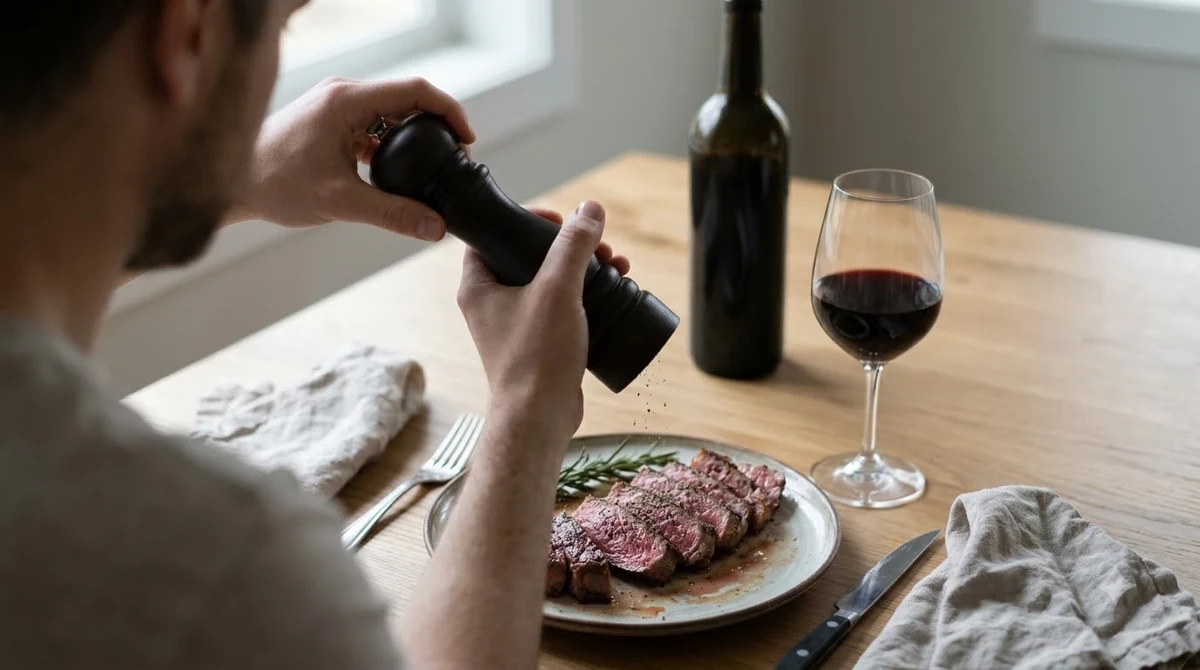
Fat softens tannin. Tannin is the drying, slightly bitter texture in red wine that comes from grape skins, seeds, and oak. When a tannic wine meets a fatty dish, the fat coats the mouth and the tannin feels smoother, which is why steak and red wine is such a classic match. Wine Folly notes that fatty foods need a wine with high acidity or high alcohol, or the wine can taste flabby. Its example is a tannic Italian Sangiovese served with an herbed potato croquette and roasted tomatoes: the fat softens the tannin while the tomato and cherry flavors echo the wine.
Fat is also a reason to reach for sparkling wine. Champagne’s acidity and bubbles cut through rich, creamy foods, and Wine Folly uses it as an example against a rich cheesecake. For context on the wine itself, see how many calories in champagne, since a glass of bubbly and a slice of dessert are often ordered together. White wine works in a similar way with butter-based dishes: a splash of white wine in a beurre blanc sauce brightens the butter without competing with it.
Red wine with fat should be chosen with care. Heavier reds with firm tannin are usually a good fit for grilled or braised meats, while lighter reds with softer tannin suit roast poultry or mushroom dishes. If a red tastes drying or bitter next to the food, the usual fix is a fattier bite, a richer sauce, or a wine with more fruit and less oak.
Salt and sweetness: the surprising matches
Salt makes wine taste more bitter and less fruity, so it should be used with care when you plan a pairing. The exception is sweet-salty food. Wine Folly suggests Riesling with Pad Thai or fried rice, where the wine’s sweetness and acidity balance the salt and spice, and tawny port with salty pretzels. These matches work because the wine has enough sugar to answer the salt rather than fight it.
Sweetness has its own rules. A dry wine served with a sweet dessert will taste sour and thin, so a common approach is to choose a dessert wine that is sweeter than the dish, or to pair fruit-based desserts with a lightly sweet wine that still has good acidity. Sweet food can also soften a bitter, tannic red, which is one reason a fruit glaze or sweet sauce can make a firm red taste rounder. The rule runs in reverse too: bitter does not pair well with bitter, which is why a dry red often clashes with dark chocolate.
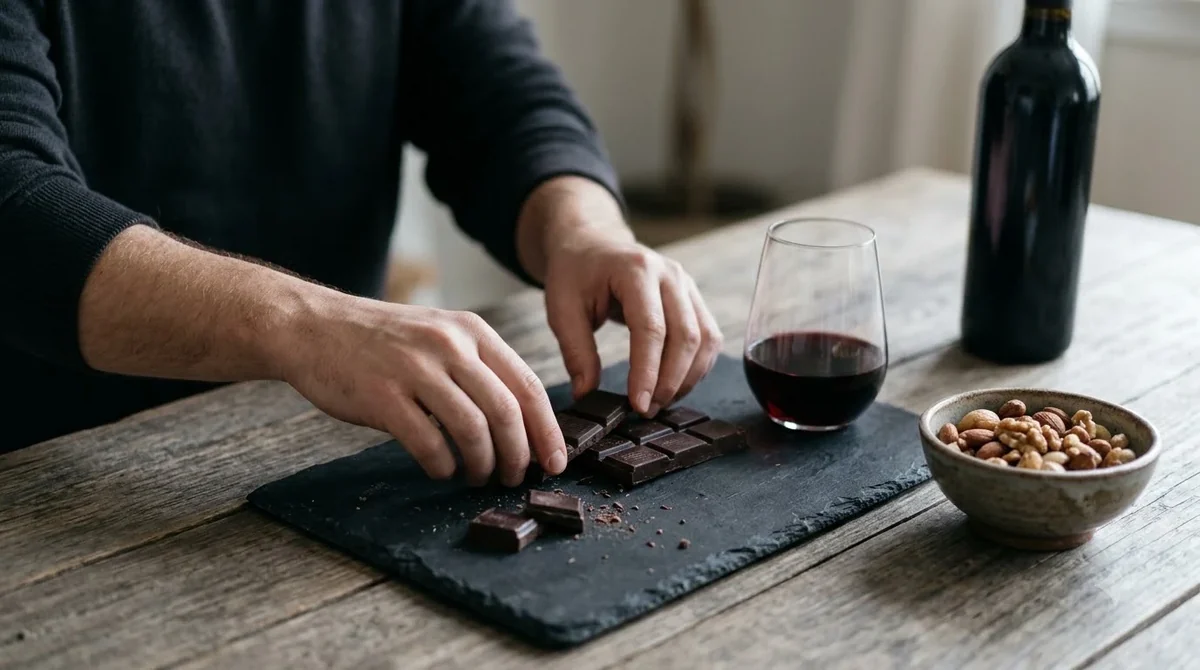
When you are building a menu, sweet and salty items can sit on the same table. A bowl of salted nuts goes well with a sweet sherry or port, and a plate of cured meat with a fruity, low-tannin red can be a lively start to a meal. Taste the pairing in small amounts first so you can adjust before the whole table is served.
Alcohol and weight: matching the feel of the wine
Alcohol level changes how a wine feels with food. Wine Folly suggests that high-alcohol wine can offset fatty foods or balance sweet desserts. Its example is a Zinfandel at 17% ABV served with pepper steak, where the wine’s weight and warmth hold up against the spice and beef. High alcohol can also make spicy food feel hotter, and a heavy red can overwhelm a delicate dish such as a light white fish. A useful habit is to keep weight in step with the plate: light dishes with lighter wines, rich dishes with fuller wines.
Weight is about texture as much as flavor. A creamy sauce, a crisp salad, and a grilled steak each ask for a different body in the glass. If you are serving several courses, move from lighter to heavier wines so the palate is not worn out too early, and save the most powerful bottle for the dish that can match it.
Tip: Taste the wine alone, then with a bite of food. If the wine tastes sour, thin, or bitter with the food, change the wine’s style or the sauce rather than the whole menu.
Quick pairing table by dish
Use this table as a starting point, then adjust for sauce, spice, and seasoning. The examples follow the principles above and the matches cited by Wine Folly.
| Dish type | What to match | Example wine style |
|---|---|---|
| Rich, creamy dishes or cheesecake | Acid to cut richness | Champagne or dry sparkling wine |
| Butter-based sauces | Acid that brightens the butter | White wine in the sauce or a crisp white to serve |
| Steak with pepper | Tannin and alcohol with fat | Zinfandel at about 17% ABV |
| Herbed potatoes and roasted tomatoes | Tannin softened by fat, fruit echoing fruit | Italian Sangiovese |
| Pad Thai or fried rice | Sweetness and acid against salt and spice | Riesling |
| Salty pretzels or nuts | Sweetness that answers salt | Tawny port |
| Tomato or lemon-based seafood | Acid that matches the dish | Dry Riesling or Sauvignon Blanc |
Frequently Asked Questions
Can you pair red wine with fish?
Usually a lighter red with soft tannin can work with richer fish such as salmon or tuna, but delicate white fish tends to pair better with white wine. Tannin can taste harsh against delicate flavors, so start with a white or a light, low-tannin red.
Does red wine go with chicken?
Yes, especially roast chicken with herbs, mushrooms, or a rich sauce. Choose a red with moderate tannin and bright fruit, because a heavy, very tannic wine can dominate lighter poultry.
What should I do if I am not sure which wine to pick?
Start with acidity. Choose a wine that is at least as acidic as the dish, then check fat and salt. A dry sparkling wine or a crisp white covers many meals, and a light red works with a wide range of dishes.
Does serving temperature change how a wine pairs with food?
Yes. A wine that is too warm can taste heavy and alcoholic, while a wine that is too cold can hide its aromas and acidity. Chill whites and sparkling wines before serving, and let fuller reds sit slightly cool rather than warm, then taste again as the glass warms.
Pairing wine with food is mostly about balance. Check acidity, fat, salt, sweetness, and weight, then taste before you serve. For more on the basics, try the Wine Q&A section, and if you are curious about the glass in front of you, the notes on how many calories in white wine are a useful next read.
More in Wine Basics
 Which Rose Is Best for Your Taste, Budget, and Food PairingsUpdated Nov 21, 2026
 Is Cheap Wine Bad? How to Find Bottles Worth DrinkingUpdated Nov 21, 2026
 What To Write On A Wine Gift Tag: Thoughtful Messages For Every OccasionUpdated Nov 21, 2026
 Which Wine Is Best For Weight Loss? Compare Lower-Calorie ChoicesUpdated Nov 21, 2026
 What Is The Best Wine For Mimosas? Choose Bubbly That Balances Orange JuiceUpdated Nov 20, 2026
 Which Prosecco Is Best for Your Taste and OccasionUpdated Nov 20, 2026