

We may earn a commission when you buy through links on this page, at no extra cost to you. Learn more.
Chenin Blanc vs Riesling comes down to texture and flavor emphasis: Chenin often feels rounder and more waxy or orchard-fruited, while Riesling is typically more sharply citrus-driven and aromatic, though both can be dry, off-dry, or sweet. Both grapes naturally retain high acidity, and neither name alone tells you whether a bottle is sweet. Choose Chenin for apple, quince, pear, honey, and a broader range of still, sweet, and sparkling styles; choose Riesling for lime, green apple, peach, floral notes, and a particularly vivid balance of fruit and acidity.
These white grapes share freshness and food-friendly versatility, but they differ in aroma, texture, sweetness, and regional expression. Those differences help you choose the right bottle for a particular meal.
The Main Differences Between Chenin Blanc and Riesling
Both grapes are naturally high in acidity and can be made from bone-dry to sweet, but Chenin Blanc often brings a broader, more rounded palate while Riesling is commonly more linear, aromatic, and citrus-led. Think of Chenin as the flexible choice for orchard fruit and texture, and Riesling as the choice for incisive lime, floral lift, and precise sweetness.
| Feature | Chenin Blanc | Riesling |
|---|---|---|
| Classic home | Loire Valley, France; also South Africa | Germany; also Alsace, Austria, and Australia |
| Typical fruit | Apple, pear, quince, peach | Lime, lemon, green apple, peach |
| Texture | Often rounded, waxy, or gently honeyed | Often light to medium-bodied, crisp, and precise |
| Acidity | High | High |
| Sweetness range | Dry, off-dry, sweet, and sparkling styles | Dry, off-dry, sweet, and some sparkling styles |
| Serving temperature | Usually 45–50°F; richer examples can take 50–55°F | Usually 45–50°F; sweet examples 43–50°F |
| Standard bottle | 750 ml, about five 5 oz pours | 750 ml, about five 5 oz pours |
The table describes tendencies, not strict rules. A lean, dry Chenin from Savennières can feel more taut than a generous Riesling from Alsace, and a sweet Vouvray can have more apparent weight than a dry Riesling from the Mosel. Climate, harvest date, fermentation choices, lees contact, residual sugar, and bottle age all influence the finished wine.
Acidity is not a reliable way to declare one grape the winner. Both varieties can make mouthwatering wines, and both can preserve freshness even when the fruit tastes ripe or the wine contains noticeable sugar. The bigger practical distinction is how that acidity is packaged: Chenin may combine it with a rounded, sometimes waxy middle palate, while Riesling often emphasizes a clear, high-toned line of citrus and stone fruit.
Aromas, Flavors, and Texture in the Glass
Chenin Blanc commonly shows apple, pear, quince, peach, honey, and flowers, with a texture that can range from brisk and stony to broad and softly waxy. Riesling more often leads with lime, lemon, green apple, peach, and white flowers, sometimes developing a distinctive savory or petrol-like note with age.
In a dry Loire Chenin, look for quince, tart apple, chamomile, and a chalky or stony impression. The middle of the palate can feel supple without being heavy, particularly in wines with some lees contact or a ripe-fruited profile. South African examples may lean toward pear, peach, and broader orchard fruit, while fuller styles can suggest honey or a subtle lanolin-like richness. These are aroma clues rather than guarantees; a cool-grown, unoaked bottling can be much more restrained.
Riesling’s signature is often its aromatic clarity. Young examples may smell of lime zest, lemon, green apple, white peach, and flowers; depending on the site, there may also be a slate-like mineral impression. With bottle age, some Rieslings develop notes commonly described as petrol, kerosene, or beeswax. That character is not a fault by itself, and it does not mean every mature Riesling will show it. The balance of ripe fruit and brisk acidity keeps the wine lively.
Texture can help when fruit aromas overlap. Chenin often has a broader, more tactile center, especially from Vouvray or South Africa, while Riesling frequently feels more focused. Neither is automatically heavier: a sweet Riesling can be more concentrated than a dry Chenin, and a ripe Chenin can be broader than a light Mosel Riesling.
Dry, Off-Dry, Sweet, and Sparkling Styles
Neither grape is inherently sweet: Chenin Blanc and Riesling both span a wide range of residual sugar, and a dry version of either can taste fruity without being sweet. To choose accurately, look for style words and regional clues rather than assuming a grape name predicts sweetness.
For Loire Chenin, the terms on a Vouvray label are useful starting points. “Sec” means dry, “Demi-Sec” indicates an off-dry style, and “Moelleux” points toward a sweeter wine; the exact balance still depends on the producer and bottling. Chenin is also used for sparkling Vouvray and Crémant de Loire, where the grape’s acidity supports a fresh, lively profile. South African Chenin is frequently dry, though off-dry and sweeter examples are also made.
German Riesling labels have their own vocabulary. “Trocken” means dry and “Halbtrocken” means off-dry. Kabinett, Spätlese, and Auslese indicate categories tied to grape ripeness at harvest, not a guaranteed level of sweetness in the finished wine; a wine labeled “Spätlese trocken,” for example, is dry. Wine Enthusiast notes that many dry German Rieslings are around 12% alcohol by volume or higher, while sweeter Prädikat examples often fall below 10%, but alcohol is a clue rather than a substitute for the stated style.
Sweetness can make a wine taste softer, but acidity determines whether the finish feels balanced rather than sticky. Chenin’s high acidity helps carry honeyed, botrytis-affected Loire wines, while Riesling’s freshness can balance everything from a hint of residual sugar to a richly sweet late-harvest bottling. For dessert, choose a wine at least as sweet as the dish; a lightly off-dry bottle can taste thin beside a very sweet cake or pastry.
Tip: When a label is unclear, ask for a dry or off-dry example by name rather than relying on the grape. For German Riesling, “Trocken” is the clearest dry-style cue; for Vouvray Chenin, “Sec” points you toward a dry bottling.
The Regions That Give Each Grape Its Identity
Place has an outsized influence on both varieties: the Loire Valley gives Chenin a spectrum from taut dry whites to honeyed dessert wines, while Germany’s Mosel and Australia’s Clare and Eden Valleys show how Riesling expresses cool climates in distinct ways. Regional names can therefore be more useful than the grape name alone when narrowing a choice.
In France’s Loire Valley, Vouvray is one of the best-known reference points for Chenin because it can offer still wines across the sweetness range as well as sparkling versions. Savennières is associated with dry, structured Chenin, often with a firm, savory edge. Further along the Loire, Quarts de Chaume, Bonnezeaux, and Coteaux du Layon are known for concentrated sweet expressions. For a broader look at the grape’s Loire and international styles, Decanter’s Chenin Blanc profile outlines its classic aromas, regional roots, and range of styles.
South Africa is the other major reference point for Chenin, also called Steen there. The grape appears in fresh, fruit-forward wines as well as more textured bottlings, and California, Washington, and other American regions produce it too. Riesling’s best-known European homes include Germany’s Mosel and Rheingau, France’s Alsace, and Austria’s Wachau: Mosel wines are often light-bodied and slate-influenced, while Alsace tends toward a fuller, often-dry style. In Australia, Clare Valley Riesling is known for lime-driven fruit and bright acidity; Eden Valley examples can share that citrus profile with a more pronounced mineral edge. Wine Australia’s Riesling regional profile describes its cool-climate sites and regional differences.
American Riesling from Washington State can be dry or off-dry with ripe peach and citrus; New York’s Finger Lakes are associated with bright, delicate wines ranging from bone-dry to lightly sweet. For comparisons with other crisp whites, see Chenin Blanc vs Pinot Grigio and Chenin Blanc vs Sancerre.
Food Pairings for Both High-Acid Whites
Chenin Blanc is especially useful with dishes that benefit from both acidity and a little texture, while Riesling is a strong choice for aromatic, salty, or spicy food. Both work with seafood and vegetables, but the wine’s sweetness level and body should match the weight and seasoning of the dish.
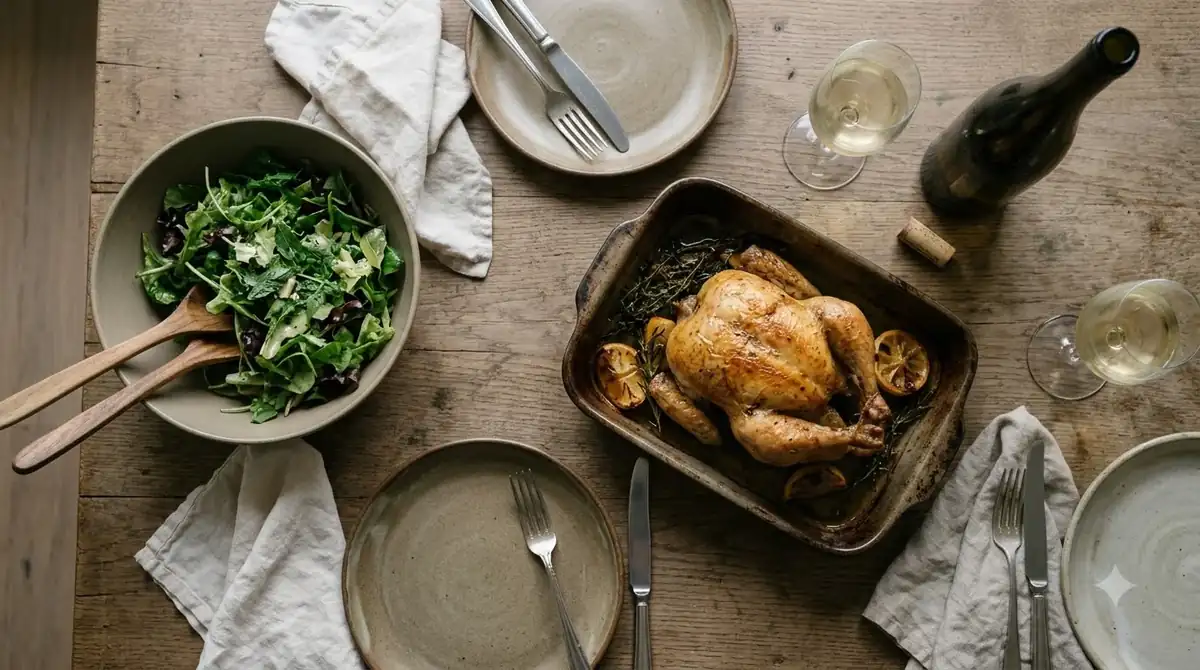
Try dry Chenin with roast chicken, pork tenderloin, grilled shrimp, scallops, or a goat-cheese salad. Its acidity refreshes the palate after richer bites, and a rounder version can stand up to cream sauce, pork belly, or roasted squash without feeling too delicate. Loire Chenin and goat cheese are a familiar match because the wine’s freshness can cut through the cheese’s richness. For a more structured Savennières, consider herb-roasted chicken, white beans, or a savory mushroom dish.
Dry Riesling fits oysters, sushi, steamed shellfish, ceviche, and lightly seasoned white fish. Its citrus character complements lemon, ginger, and fresh herbs, while its acidity keeps a clean finish alongside salty foods. A slightly off-dry Riesling is often a better choice for Thai curry, Sichuan dishes, or spicy noodles than a very dry, high-alcohol white: a touch of sweetness softens the impression of chili heat. Keep the dish’s richness in mind too; a fuller Alsace Riesling can handle roast pork or richer poultry more comfortably than a delicate, light-bodied example.
For dishes with noticeable acidity, such as ceviche, tomato salad, or a sharp vinaigrette, choose a wine with equal or greater freshness so the food does not make it seem flat. For dessert, the wine should be at least as sweet as the food: sweet Chenin suits fruit tart, poached pear, or blue cheese, while sweet Riesling can work with peach cobbler or ginger desserts. Match intensity too: steamed fish with herbs suits a lighter wine, while pork belly or creamy seafood stew can take a richer Chenin or Alsace Riesling. For a mixed menu, dry Chenin is a useful middle ground; off-dry Riesling is practical with chili, ginger, and sweet-sour sauces. The comparison Chablis vs Chenin Blanc can also help match acidity and body to the plate.
Serving, Shopping, and Storing Each Wine
Serve both grapes cool enough to preserve their freshness but not so cold that their aromas disappear: 45–50°F is a good starting range for most dry, light-bodied bottles. Fuller Chenin and richer Riesling can show more detail closer to 50–55°F, while sweet whites are best around 43–50°F.
Chill the bottle in a refrigerator and bring it out shortly before pouring; a few minutes in the glass will let the fruit and floral notes open. Use a standard white-wine glass with enough room to swirl, rather than a narrow glass that traps the aromas. Pour about 5 ounces per serving. A 750 ml bottle provides roughly five such glasses, which makes it easy to plan a tasting with one Chenin and one Riesling side by side.
At the store, begin with the style you want, then use the region as a filter. For dry Chenin, look toward Savennières, dry Vouvray, or South African bottlings described as dry; for sweeter Chenin, explore demi-sec or moelleux Vouvray and Loire dessert-wine appellations. For dry Riesling, search for “Trocken,” Alsace, Austria’s Wachau, or Australia’s Clare Valley. German Kabinett or a Finger Lakes bottling can suit a gentler, lightly sweet preference. The wider Wine vs Wine guide applies the same questions—sweetness, acidity, body, aroma, and food match—to other varieties.
Producer and vintage influence both grapes because they express site and harvest conditions. Cool years may bring leaner citrus, while warmer years can yield riper orchard or stone fruit. Classic Riesling rarely relies on new oak; Australian examples commonly use stainless steel to preserve primary fruit. Chenin can be made in stainless steel or neutral oak, so producer notes help identify crisp or creamy styles. After opening, refrigerate still wine and aim to finish it within 3–5 days. Store unopened bottles in a cool, dark place near 55°F, on their side if cork-finished, and away from direct sunlight.
Frequently Asked Questions
What is the earliest recorded mention of Riesling?
A cellar ledger in Germany’s Hessische Bergstrasse records the purchase of six “Riesslingen” vines on March 13, 1435. Wine historians often mark that entry as Riesling’s documented birthday, although it does not establish the grape’s exact biological origin.
Why is Riesling usually harvested late?
Riesling is a late-ripening variety, and Wine Australia’s vineyard profile says it buds up to a week later than Chardonnay, Semillon, and Sauvignon Blanc. It is often among the last white varieties picked, giving growers time to develop ripe flavors while retaining acidity in suitable cool regions.
Why can Chenin Blanc be challenging in the vineyard?
Chenin Blanc buds early but ripens late, and it tends to produce low to moderate yields. That long growing cycle means site and seasonal conditions are important to reaching full flavor without losing the fresh acidity that makes the variety distinctive.
What does Grosses Gewächs mean on a German Riesling label?
Grosses Gewächs, often shortened to GG, is a designation associated with dry wines from the VDP’s top vineyard sites. The category helped make clear that Germany’s most prestigious vineyard expressions could be fully dry rather than sweet.
Why do many Australian Rieslings use screw caps?
Wine Australia notes that it is rare for Australian Riesling to be bottled under anything other than a Stelvin screw-cap closure. The closure is valued for helping preserve the grape’s fresh, pure fruit character, particularly in wines intended to be enjoyed young.
Chenin Blanc and Riesling are not rivals so much as two versatile answers to different preferences: choose Chenin for orchard fruit and a broader texture, or Riesling for vivid citrus, fragrance, and fine control over sweetness. Try them side by side at the same temperature with a simple meal, and the differences in aroma and finish become much easier to recognize.
More in Wine vs Wine
 Chenin Blanc vs Pinot Gris: Acidity, Body, and Pairing DifferencesUpdated Nov 20, 2026
 Chianti vs Lambrusco: How Tuscany and Emilia-Romagna Reds CompareUpdated Nov 20, 2026
 Chianti vs Primitivo: Key Differences in Taste, Body, and PairingUpdated Nov 20, 2026
 Chianti vs Rioja: Key Differences in Taste, Aging, and PairingUpdated Nov 20, 2026
 Chianti vs Shiraz: How Acidity, Body, and Food Pairings CompareUpdated Nov 20, 2026
 Chianti vs Syrah: Key Differences in Taste, Body, and Food PairingUpdated Nov 20, 2026